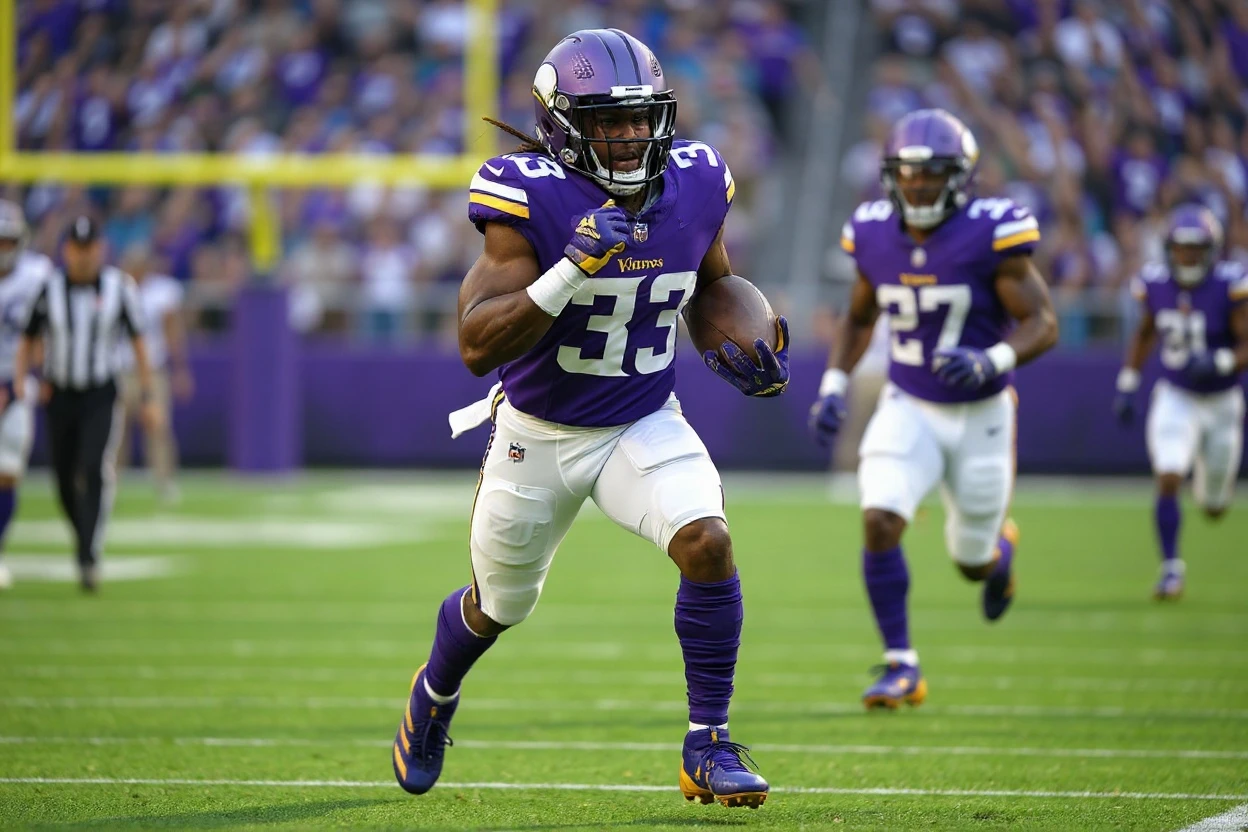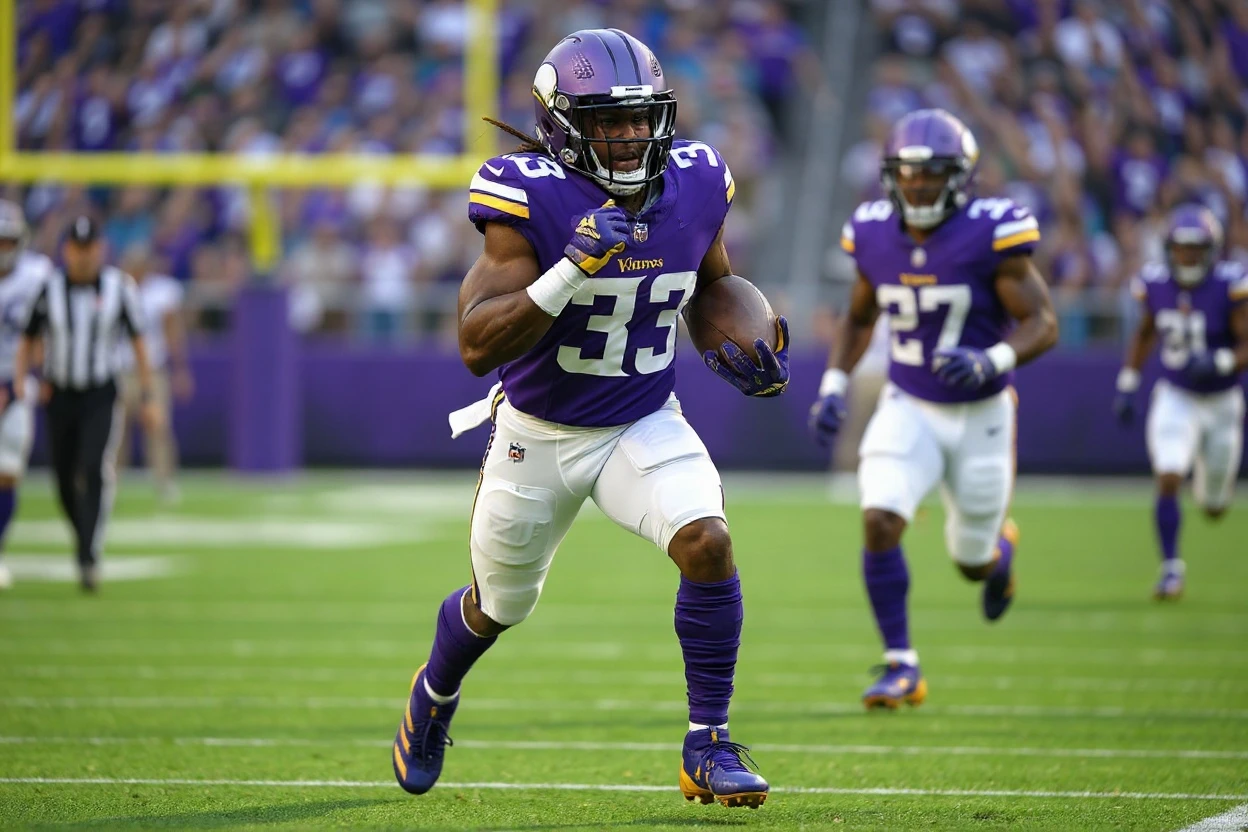

Christmas Day football delivered exactly what the NFL promised — a divisional rivalry with playoff stakes, a hostile crowd, and a result that nobody outside Minnesota saw coming.
The Minnesota Vikings dismantled the Detroit Lions 23-10 at U.S. Bank Stadium, a result Fox News confirmed, handing Detroit one of its most confounding losses of the season in a game where the Vikings’ offense barely functioned through the air yet still controlled the outcome from start to finish.
The final score tells one story. The box score tells another. Minnesota finished with a net passing total of negative-3 yards — a number that would typically signal a blowout loss, not a 13-point victory. That the Vikings won anyway speaks directly to how dominant their defense was and how efficiently they converted the opportunities their pass rush created.
- Minnesota won 23-10 despite recording -3 net passing yards — one of the most statistically unusual victories in recent NFL history.
- The Vikings’ defense suffocated Detroit’s offense, forcing turnovers and limiting the Lions to a single touchdown.
- Minnesota’s run game and special teams carried the offensive load when the passing attack stalled completely.
- The result had direct NFC playoff implications, tightening the divisional race heading into the final weeks of the regular season.
- Detroit’s loss exposed vulnerabilities in their offensive line and red zone execution that could haunt them in the postseason.
- The Christmas Day setting amplified the stakes — both teams entered knowing a loss would significantly damage their seeding outlook.
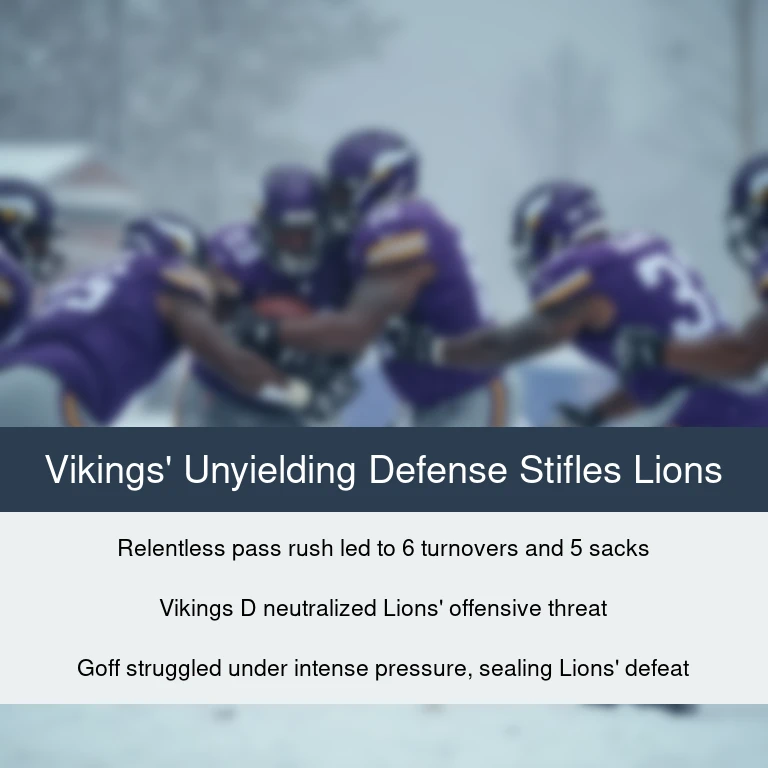
How Minnesota’s Defense Turned a Broken Offense Into a Win
The Pass Rush That Changed Everything
The Vikings’ defensive front made Jared Goff’s afternoon miserable from the opening series.
Minnesota generated consistent pressure off the edge, collapsing the pocket and forcing Goff into rushed decisions that led to errant throws, scrambles, and ultimately turnovers.
The Lions entered the game as one of the NFC’s most productive offenses, but the Vikings’ defensive line neutralized Detroit’s rhythm before it could develop.
Goff, who had been among the league’s most efficient passers for much of the season, was never allowed to settle into the timing-based passing game that makes Detroit’s offense so difficult to defend when it’s operating cleanly.
Turnovers as the Offensive Engine
Minnesota’s offense didn’t generate yards through the air — it generated points through field position and turnovers.
Each time the Vikings’ defense forced a Lions mistake, Minnesota’s offense capitalized with short-field scoring drives that required minimal passing production.
That formula — elite defense, turnover conversion, and a functional run game — is exactly how teams with limited passing attacks can still win meaningful games in December.
The Vikings leaned into their identity rather than trying to manufacture a passing game that wasn’t there, and the result was a controlled, methodical victory that never felt as close as a 13-point margin might suggest.
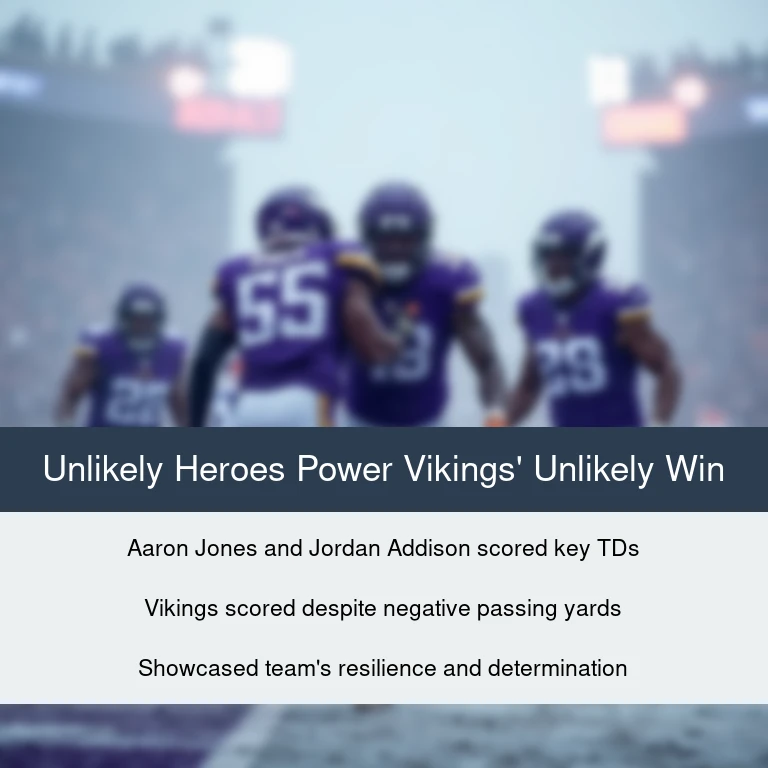
The -3 Net Passing Yards Anomaly — What It Actually Means
Putting the Number in Historical Context
Finishing a game with negative net passing yards and winning is extraordinarily rare in the modern NFL.
The league has evolved into a passing-first environment where teams that can’t generate positive yardage through the air almost always lose.
Minnesota’s ability to win 23-10 under those conditions places this game in a category occupied by very few results in recent memory.
The negative passing total reflects a combination of factors: sacks that erased yardage, intentional throwaways, and a game plan that deliberately deprioritized the passing game once it became clear the run and defense were sufficient.
Why the Vikings Didn’t Need the Air Attack
Minnesota’s coaching staff deserves credit for recognizing early that the passing game wasn’t working and refusing to force it.
Rather than abandoning the run to chase points through the air — a common mistake for teams trailing or struggling offensively — the Vikings stayed disciplined, ran the ball effectively, and trusted their defense to keep the score manageable.
That kind of in-game adaptability is a marker of a well-coached team, and it’s the reason Minnesota converted what could have been a frustrating offensive performance into a decisive win.

Detroit’s Collapse — What Went Wrong for the Lions
Goff Under Pressure
Jared Goff is one of the NFL’s most accurate passers when given a clean pocket and time to work through his progressions.
Against Minnesota’s defensive front on Christmas Day, he had neither.
The Lions’ offensive line, which had been one of Detroit’s most reliable units throughout the season, struggled to handle the Vikings’ pass rush alignment and stunts.
When Goff was forced to improvise — moving off his first read, extending plays, or throwing into tight windows — the results were costly.
Red Zone Failures and Missed Opportunities
Detroit’s inability to convert in the red zone proved decisive.
The Lions moved the ball into scoring position on multiple drives but came away with either field goals or nothing, failing to punch the ball into the end zone when the game was still within reach.
A single touchdown in a game where your offense is supposed to be among the conference’s best is a damning result, and it reflects both Minnesota’s defensive quality and Detroit’s execution failures in critical moments.
Playoff Implications for Detroit
The Lions entered Christmas Day with legitimate NFC championship aspirations.
A loss to a divisional rival — at home in the standings sense, though played at U.S. Bank Stadium — with the postseason approaching tightened Detroit’s margin for error considerably.
Teams that struggle to score against elite defenses in December rarely find it easier in January, and the Lions’ red zone issues and offensive line vulnerabilities exposed in this game will be a focal point for opposing coordinators in the playoffs.
Minnesota’s Playoff Picture After the Christmas Win
Where the Vikings Stand in the NFC
The victory strengthened Minnesota’s position in the NFC playoff race at a moment when every game carries maximum weight.
Beating a division rival of Detroit’s caliber — on Christmas Day, with national attention — sends a message about the Vikings’ defensive identity and their capacity to win ugly when the offense isn’t functioning at full capacity.
For a team that has spent much of the season building toward a postseason run, this result demonstrated the kind of resilience that separates contenders from pretenders in the final weeks of the regular season.
The Defense as Minnesota’s Identity
This game crystallized what the Vikings are: a defense-first team capable of winning games in multiple ways.
When the passing game works, Minnesota can score in bunches. When it doesn’t, the defense is good enough to keep the team in every game and create enough turnovers to manufacture points through field position.
That dual identity makes the Vikings genuinely dangerous in a single-elimination playoff format, where one dominant defensive performance can end any opponent’s season regardless of offensive firepower.
The 2026 NFL offseason will bring its own roster decisions, but Minnesota’s Christmas Day performance reinforced that their defensive core is already built for playoff football.
Reading the Christmas Day Result as a Playoff Preview
If you’re trying to project how Minnesota performs in January, this game offers a useful template.
The Vikings showed they can win a game where their quarterback throws for negative net yards — which means their floor is higher than most teams’ floors when the passing game breaks down.
For Detroit, the lesson is equally instructive: if your offensive line can’t protect Goff against a physical defensive front, and your red zone execution fails under pressure, you will not beat elite defenses in the postseason.
The Lions need to address both issues before January arrives.
For Minnesota, the blueprint is clear: generate pressure, force turnovers, run the ball, and trust the defense to handle the rest.
That formula worked against one of the NFC’s best offenses on Christmas Day. It can work again.
Fans tracking the broader NFC landscape should also note that results like this one — where a team wins despite historically poor passing numbers — often signal a defense that is peaking at the right time of year.
Minnesota’s pass rush, in particular, looks like a genuine postseason weapon, the kind of unit that can disrupt any offense’s timing and force the turnovers that decide close playoff games.
Compare this performance to how other NFC contenders have fared against physical defensive fronts, and the Vikings’ ceiling becomes clearer.
They don’t need to be a great offensive team to win a Super Bowl. They need to be exactly what they showed on Christmas Day: relentless, disciplined, and opportunistic.
The Bigger Picture — What This Game Reveals About Both Franchises
Christmas Day games carry outsized narrative weight in the NFL calendar.
They’re nationally televised, they typically feature marquee matchups, and the results tend to define how teams are perceived heading into the postseason.
Minnesota’s 23-10 win over Detroit will be remembered not for offensive brilliance but for defensive dominance — a performance that reminded the rest of the NFC that the Vikings are a legitimate threat even when their passing game is completely absent.
Detroit, meanwhile, faces a reckoning.
The Lions have the talent to compete for an NFC title, but this loss exposed the fragility of an offense that depends heavily on Goff operating from a clean pocket with rhythm and timing.
When that’s taken away — as Minnesota took it away on Christmas Day — Detroit’s offense becomes ordinary, and ordinary offenses don’t win playoff games against elite defenses.
The Vikings’ defensive performance also raises an interesting question about how opposing coordinators will approach Minnesota in the postseason.
If you can’t run the ball effectively against their front seven and you can’t get Goff into a rhythm against their pass rush, what’s the plan?
Detroit didn’t have a convincing answer on Christmas Day, and that’s the most concerning takeaway from a Lions perspective.
For context on how other teams have navigated similar defensive challenges this season, the unexpected storylines emerging across major sports in 2025-26 reflect a broader pattern of defense-first teams outperforming offensive expectations in high-stakes environments.
What Comes Next for Minnesota and Detroit
The Christmas Day result sets up a compelling final stretch of the regular season for both franchises.
Minnesota carries momentum, a proven defensive identity, and the confidence that comes from winning a game where almost nothing went right offensively.
Detroit carries a loss that stings precisely because it was avoidable — a game where the Lions had the talent to win but couldn’t execute when it mattered.
The next development to watch is whether Detroit’s offensive line can recapture its earlier-season form and whether Goff can return to the efficiency that made him one of the NFC’s top passers before this game.
For Minnesota, the question is simpler: can the passing game recover enough to give the defense some relief, or will the Vikings need to keep winning games the hard way?
Based on what happened on Christmas Day, the answer might not matter as much as you’d expect.
A defense this good can carry a team a long way — and the Vikings proved it on the biggest stage the regular season has to offer.
Keep an eye on how both teams close out the regular season, because the NFC playoff bracket could look very different depending on whether Detroit rebounds or Minnesota continues to impose its defensive will on the rest of the conference.
For more on how the NFL’s top defensive units are shaping the postseason picture, see coverage of how elite pass rushers decide championships — a dynamic that was on full display in Minneapolis on Christmas Day.