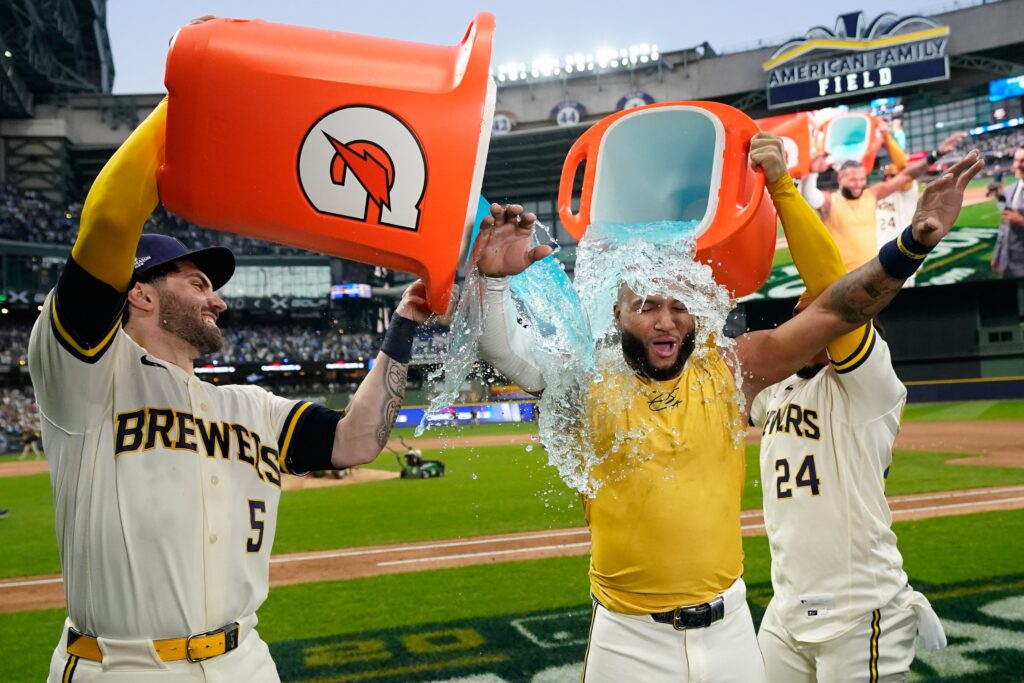
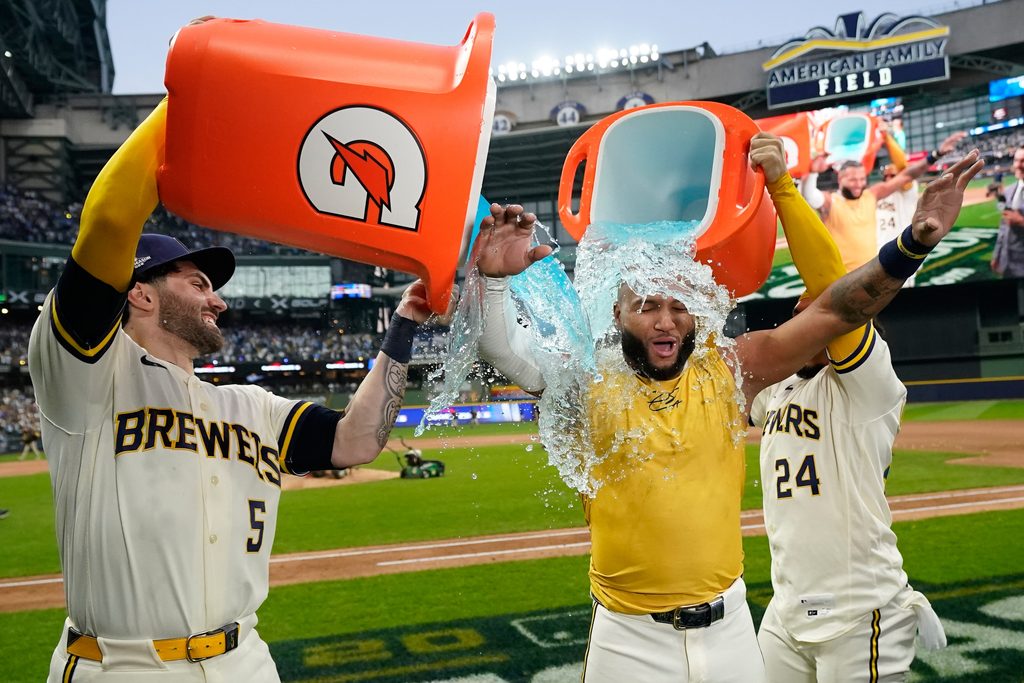
The Milwaukee Brewers were down to their final strike.
Trailing the San Diego Padres by one run in the bottom of the ninth inning, Milwaukee had managed to load the bases but still needed one more hit to complete the comeback. Standing between the Brewers and defeat was Padres closer Mason Miller, armed with one of baseball’s most overpowering fastballs.
Then 22-year-old Jackson Chourio delivered.
Chourio ripped a 101.3 mph fastball back through the middle, driving home Christian Yelich and Sal Frelick for a dramatic 4-3 walk-off victory. In a matter of seconds, Milwaukee went from the brink of defeat to taking a commanding 2-0 lead in the series.
It was a finish that perfectly captured the combination of patience, resilience and young star power that had carried the Brewers to a franchise-record 103 wins during the regular season.
Down to the Final Strike, Chourio Changed the Series
The situation could hardly have been more dramatic.
With two outs in the bottom of the ninth, the bases loaded and Milwaukee trailing by a run, Chourio stepped into the batter’s box knowing the game could end with one more strike.
Miller attacked him with pure velocity.
His fastball registered 101.3 mph, the type of pitch capable of overwhelming even the most accomplished major-league hitters. Chourio was ready for it.
The Brewers outfielder turned on the pitch and sent a 109.5 mph line drive straight back through the middle of the field. Padres second baseman Jake Cronenworth made a desperate diving attempt, but the ball skipped beyond his reach and into the outfield.
Yelich scored from third.
Frelick followed from second.
Ballgame.
Milwaukee had completed a stunning 4-3 comeback and suddenly held a two-game advantage in the series.
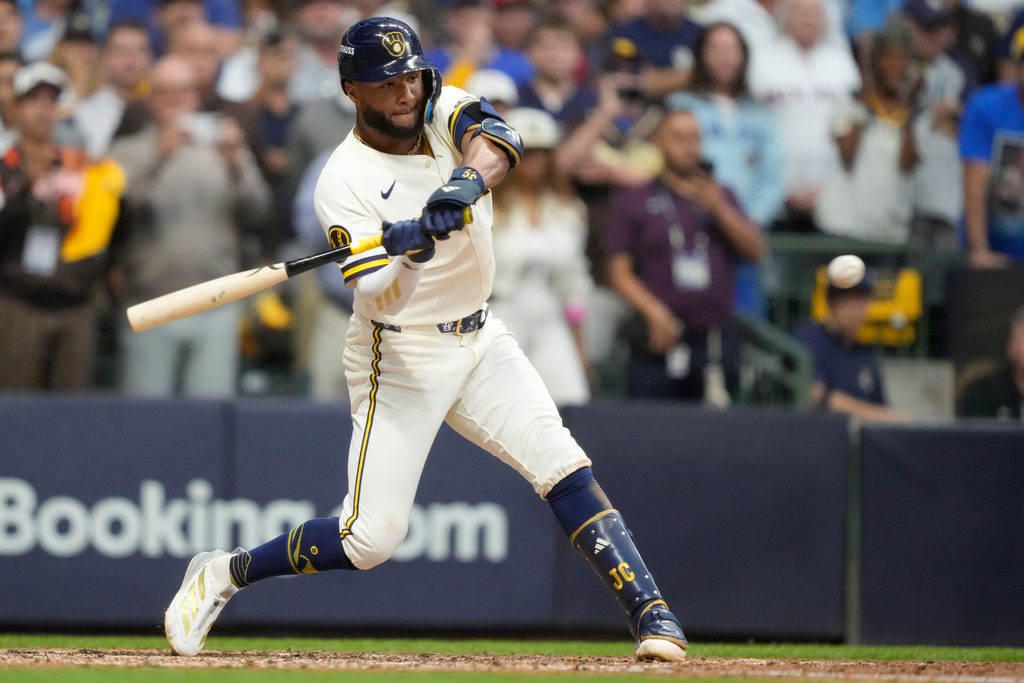
How a 22-Year-Old Turned 101 MPH Into Brewers History
For Chourio, the moment added another remarkable achievement to a rapidly growing postseason résumé.
Born in Venezuela on March 11, 2004, Chourio reached the majors in 2024 and quickly developed into one of the most important young players in Milwaukee’s lineup. By 2026, he had recorded 153 hits in 526 at-bats while establishing himself as a cornerstone of the Brewers’ offense.
His walk-off against San Diego placed him in rare franchise company.
Chourio became only the third Brewers player to deliver a postseason walk-off hit, joining Nyjer Morgan in 2011 and Mike Moustakas in 2018.
Doing it at just 22 years old made the moment even more impressive.
The hit also raised Chourio’s career postseason RBI total to 15, putting him second in franchise history. He had already made an impact earlier in the series, launching a game-tying two-run homer in Game 1. It was the fifth postseason home run of his young career, setting a new Brewers franchise record.
Chourio was no longer simply Milwaukee’s promising young outfielder.
He was becoming one of the central figures in the franchise’s postseason history.
Three Walks Created the Opening Milwaukee Needed
Chourio delivered the decisive swing, but Milwaukee’s comeback was built before he ever stepped into the batter’s box.
The rally began with patience.
Christian Yelich worked a walk to give Milwaukee life. Sal Frelick followed with another free pass, increasing the pressure on Miller and the Padres. Pinch-hitter Gary Sánchez then drew another walk, loading the bases and bringing Chourio to the plate.
Three walks had transformed what appeared to be a controlled ninth inning into a full-scale crisis for San Diego.
It was also a fitting reflection of the offensive approach Milwaukee had relied on throughout its historic regular season. Rather than forcing the issue, the Brewers consistently worked counts, forced pitchers into uncomfortable situations and waited for opportunities to attack.
That discipline helped Milwaukee finish 103-59, giving the club its first 100-win season and the best record in baseball while securing a fourth consecutive National League Central title.
In Game 2, the same approach produced the biggest rally of their postseason.
The Brewers didn’t need three home runs or a string of extra-base hits.
They needed three disciplined plate appearances — and one perfectly timed swing.
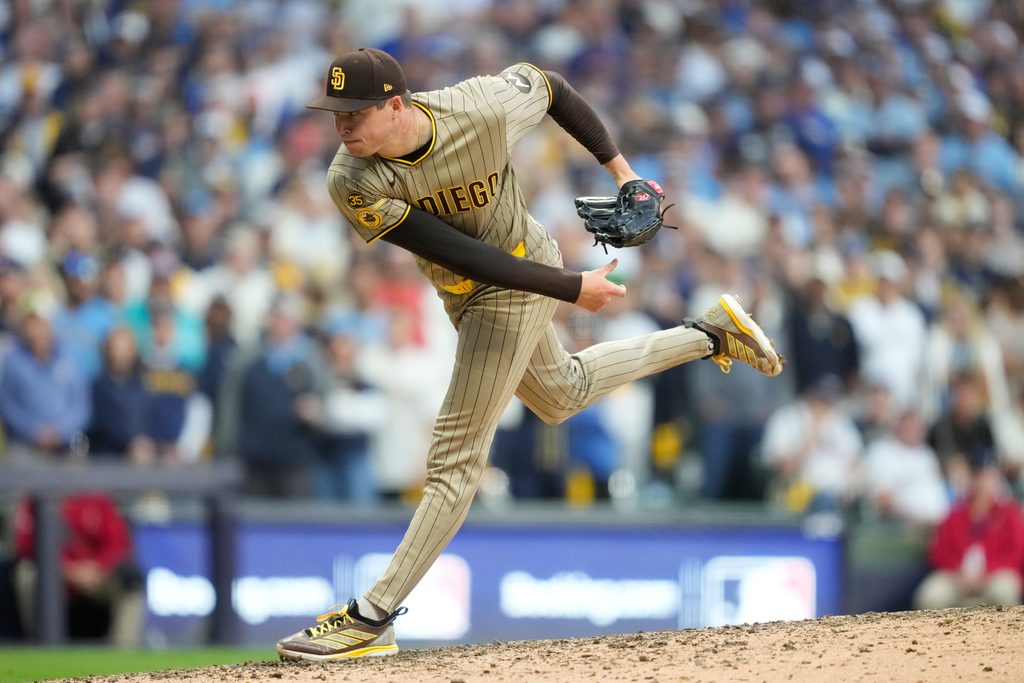
Mason Miller’s 101 MPH Fastball Still Wasn’t Enough
For Miller, the ending demonstrated just how unforgiving postseason baseball can be.
The Padres closer entered the matchup with the profile of exactly the pitcher San Diego wanted protecting a ninth-inning lead. Across 67 appearances and 71 innings, he had recorded 131 strikeouts, combining elite velocity with the ability to overpower hitters in high-leverage situations.
And his final pitch to Chourio was hardly a hanging mistake.
It was a 101.3 mph fastball.
Chourio simply beat it.
After the game, Miller accepted responsibility for the loss rather than searching for excuses, acknowledging the significance of allowing Milwaukee to turn a potential series-evening victory into a 2-0 Brewers advantage.
The exchange highlighted the extraordinarily small margins that often decide October baseball.
A pitch traveling more than 100 mph can be executed well and still end up in the outfield.
One swing can erase eight innings of work.
And one loss can completely change the pressure surrounding an entire playoff series.
Why Milwaukee’s Walk-Off Could Shape the Rest of the Series
The Brewers gained more than another victory with Chourio’s single.
They gained control.
A 2-0 series lead puts Milwaukee firmly in command, but the way the Brewers reached that position may matter just as much as the numbers themselves.
Milwaukee showed that it could remain patient while facing one of San Diego’s most dangerous relievers. The Brewers refused to chase their way out of the inning, loaded the bases without recording a hit and then trusted one of their youngest players to finish the job.
That reinforces the identity that carried Milwaukee through its 103-win regular season: pressure opponents, extend at-bats and capitalize when an opportunity finally appears.
For San Diego, the challenge is considerably different.
The Padres were one strike away from escaping Milwaukee with the series tied. Instead, they watched three consecutive walks set up a walk-off hit that left them facing a two-game deficit.
That type of loss can linger.
San Diego must now find a way to respond before Milwaukee can turn one unforgettable swing into something even bigger.
For Chourio and the Brewers, however, the equation is much simpler.
They were down to their final strike.
Now they are one step closer to advancing.