The Buffalo Bills secured a dramatic 37-34 overtime victory against the Los Angeles Rams at SoFi Stadium in Inglewood, California, in a Monday Night Football matchup that showcased both teams’ resilience and flaws.
Josh Allen and the Bills demonstrated their ability to adapt their offensive approach while overcoming significant challenges, including missing key receivers and multiple turnovers from their running back.
The game ultimately hinged on a single defensive play in overtime that prevented what would have been a game-winning field goal for the Rams, allowing Buffalo to improve their record to 4-1 while Los Angeles dropped to 2-3 in a competitive NFC West division.
The Moment Everything Changed: How a Blocked Kick Decided Monday Night’s Thriller
The overtime period in Inglewood delivered the kind of tension that keeps football fans on the edge of their seats, with both teams trading possessions and searching for the decisive moment.
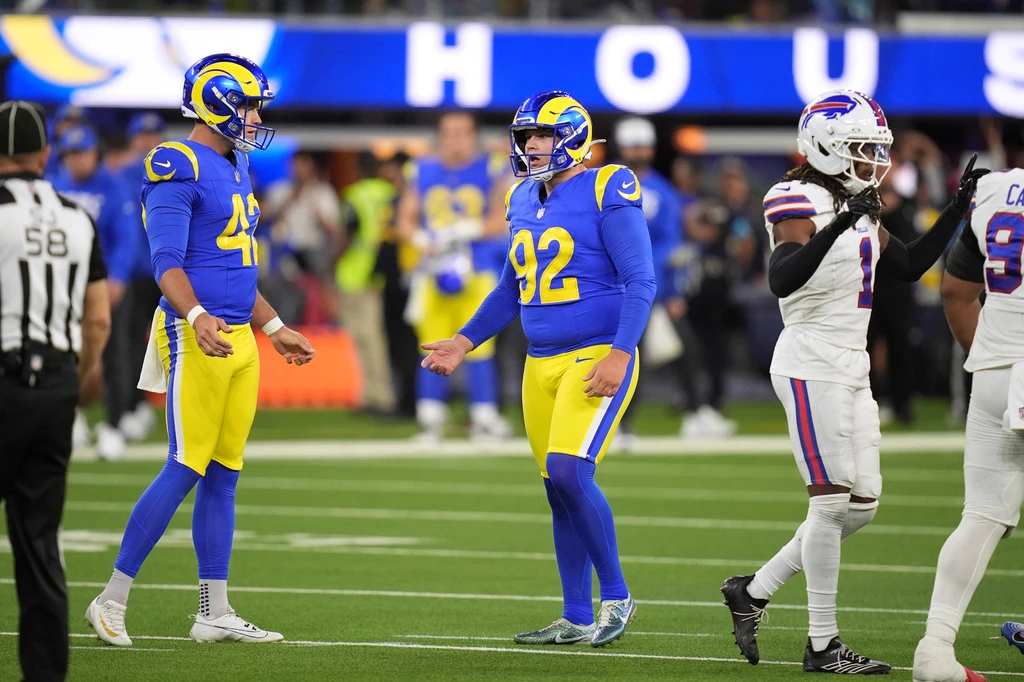
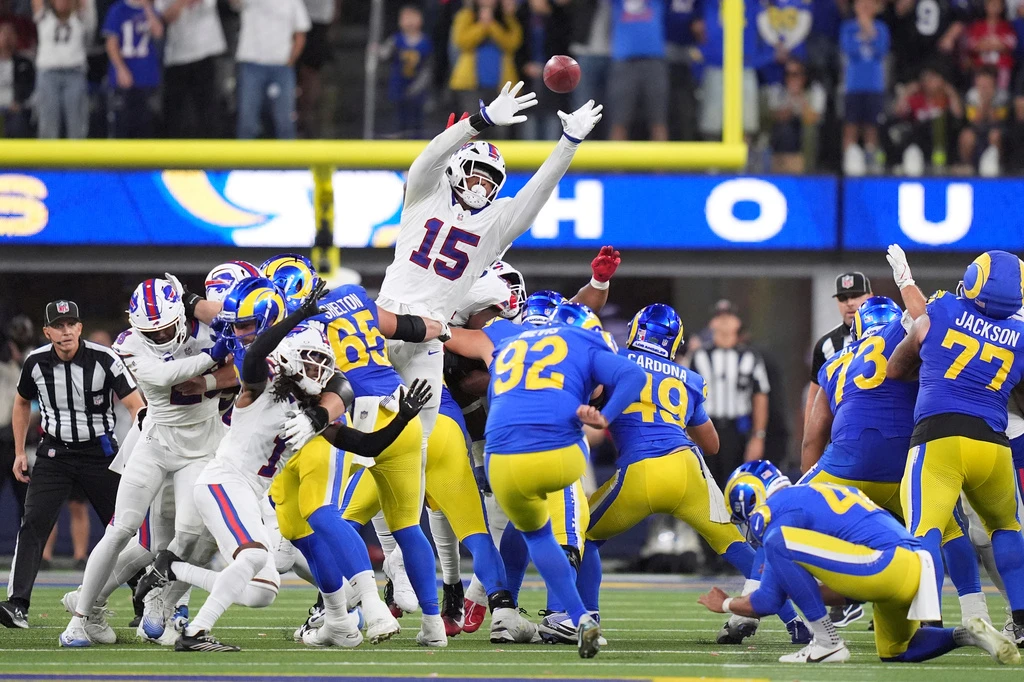
When the Rams positioned themselves for what appeared to be a game-winning opportunity, kicker Harrison Mevis lined up for a 48-yard field goal attempt that would have sent the home crowd into celebration and given Los Angeles a much-needed victory.
Edge defender Greg Rousseau had other plans for the Bills, timing his rush perfectly and getting his hand on the football just as it left Mevis’s foot. The blocked kick represented more than just a single play, it symbolized Buffalo’s defensive resilience throughout a game where they had struggled to contain Matthew Stafford’s passing attack and the Rams’ offensive weapons.
Following the blocked attempt, Buffalo’s offense took the field with renewed confidence and methodically moved down the field to set up their own field goal opportunity.
The Bills’ kicker converted the attempt, sealing the 37-34 victory and giving Buffalo their fourth win in five games to start the season. This dramatic finish echoed the team’s recent history of improbable comebacks and clutch performances that have defined their identity under head coach Sean McDermott and quarterback Josh Allen.
What Josh Allen’s Unconventional Game Plan Reveals About Buffalo’s Real Weakness
The Wyoming product who was selected seventh overall in the 2018 NFL draft showcased his versatility in ways that both impressed and concerned observers of the Buffalo offense. Allen accumulated 121 rushing yards while completing just four passes, a statistical anomaly that highlighted the Bills’ depleted receiving corps and forced the team to rely on an alternative offensive philosophy.
Without key receivers DJ Moore and Joshua Palmer available for the Monday night contest, offensive coordinator implemented a ground-heavy approach featuring downhill runs, screen passes, and designed scrambles.
This strategy placed enormous pressure on Allen to create plays with his legs and make quick decisions in the passing game, limiting the explosive downfield opportunities that typically characterize Buffalo’s offensive identity.
Running back James Cook complemented Allen’s rushing performance with 111 yards of his own, demonstrating the effectiveness of Buffalo’s adjusted game plan despite its unconventional nature.
However, the limited passing attack raised questions about the team’s ability to compete against elite defenses when their full complement of receivers isn’t available. The Bills’ success in this game came through adaptation and physicality rather than the aerial assault that has become their trademark in recent seasons under Allen’s leadership at Highmark Stadium in Orchard Park, New York.
The Penalty Problem That’s Quietly Destroying LA’s Season
The Rams’ performance at their state-of-the-art SoFi Stadium, the world’s costliest venue at over five billion dollars, was marred by self-inflicted wounds that prevented them from securing a victory they had within their grasp.
Los Angeles committed 11 penalties for 84 yards, including four false starts that disrupted offensive rhythm and stalled promising drives throughout the evening.
The things that really chapped me that I think are a reflection of an undisciplined team are the pre-snap, the procedural things. Those are the things that we can control with focus and concentration. “Sean McVay” was evident as the penalties continued to mount, particularly the pre-snap infractions that suggested a fundamental breakdown in focus and preparation.
These procedural mistakes are especially concerning for a franchise that prides itself on offensive innovation and execution, as they represent controllable errors that have nothing to do with opponent talent or game-planning.
The penalty issues have become a recurring theme for the Rams as they’ve stumbled to a 2-3 record in the competitive NFC West division. While Matthew Stafford’s performance demonstrated that the offense can move the ball effectively when executing cleanly, the constant setbacks from yellow flags prevented Los Angeles from building the momentum necessary to put away a Bills team that was playing without key offensive weapons.
These discipline problems could prove costly as the Rams prepare to face the Arizona Cardinals in their next contest, with their playoff hopes already beginning to slip away just five weeks into the season.
Why James Cook’s Fumbles Might Actually Be Buffalo’s Biggest Concern Going Forward
Despite his impressive 111-yard rushing performance that helped Buffalo control the clock and keep the Rams’ offense off the field, running back James Cook’s ball security issues emerged as a troubling pattern that could haunt the Bills in crucial moments. Cook fumbled twice during the Monday night contest, including once in the overtime period when Buffalo was attempting to secure field position for a potential game-winning drive.
These two fumbles represented Cook’s third and fourth lost fumbles of the young season, an alarming rate that suggests a fundamental problem with his ball-carrying technique or concentration under pressure.
For a team with legitimate Super Bowl aspirations competing in the AFC East division, turnovers in critical situations can be the difference between advancing in the playoffs and suffering an early elimination.
The timing of Cook’s overtime fumble was particularly concerning, as it gave the Rams an opportunity to win the game with a field goal before Rousseau’s blocked kick saved Buffalo from the consequences of the turnover. While the Bills ultimately prevailed and improved to 4-1, the coaching staff will need to address Cook’s ball security issues before they face tougher opponents.
The team’s next matchup against the Las Vegas Raiders on Sunday at 4:25 p.m. ET will provide an opportunity to see whether Cook can correct these mistakes or if the fumbling problems will continue to threaten Buffalo’s championship aspirations.
The One Stat That Proves These Bills Are Different From Last Year’s Team
Buffalo’s ability to secure victories despite significant adversity has become a defining characteristic of their 4-1 start to the season, separating this year’s squad from previous iterations that sometimes wilted under pressure.
The Bills won on Monday night while missing key receivers, relying on an unconventional offensive approach, and overcoming multiple turnovers from their starting running back, demonstrating a mental toughness that wasn’t always present in prior campaigns.
The team’s resilience extends beyond just this single game, as they’ve now shown the capacity to adapt their game plan based on available personnel and still find ways to emerge victorious. Under Sean McDermott’s leadership, the Bills have appeared in the playoffs for seven of the past eight seasons, but this year’s team seems to possess an extra gear when facing adversity that could prove crucial in January.
Allen’s willingness to win games with his legs when the passing game isn’t available, combined with the defense’s ability to make game-changing plays like Rousseau’s blocked field goal, suggests a more complete and versatile team than in previous years.
As Buffalo prepares for the second quarter of their season, the combination of offensive adaptability and defensive playmaking could be the formula that finally delivers the championship that has eluded the franchise.
The Bills’ performance at the Greater Los Angeles area venue demonstrated that they can win in hostile environments using multiple approaches, a versatility that championship teams must possess.