The Green Bay Packers faced a moment of collective silence when their star wide receiver went down during what seemed like a routine play in Week 2.
What initially appeared to be a standard injury quickly transformed into something far more serious, leaving fans and teammates alike holding their breath.
The aftermath of that September evening has now culminated in a decision that will reshape the remainder of the season for one of the league’s most promising young receivers.
The Play That Changed Everything: What Really Happened to Jayden Reed?
The second play from scrimmage against the New York Jets on September 20 became a turning point that nobody anticipated.
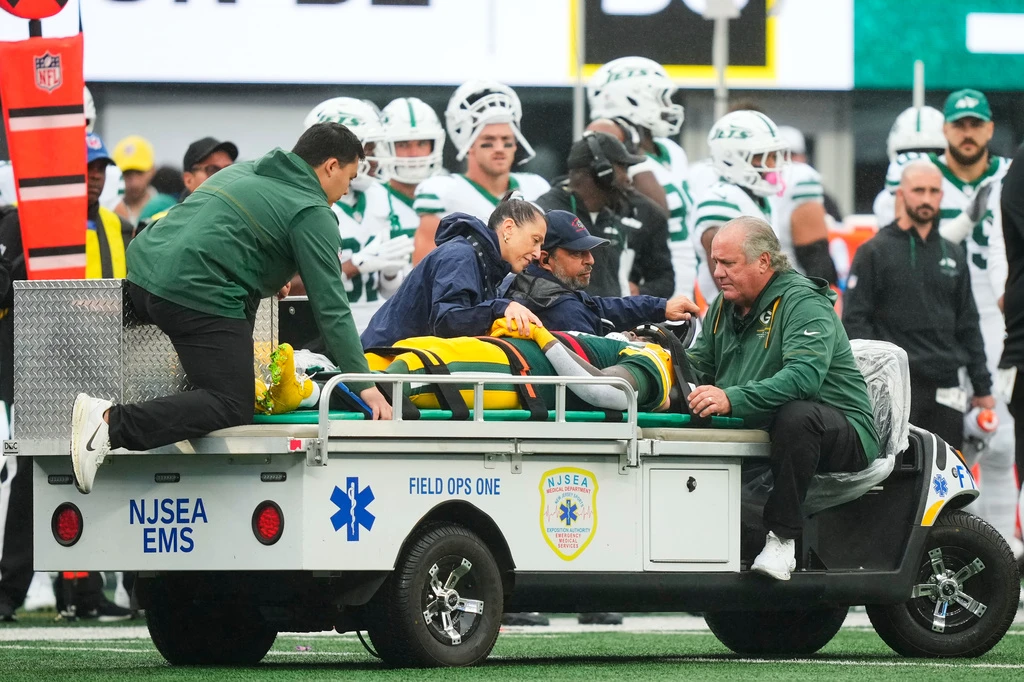
Jayden Reed, who had established himself as Green Bay’s most reliable pass catcher over his first two seasons, suddenly found himself motionless on the turf as medical personnel rushed onto the field.
The scene that unfolded was one that sends chills through any football stadium, with trainers carefully placing the receiver on a backboard and securing his helmet as a precautionary measure.
What made the situation particularly alarming was the immediate response from the medical team and the decision-making that followed. While Reed maintained movement in his extremities, which provided some initial relief to those watching, the severity of the situation became apparent when team officials determined he would need to remain in New Jersey overnight rather than travel back to Green Bay with his teammates.
This deviation from standard protocol signaled that the injury was more complex than initially hoped.
Head coach Matt LaFleur later reflected on the frightening nature of witnessing one of his players in such a vulnerable position. The magnitude of the moment wasn’t fully apparent to him at first, but standing on the field beside Reed as the situation developed brought the reality into sharp focus.
These are the moments that remind everyone involved in the sport that the physical toll extends beyond the routine bumps and bruises that come with playing professional football.
Why This Injury Is Different (And What the Packers Aren’t Saying)
Neck injuries in football carry a weight that differs from most other ailments that sideline players during a season.
The delicate nature of the cervical spine and the potential for long-term complications make these situations particularly sensitive for both medical staff and team management.
When LaFleur confirmed on Wednesday that Reed would undergo season-ending surgery, he was careful to address the elephant in the room regarding whether this could potentially end the young receiver’s career.
The coach’s response provided some measure of reassurance, stating that from his understanding, the injury would not be career-ending, though Reed would be absent for a significant period.
However, the specifics of the surgical procedure and the exact nature of the neck damage have remained somewhat vague in official team communications. This measured approach to information sharing is typical when dealing with injuries of this magnitude, as medical teams prefer to focus on the immediate treatment plan rather than speculating about long-term outcomes.
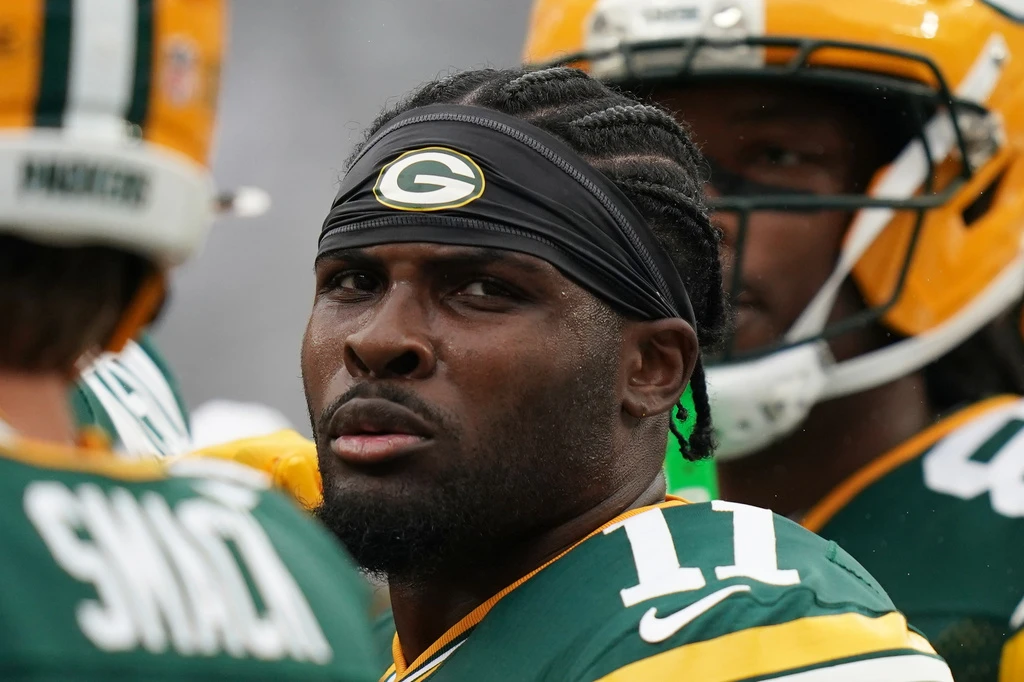
Jayden Reed, the Packers wide receiver, appeared to address his situation on social media earlier Wednesday, writing, “God will use the unusual to do the unexpected… 11 out.” The message came as Reed faced time away from the field because of a neck injury.
His reference to being “out” acknowledged the reality of the setback, while the rest of the post suggested he was drawing on his faith and maintaining a positive perspective during a difficult period.
Although brief, the message reflected an optimistic outlook as he begins his recovery and awaits clarity on his return to the Packers.
The $50 Million Question: Did Green Bay Make a Mistake?
Just months before this devastating injury, the Packers demonstrated their confidence in Reed’s abilities by securing him with a three-year contract extension worth $50.25 million in April.
The timing of this investment now raises questions about the organization’s risk assessment, particularly given Reed’s injury history from the previous season. This wasn’t the first time the young receiver had found himself on injured reserve early in a campaign.
During Week 2 of the 2024 season, Reed suffered a fractured collarbone that required surgical intervention, along with a Jones fracture in his left foot that had been lingering.
He underwent procedures to address both issues and managed to return in Week 14, contributing to the final four regular-season games and the playoff loss to the Chicago Bears. The pattern of early-season injuries occurring in consecutive years creates an uncomfortable narrative for a player who just received a significant financial commitment from his team.
Yet the decision to extend Reed’s contract wasn’t made in a vacuum. His production over his first two seasons justified the investment, as he emerged as the team’s leading receiver in both campaigns.
With 142 career catches for 1,881 yards and 18 total touchdowns, Reed had proven himself to be a dynamic playmaker capable of impacting games through both the passing and rushing attacks.
The front office clearly believed that his talent outweighed the injury concerns, though the current situation will test that conviction.
Who Steps Up Now? Inside the Packers’ Receiver Crisis
The timing of Reed’s injury couldn’t be worse for a receiving corps that underwent significant changes during the offseason.
Green Bay made the strategic decision to streamline their wide receiver room, focusing on a core trio of Christian Watson, Matthew Golden, and Reed. This approach led to the trade of Dontavion Wicks to the Philadelphia Eagles and the departure of Romeo Doubs to the New England Patriots in free agency.
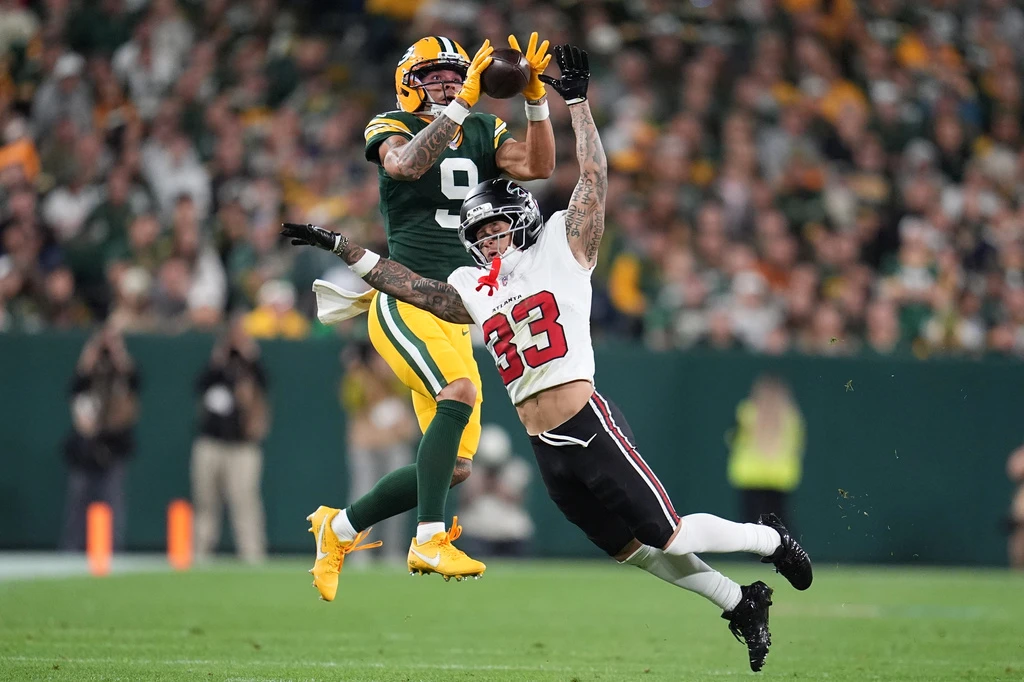
With Reed sidelined for the remainder of the season after managing just four catches for 24 yards before his injury, the burden now falls heavily on Watson and Golden to carry the passing attack. Watson has emerged as the current leader with 17 receptions for 284 yards and four touchdowns, showing the explosive potential that made him a valuable draft pick.
Golden has also contributed meaningfully with 15 catches for 253 yards and one touchdown, demonstrating that he can be a reliable target in the offense.
Beyond these two primary options, the depth chart reveals concerning gaps in experience and production. Skyy Moore sits as the next leading receiver with a modest five catches for 37 yards, while tight end Tucker Kraft has provided some relief with nine receptions for 106 yards.
The lack of proven depth at the position puts enormous pressure on the top two receivers to stay healthy and maintain their production levels throughout what remains of the season. Any additional injuries to this group could prove catastrophic for Green Bay’s offensive capabilities.
What Reed’s Cryptic Message Reveals About His Future
The message Reed shared on social media before the official announcement of his surgery carried layers of meaning for those trying to understand his mindset during this difficult period.
His reference to God using the unusual to accomplish the unexpected suggests a player who is searching for purpose in what appears to be a devastating setback. The number 11, his jersey number, followed by ‘out’ served as both an acknowledgment of his current status and a signature of sorts on this chapter of his career.
This philosophical approach to adversity may indicate that Reed is mentally preparing for a lengthy recovery process that will extend well beyond the current season.
Neck surgeries require careful rehabilitation and a patient approach to returning to contact sports, meaning his offseason will be dominated by medical appointments, physical therapy sessions, and gradual progressions back to football activities. The mental challenge of such a recovery can be just as demanding as the physical aspects.
Looking ahead to the 2026 season, Reed will be entering the first year of his new contract extension with the goal of proving that his talent and production can overcome the injury concerns that have now plagued him in consecutive seasons. The Packers organization will be watching closely as he progresses through his recovery, hoping that the investment they made in April will pay dividends for years to come.
For Reed, the path forward involves not just healing from this surgery, but demonstrating the resilience and durability that will define the rest of his professional career.