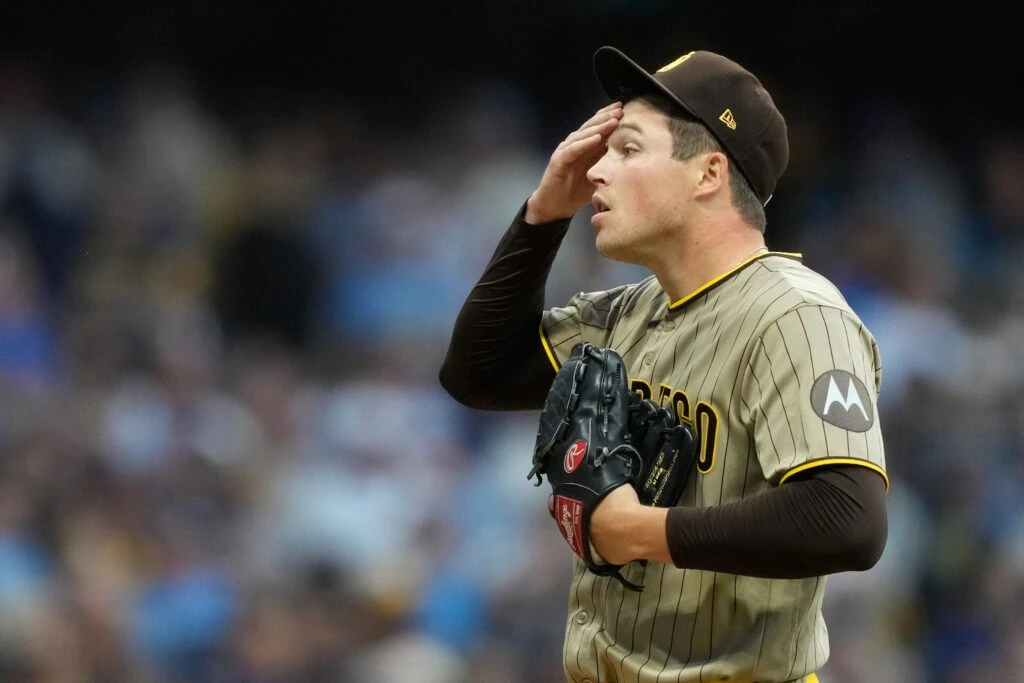
Few moments expose the human side of professional sports quite like the one Mason Miller faced on Tuesday.
Less than an hour before the San Diego Padres were due to play for their postseason lives, their All-Star closer learned that his wife, Jordan, had gone into labor with the couple’s first child.
Baseball suddenly became secondary.
Approximately 45 minutes before first pitch of Game 3 of the National League Division Series against the Milwaukee Brewers, Miller was placed on the postseason paternity list and stepped away from the team.
For the Padres, the timing could hardly have been more dramatic. They were already trailing 2-0 in the best-of-five series, meaning one more defeat would end their season.
Now they would have to survive without one of baseball’s most dominant relievers.
The Decision That Came 45 Minutes Before First Pitch
The Padres announced shortly before Game 3 that Miller had been placed on the postseason paternity list after Jordan went into labor Tuesday afternoon.
Left-handed reliever Wandy Peralta was added to San Diego’s active roster in his place. Under MLB’s postseason paternity rules, Miller can remain away from the club for between one and three days before returning and replacing Peralta on the roster.
It was the type of roster move that no manager can realistically plan for.
Miller had been the foundation of San Diego’s late-inning strategy throughout the season. The 28-year-old finished the regular season with a 1.67 ERA, 38 saves, a 0.90 WHIP and 129 strikeouts across 70 innings in 66 appearances.
He converted 38 of 41 save opportunities and regularly overwhelmed hitters with a fastball capable of reaching 104 mph.
In an elimination game, those are exactly the numbers a team wants available in the ninth inning.
Instead, San Diego had to improvise.
Why Miller’s Absence Could Not Have Come at a More Difficult Time
The Padres entered Game 3 already facing the possibility of their season ending.
Milwaukee had won the opening two games of the NLDS, including a crushing 4-3 walk-off victory in Game 2, leaving San Diego needing three consecutive wins to advance.
That challenge was difficult enough against a Brewers team that finished the regular season with an MLB-best 103-59 record. Milwaukee had established itself as one of baseball’s most complete teams and entered October as the National League’s top seed.
San Diego had arrived in the Division Series with significant momentum after sweeping the Chicago Cubs in the Wild Card round.
Two narrow losses in Milwaukee quickly erased much of it.
Then, less than an hour before the Padres’ first elimination game, they lost the pitcher they normally trusted to finish their biggest games.
But there was another layer to Miller’s absence.
His final appearance before leaving the team had produced one of the most painful moments of San Diego’s postseason.
The Game 2 Collapse That Made Miller’s Departure Even More Complicated
Miller had been asked to do something unusual in Game 2: record the final six outs.
For one inning, the plan worked perfectly.
He protected San Diego’s 3-2 advantage through the eighth and appeared to be on his way toward delivering one of the biggest saves of the Padres’ season.
Then the ninth inning unraveled.
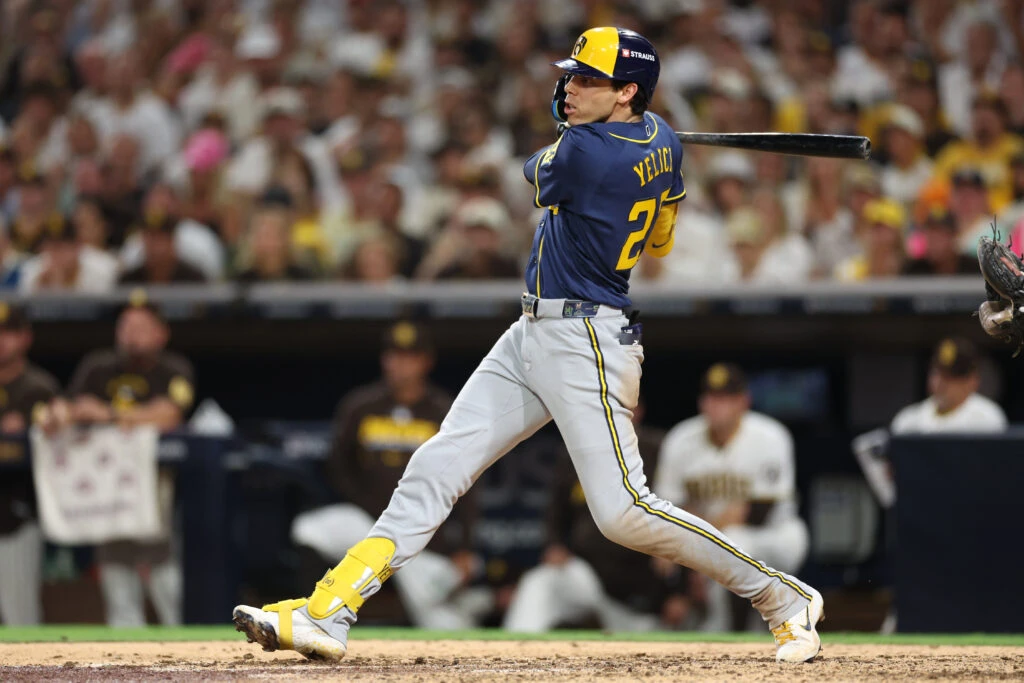
Miller walked Christian Yelich, Sal Frelick and Gary Sánchez, loading the bases and creating an opportunity for Jackson Chourio.
With two outs and two strikes, Miller was one pitch away from sending the series back to San Diego tied at one game apiece.
Instead, Chourio drove a 101 mph fastball into center field for a two-run walk-off single.
Brewers 4, Padres 3.
Miller had thrown a season-high 40 pitches, and San Diego suddenly trailed the series 2-0.
It created an unusual emotional backdrop for what happened next.
The Padres’ closer went from experiencing one of the most difficult nights of his professional career to preparing for one of the most important moments of his personal life.
Less than two days later, baseball was no longer his immediate priority.
Who Could Possibly Replace One of Baseball’s Best Closers?
Wandy Peralta officially took Miller’s roster spot, but replacing him on the roster and replacing his role were two very different things.
There was no obvious substitute for a closer who had saved 38 games with a 1.67 ERA.
Manager Craig Stammen instead had to treat the elimination game as an all-hands-on-deck situation.
And ultimately, the most unlikely option became the answer.
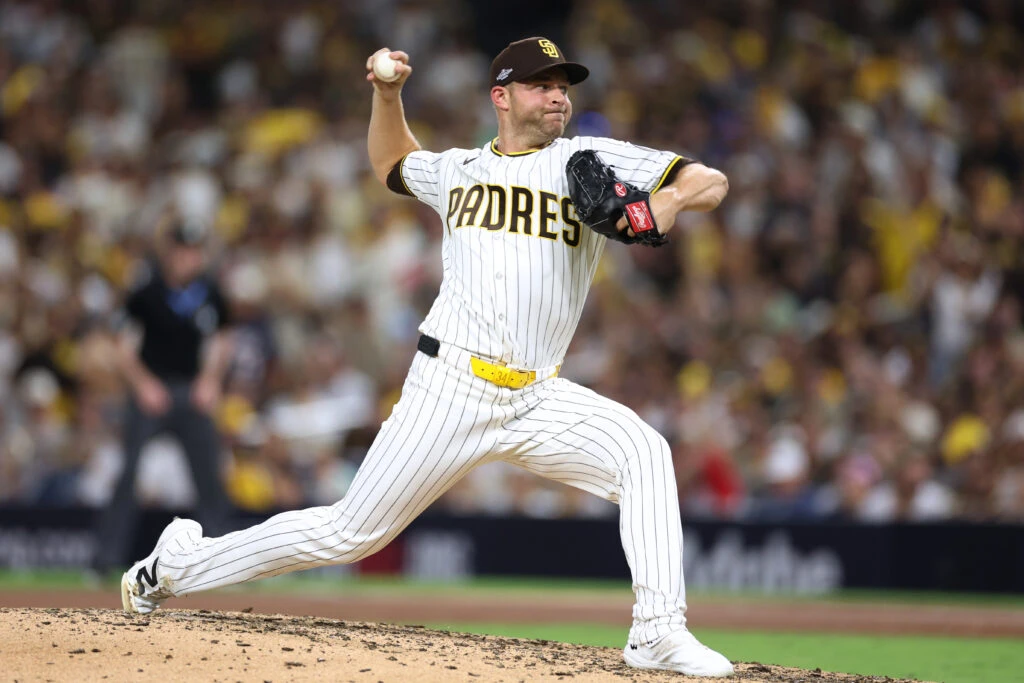
Michael King had started Game 2 just two days earlier, throwing five innings in Milwaukee. In Game 3, San Diego called on him again—this time from the bullpen.
King recorded the final six outs.
Pitching in relief for the first time all season, he protected a one-run advantage through the eighth and ninth innings and induced Christian Yelich into a game-ending double play.
The Padres survived 4-3.
Their season was still alive.
It was an extraordinary response to losing their closer only moments before the game began.
The Padres Survived Without Miller—But the Question Now Changes
Before Game 3, the question was simple:
Could San Diego survive without Mason Miller?
Now the question becomes whether Miller will be able to return while the Padres still have something to play for.
San Diego’s victory cut Milwaukee’s series lead to 2-1 and forced Game 4 at Petco Park. Under the postseason paternity rules, Miller can be away from the club for as many as three days. The Padres did not immediately announce when he might return.
That means San Diego may once again have to construct the final innings without its usual closer.
But Game 3 demonstrated that the Padres at least have alternatives.
King’s emergency appearance provided the most dramatic example, while the rest of the bullpen successfully navigated several dangerous Milwaukee rallies throughout the night.
The circumstances also made Miller the second Padres pitcher to deal with a birth during this very series. Walker Buehler had been on the paternity list for the opening games in Milwaukee before returning ahead of Game 3.
It was an unusual reminder that postseason schedules do not stop the rest of life from happening.
A Bigger Moment Than Baseball
There is an understandable tendency to frame everything that happens during October through the lens of winning and losing.
Miller’s absence undeniably made San Diego’s situation more difficult. He is one of the best relief pitchers in baseball, and the Padres were preparing for an elimination game without the player they normally trust most with a late lead.
But there was never really much of a choice to make.
Miller stepped away from baseball to be with his family for the birth of his first child.
His teammates then did their part.
They found a way to win without him.
For one night, San Diego’s season survived, Miller was exactly where he needed to be, and a situation that began with uncertainty ended with something far more important than a box score.
Now the Padres move on to Game 4.
And if Miller is able to return, he could find himself walking back into another elimination game—this time as both a new father and the closer tasked with keeping San Diego’s postseason alive.