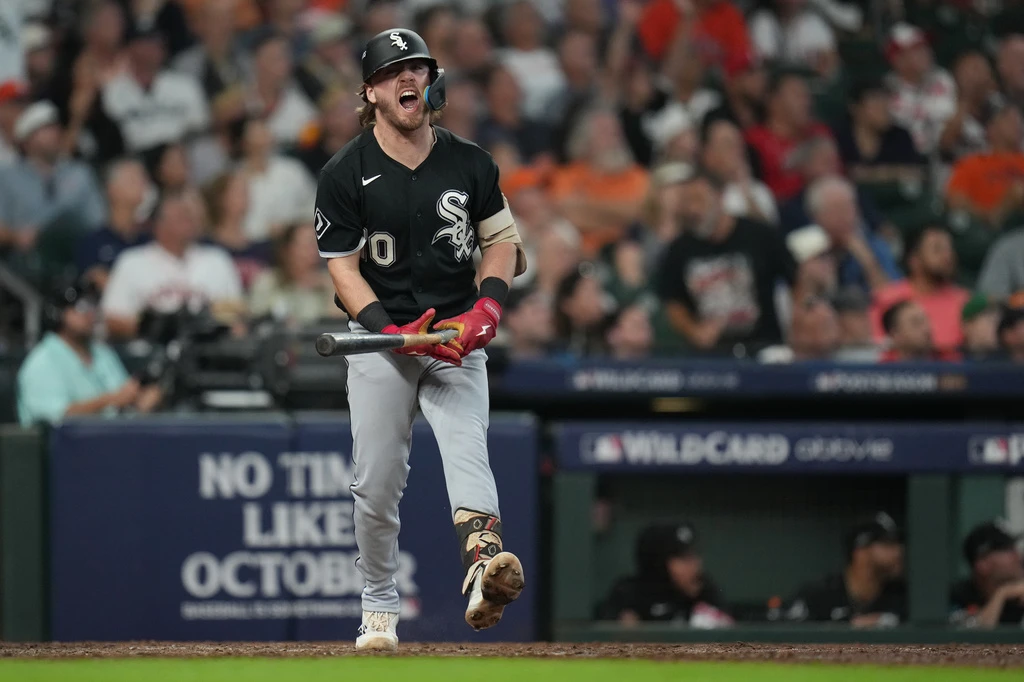
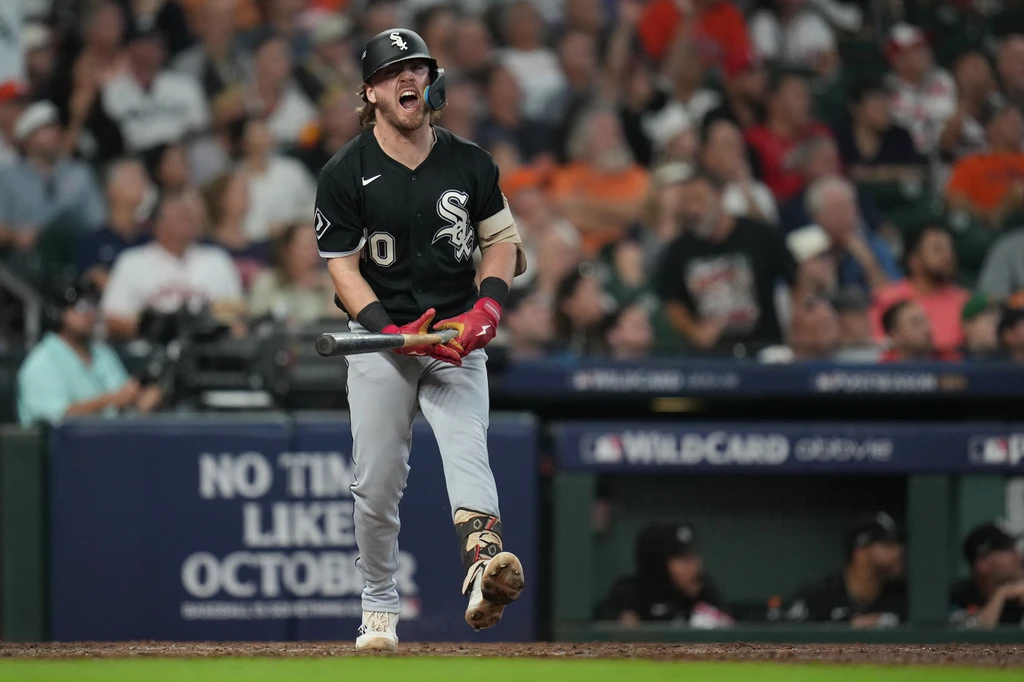
For 21 years, the Chicago White Sox had been waiting for another October moment like this.
On Wednesday night at Daikin Park, that wait finally ended.
Chicago defeated the Houston Astros 7-3 to complete a two-game sweep of the American League Wild Card Series, giving the franchise its first postseason series victory since the 2005 World Series.
The symmetry was difficult to ignore.
The last time the White Sox clinched a playoff series, on October 26, 2005, they did it in the same Houston ballpark — then known as Minute Maid Park — against the same opponent. That victory completed a World Series sweep and delivered Chicago its first championship in 88 years.
More than two decades later, the White Sox celebrated in Houston again.
Only this time, the team doing the celebrating looked almost nothing like the franchise that had spent so many years trying to find its way back.
The 21-Year Wait Ended Where It Started
Chicago’s return to postseason success carried significance well beyond one Wild Card Series.
The White Sox had reached the playoffs since 2005, most recently in 2021, but they had been unable to advance. Year after year passed without another postseason series victory.
Then came one of the darkest stretches in franchise history.
Chicago lost 121 games in 2024, setting a modern-era MLB record for defeats in a season. Another 100-loss campaign followed in 2025. What had once been a struggling organization suddenly looked like one facing a rebuilding process that could take years.
Instead, the turnaround arrived much faster than almost anyone expected.
The White Sox went 84-78 in 2026, finishing just one game behind Cleveland in the AL Central and earning a Wild Card berth. Their reward was a trip to Houston to face an Astros franchise with considerably more recent postseason experience.
Chicago responded by winning both games.
For owner Jerry Reinsdorf, now 90, the celebration provided an extraordinary connection between generations. He was there when the White Sox celebrated in Houston in 2005, and he was there again as another Chicago roster finally ended the drought.
Many of the players responsible for the latest victory were barely old enough to remember the first one.
Nine players on the current roster were kindergarten age or younger when the White Sox last won a playoff series.
Now they have their own October memory.
A Young White Sox Team With Nothing to Fear
The age of Chicago’s roster could easily have been viewed as a disadvantage entering the postseason.
Houston had players accustomed to October pressure. Jose Altuve entered the series as one of the most accomplished postseason hitters in baseball history, while Yordan Álvarez had just completed a dominant regular season with 42 home runs, a .316 batting average and 341 total bases.
Chicago’s roster, by comparison, featured numerous players experiencing postseason baseball for the first time.
They rarely looked overwhelmed.
Instead, the White Sox played with the same aggression that had helped transform them during the regular season.
Manager Will Venable’s philosophy throughout the year had been straightforward: find a way.
Sometimes that meant power. Sometimes it meant aggressive baserunning. Sometimes it meant using pitchers in unfamiliar situations or asking role players to deliver in critical moments.
Against Houston, all of those elements came together.
Chicago jumped ahead 4-0 in the first inning of Game 2, taking advantage of defensive mistakes while repeatedly putting the ball in play.
Houston responded exactly as a veteran postseason team should.
Jeremy Peña homered in the first inning. Cam Smith added another in the second. Then Altuve went deep in the fourth, cutting Chicago’s advantage to 4-3 and moving within one home run of Manny Ramirez’s all-time postseason record.
A game that had looked comfortable was suddenly one swing away from being tied.
That was when the White Sox faced their biggest test.
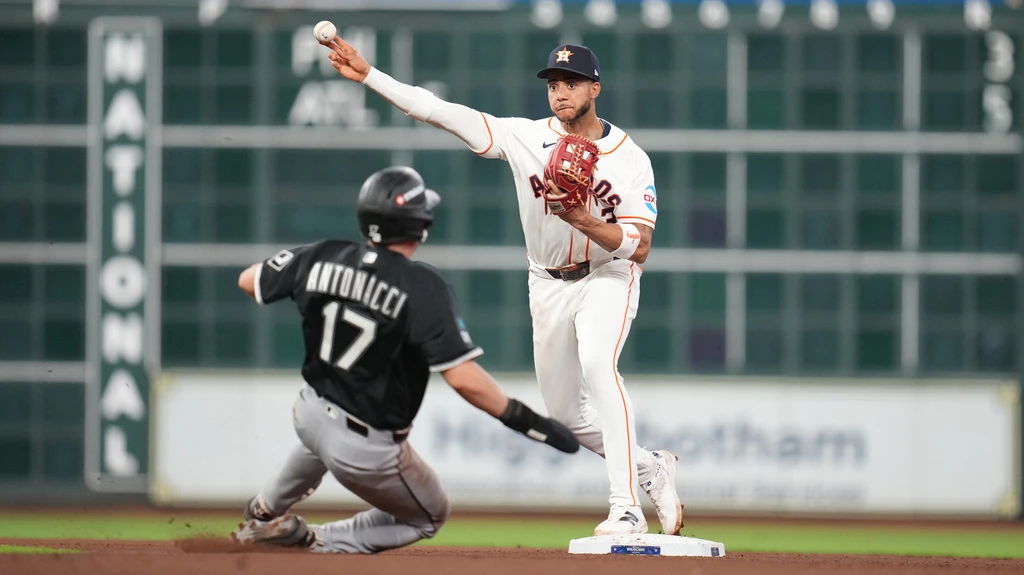
The Fifth Inning Escape That Preserved the Season
Houston’s best opportunity came in the bottom of the fifth.
With runners on first and second and one out, Álvarez stepped to the plate representing the potential go-ahead run.
Venable turned to left-hander Anthony Kay.
It was an unconventional decision. Kay had worked primarily as a starter during the season and was making his first true relief appearance of the year. Now he was being asked to face one of the most dangerous hitters in baseball in the biggest game Chicago had played in years.
The situation immediately became uncomfortable.
Kay fell behind Álvarez 3-0 before fighting his way back into the at-bat. Álvarez eventually lifted a fly ball to left field for the second out.
The danger wasn’t over.
Kay then walked Isaac Paredes, loading the bases for Altuve — the same hitter who had homered an inning earlier.
One hit could have changed the entire series.
Kay got Altuve to fly out to right.
Three runners were stranded.
Houston had pushed Chicago to the edge and came away with nothing.
It was the kind of inning that postseason games often turn on. The Astros had momentum, their most dangerous hitters at the plate and a chance to erase what remained of Chicago’s early advantage.
The White Sox escaped.
One inning later, they delivered the blow that effectively ended the series.
The Bunt Look That Turned Into a Three-Run Homer
The sixth inning captured exactly why this White Sox offense became so difficult to predict.
Andrew Benintendi opened the inning with a walk, and Luisangel Acuña entered as a pinch-runner before stealing second base.
Tristan Peters then drew another walk.
That brought Chase Meidroth to the plate with two runners aboard and nobody out.
Meidroth showed bunt.
The possibility of small ball forced Houston to react, and Chicago used the moment to become even more aggressive on the bases. Acuña and Peters executed a double steal, putting both runners into scoring position.
The White Sox suddenly had options.
A sacrifice bunt was no longer necessary.
Meidroth could swing.
Bryan Abreu eventually left a slider in the part of the strike zone Meidroth was looking for, and the 25-year-old second baseman drove it over the left-field wall.
Three-run homer.
7-3 Chicago.
In a matter of minutes, the White Sox had gone from threatening to manufacture a single insurance run to opening a four-run lead.
That sequence represented the identity Venable had spent the entire season building.
Chicago didn’t have to choose between aggressive baserunning and power. It could use one to create opportunities for the other.
And when Houston adjusted to the possibility of a bunt, the White Sox were ready to attack in a completely different way.
For Meidroth, it was the biggest swing of his young career.
After producing 156 hits across 154 regular-season games, he delivered the one that will be remembered far longer than the rest.
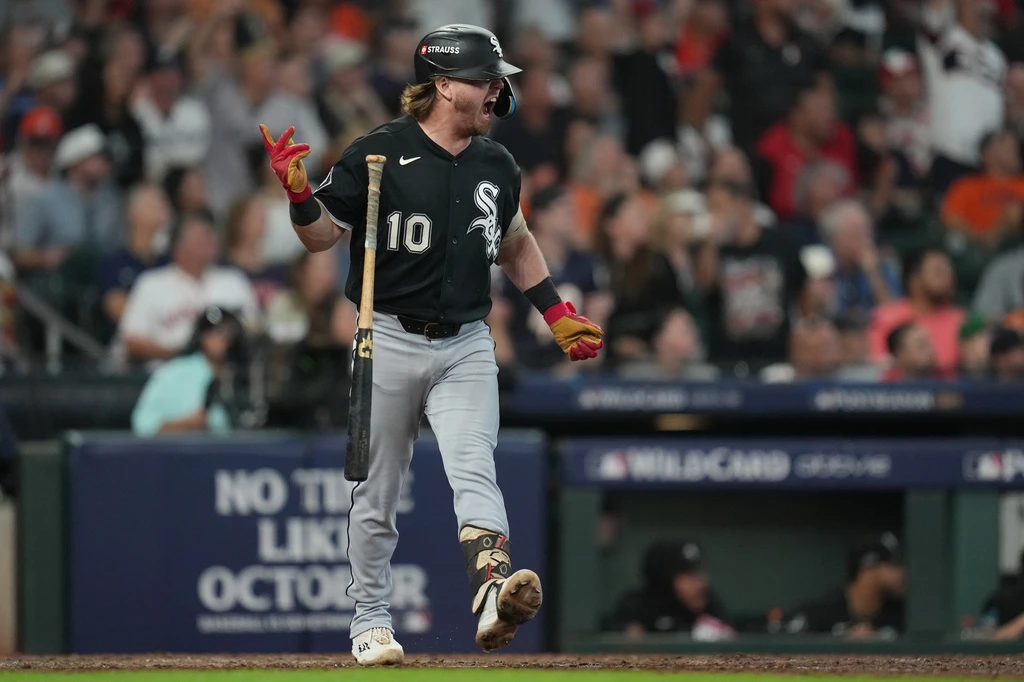
From 121 Losses to October History in Two Years
The most remarkable part of Chicago’s postseason breakthrough may not be the opponent, the ballpark or even the 21-year wait.
It is how quickly the White Sox got here.
In 2024, they finished 41-121.
In 2025, they lost more than 100 games again.
By the end of 2026, they had become one of the American League’s most productive offensive teams, scoring 776 runs during the regular season and finishing 84-78.
That transformation required more than simply replacing players.
The style changed.
Chicago became aggressive on the bases. The lineup developed legitimate power. Young players were trusted in meaningful situations. Pitchers were asked to work outside traditional roles when matchups demanded it.
Perhaps most importantly, the team learned how to win games in different ways.
That was evident throughout the Wild Card Series.
Chicago could capitalize on defensive mistakes. It could manufacture pressure with stolen bases. It could hit the ball out of the park. And when a dangerous Houston lineup threatened to take control, Venable was willing to make an unconventional pitching move rather than wait for the game to dictate his decision.
The White Sox weren’t simply surviving October.
They were playing the same style of baseball that had carried them there.
Why Cleveland Has Reason to Pay Attention
Chicago’s reward is an American League Division Series matchup with the Cleveland Guardians, the team that finished one game ahead of the White Sox to win the AL Central.
The familiarity between the teams adds another layer to the matchup.
Chicago won the regular-season series 7-6, but Cleveland earned the division title and home-field advantage.
A best-of-five series will present a different challenge from the Wild Card round. Cleveland possesses a strong pitching staff and one of baseball’s top late-inning arms in Cade Smith, while the longer format will force Chicago to manage its pitching staff differently.
But Houston provided a revealing preview of what Cleveland will have to deal with.
The White Sox are willing to take risks.
They will steal bases. They will show bunt. They will attack mistakes. Venable will use pitchers in unexpected situations if he believes the matchup favors Chicago.
Most importantly, this is a team that does not appear particularly interested in what it was supposed to be.
Two years ago, the White Sox lost 121 games.
One year ago, they were still buried in another 100-loss season.
Now they are four teams away from a World Series championship.
Whatever happens next, one piece of history has already been rewritten.
For the first time since that championship night in Houston in 2005, the Chicago White Sox have won a playoff series.
And somehow, 21 years later, they did it in Houston all over again.