Professional football games rarely come down to the final tick of the clock, but when they do, the moments become etched in memory forever.
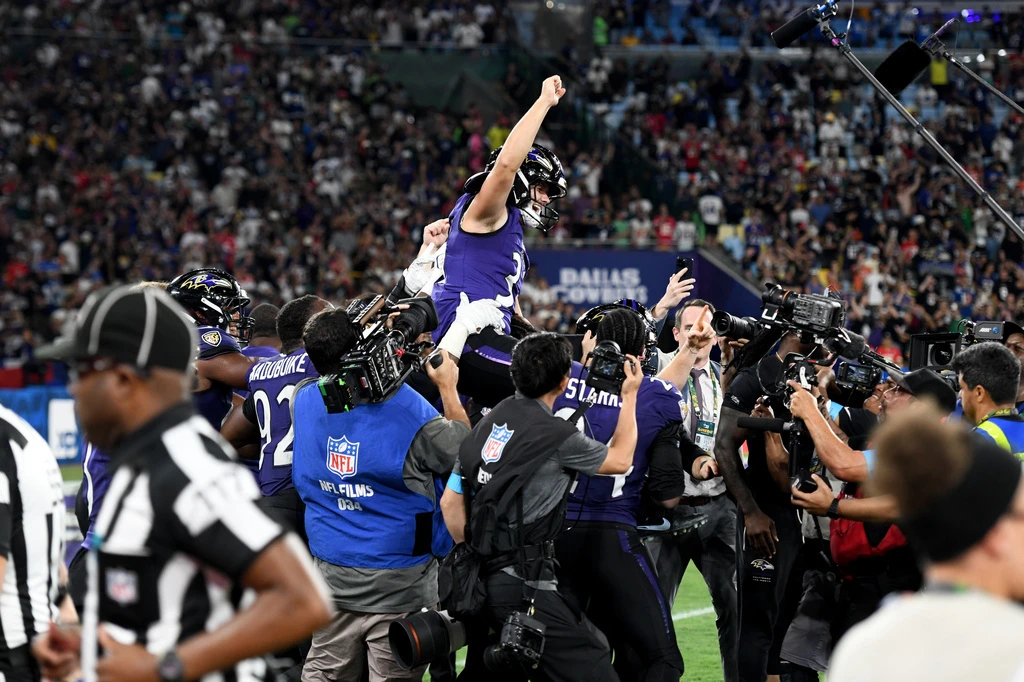
The Baltimore Ravens and Dallas Cowboys delivered exactly that kind of unforgettable finish in Rio de Janeiro, where a 56-yard field goal as time expired sealed a 34-31 victory for Baltimore.
The game featured a remarkable sequence of events that began with just seven seconds remaining, setting the stage for one of the most improbable conclusions to a contest in recent memory.
What unfolded in those final moments would provide redemption for one player while raising questions about another team’s strategic choices.
The Decision That Changed Everything: Why Dallas Chose a Touchback With 7 Seconds Left
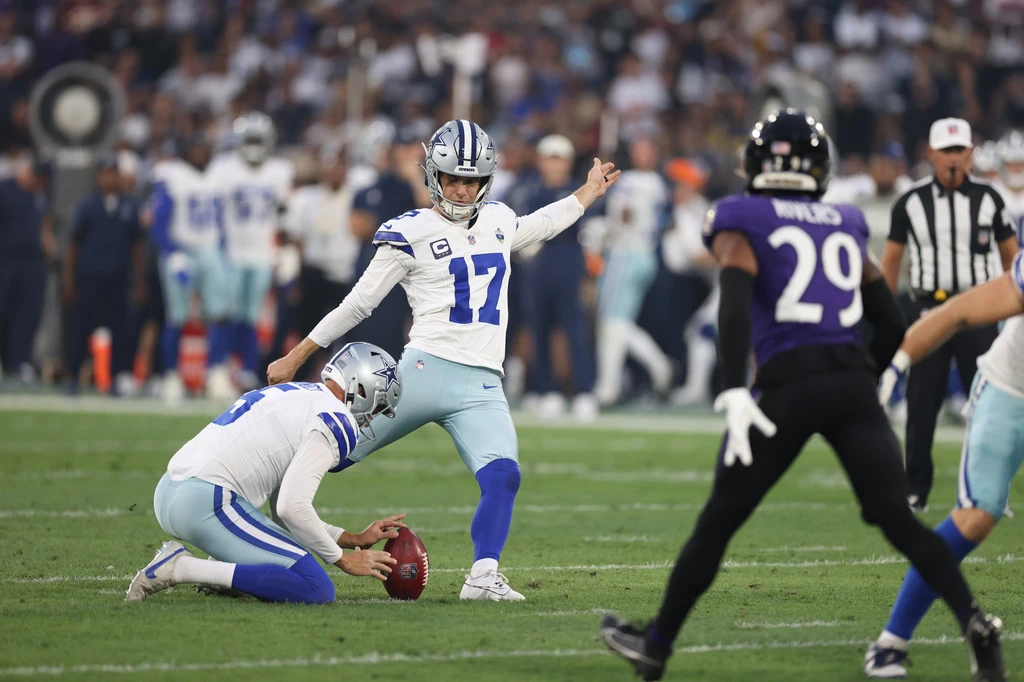
When Brandon Aubrey connected on a 23-yard field goal to tie the game at 31, the Cowboys faced a critical decision on the ensuing kickoff with seven seconds showing on the clock.
Dallas elected to kick the ball into the end zone for a touchback, a choice that would ultimately prove costly for the franchise.
Cowboys head coach Brian Schottenheimer later explained the reasoning behind this strategic call, noting that Aubrey had already sent two kickoffs out of bounds earlier in the contest.
The concern was preventing Baltimore from gaining favorable field position, which had been a recurring issue throughout the game. By forcing a touchback, Dallas hoped to pin the Ravens deep in their own territory with minimal time remaining.
The decision reflected a calculated risk based on the assumption that Baltimore would struggle to advance the ball significantly from their own 25-yard line in such a compressed timeframe.
However, this approach failed to account for the explosive potential of the Ravens offense and the preparation they had undertaken for precisely this scenario. The Cowboys defense, which had allowed franchise record-worst numbers for points and touchdowns during the 2025 season, would be tested one final time.
From Playoff Heartbreak to Redemption: The Kicker Nobody Expected to Be the Hero
Tyler Loop stepped onto the field in Rio de Janeiro carrying the weight of a painful memory from the previous season.
His missed 44-yard field goal in the 2025 season finale against the Pittsburgh Steelers had ended Baltimore’s playoff hopes and handed the AFC North division title to their rivals. That moment had haunted the kicker throughout the offseason.
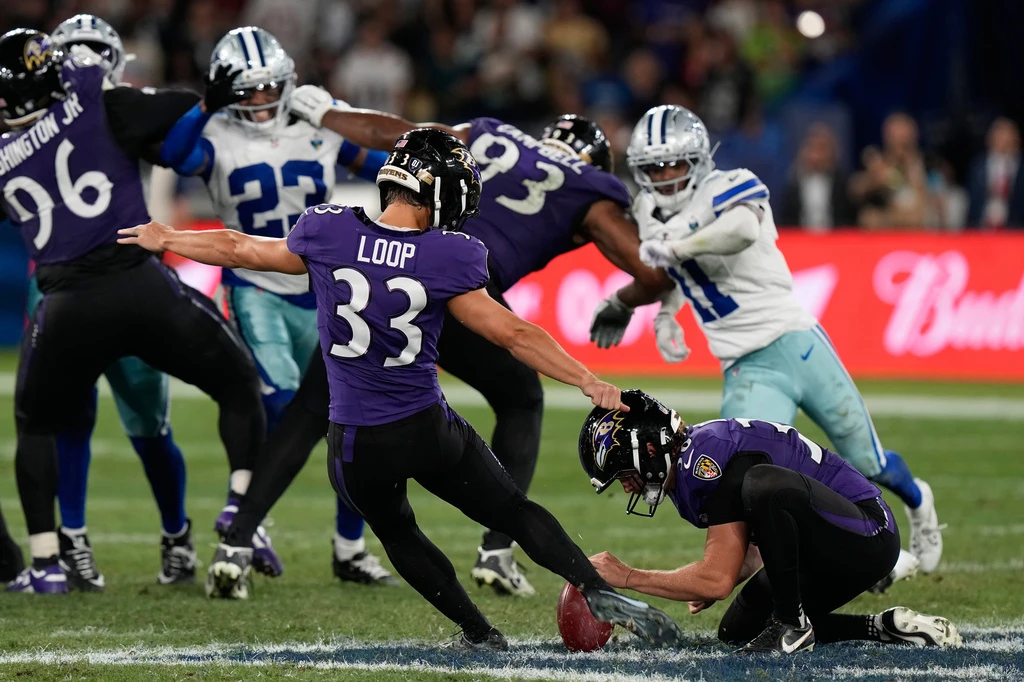
Now, with one second remaining on the clock and the ball spotted 56 yards from the goalposts, Loop had an opportunity to rewrite his narrative. The distance was considerably longer than his previous crucial attempt, and the pressure was immense.
The Ravens had just completed a lightning-quick drive that covered significant yardage in mere seconds, and the entire outcome rested on his right foot.
You practice those moments, and you wait for them to come up. It came up today, and we were ready. “Jesse Minter” never wavered despite the previous season’s disappointment. As the ball sailed through the uprights as time expired, Loop’s redemption was complete.
The 56-yard field goal not only secured a 34-31 victory for Baltimore but also provided the kicker with a chance to move forward from the mistake that had defined his previous campaign.
For a player who had experienced the lowest point of his professional career just months earlier, this moment represented the ultimate vindication.
What the Ravens Practiced All Summer That the Cowboys Never Saw Coming
Baltimore’s preparation for the 2026 season included extensive work on end-of-game scenarios, particularly situations involving minimal time and maximum pressure.
Ravens head coach Jesse Minter, who had been hired as the franchise’s fourth head coach in January 2026 after serving as the Los Angeles Chargers defensive coordinator, emphasized these critical moments throughout training camp.
The specific scenario that unfolded in Rio de Janeiro was one the team had rehearsed repeatedly since the summer. With quarterback Lamar Jackson at the helm, the Ravens worked on quick-strike opportunities that could materialize from various field positions. The emphasis was on maximizing efficiency while managing the clock with precision, skills that would prove essential in the final seconds against Dallas.
Jackson’s ability to execute under extreme pressure was a product of both his natural talent and the countless repetitions the team had invested in these situations. The 27-yard completion to Zay Flowers that set up Loop’s game-winning kick was not a matter of luck but rather the result of meticulous preparation.
Baltimore’s coaching staff understood that games could be decided in these fleeting moments, and their commitment to readiness paid dividends when the opportunity finally presented itself on the international stage.
The Most Improbable Final Drive Since 1978—And the One Play That Made It Possible
Statistical analysis revealed that Baltimore’s game-winning drive represented the latest start to a successful scoring sequence off a kickoff since 1978.
The seven-second window provided an extraordinarily narrow margin for error, yet the Ravens executed with remarkable composure. Jackson’s connection with Flowers covered 27 yards and moved the chains into field goal range, a completion that required both precision and timing.
The quarterback’s decision to immediately call timeout with one second remaining demonstrated his awareness of the situation and his trust in Loop to deliver from long distance.
That single play, the pass to Flowers, transformed what appeared to be a tie game heading to overtime into a realistic opportunity for an outright victory. The throw itself required Jackson to identify the coverage quickly and release the ball with confidence, knowing that any hesitation would likely result in time expiring.
For the Cowboys defense, the breakdown on that crucial play compounded a season filled with defensive struggles. Dallas had already established franchise record-worsts for points and touchdowns allowed during the 2025 campaign, and this final sequence added another painful chapter to their defensive woes.
The inability to prevent a significant gain in such a compressed timeframe highlighted the challenges that had plagued the team throughout the year under first-year head coach Brian Schottenheimer.
Two Games, Two Endings: How Baltimore Erased Last Season’s Nightmare in Rio
The victory in Rio de Janeiro carried additional significance for Baltimore when viewed in the context of their recent history with dramatic finishes.
The Ravens had experienced heartbreak in their 2025 season opener, surrendering a 40-25 lead to the Buffalo Bills in an epic 41-40 defeat. That loss featured a fourth-quarter collapse that saw Baltimore’s defense allow 22 points and a crucial fumble by running back Derrick Henry with just over three minutes remaining.
The Bills comeback had been one of the most improbable in recent memory, with Buffalo’s win probability dipping to just 1.1 percent at one point in the fourth quarter.
Despite Jackson’s strong performance and Henry’s 169 rushing yards, the Ravens could not hold their advantage. The defeat set a difficult tone for a season that would ultimately end with an 8-9 record and a missed playoff opportunity due to Loop’s field goal miss against Pittsburgh.
By contrast, the triumph over Dallas in Rio showcased Baltimore’s ability to finish strong when given a final opportunity. The Ravens demonstrated resilience and execution in the clutch, qualities that had eluded them in previous critical moments.
For a franchise that plays its home games at M&T Bank Stadium and competes in the AFC North division, this victory represented more than just a win in the standings
It symbolized growth, redemption, and the capacity to learn from past failures while seizing the moment when it matters most.