
In the heart of the Windy City, a young phenom has emerged, captivating fans with his electrifying play and fiery persona.
At Wrigley Field, a new kind of star is taking shape — one who plays with the controlled fury of a player who genuinely cannot stand losing, and whose talent is starting to match the intensity.


The Hulk of Wrigley: Pete Crow-Armstrong’s Fiery Passion
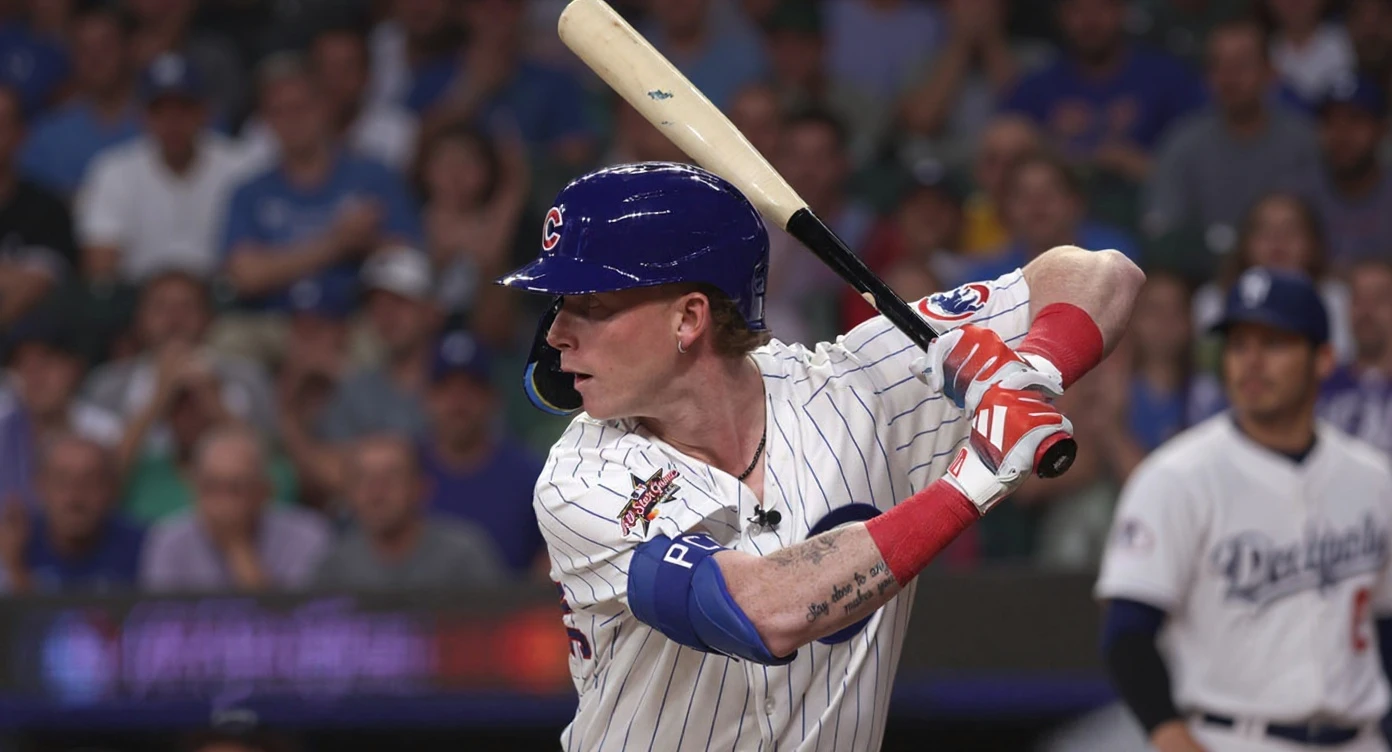
Pete Crow-Armstrong, the Chicago Cubs’ 23-year-old center fielder, has developed into one of the most complete young outfielders in baseball — a five-tool talent whose harshest critic, by a wide margin, is himself.
In his second full major league season in 2025, Crow-Armstrong announced himself as a legitimate star, becoming the second-youngest Cub ever to start an All-Star Game and cementing his place at the center of Chicago’s rebuild.
The numbers backed up the hype. Crow-Armstrong posted a historic 30-30 season — 31 home runs and 30 stolen bases — joining Sammy Sosa as the only Cubs players ever to reach that threshold in a single season. On defense, he set a record with 19 five-star catches according to Statcast tracking, establishing himself as arguably the best defensive center fielder in the National League.
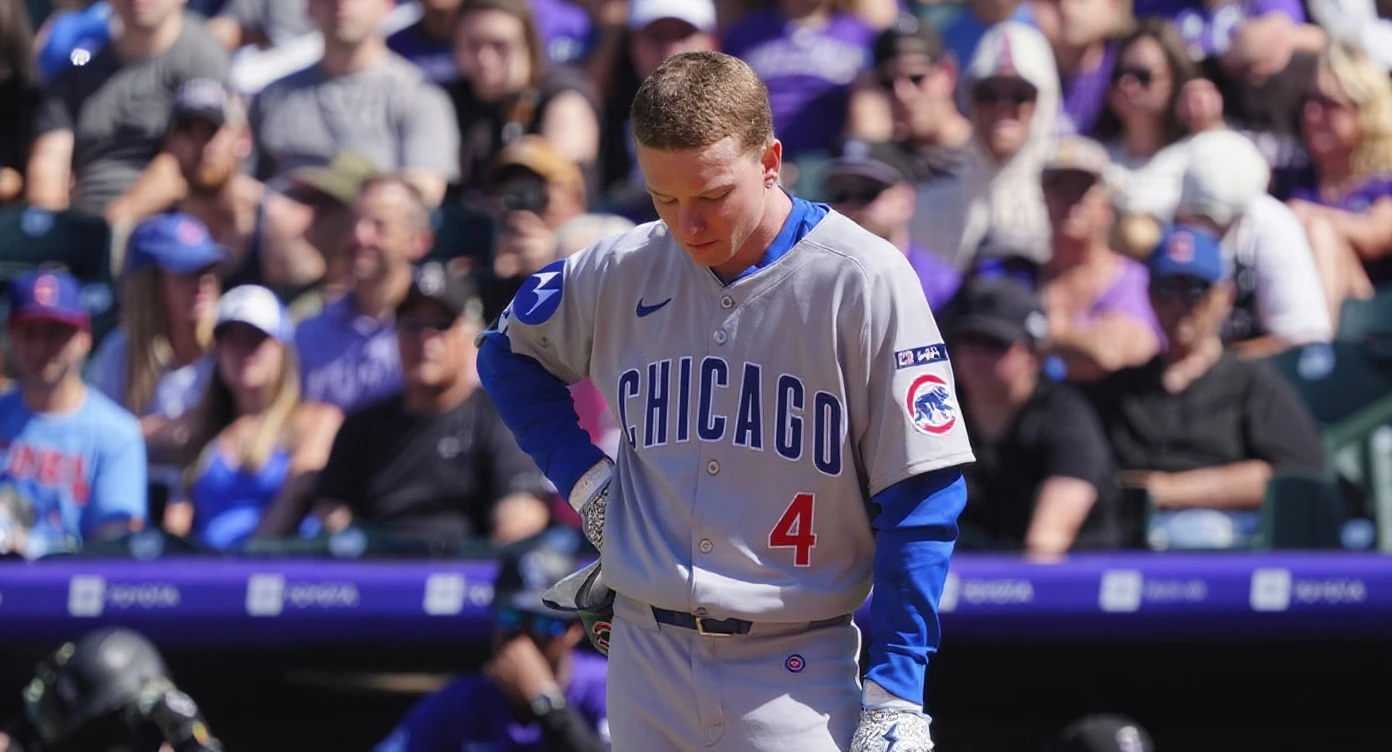
The production wasn’t evenly distributed, though, and Crow-Armstrong has been candid about why. He slugged 25 of his 31 home runs in the first half before managing just six after the break, a collapse he attributes directly to emotional exhaustion. “I was on the cusp of it for so long, but it never happened. And the emotions and anger tired me out,” he said. It’s a rare admission from a young star — acknowledging that the fire driving his success was also burning through his reserves.
From Hollywood to the Ivy League: Crow-Armstrong’s Unconventional Path
The emotional outbursts are well-documented. Helmet throws, bat tosses, and visible frustration after strikeouts or defensive miscues went viral on TikTok, drawing mockery from some corners of the internet. But those who know Crow-Armstrong best frame it differently — not as immaturity, but as the visible output of a competitor who holds himself to an almost unreasonable standard and refuses to accept anything less from himself.
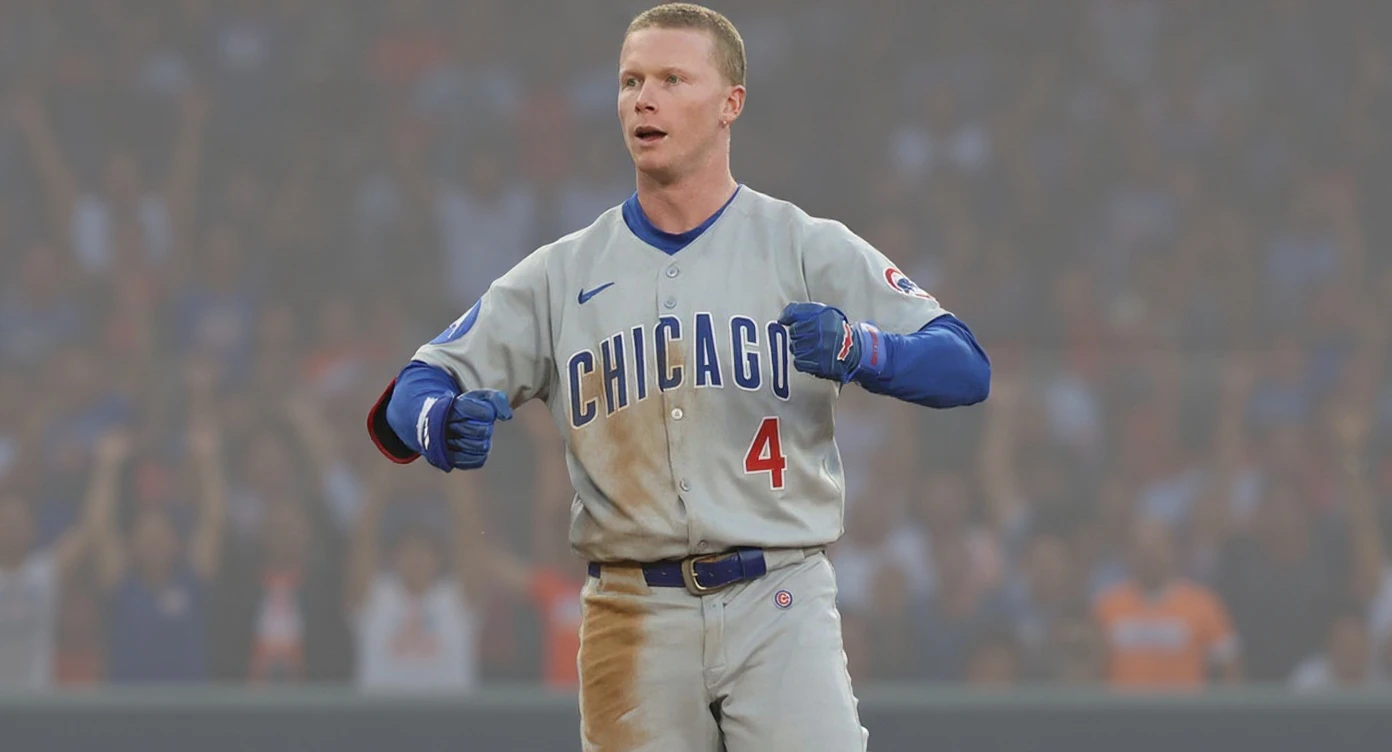
Off the field, Crow-Armstrong is a different kind of personality altogether. He arrived at 2025 spring training with bleached blond hair decorated with blue stars, and his pregame wardrobe — high-end, fashion-forward, and deliberately eye-catching — has made him one of the more distinctive presences in any clubhouse in baseball.
His background explains some of that. Crow-Armstrong grew up in Sherman Oaks, California, the son of two actors, in a household where the soundtrack ranged from Bob Dylan to the Beastie Boys. It’s an upbringing that gave him a broader cultural frame of reference than most players his age.
Chasing the Dream: Crow-Armstrong’s Meteoric Rise Through the Minors
Baseball, though, was always the priority. Crow-Armstrong starred at Harvard-Westlake High School — one of the most competitive prep programs in Southern California — before the New York Mets selected him 19th overall in the 2020 MLB Draft, as MiLB.com documents. The Cubs acquired him in a 2021 trade for Javier Báez and Trevor Williams, as MiLB.com reported, and he quickly became one of the most coveted prospects in their system, rising through the minor leagues on the strength of his defense and improving bat.
In the minors, Crow-Armstrong built a reputation as a relentless worker whose defensive instincts were already big-league caliber. His routes in center field, his first-step quickness, and his arm strength drew consistent praise from scouts and coaches throughout his development.
He made his MLB debut in 2023 but struggled to find consistent footing before breaking out in 2024. A telling moment came in August 2024 during a Triple-A appearance — after being hit by a pitch, he responded by homering on the next at-bat, a sequence that previewed exactly the kind of edge-fueled performance that would define his 2025 campaign.
Embracing the Friendly Confines: Crow-Armstrong’s Love for Chicago
Cubs coaches have made emotional management a deliberate part of Crow-Armstrong’s development plan. Breathing exercises and structured self-regulation techniques are part of the program, and the organization has leaned on veteran presence to help model a more sustainable approach. Jason Heyward, who navigated his own well-publicized struggles with performance pressure early in his career, has been cited as a resource for the young outfielder.
Away from the ballpark, Crow-Armstrong has invested in Chicago as a city, not just a job. He has attended Bulls and Blackhawks games, engaged in community events, and by most accounts embraced the culture of a sports town that rewards players who show up as genuine participants rather than seasonal residents.
Balancing Intensity: Helping the ‘Hulk’ Find His Zen
He has made clear he wants to be in Chicago long-term. The Cubs control his rights through 2030, and Crow-Armstrong has spoken openly about wanting an extension — though he’s been careful about framing. His comment that “league minimum ain’t too fucking bad” signaled he’s not in a rush to force the issue, while his stated goal of a “fair” deal that doesn’t undercut the market for other young players reflects an awareness of the broader labor dynamics at play. His ultimate motivation, he has said, is straightforward: win a World Series at Wrigley Field. He was 14 years old when he watched the Cubs do it in 2016, and that memory has never left him.
The “Hulk” nickname, coined by Cubs coaches, captures the central tension in Crow-Armstrong’s game precisely. On the field, he operates at an emotional intensity that can tip into volatility. Off it, he is thoughtful, self-aware, and analytically sharp about his own performance. The gap between those two versions of the same person is the thing the Cubs are most focused on closing.
That intensity is both his greatest asset and his most significant liability. The second-half collapse in 2025 — just six home runs after the break — is a direct data point for what happens when competitive drive curdles into mental fatigue. Managing that cycle is the next developmental challenge for a player who already has the physical tools to be a perennial All-Star.

What Fans Are Saying About Pete Crow-Armstrong
The Cubs’ approach is structured and deliberate. Meditation, self-reflection exercises, and regular conversations with coaches and mental performance staff are all part of the framework. The goal isn’t to eliminate the fire — it’s to give Crow-Armstrong the tools to regulate it so that the emotion fuels performance rather than undermining it over the course of a 162-game season.
Crow-Armstrong’s profile — Hollywood upbringing, fashion-forward style, actor parents, and a playing style that looks like barely contained chaos — has made him a genuinely compelling figure for fans who don’t typically follow the Cubs closely.
The contrast between his privileged background and his on-field fury has generated plenty of commentary, some of it dismissive. But the more substantive concern raised by observers, including voices within the players’ association orbit, is whether his public framing around contract negotiations — specifically the “fair deal” language — could complicate collective bargaining solidarity at a moment when the union is working to maintain a unified front on young player compensation.
It’s a legitimate tension. Crow-Armstrong is clearly not motivated primarily by money, and his comments reflect that. But in a labor environment where service time manipulation and pre-arbitration salaries remain live issues, a star player signaling flexibility on his own deal carries weight beyond his individual situation — whether he intends it to or not.