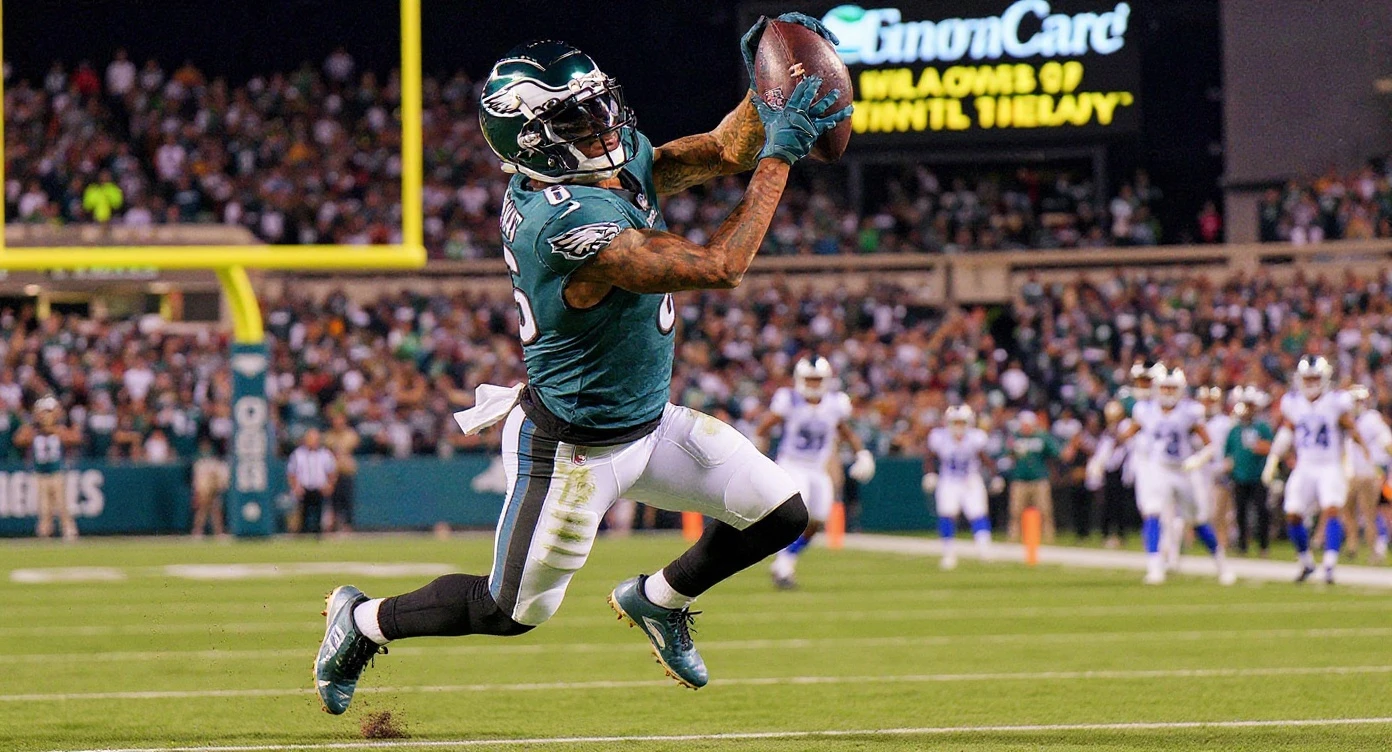

When the Philadelphia Eagles traveled to Lambeau Field for a late-season NFC showdown, the forecast called for cold temperatures, a raucous crowd, and a Packers offense looking to make a statement.
What unfolded instead was a 10-7 Eagles victory that stripped Green Bay down to its studs and exposed every weakness in Jordan Love’s supporting cast.
Philadelphia didn’t win this game with explosive plays or offensive fireworks — they won it by making every yard Green Bay earned feel like a battle, and by converting just enough on offense to keep the scoreboard in their favor.
- Final score: Philadelphia Eagles 10, Green Bay Packers 7, a final confirmed by NFL.com — a defensive masterclass at one of the NFL’s most storied venues
- Eagles defense held Green Bay to 7 points and repeatedly stifled Jordan Love in critical situations
- Saquon Barkley carried the offensive load for Philadelphia, grinding out yards against a stout Packers front
- Playoff implications were significant — the win tightened Philadelphia’s grip on NFC seeding heading into the final weeks
- Green Bay’s offensive line struggled to create consistent push, leaving Love under pressure throughout the game
- The result reinforced the Eagles’ identity as a team built to win ugly in hostile environments
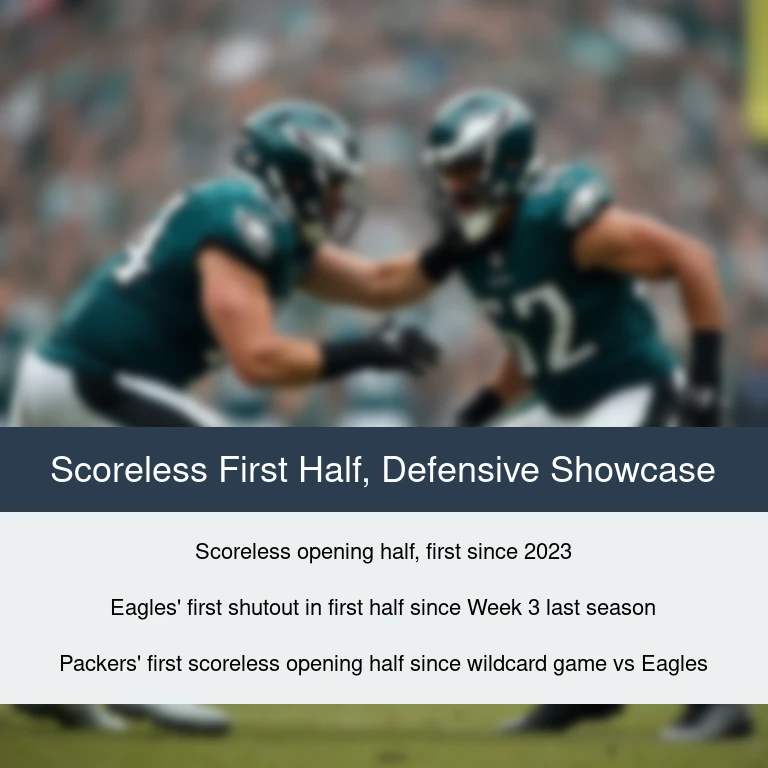
What Was at Stake at Lambeau Field
Late-season NFC games at Lambeau Field carry a weight that regular-season matchups elsewhere rarely match.
Green Bay’s home crowd is among the most intimidating in professional football, and the Packers have historically used that environment to protect their playoff positioning.
For the Eagles, arriving in Wisconsin with NFC seeding on the line meant this was not a game they could afford to treat as a measuring stick.
Philadelphia entered the contest having already established themselves as one of the conference’s most complete teams, but a road win at Lambeau — particularly in cold, late-season conditions — would carry a different kind of credibility.
Green Bay, meanwhile, needed the win to maintain their own postseason footing in a crowded NFC field.
Jordan Love had shown flashes of brilliance throughout the season, but the Packers’ offense had been inconsistent, and their ability to sustain drives against elite defenses remained an open question heading into this matchup.

Philadelphia’s Defense Dictates the Terms
Suffocating Green Bay’s Passing Game
The Eagles’ defensive unit arrived at Lambeau with a clear assignment: take away what Green Bay does best and force the Packers into uncomfortable situations.
Philadelphia’s pass rush generated consistent pressure on Jordan Love throughout the game, collapsing the pocket and forcing him into rushed throws that either fell incomplete or were contested at the catch point.
Love finished the game without the kind of rhythm that makes him dangerous — the Eagles’ secondary took away his first reads repeatedly, and the underneath routes that Green Bay relies on to move the chains were contested aggressively by Philadelphia’s linebackers.
The Packers managed just 7 points, a total that reflects not just one or two defensive stops but a sustained, disciplined performance across four quarters.
Stopping the Run Before It Started
Green Bay’s attempts to establish a ground game were met with equal resistance.
Philadelphia’s defensive line controlled the line of scrimmage, preventing the Packers from creating the kind of run-pass balance that would have opened up the field for Love.
When a team cannot run the ball effectively and faces consistent pressure in the pocket, the margin for error on third down shrinks dramatically — and the Eagles exploited that reality throughout the afternoon.
Green Bay’s offense never found a rhythm, and by the time the fourth quarter arrived, the Packers were in a position where they needed to manufacture points against a defense that had already proven it wasn’t going to give them anything easy.

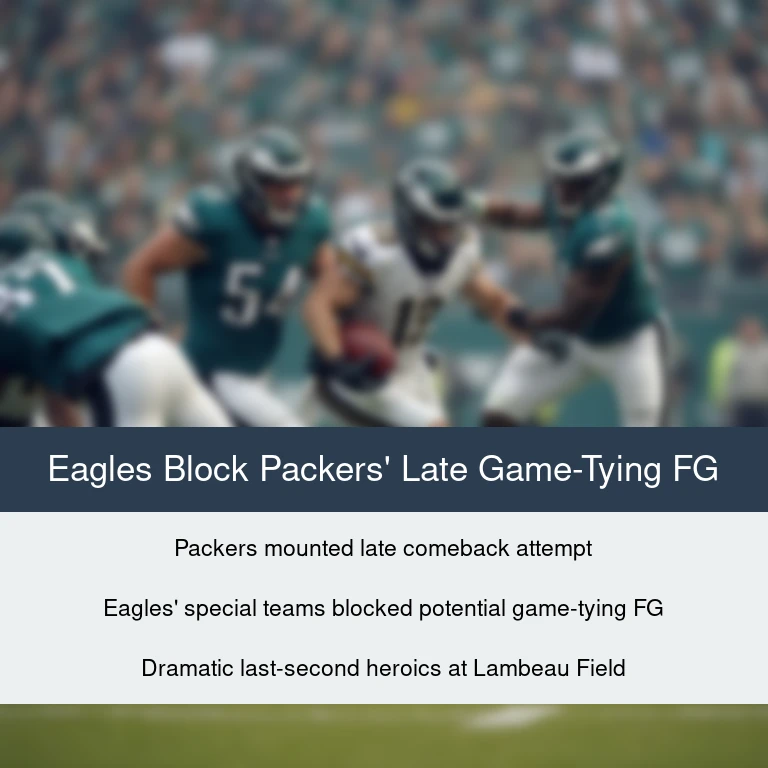

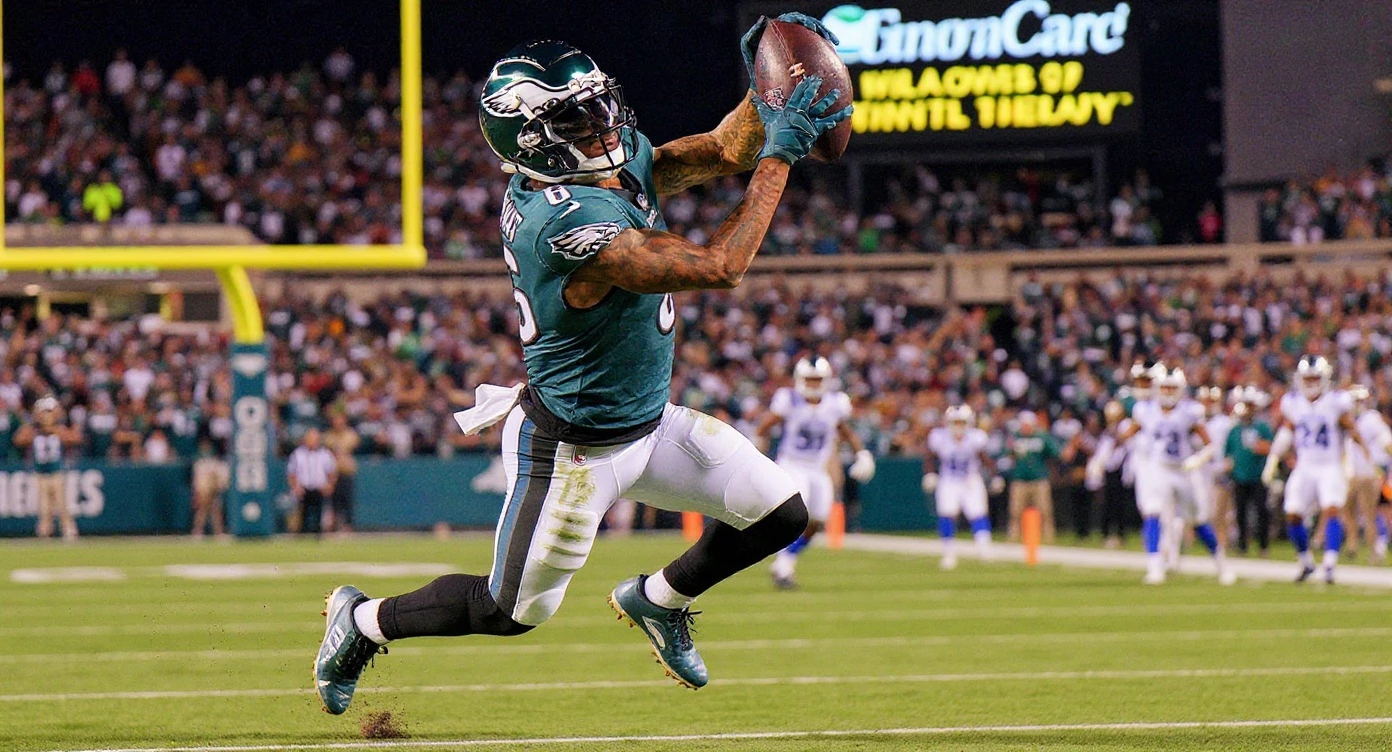
Saquon Barkley and the Eagles’ Offensive Formula
Grinding Out Yards in Hostile Territory
Philadelphia’s offense was never going to light up the scoreboard at Lambeau in late-season conditions, and the Eagles didn’t need it to.
Saquon Barkley shouldered the offensive workload, running with the physicality and vision that has defined his time in Philadelphia.
Barkley’s ability to gain yards after contact — a trait that makes him uniquely valuable in cold-weather, low-scoring games — kept the Eagles’ drives alive and allowed Philadelphia to control field position throughout the contest.
The Eagles’ offensive line, one of the most physically imposing units in the NFL, gave Barkley the creases he needed to keep Green Bay’s defense honest.
Jalen Hurts Managing the Moment
Jalen Hurts didn’t need to be spectacular in this game — he needed to be efficient, protect the football, and make the throws that kept the chains moving.
That’s exactly what he delivered.
Hurts avoided the kind of costly turnovers that can swing a low-scoring game, and his ability to extend plays with his legs created additional stress for a Packers defense that was already dealing with Barkley’s workload.
In a 10-7 game, every possession matters, and Hurts managed Philadelphia’s offensive possessions with the composure of a quarterback who has been in these situations before.
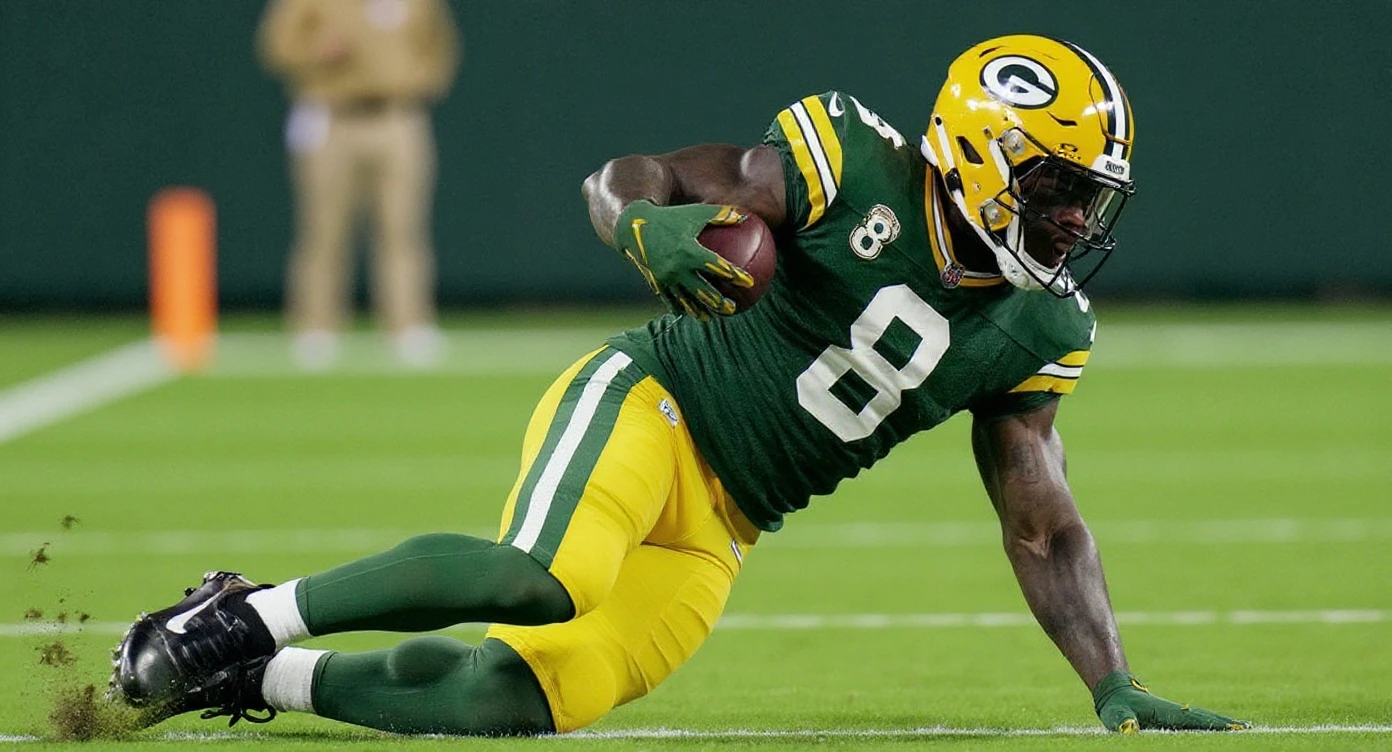
Jordan Love Under the Microscope
Jordan Love’s development as Green Bay’s franchise quarterback has been one of the more compelling storylines in the NFC over the past two seasons.
He has shown the arm talent and pocket presence to be a legitimate threat, but games like this one against Philadelphia expose the limitations that still exist in his game when the pressure is at its highest.
Against the Eagles’ defense, Love struggled to process information quickly enough to consistently beat the coverage.
Philadelphia’s scheme took away his comfort throws and forced him to hold the ball longer than he wanted to, which in turn allowed the pass rush to generate the kind of pressure that disrupts timing and rhythm.
The Packers’ supporting cast also deserves scrutiny here.
Green Bay’s receiver group, while talented, did not create enough separation against Philadelphia’s corners to give Love clean windows to throw into.
In a game decided by 3 points, the inability to convert in the red zone and on third down proved fatal to Green Bay’s chances.
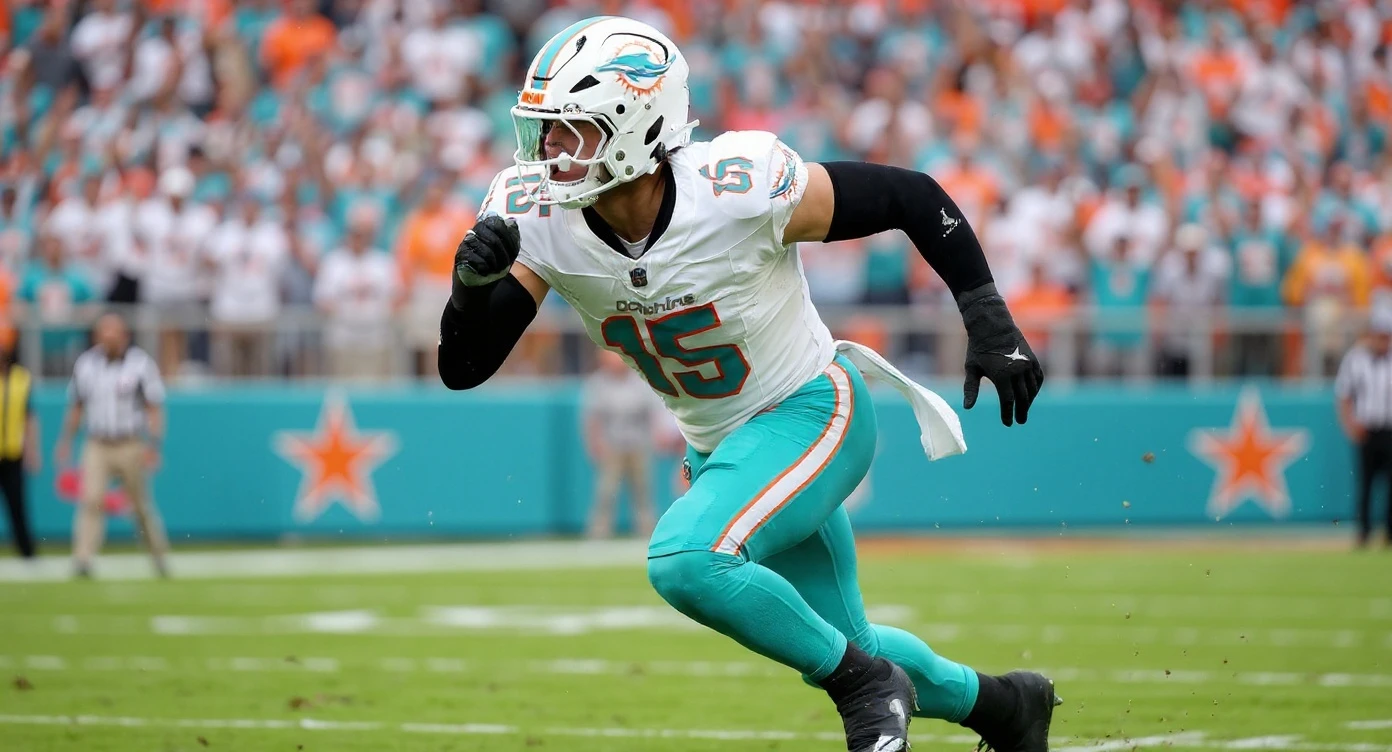
The Broader NFC Picture After Philadelphia’s Win
A road win at Lambeau Field in late-season play is the kind of result that carries weight in NFC seeding conversations.
For the Eagles, the victory reinforced their standing as one of the conference’s most dangerous teams — not because of offensive firepower, but because of their ability to win in environments where most teams struggle.
Philadelphia’s defensive identity, built around a dominant front seven and a secondary capable of taking away opposing teams’ best options, is the kind of foundation that travels well in the playoffs.
The Packers, meanwhile, faced difficult questions about their offensive ceiling heading into the postseason.
If Green Bay cannot score more than 7 points against a quality opponent at home, the path to a deep playoff run becomes significantly more complicated.
The NFC playoff picture remained tight, with multiple teams capable of earning favorable seeding — but Philadelphia’s performance at Lambeau sent a clear message about where the Eagles stood in that conversation.
Reading the Eagles’ Defensive Blueprint — What It Means for Playoff Opponents
Understanding what Philadelphia did to Green Bay in this game gives you a framework for evaluating how the Eagles will approach playoff matchups.
The Eagles’ defensive scheme is built on a few core principles: control the line of scrimmage, take away the run, generate pressure without overcommitting to the blitz, and trust the secondary to win in man coverage.
Against Green Bay, all four of those principles were executed at a high level.
For teams preparing to face Philadelphia in the postseason, the challenge is clear: you need an offensive line capable of handling the Eagles’ front, a quarterback who can process quickly under pressure, and receivers who can win contested catches against physical corners.
Very few teams in the NFC check all three of those boxes, which is precisely why Philadelphia’s defensive identity makes them such a difficult out in January.
The 10-7 final score at Lambeau wasn’t a fluke — it was a demonstration of what this Eagles defense is capable of when it’s operating at full capacity.
Fans tracking NFC playoff seeding should note that wins like this one don’t just add to the record — they establish the kind of road credibility that matters when the bracket is set and travel becomes unavoidable.
For more on how Philadelphia’s defense has been constructed and what makes it so difficult to attack, the Eagles’ defensive philosophy and its evolution is worth examining in detail.
What This Game Reveals About the 2025 Eagles
The 10-7 win at Lambeau Field is the kind of result that defines a team’s identity more clearly than a blowout victory ever could.
Philadelphia didn’t need to outscore Green Bay — they needed to outlast them, and they did it by executing their defensive scheme at a level that left the Packers with no answers.
The Eagles are not a team that will always win with style points.
They are a team that will grind opponents into submission, control the line of scrimmage on both sides of the ball, and make the plays that matter most when the game is on the line.
That formula has worked in regular-season road games, and it is the same formula that makes Philadelphia dangerous in January.
The Packers, for their part, need to address their offensive limitations before the postseason arrives.
Jordan Love is talented enough to lead a deep playoff run, but he needs more consistent support from his receiver group and a more reliable run game to take pressure off his arm in low-scoring environments.
Green Bay’s front office faces real decisions about how to upgrade the supporting cast around Love — decisions that will define whether this team is a first-round exit or a legitimate NFC contender in the coming seasons.
A Win That Echoes Beyond the Final Score
The Eagles’ 10-7 victory at Lambeau Field will not be remembered for highlight-reel plays or record-breaking performances.
It will be remembered as the game where Philadelphia proved they could win the hardest kind of game in the NFL — a cold-weather, low-scoring road battle against a quality opponent in front of a hostile crowd.
That kind of win builds something that statistics alone cannot measure: confidence, cohesion, and the belief that this team can handle whatever the postseason throws at them.
Watch for how Philadelphia’s defense performs in their next high-stakes matchup — if they replicate this level of execution, the Eagles are going to be a nightmare for any NFC team that has to face them in January.
For context on how the broader NFC landscape shaped up around this result, the 2026 NFL offseason breakdown offers useful perspective on how teams responded to their late-season performances.