
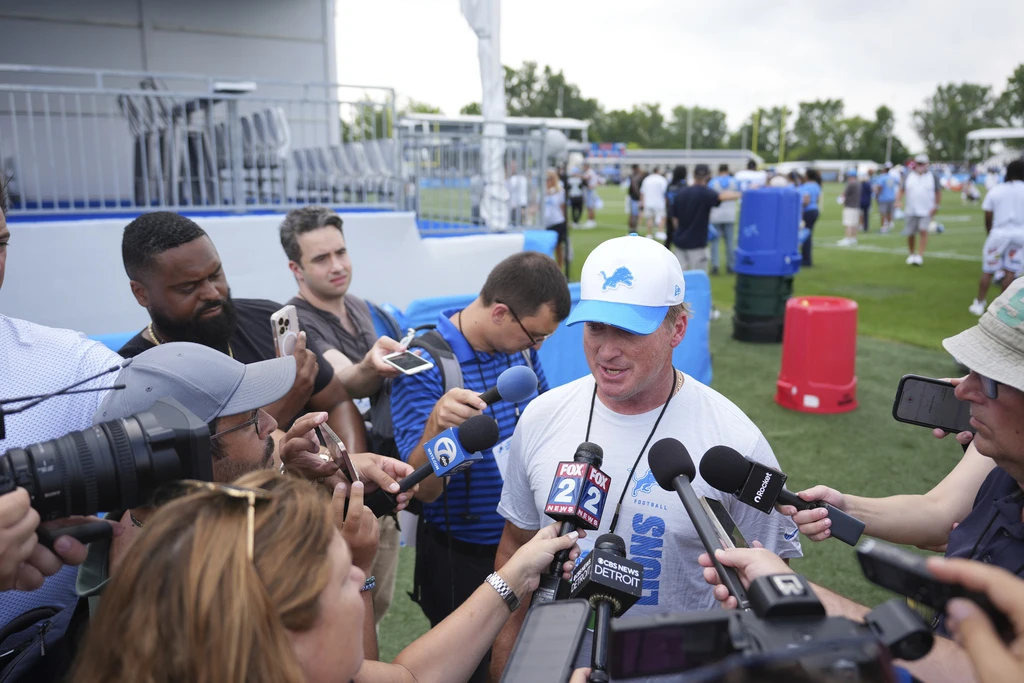
In the ever-evolving landscape of professional football, Jon Gruden, the former NFL coach, has sparked a thought-provoking debate with his candid assessment of the current state of quarterback play.
The Dissolving Game: Gruden’s Critique of Modern Quarterback Play
Jon Gruden, the former NFL head coach who compiled a 114-85 regular season record across stints with the Oakland Raiders and Tampa Bay Buccaneers — including a Super Bowl XXXVII title that Britannica documents — has reignited a long-running debate about the state of quarterback development in professional football. His assessment is blunt: the position isn’t evolving. It’s dissolving.
Gruden’s central argument is that modern quarterbacks are losing the foundational skills that separate good signal-callers from great ones — specifically, the ability to communicate at the line of scrimmage and diagnose defensive alignments before and after the snap. In his view, the game isn’t progressing at the quarterback position; it’s regressing behind the surface-level production numbers.
Gruden’s perspective carries weight because it’s rooted in decades of direct coaching experience at the highest level. He spent years dissecting quarterback mechanics and defensive recognition as both an offensive coordinator and head coach, building offenses that demanded pre-snap intelligence and post-snap processing from the position. His critique isn’t theoretical — it comes from someone who has stood on the sideline and watched quarterbacks succeed or fail based on exactly the skills he now says are disappearing.
Mastering the Techniques: Gruden’s Emphasis on Continuity and Repetition
The core of Gruden’s concern is what he sees happening at the line of scrimmage. Quarterbacks, he argues, are sprinting to the line and snapping the ball before they’ve had a chance to read the defense, identify the Mike linebacker, or make meaningful protection adjustments. The proliferation of run-pass option plays and bubble screens — which shift decision-making to after the snap rather than before it — has, in Gruden’s view, become a crutch that masks deficiencies in pre-snap processing. High-tempo offenses compound the problem by limiting the time quarterbacks have to communicate with their offensive line and receivers.
Gruden traces the root of the problem upstream to the college game, where the transfer portal has fundamentally altered how quarterbacks develop.
A quarterback who plays at three different programs in four years is learning three different systems, three different terminology sets, and facing three different sets of defensive looks. That fragmented experience, Gruden argues, prevents the kind of deep repetition that builds genuine mastery of the position.
The transfer portal, which saw over 2,000 players enter in a single cycle in recent years , has made it structurally harder for quarterbacks to stay in one system long enough to internalize it.
Gruden’s argument is that learning to read a Cover 2 shell versus a Cover 2 trap, or identifying a disguised zero coverage before the snap, requires hundreds of repetitions in the same system — not a semester’s worth of exposure before moving on.
Continuity, in Gruden’s framework, is not just a convenience — it’s a prerequisite for quarterback mastery. The ability to recognize a defense, communicate the adjustment, and execute the play within a compressed window at the NFL level requires that the quarterback has seen those looks hundreds of times before.
Without that repetition, quarterbacks arrive in the NFL with the athleticism and arm talent to succeed but without the mental processing speed the position demands at its highest level.
A Potential Return to the Sidelines: Gruden’s Coaching Aspirations
Gruden’s coaching career reinforced this belief repeatedly. His work developing Rich Gannon — who won the NFL MVP award in 2002 after throwing for 4,689 yards and 26 touchdowns, as CBC Sports reported — demonstrated what a quarterback could accomplish when fully immersed in a system that demanded pre-snap communication and defensive recognition. Gannon’s late-career resurgence under Gruden is frequently cited as a case study in what system mastery can unlock in a quarterback.
Since his departure from the Raiders in 2021, as reported by Fox News, Gruden has expressed interest in returning to football in some capacity, including work as a broadcaster. His legal situation following the release of private emails has complicated any potential return, but he has made clear that his passion for the game — and specifically for the craft of offensive football — remains intact.
Gruden has spoken publicly about wanting to get back into a locker room environment, work through game plans, and engage with the preparation process that defines NFL coaching. For Gruden, the X’s and O’s aren’t just a job — they’re the part of football he finds most compelling, and his frustration with what he sees as a decline in quarterback fundamentals is inseparable from that passion.
What makes Gruden’s critique particularly pointed is that it isn’t directed at individual quarterbacks — it’s directed at the systems and development pipelines that produce them. He isn’t saying today’s quarterbacks lack talent. He’s saying the infrastructure around them — from college offensive schemes to NFL tempo-based attacks — is not building the communication and recognition skills the position requires at its highest level.
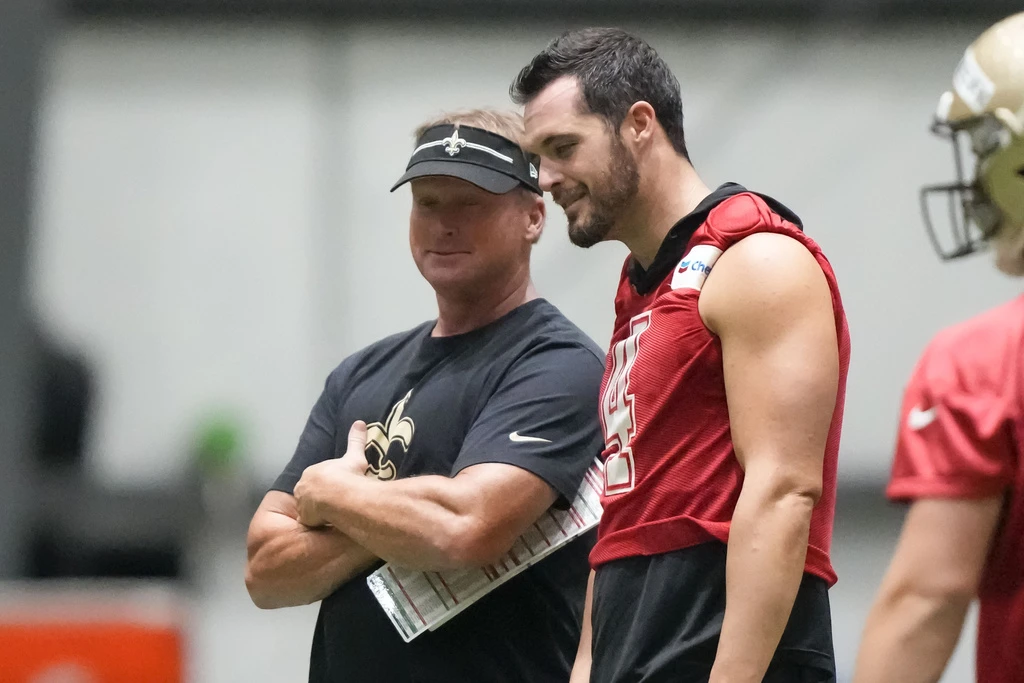
The Clash of Philosophies: Traditional vs. Modern Offensive Strategies
That argument puts Gruden in direct philosophical opposition to a significant portion of the modern NFL coaching tree. Coaches like Kyle Shanahan, Sean McVay, and Kevin O’Connell have built offenses that use motion, pre-snap manipulation, and RPO concepts to create easier post-snap reads for their quarterbacks — a design philosophy that, in Gruden’s view, substitutes schematic shortcuts for the harder work of developing pre-snap intelligence. The counterargument, of course, is that those offenses have produced some of the most efficient quarterback play in recent NFL history.
The philosophical divide Gruden is articulating isn’t new, but it has sharpened as the gap between traditional drop-back passing systems and modern spread-influenced NFL offenses has widened. The question at the center of the debate is whether the NFL is producing better quarterbacks or just better-supported ones — and whether those two things are the same.
Gruden’s camp argues that the modern game has engineered around quarterback deficiencies rather than correcting them. RPO-heavy systems, quick-game passing concepts, and high-tempo attacks reduce the cognitive load on the quarterback by design — which produces cleaner stat lines but, in Gruden’s view, doesn’t develop the full skill set the position demands. The opposing camp argues that adapting to what defenses allow is exactly what good offensive football looks like, and that the results — record-setting passing seasons across the league — speak for themselves.
Both sides of this debate have legitimate evidence. Patrick Mahomes operates within a system that demands elite pre-snap processing and post-snap improvisation — and he delivers both at a level that satisfies both camps. But for every Mahomes, there are quarterbacks who post serviceable numbers within a system and struggle the moment they’re asked to operate outside of it, which is precisely the scenario Gruden’s critique anticipates.
Whether Gruden’s traditional principles stage a comeback in NFL offensive philosophy remains to be seen. The league’s continued shift toward analytics-driven, efficiency-focused offensive design suggests the RPO and tempo-based approaches aren’t going anywhere. But the persistent struggles of quarterbacks who change systems — and the premium teams place on quarterbacks who can operate in multiple looks — suggests Gruden’s underlying point about the value of pre-snap intelligence still resonates with evaluators, even if the development path looks different than it did in his era.
The debate over quarterback development, pre-snap communication, and the long-term impact of RPO-heavy college systems on NFL readiness isn’t going away. As more quarterbacks arrive in the league having never operated under center for a full season, and as more NFL offenses continue to simplify the pre-snap environment to protect their signal-callers, Gruden’s critique will either look prescient or outdated depending on how the next generation of quarterbacks performs when the game gets hard. That verdict is still being written.

Internet Reactions to Gruden’s Critique of Modern Quarterback Play
The statistical tension Gruden is pointing to is real. A quarterback can complete 68% of his passes in a quick-game, RPO-heavy system and still struggle to move the chains when the game slows down in the fourth quarter and defenses take away the easy reads.
Efficiency metrics like EPA per play and DVOA have become the preferred tools for evaluating quarterback performance, but they don’t always capture whether a quarterback is winning because of his processing or in spite of its limitations.
The public reaction to Gruden’s comments has been predictably split along generational and philosophical lines. Coaches and analysts who came up in traditional pro-style systems tend to validate his concerns.
Those embedded in the modern spread-to-pro movement push back, arguing that the game has simply changed and that Gruden’s framework is anchored in an era that no longer exists at the college or NFL level.
The more nuanced responses acknowledge that both things can be true simultaneously — that the modern game has created more opportunities for quarterbacks to succeed statistically while also potentially reducing the developmental pressure that builds elite pre-snap processing. A quarterback who never has to make a full-field read because his system is designed around half-field concepts may post excellent numbers without ever developing the skill set to handle a two-minute drive against a disguised coverage.
That scenario — the quarterback who thrives in structure but struggles without it — is exactly what Gruden is warning about. And it’s a concern that NFL front offices quietly share, even if they don’t always say so publicly. The premium placed on quarterbacks who can operate under center, work through progressions, and manage a full route tree in the NFL Draft reflects an ongoing belief that those skills still matter when the game is on the line.
The RPO debate also intersects with the physical evolution of the quarterback position. Today’s NFL quarterbacks are, on average, more athletic than their predecessors — capable of extending plays, threatening defenses with their legs, and making off-platform throws that previous generations couldn’t.
Gruden doesn’t dismiss that athleticism, but he argues it has become a substitute for the mental processing that separates good quarterbacks from great ones in critical moments.
The broader question Gruden’s critique raises is one the NFL will be wrestling with for years: as the college game continues to produce quarterbacks developed in spread systems with minimal under-center experience and limited pre-snap communication demands, how does the league adapt its development infrastructure to close the gap?
Teams like the San Francisco 49ers and Los Angeles Rams have shown that the right system can accelerate quarterback development — but they’ve also shown how quickly those quarterbacks can struggle when the system changes around them.
Gruden’s voice in this conversation carries the credibility of someone who has coached at the highest level and won at it. Whether you agree with his conclusions or not, the underlying concern — that the pipeline producing NFL quarterbacks may be optimizing for the wrong skills — is a legitimate one that deserves more than a dismissive response from the modern football establishment.