
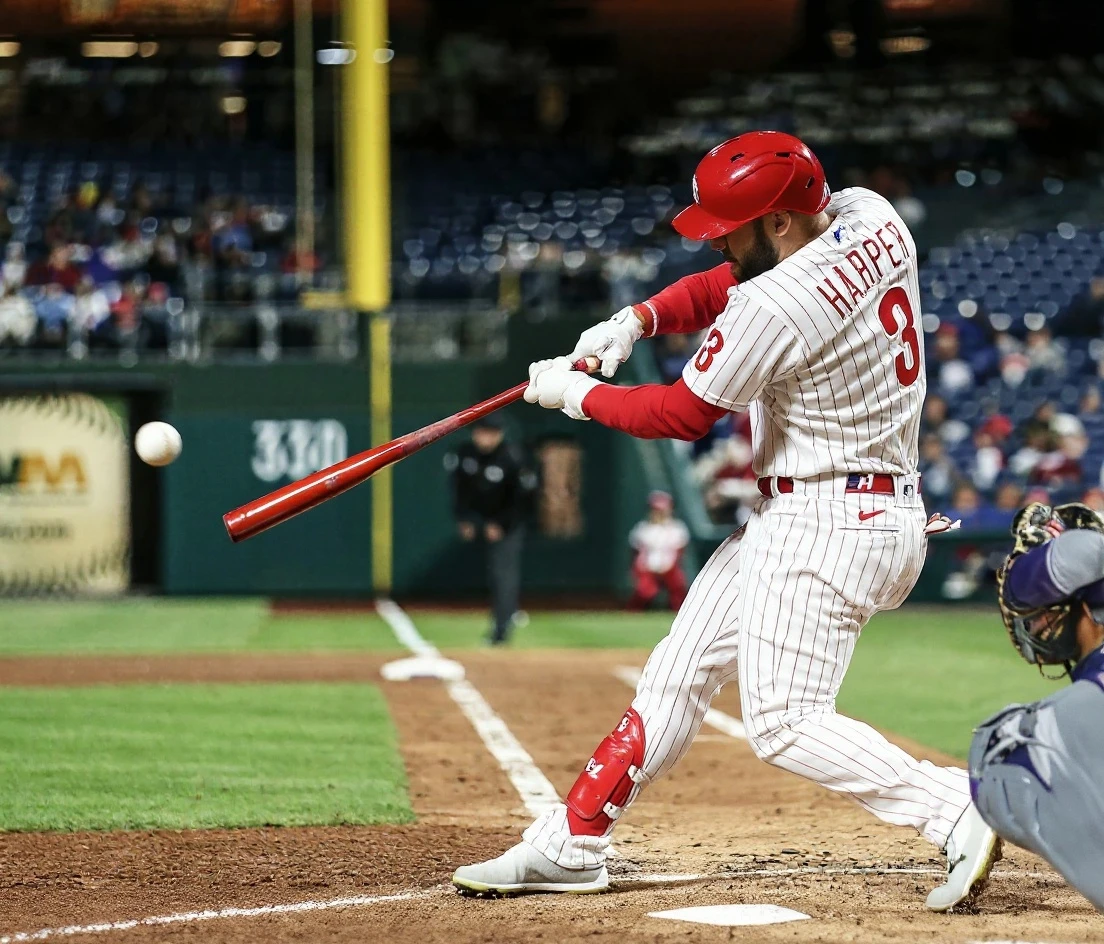
Tensions are rising in the MLB world as a heated confrontation between superstar Bryce Harper and Commissioner Rob Manfred has brought the contentious issue of a potential salary cap back into the spotlight.
Tensions inside Major League Baseball have reached a flashpoint. A reported confrontation between Philadelphia Phillies first baseman Bryce Harper and Commissioner Rob Manfred over the prospect of a salary cap has thrust one of the sport’s most divisive debates back into the national conversation — and the fallout is still spreading.

The incident, set against the backdrop of the Los Angeles Dodgers’ record-breaking payroll and an approaching collective bargaining deadline, has forced a reckoning over competitive balance, player compensation, and what the next CBA could mean for the long-term structure of the game.
The reported confrontation between Harper and Manfred is not a minor clubhouse dispute. It is a collision between two of the most powerful forces in baseball — a generational player with enormous union influence and a commissioner pushing structural changes that could fundamentally reshape how players earn. The fact that it became public at all signals how volatile the labor climate has become ahead of the 2026 CBA deadline.
Bryce Harper’s Explosive Clubhouse Clash with MLB Boss
The incident has drawn immediate reactions from players, agents, and union officials, and it has given the MLBPA a galvanizing moment at exactly the time it needs one. Whether that momentum translates into leverage at the bargaining table remains to be seen, but the confrontation has already changed the tone of the conversation.
According to a report from ESPN’s Jeff Passan, the flashpoint occurred during Commissioner Manfred’s annual visit to the Phillies’ clubhouse in July 2025.
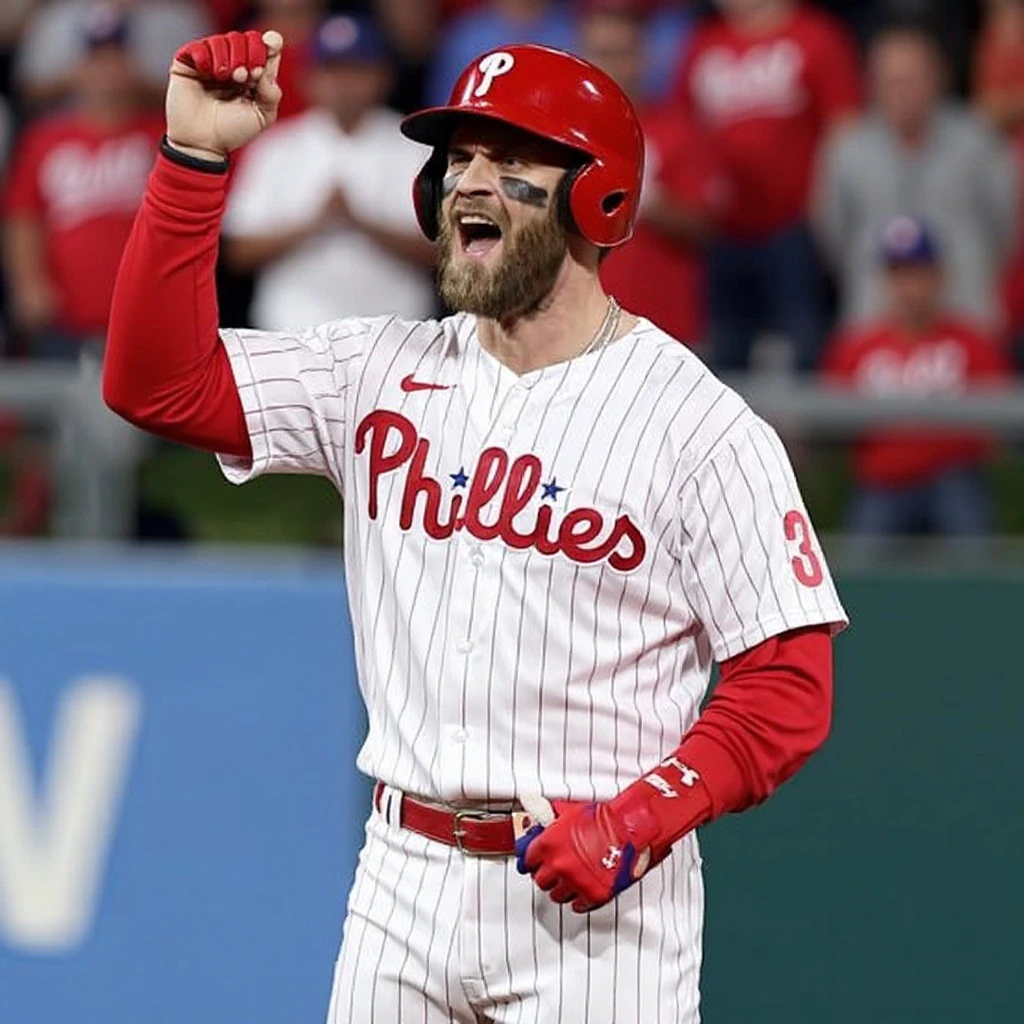
When Manfred raised the topic of implementing a salary cap, Harper reportedly erupted — directing a string of expletives at the commissioner and demanding he leave the clubhouse immediately. Manfred, by all accounts, refused to back down and remained to complete the meeting, a detail that only added to the tension surrounding the exchange.
The confrontation escalated further when sports agent Allan Walsh, speaking on the “Agent Provocateur” podcast, alleged that a deputy of Manfred’s subsequently threatened Harper directly — warning him not to publicly disrespect the commissioner again and using language Walsh described as menacing and coercive.
Salary Cap Showdown: Baseball’s Next Labor War Looms
The alleged threat sent immediate shockwaves through the baseball community. Players, agents, and union officials condemned what they viewed as a deliberate attempt to intimidate one of the sport’s highest-profile voices at a moment when labor negotiations are already heating up. For many inside the union, the episode confirmed long-standing suspicions about how the commissioner’s office operates when it feels challenged.
Walsh’s account added a darker dimension to what was already a combustible situation — and it gave the story legs well beyond the original clubhouse exchange.
The agent alleged that Manfred’s deputy told Harper, in no uncertain terms, that publicly defying the commissioner carried serious consequences. Walsh characterized the language as a direct threat, not an informal warning. Whether the exchange constitutes an official league action or an off-the-record conversation remains disputed, but the distinction may matter less than the perception it has created inside the union.
Whether the exchange constitutes an official league action or an off-the-record warning remains disputed, but the fallout has been significant regardless of how the league characterizes it.
Player representatives and union leadership have taken notice. The episode has become a rallying point for players who already harbor deep skepticism toward the commissioner’s office, and it has arrived at a moment when the MLBPA is actively building its case for the next round of bargaining.

Inside the Dodgers’ Juggernaut Fueling Cap Debate
With the MLBPA and MLB set to enter a new round of collective bargaining before the current CBA expires after the 2026 season, the timing of this confrontation could not be more consequential. Both sides are already positioning themselves, and incidents like this one shape the psychological landscape of negotiations as much as any specific contract proposal.
The core issue driving Harper’s anger is straightforward: a salary cap would fundamentally restructure how players get paid in Major League Baseball, and the players who stand to lose the most are exactly the ones with the most influence inside the union.
Unlike the NFL and NBA, MLB has never operated under a hard salary cap. The league instead relies on a luxury tax threshold — set at $237 million for the 2025 season — as a soft deterrent against runaway spending. Teams that exceed the threshold pay a tax on the overage, but there is no ceiling that prevents a franchise from spending as aggressively as its ownership is willing to fund.
Harper, who signed a 13-year, $330 million contract with the Phillies in March 2019, represents exactly the kind of generational deal that a hard cap could make structurally impossible. His contract was the largest in MLB history at the time of signing, as CNBC reported, and remains one of the defining free-agent agreements of the modern era. A cap system modeled on the NFL’s would compress the top of the market and eliminate the kind of open-ended bidding war that produced that deal.
The MLBPA has consistently and forcefully opposed cap proposals, arguing that free market competition is the only mechanism that ensures players receive fair market value. The union’s position has not shifted on this point across multiple CBA cycles, and Harper’s reaction to Manfred’s overture suggests that position is not softening.
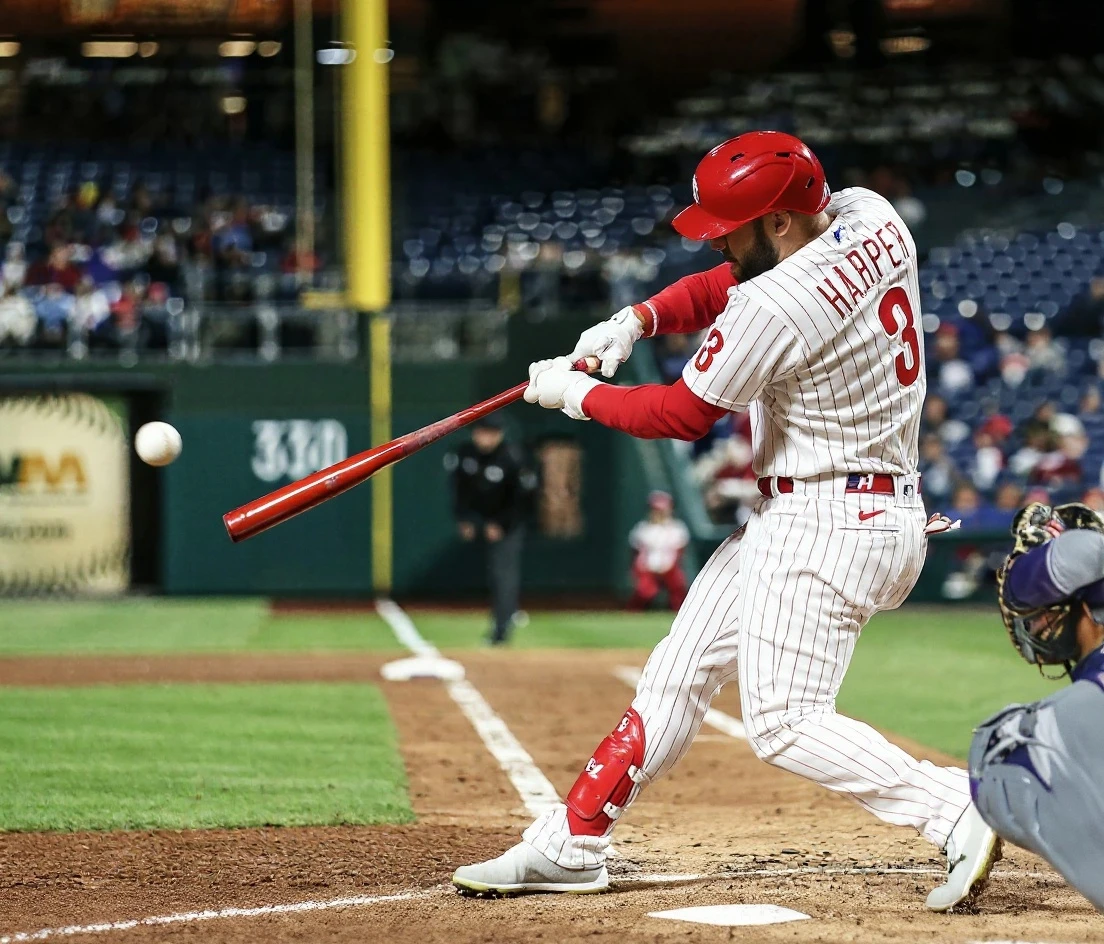
Harper’s 2025 production reinforces the argument that elite players earn their contracts. Through the first half of the season, he posted 73 runs scored, 73 walks, 33 doubles, 12 stolen bases, and 124 strikeouts — an all-around offensive profile that reflects the kind of sustained, high-level performance that commands top-tier compensation. His numbers are not a fluke; they are the continuation of a career that has produced two NL MVP awards and consistent All-Star production across 14 seasons.
Will Harper’s Defiance Ignite MLB’s Salary Cap Saga?
A salary cap, critics argue, would suppress those earnings while doing little to address the structural inequities that already exist between large- and small-market clubs. The teams most likely to benefit from a cap are not the small-market franchises struggling to compete — they are the mid-market clubs looking to close the gap with the Dodgers without having to outspend them.
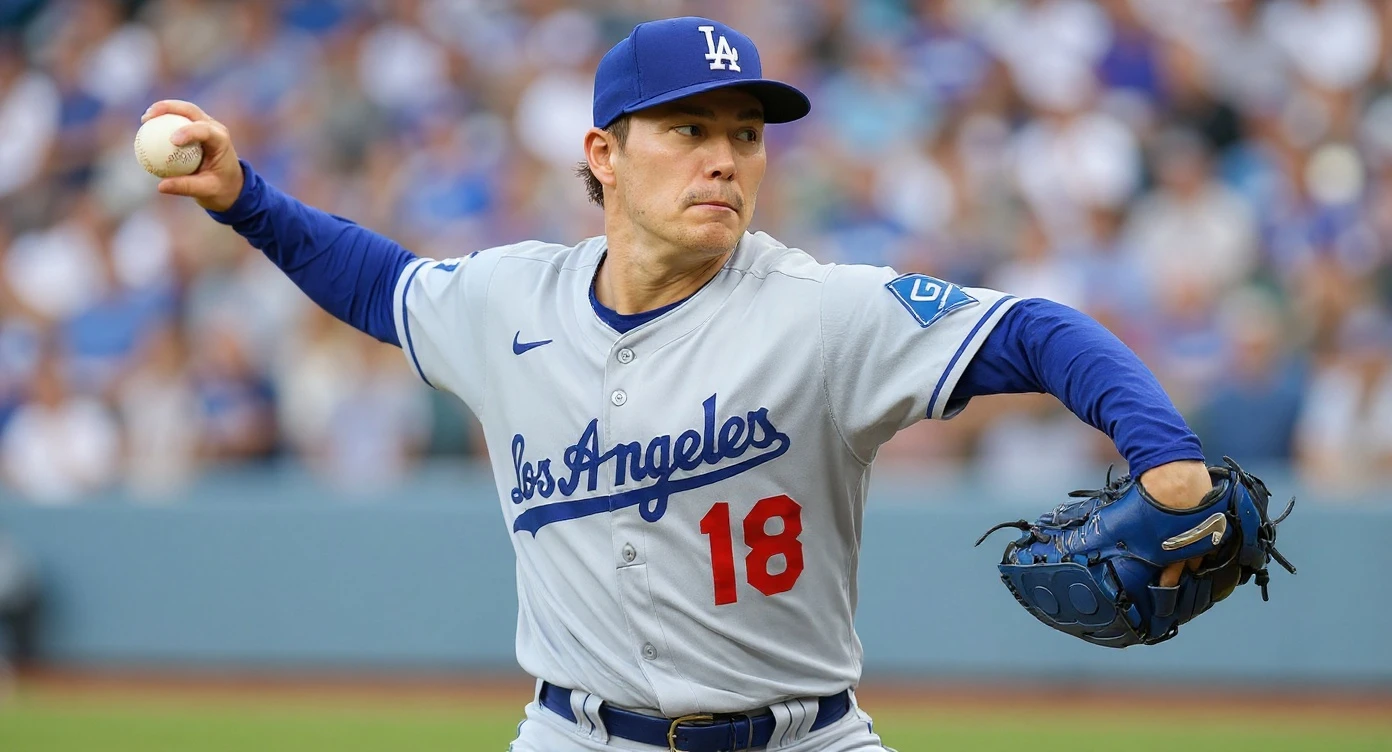
No team embodies the salary cap debate more visibly than the Los Angeles Dodgers. Their 2025 payroll surpassed $350 million — the highest in baseball history at the time — after an offseason that brought Shohei Ohtani ($700 million over 10 years, the largest contract in North American sports history), Yoshinobu Yamamoto ($325 million over 12 years), and a supporting cast assembled with resources that few franchises can realistically match. The Dodgers’ financial model has produced results: back-to-back National League pennants and a World Series title in 2024. For small-market teams operating at or near the $100 million payroll range, the gap is not just financial — it is existential.
Proponents of a salary cap point to the Dodgers as evidence that the current system allows wealthy franchises to simply outspend the competition rather than outmaneuver it. Opponents counter that the Dodgers’ success reflects smart roster construction, elite player development, and front-office depth — not just a willingness to write large checks. The Phillies, for their part, have invested heavily in their own roster. Their 2025 pitching staff logged 1,478 innings while surrendering 1,452 hits, a workload that reflects a franchise committed to competing at the top of the market. But the gap between Philadelphia’s resources and Los Angeles’s remains substantial, and it is widening.
The broader context of MLB’s labor history makes this confrontation even more significant. The sport has experienced eight work stoppages since 1972 — more than any other major American professional league. The most recent, the 99-day lockout that began in December 2021, as CNN chronicled, ended with a new CBA that included modest increases to the pre-arbitration bonus pool, a higher luxury tax threshold, and a draft lottery for the top picks. It was a deal that both sides accepted without enthusiasm, and the unresolved tensions from that negotiation have been building ever since.
The 2022 CBA did not resolve the fundamental tension between large-market clubs willing to spend aggressively and small-market franchises that rely on cost-controlled talent to stay competitive. A salary cap was not seriously on the table in those talks, but the Dodgers’ subsequent spending spree — headlined by the Ohtani and Yamamoto signings — has given cap proponents new ammunition and a concrete example to point to heading into the next round of negotiations.
For players, the stakes in the next CBA negotiation extend well beyond the cap question. Service time manipulation, the pre-arbitration pay structure, and the pace of free agency eligibility remain unresolved grievances from the last agreement. Young players, in particular, have watched teams deliberately suppress their service time to delay arbitration and free agency eligibility — a practice the union has challenged repeatedly without achieving a structural fix.
The MLBPA, under executive director Tony Clark, has signaled that it intends to push for more aggressive reforms in the next round of talks. Harper’s public confrontation with Manfred — and the alleged threat that followed — may have inadvertently handed the union a galvanizing moment that strengthens its internal cohesion heading into what promises to be a difficult negotiation.
Labor negotiations are as much about psychology and momentum as they are about specific contract terms. The image of a commissioner’s deputy allegedly threatening one of the game’s biggest stars is not a narrative that helps the league’s bargaining position. It reinforces the union’s framing of the relationship between players and ownership as fundamentally adversarial — and it gives the MLBPA a story it can use to keep its membership unified when the hard bargaining begins.
The consensus across fan forums and social media was clear: this is not an isolated incident, but a preview of the larger battle ahead between players and ownership over the financial structure of the sport. The salary cap debate has been simmering for years. Harper and Manfred may have just brought it to a full boil.
The financial stakes involved in the next CBA are staggering. MLB generated an estimated $11 billion in revenue in 2023, according to league figures, yet the share flowing directly to players through salaries has declined as a percentage of total revenue over the past decade. The union’s core argument — that players are not receiving a fair share of the revenue they generate — is backed by that trend, and it will be central to every major issue on the bargaining table, from the luxury tax threshold to pre-arbitration pay to the cap question itself.
Small-market franchises present the most complicated variable in the cap debate. Teams like the Oakland Athletics, Tampa Bay Rays, and Pittsburgh Pirates have operated for years at payrolls well below the league average, relying on player development and cost-controlled roster construction to compete. A salary cap would theoretically level the playing field at the top, but it would not address the revenue-sharing mechanisms that determine how much money small-market clubs have to spend in the first place. Without meaningful reform to the revenue-sharing structure, a cap could simply redistribute competitive disadvantage rather than eliminate it.
Harper’s confrontation with Manfred has also reignited a broader conversation about the commissioner’s role and accountability. Unlike commissioners in other major sports, MLB’s commissioner is employed by the owners — not by the league as a neutral party. That structural reality shapes every interaction between the commissioner’s office and the players’ union, and it is part of why union officials have long viewed Manfred’s proposals with deep skepticism. When a commissioner’s deputy allegedly threatens a player for pushing back, it reinforces the perception that the office functions as an instrument of ownership rather than a steward of the game.

Internet Reactions to Bryce Harper’s Confrontation with MLB Commissioner
What happens next will depend largely on how both sides manage the fallout from this incident in the months leading up to the 2026 CBA deadline. If the league moves to discipline Harper or distances itself from the alleged threat, it may be able to contain the damage. If it does not, the episode risks becoming a symbol of the power imbalance that players have long argued defines their relationship with ownership. Either way, the Harper-Manfred confrontation has already accomplished something significant: it has made the salary cap debate impossible to ignore, and it has reminded fans and analysts alike that the next round of MLB labor talks could be the most consequential in a generation.
Harper’s defiance of Manfred carries weight beyond one clubhouse confrontation. As one of the most recognizable players in the sport and a two-time NL MVP — winning in 2015 with the Washington Nationals and again in 2021 with Philadelphia — Harper commands influence inside the union that few active players can match. His willingness to publicly oppose the commissioner signals to other players that resistance to a cap is not just acceptable — it is expected. When a player of his stature draws a line, others take notice.
With the 2026 CBA deadline approaching, the league and the union are already positioning themselves for what could be the most contentious negotiation cycle since the 1994-95 strike that, as Britannica recounts, wiped out the World Series. The 2021-22 lockout, which lasted 99 days and delayed spring training, demonstrated that both sides are willing to absorb short-term pain to protect long-term interests. A repeat — or worse — is not out of the question if the salary cap becomes the central sticking point.
If the cap question does become the defining issue in the next round of talks, another work stoppage cannot be ruled out. Harper’s 2025 numbers — including 124 strikeouts, 33 doubles, and 12 stolen bases — are a reminder of the caliber of talent whose earning power hangs in the balance. These are not abstract labor policy debates. They determine how much the best players in the world get paid, and for how long.
The online reaction to the Harper-Manfred confrontation ranged from disbelief to outright alarm. The alleged threat from Manfred’s deputy drew the sharpest responses, with many users expressing shock that league officials would use that kind of language toward a player — particularly one of Harper’s standing and union influence.
Several commenters flagged the labor implications immediately, noting that the incident could harden the union’s position heading into CBA talks and make a negotiated settlement more difficult to reach before the 2026 deadline.
One fan observed that the exchange “kind of lets us fans know things are going to get messy in the next year” — a sentiment that reflects broader anxiety about the possibility of another work stoppage and its impact on the 2026 season and beyond.
Others pointed out that threatening a player of Harper’s stature — a two-time MVP with a decade-long track record of union advocacy and one of the most lucrative contracts in the sport’s history — was a significant miscalculation if the league’s goal was to de-escalate tensions before bargaining begins in earnest.