
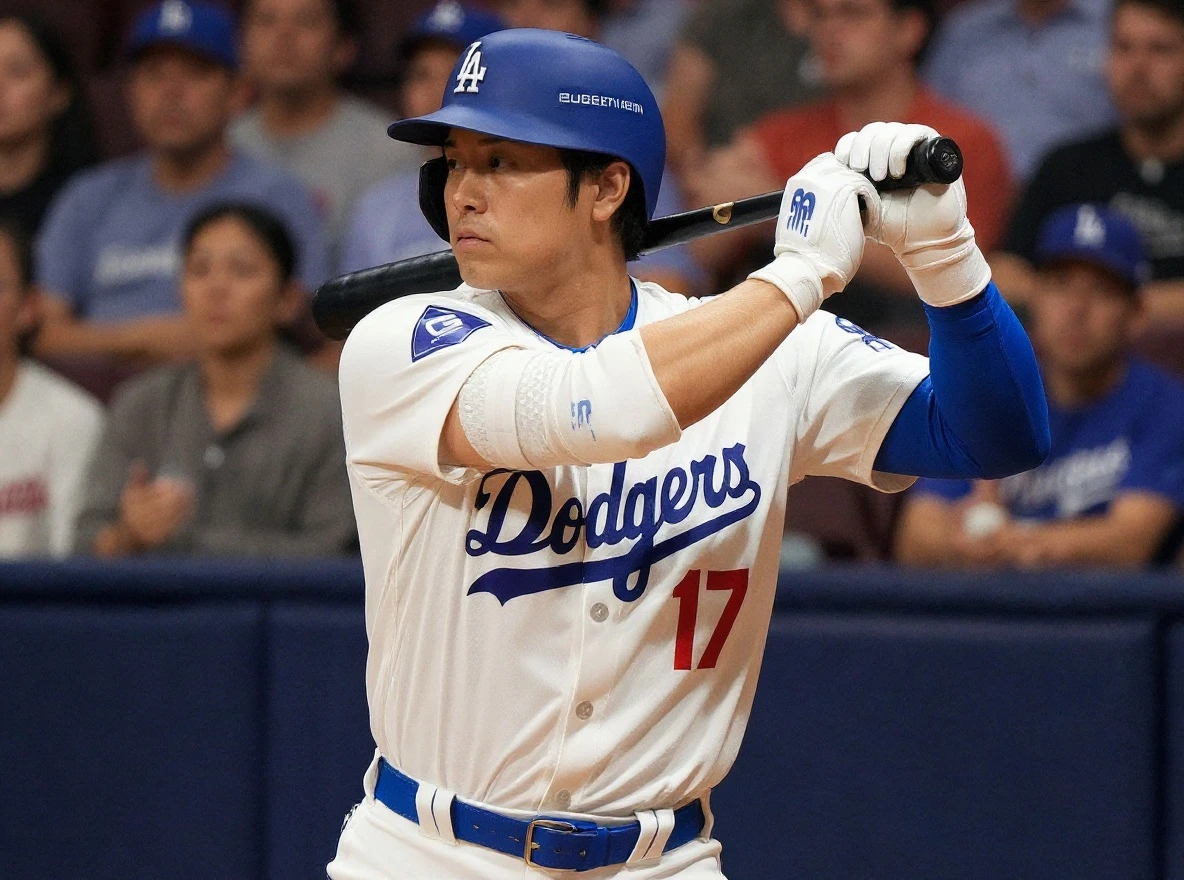
Shohei Ohtani, the two-way sensation for the Los Angeles Dodgers, has once again cemented his status as the favorite athlete among young Japanese, according to a recent survey.
His remarkable achievements on and off the field have captured the hearts and imaginations of a new generation, solidifying his place as a true icon of the sport.



Shohei Ohtani has topped the Sasakawa Sports Foundation’s biennial survey of Japan’s favorite athletes among young people for the fourth consecutive time — and it isn’t close.
The Los Angeles Dodgers’ two-way superstar pulled 19.9% of the vote in the most recent poll, a margin that reflects not just his on-field dominance but the cultural grip he holds on an entire generation of Japanese sports fans.
No other athlete in the survey came close to matching that level of support.
Unveiling Japan’s Rising Sports Stars
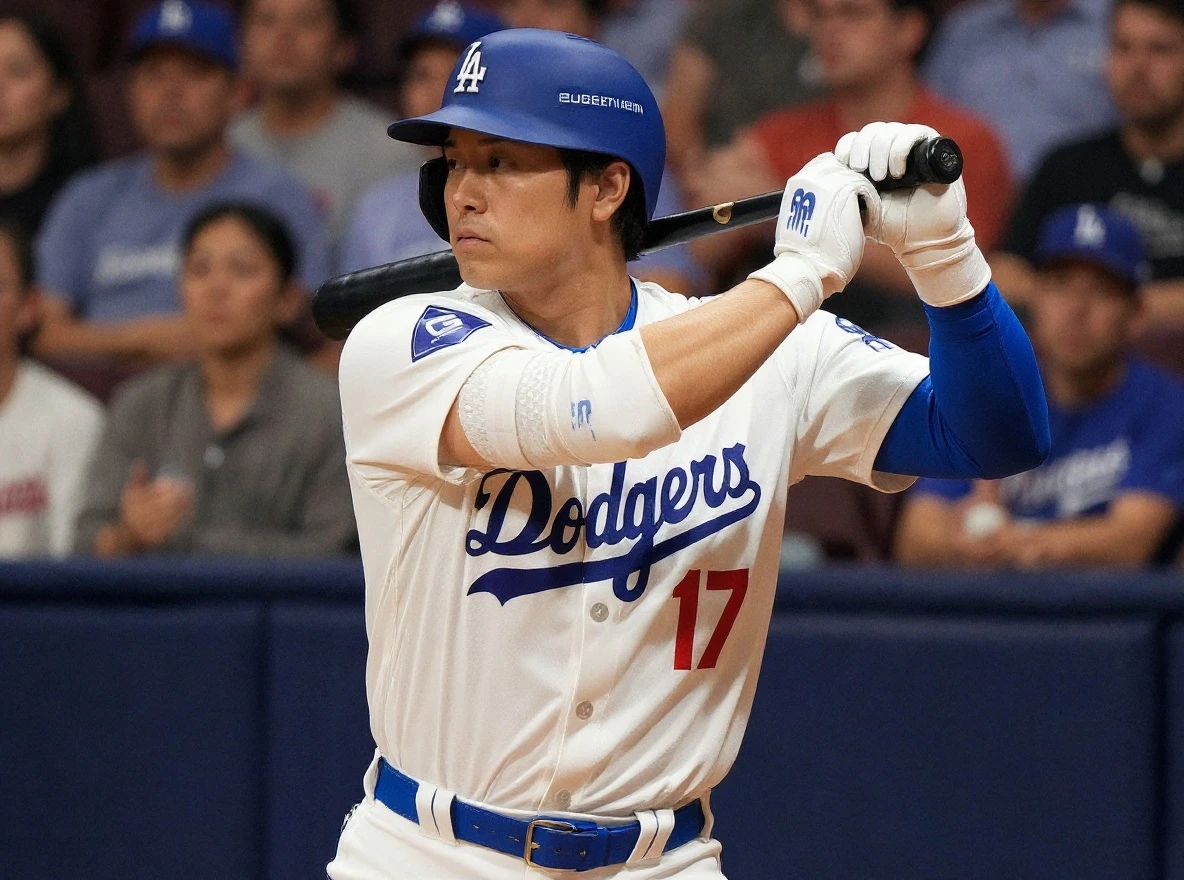
Ohtani’s Reign: A Dynasty in the Making?
The Sasakawa Sports Foundation conducted the survey in June, targeting 3,000 young Japanese respondents between the ages of 12 and 21, with 1,438 usable responses collected. According to Nippon.com’s report on the Sasakawa survey, Ohtani claimed the top spot with 19.9% of the vote. Volleyball standout Yuki Ishikawa finished a distant second at just 4.5%.
The gap between first and second place tells the story clearly: Ohtani isn’t just popular among Japan’s youth — he’s in a category of his own.
This marks the fourth straight survey in which he has held the top position, a run of dominance that spans his time with both the Los Angeles Angels and the Dodgers.
From MVP to World Champion: Ohtani’s Meteoric Rise
The period since the 2020 survey has been the most decorated stretch of Ohtani’s career.
After signing a record-breaking 10-year, $700 million contract with the Los Angeles Dodgers — the largest contract in North American professional sports history at the time (as NPR reported) — he delivered immediately.
In the 2024 season, Ohtani became the first player in MLB history to record 50 home runs and 50 stolen bases in a single season, as CBS Sports documented, finishing with 54 homers and 59 stolen bases.
He won the National League MVP unanimously, adding to his unanimous AL MVP award from 2021 with the Angels, per FOX Sports. The Dodgers went on to win the 2024 World Series, with Ohtani contributing throughout the postseason.
His return to the mound in 2025 following Tommy John surgery added yet another chapter to an already historic career arc.
The Two-Way Titan: Shattering Records, Defying Limits
Japanese media coverage of Ohtani is relentless and comprehensive, which directly fuels his standing in surveys like this one. Every start, every at-bat, and every milestone gets amplified across Japanese television, digital platforms, and print outlets.
His 2024 NL MVP award — his third overall and second unanimous selection — made him the first player in MLB history to win MVP awards in both leagues, a distinction that resonated deeply with fans back home.
The narrative arc from small-town Iwate Prefecture prospect to the most decorated two-way player in baseball history gives Japanese youth a story that is both aspirational and deeply personal.
A Beacon of Inspiration for Japan’s Youth
Ohtani’s appeal to young fans goes beyond raw statistics, though the numbers are staggering on their own.
He reached the 40-40 milestone — 40 home runs and 40 stolen bases — faster than any player in MLB history during the 2024 season, before ultimately surpassing 50 in both categories.
His career ERA as a starting pitcher sits among the best active starters in the game when accounting for his limited innings due to injury.
What makes him uniquely compelling as a role model is the combination: elite power, elite speed, elite pitching, and a public persona defined by discipline and professionalism. For young athletes in Japan, that combination is a blueprint, not just a highlight reel.
The broader takeaway from the Sasakawa survey is that Ohtani has achieved something rare in professional sports: sustained, cross-generational cultural relevance in his home country while competing at the highest level abroad.
As long as he continues to perform — and his 2025 return to the mound suggests he intends to — there is no realistic challenger to his position at the top of Japan’s youth sports consciousness.
For young Japanese athletes watching Ohtani, the message embedded in his career is specific and demanding: elite performance requires elite preparation, and conventional limits are negotiable.
He didn’t choose between pitching and hitting when scouts and coaches told him to. He didn’t accept a reduced role after surgery.
He signed with the most competitive team in baseball and then delivered a historically unprecedented season. That is the standard he has set, and it is the standard Japan’s next generation of athletes is measuring itself against.

Internet Reactions to Shohei Ohtani’s Remarkable Popularity Among Japan’s Youth
The cultural weight Ohtani carries in Japan is difficult to overstate. He is not simply a baseball player who happens to be Japanese — he is a national figure whose success abroad is treated as a source of collective pride.
His humility in interviews, his commitment to preparation, and his refusal to take shortcuts even after achieving generational wealth have made him a figure that parents and coaches actively point young athletes toward. The survey results confirm what anyone following Japanese sports culture already knows: Ohtani’s influence on the next generation is structural, not just sentimental.
The consistency of Ohtani’s survey dominance — four straight biennial polls at the top — is itself a data point worth examining. Athletes typically cycle in and out of popularity rankings as their performance fluctuates or as newer stars emerge. Ohtani has not only maintained his position but done so while his career has grown more complex, including a major elbow surgery and a position-only season in 2024 before his pitching return. The fact that his popularity held and even strengthened during a year when he wasn’t pitching speaks to how deeply his identity has been absorbed into Japanese sports culture beyond any single skill set.
Several commenters noted that the 19.9% figure, while dominant, is actually lower than some of Ohtani’s previous survey totals — a point that some attribute to the specific 12-to-21 age bracket used in this edition, which skews toward younger respondents who may have less direct memory of his Angels-era dominance.
The age range of 12 to 21 is worth examining in context. Respondents at the younger end of that bracket were as young as seven or eight years old when Ohtani first arrived in MLB in 2018. Their frame of reference for him is almost entirely his Dodgers era — the record contract, the 50-50 season, the World Series title.
That framing may actually strengthen his appeal with the youngest cohort, since they associate him exclusively with peak performance and championship success rather than the Angels’ losing seasons. The 19.9% figure, while slightly below some prior surveys, likely reflects the narrower demographic window rather than any erosion of his standing.
Fan discussion has also touched on the role of Ohtani’s interpreter situation — following the gambling scandal involving his former interpreter Ippei Mizuhara in early 2024 — and whether that controversy affected his image in Japan. The survey results suggest it did not. Ohtani was cleared of any wrongdoing, as Fox News reported, and his on-field performance in 2024 effectively buried the story in the public consciousness.
The survey results also prompted discussion about the relative absence of other prominent Japanese MLB players from the top of the rankings. Seiya Suzuki of the Chicago Cubs, Yu Darvish of the San Diego Padres, and Yoshinobu Yamamoto — Ohtani’s Dodgers teammate — all have significant profiles in Japan, yet none approached Ohtani’s vote share.
The likely explanation is a combination of factors: Ohtani’s unmatched statistical output, his higher-profile team and market, and the sheer volume of media coverage he generates compared to any other Japanese player abroad. Yamamoto, despite signing a 12-year, $325 million contract with the Dodgers, is still building his MLB narrative. Ohtani’s is already complete enough to be historic.