Cowboys Conquer Chiefs in Thrilling Playoff Push

The Dallas Cowboys kept their playoff hopes alive with a gritty 31-28 victory over the Kansas City Chiefs, securing their third consecutive win and delivering a statement result against the reigning Super Bowl champions.

The Dallas Cowboys kept their playoff hopes alive with a statement 31-28 victory over the Kansas City Chiefs, locking up their third straight win and delivering one of the most significant results any NFC team has produced this season.

Dak Delivers in the Clutch

Dallas did not just beat Kansas City — it outgained the reigning Super Bowl champions 457 to 362 total yards, controlled the clock in the fourth quarter, and held on through a late Chiefs push to secure a result that reshapes the entire NFC wild card conversation. Beating a Patrick Mahomes-led team by any margin is a credential. Doing it while trailing early and sustaining a 3:27 clock-killing drive to close it out is a different level of execution entirely.

The win pushed Dallas to 6-5-1 on the season and sent a direct message to every team watching the NFC standings: the Cowboys are not done. After sitting at 4-5-1 just two weeks ago and absorbing legitimate questions about whether this roster had the consistency to compete in January, Dallas has now answered those questions with back-to-back wins over two of the most respected franchises in professional football.

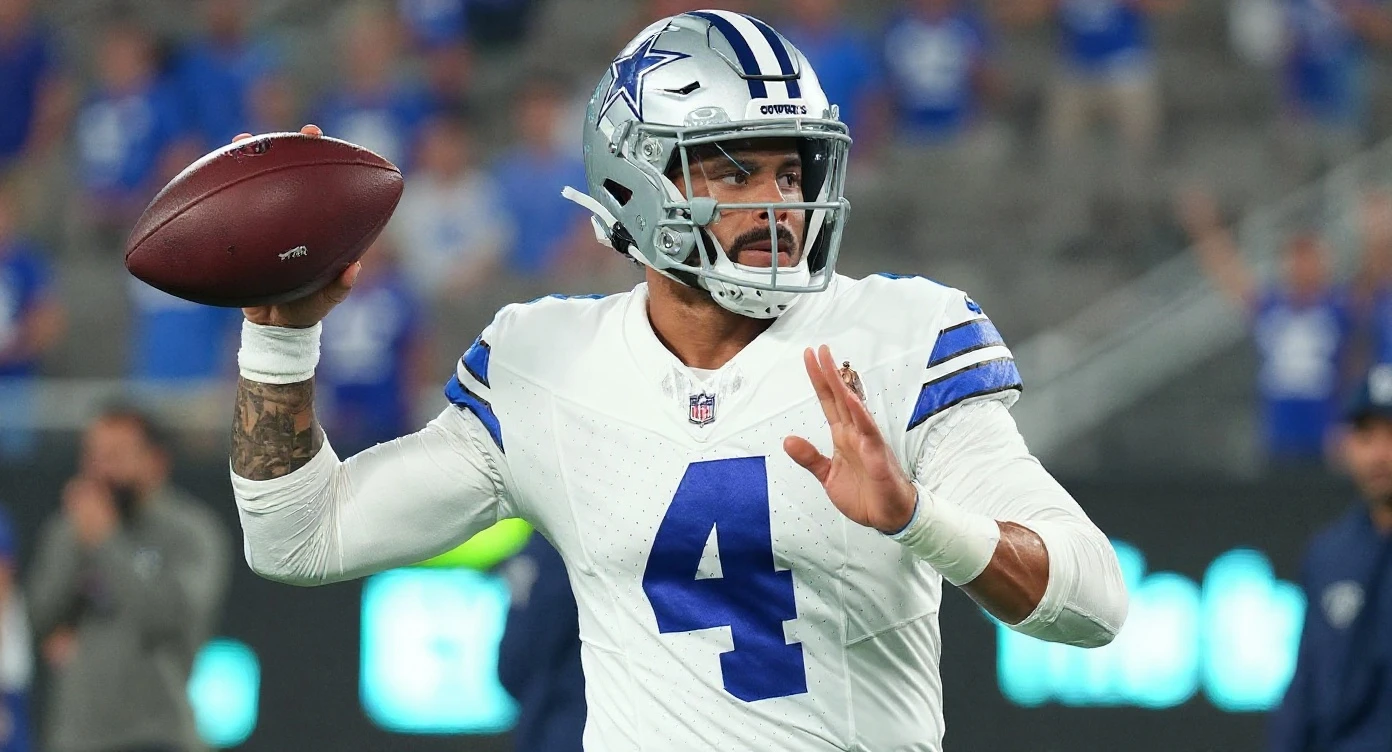
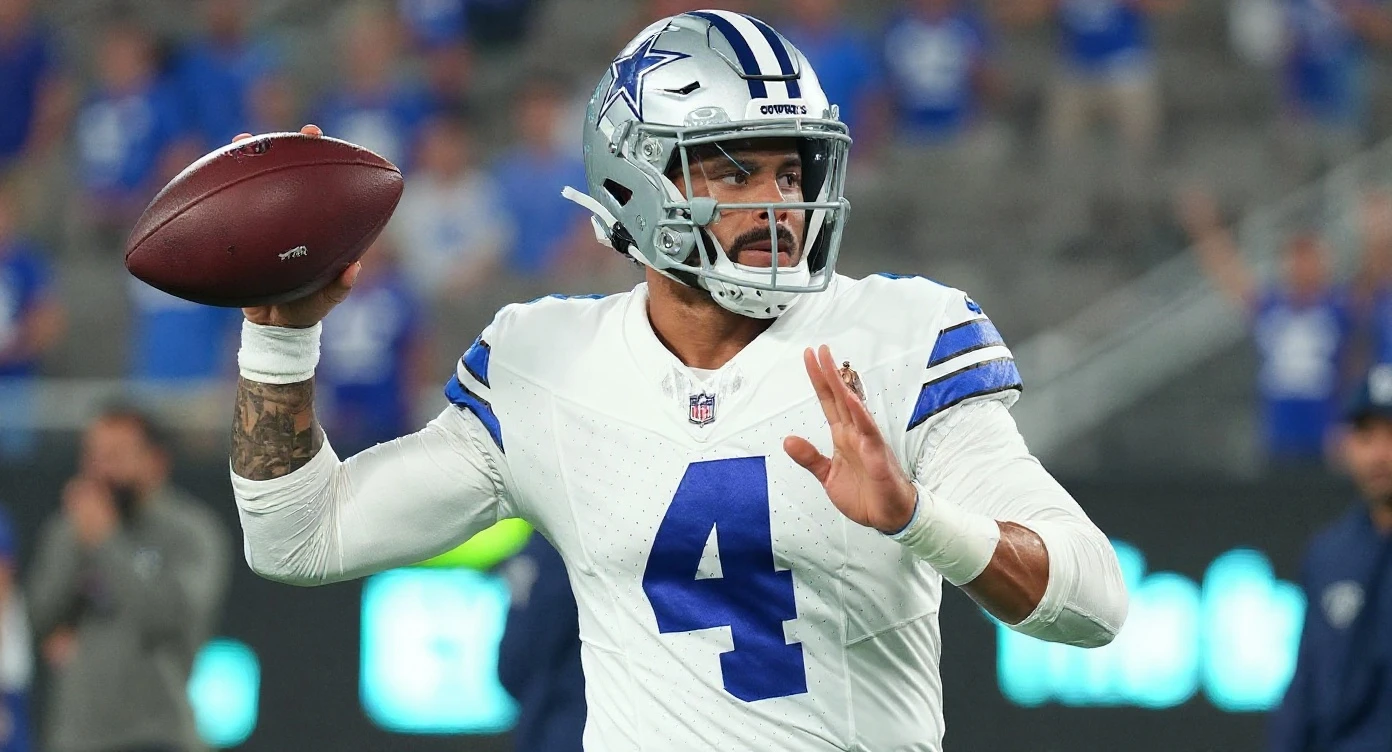
Kansas City drew first blood when cornerback Jaylen Watson intercepted Dak Prescott on just the third play of the game, setting up an early 7-0 Chiefs lead and threatening to derail Dallas before the offense ever found its footing. What followed was a sustained, methodical response — 457 total yards, consistent third-down conversions, and a fourth quarter that belonged entirely to the Cowboys. Prescott’s ability to reset after a turnover and lead a clean offensive performance from that point forward was the defining storyline of the first half.

Cowboys Conquer Chiefs in Playoff Push

Dallas converted critical third downs throughout the contest and controlled the clock when it mattered most, running out the final 3:27 to seal the result. Through 12 games, the Cowboys have accumulated 3,692 passing yards and 1,783 rushing yards — a balanced offensive profile that forces opposing defenses to account for multiple threats on every possession and prevents them from loading the box or dropping into a single coverage shell.

The Chiefs, meanwhile, dropped to 6-6 — their third loss in four games — and now face a steep climb back into the AFC playoff picture. As NBC Sports analyst Mike Florio noted, Dallas’ back-to-back wins over the Eagles and Chiefs within a four-day span represent one of the more remarkable short stretches any team has produced this season. For Kansas City, the loss is not just a setback — it is a structural warning sign about a team that cannot afford to keep beating itself.

Dak Prescott bounced back from his early interception to deliver one of his cleaner performances of the season, completing 27 of 39 passes for 320 yards with two touchdown passes against that one pick. His composure after the turnover was immediate and visible — Dallas did not go conservative or abandon the downfield passing game. Prescott attacked Kansas City’s secondary, distributed the ball efficiently across multiple receivers, and managed the fourth quarter like a quarterback who has been in these situations before. Nine NFL seasons have a way of producing that kind of poise.

CeeDee Lamb continued to build his case as one of the premier receivers in the NFC, hauling in seven catches for 112 yards and a touchdown. His ability to win contested catches and create separation against press coverage remains a consistent problem for opposing secondaries — Kansas City had no reliable answer for him in the second half. George Pickens, acquired to give Dallas a legitimate second receiving threat, contributed six receptions for 88 yards, a performance that validated the front office’s decision to invest in adding him to the roster and gave Prescott a genuine safety valve when Lamb drew extra attention.

Mahomes’ Heroics Fall Short

In the backfield, Javonte Williams carried 17 times for 59 yards and added a receiving touchdown, providing the kind of physical, between-the-tackles running that keeps defenses from committing entirely to pass coverage. Backup Malik Davis delivered the play of the game with a 43-yard touchdown run that decisively shifted momentum in Dallas’ favor and gave the Cowboys the cushion they needed heading into the fourth quarter — a burst of explosive production from an unexpected source that reflected the depth of this Dallas roster.

Dallas has now accumulated 325 first downs on the season, with 185 of those coming through the air — a clear indicator of how heavily the offense relies on Prescott’s arm to sustain drives. That aerial dependency makes the Cowboys vulnerable against elite pass-rush units, but against Kansas City’s defense, Prescott had enough time to operate and enough weapons to exploit coverage mismatches. The offensive line’s ability to protect him in the pocket was a quiet but essential factor in the final outcome.

The significance of this three-game winning streak cannot be overstated for a Cowboys team that stood at 4-5-1 just two weeks ago and appeared to be drifting out of the playoff conversation entirely. Teams that recover from mid-season slumps to beat legitimate contenders in back-to-back games are rare. Dallas has now done exactly that, and the timing — with six games remaining and a wild card spot still very much in play — could not be more important.

Defeating the Philadelphia Eagles and Kansas City Chiefs — the two franchises that met in Super Bowl LVIII — within a four-day window is the kind of résumé-building run that changes how a team is evaluated leaguewide. It is not just about the wins. It is about who you beat, when you beat them, and what it says about your ability to perform under pressure when the season is on the line.

Playoff Implications Loom Large

Dallas has now scored 416 total points on the season, a figure that reflects an offense capable of putting up numbers against elite competition. That scoring output places the Cowboys among the more productive offenses in the NFC and gives them a realistic path to outscoring opponents in high-stakes January games — provided the defense continues to hold up its end of the bargain and special teams keep delivering favorable field position.

The Chiefs, by contrast, have now lost three of their last four and find themselves on the outside of the AFC playoff picture looking in — a position that would have seemed unthinkable for this franchise just a month ago. Kansas City has appeared in four of the last five Super Bowls and won three of them. Sitting at 6-6 in December is not a position this organization is accustomed to navigating.

Patrick Mahomes finished 23-of-34 for 261 yards and four touchdown passes — a stat line that would carry most teams to a win on any given Sunday. The fact that Kansas City still lost underscores how badly the team’s structural issues undermined an otherwise strong individual performance from its franchise quarterback. Mahomes did his job. The team around him did not.

Rashee Rice was Mahomes’ primary weapon, catching eight passes for 92 yards and two scores, while Kareem Hunt provided a physical presence in the run game with 58 yards on 14 carries. But Kansas City’s discipline issues proved far too costly to overcome, regardless of what the offense produced. When your quarterback throws four touchdowns and you still lose by three points, the problem is not the quarterback.

The Chiefs committed 10 penalties for 119 yards and punted five times compared to Dallas’ single punt — a catastrophic disparity in field position that the Cowboys exploited throughout the second half. Penalty yardage of that volume against a well-coached offense is essentially a self-inflicted wound. Kansas City’s inability to stay disciplined in a must-win game raises legitimate questions about the team’s focus and preparation heading into the final stretch of the regular season.

Dallas’ special teams unit also played a meaningful role in the outcome. The Cowboys have generated 1,868 return yards on the season — including 1,559 on kickoff returns — consistently giving the offense favorable starting field position and reducing the burden on Prescott to manufacture long scoring drives from deep in Dallas territory. In a three-point game, field position is not a secondary factor. It is often the deciding one.

The final weeks of the regular season will define both franchises’ 2024 legacies. For Dallas, the objective is straightforward: keep winning, control what you can control, and let the playoff picture sort itself out. The Cowboys have the offensive firepower and the defensive experience to make a run if they sustain this level of play through December. Anything less than continued momentum, however, and the window that just cracked open could close just as quickly.

A playoff berth would validate a season that looked in serious jeopardy just two weeks ago and would set up what could be a deep postseason run for a roster built to compete in January. Dallas has the talent at the skill positions and the quarterback experience to be dangerous in a single-elimination format — and a team that just beat the Eagles and Chiefs back-to-back is not a team any NFC seed will want to see on the bracket.

For the Cowboys, the question now is whether this winning streak represents a genuine turning point or a temporary surge. History suggests that teams making late-season runs need to sustain their level of play through December and into January, and Dallas has the talent to do exactly that if the offense remains consistent and the defense continues to force opponents into mistakes. The next three weeks will answer that question definitively — and the schedule will not get easier.

What makes this Cowboys run particularly compelling is the context surrounding it. Dallas did not beat a pair of struggling teams to pad its record — it beat the Eagles, who entered the week as one of the NFC’s top seeds, and the Chiefs, who have been the AFC’s standard-bearer for the better part of a decade. Winning those games back-to-back, in a compressed four-day window, with a playoff spot on the line, is the kind of performance that separates contenders from pretenders in any era of the NFL.

Prescott’s nine seasons of NFL experience are showing up in the most important moments. He has now led multiple fourth-quarter comeback drives this season, and his ability to manage the game — distributing the ball efficiently to Lamb, Pickens, and the backfield — reflects a quarterback who understands what his team needs rather than forcing the issue. That kind of veteran poise is what playoff teams are built around, and Dallas has it at the most important position on the field.

The Cowboys’ defensive performance also deserves recognition. Holding Mahomes to 261 yards — well below his season average — while forcing Kansas City into five punts required disciplined coverage and consistent pressure from the front seven. Dallas’ ability to limit one of the most prolific offenses in NFL history to 28 points, while also generating favorable field position through special teams, reflects a complete team effort rather than a one-sided offensive showcase. Defense wins in January, and this unit is trending in the right direction.

From a broader NFL context, this matchup reinforced several season-long storylines. CeeDee Lamb’s continued production — he now ranks among the league’s top receivers in yards and targets — makes him one of the most important offensive players in the NFC and one of the most difficult matchup problems any defensive coordinator will face in January. Dak Prescott’s ability to recover from a turnover and lead a game-winning drive speaks to the experience he has accumulated over nine NFL seasons and the maturity he has developed as a franchise quarterback when the pressure is highest and the margin for error is smallest.

What People Are Saying About the Cowboys’ Playoff Push

As the calendar turns toward December, the Cowboys have positioned themselves as one of the more dangerous teams in the NFC wild card race. They are not the favorite to win the conference — that distinction likely belongs to the Eagles or another top seed — but a team with Prescott, Lamb, and a defense capable of slowing down Mahomes is a team no one in the NFC wants to face in January. That alone makes the next six weeks must-watch football for anyone tracking the playoff race.

For Kansas City, the margin for error has essentially disappeared. The Chiefs need wins immediately, and they need the rest of the AFC to stumble. The NFL’s playoff race rarely produces clean narratives, but right now, the Cowboys are writing one worth following — and the Chiefs are scrambling to rewrite their own before December runs out.

With six games remaining, Dallas sits squarely in the NFC wild card conversation. The path is not easy — the Cowboys still need help and must continue winning — but the momentum generated by beating two Super Bowl-caliber opponents in the same week has fundamentally shifted the narrative around this team. The Chiefs, meanwhile, face a genuine postseason crisis that no amount of individual brilliance from Mahomes can solve alone if the penalties keep piling up and the field position battle keeps getting lost.

At 6-6, Kansas City must win out or come close to it while hoping other AFC teams stumble. For a franchise that has appeared in four of the last five Super Bowls and won three of them, that reality represents a significant departure from the standard they have set — and a warning sign that the dynasty’s grip on the AFC may be loosening heading into what could be a pivotal offseason for the organization.

The Cowboys’ win over Kansas City ignited immediate reaction across the NFL fan base and the broader media landscape. Supporters who had written Dallas off after a sluggish mid-season stretch are now recalibrating their expectations, and analysts who dismissed the Cowboys as a .500 team with no postseason ceiling are being forced to revisit that assessment in real time. Two wins do not erase a difficult first half of the season, but they do change the conversation.

Back-to-back wins over the Eagles and Chiefs — two of the most recognizable and well-resourced brands in the league — gave Dallas a credibility boost that a string of wins over lesser opponents simply cannot provide. Résumé matters in the playoff race, and the Cowboys just added two of the most impressive lines on theirs at exactly the right moment in the season.

The broader NFC playoff picture shifted noticeably with this result. Dallas climbed back into a crowded wild card race that now includes multiple teams separated by a game or two, and the Cowboys’ strength of schedule over the final six weeks will either validate or test everything they have built over this winning streak. There is no soft landing from here — every game carries playoff implications.

The debate around Patrick Mahomes’ performance reflects a larger question about where this Chiefs team stands. Mahomes threw four touchdowns and posted a strong completion percentage, yet Kansas City still lost — largely because the team’s penalty issues and inability to win the field position battle undermined everything he produced. A quarterback can only do so much when his team is spotted 119 penalty yards in a three-point game. At some point, the supporting cast has to hold up its end.

Some analysts have pointed to the Chiefs’ offensive line depth and receiver corps as structural concerns that Mahomes cannot overcome on his own. Others argue that a team quarterbacked by Mahomes is never truly out of the playoff race, regardless of record. Both arguments carry weight, and the next four weeks will determine which side is right. What is not debatable is that Kansas City’s current trajectory — three losses in four games — is unsustainable for a team with Super Bowl aspirations.


Marcus

Marcus Bennett covers football, baseball, basketball, and athlete-driven features for DoubleHype, focusing on comeback stories, career-defining moments, and the pressure behind elite competition.