
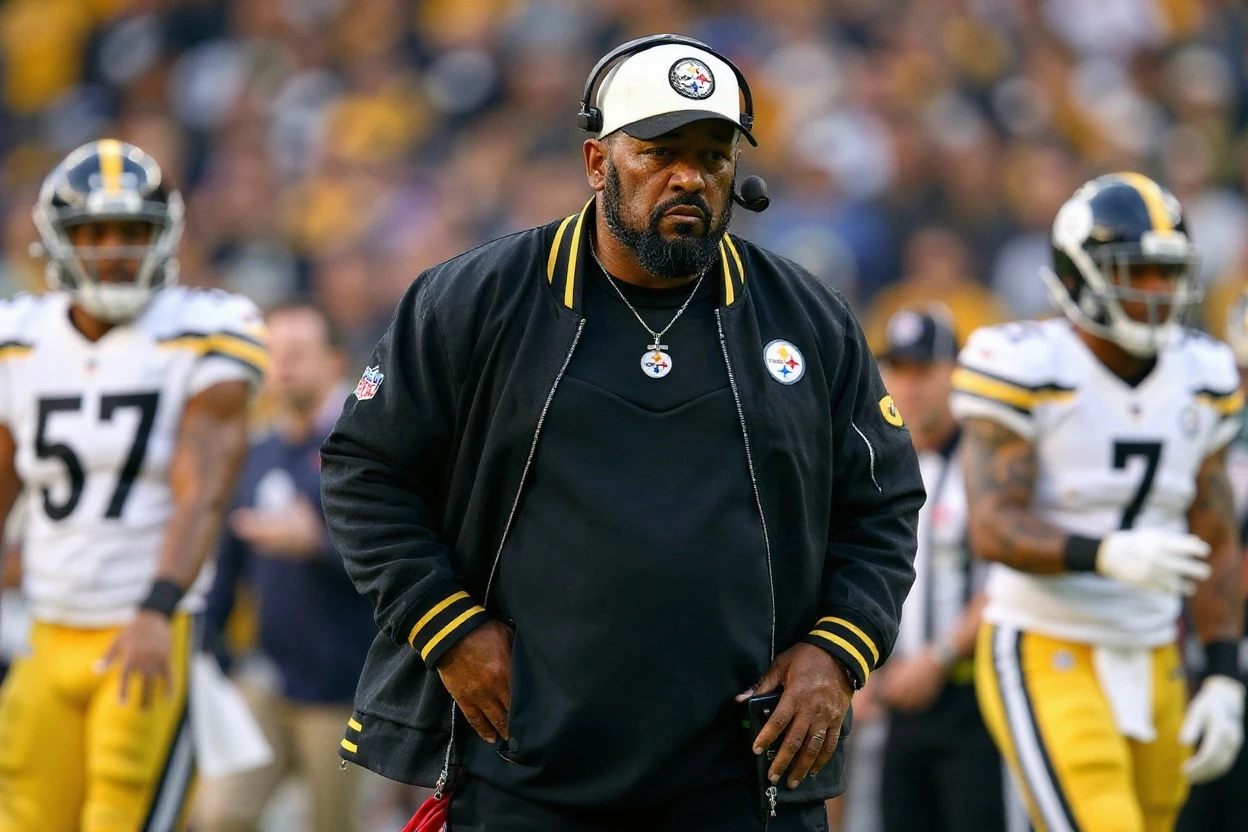
The Pittsburgh Steelers’ recent struggles have fueled a growing sense of frustration and disillusionment among their passionate fan base, with much of the criticism directed towards long-time head coach Mike Tomlin.
As the team’s fortunes have plummeted, the once-unwavering faith in Tomlin’s leadership has been shaken to its core.
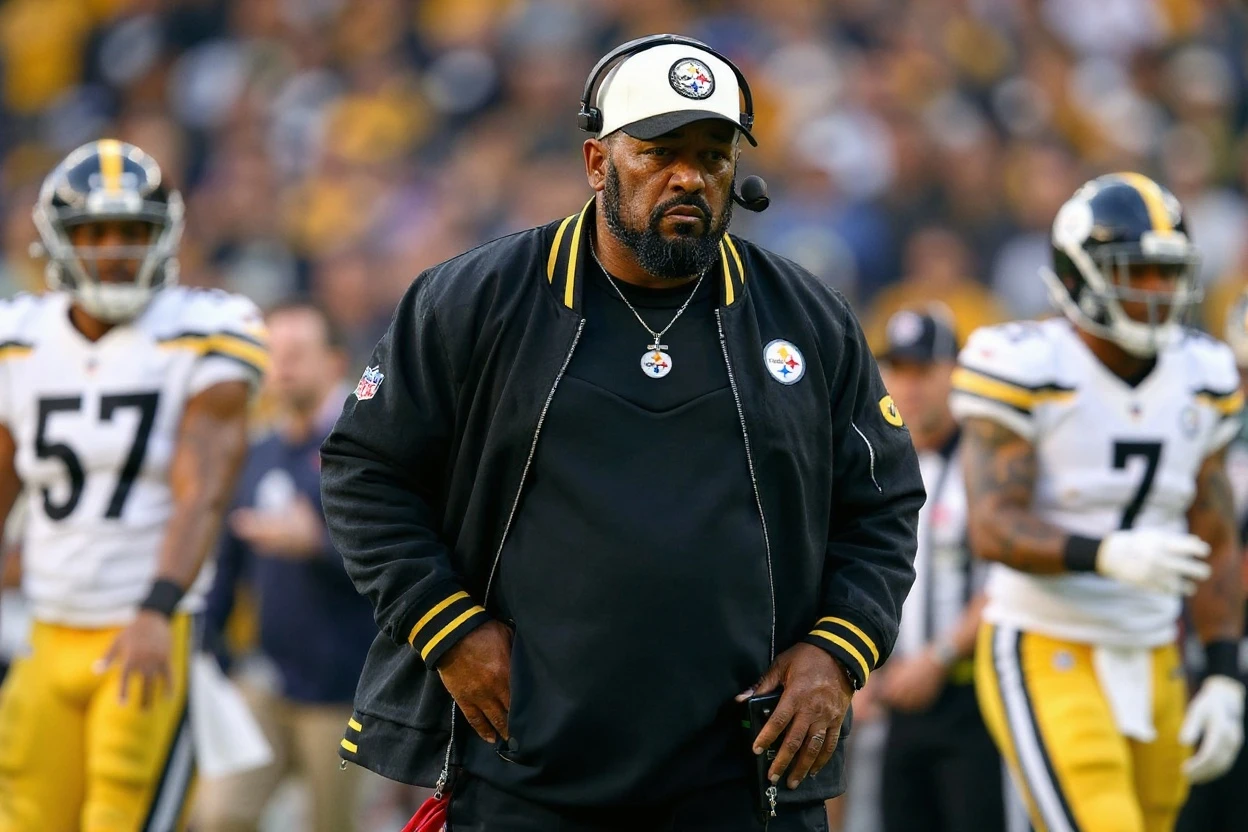
Mike Tomlin has coached the Pittsburgh Steelers since 2007, compiling a record that includes a Super Bowl title (Super Bowl XLIII), multiple AFC North division crowns, and a streak of 16 consecutive non-losing seasons that ended in 2023.
But the goodwill built over nearly two decades is eroding fast. A pattern of blowout losses, offensive inconsistency, and first-round playoff exits has pushed a significant portion of the Steelers’ fan base past frustration and into outright calls for change.
Unraveling the Unraveling: Pittsburgh’s Puzzling Plunge
The 26-7 loss to the Buffalo Bills served as a flashpoint. It was not just the margin — it was the manner. The Steelers were outgained, outcoached, and outcompeted for four quarters in a game that exposed every structural weakness on the roster.
For a franchise that built its identity on physical, disciplined football, that kind of performance lands differently.
Fans who had defended Tomlin through lean years found themselves running out of arguments. The phrase “unSteeler-like” has become shorthand in Pittsburgh for a brand of football that the organization’s most loyal supporters no longer recognize.
Echoes of Failure: When Winning Becomes a Whisper
The statistical trend is damning and worth examining closely. In Tomlin’s first 13 seasons — spanning 2007 through 2019 — Pittsburgh absorbed just 12 regular-season losses by 17 or more points across 208 games.
That works out to fewer than one blowout loss per season, a reflection of a team that competed hard regardless of the matchup. In the five seasons that followed, the Steelers have already matched nearly that entire total, accumulating 10 such losses.
That is not a sample-size anomaly. It is a structural decline, and the numbers make it difficult to dismiss as bad luck or a down cycle.
Broken Promises: Tomlin’s ‘Keep Watching’ Mantra Loses Luster
The quarterback situation deserves honest scrutiny rather than reflexive blame. Ben Roethlisberger’s retirement after the 2021 season left a genuine void, and Pittsburgh has cycled through Mitchell Trubisky, Kenny Pickett, and Russell Wilson without finding a long-term answer.
The Aaron Rodgers connection referenced in fan discussions reflects broader wishful thinking about a quick fix at the position — Rodgers remains with the New York Jets and has not been a Steeler.
What is accurate is that the Steelers have not committed to a franchise quarterback through the draft in the way that sustainable contenders typically do, and that organizational failure extends beyond Tomlin’s authority alone.
The Point of No Return: Fans Demand Change at the Helm
Tomlin’s press conference responses have become a source of particular irritation. His “Keep watching” deflections, once read as confident and defiant, now register as tone-deaf to a fan base that has been watching — and losing — for several seasons.
The team’s second-half collapses have been a recurring issue, with Pittsburgh ranking among the league’s worst in fourth-quarter scoring differential during losing seasons.
When a coach’s signature phrase becomes a punchline, the credibility gap has grown too wide to paper over with personality.

What Fans Are Saying About the Steelers’ Struggles
The locker room dynamic and the fan dynamic are two separate conversations, and conflating them obscures the real issue. Players generally respect Tomlin — his track record of player development and his ability to maintain culture during losing stretches is legitimate. But fan trust operates on a different currency: wins, playoff advancement, and evidence of a coherent plan.
The chants calling for Tomlin’s dismissal during the closing minutes of the Bills loss were not an isolated reaction from a fringe minority. They reflected a broader shift in sentiment among a fan base that has watched the franchise fall from perennial contender to a team fighting for wild-card positioning. The organization now faces a genuine inflection point.
The debate among Steelers fans is no longer binary — keep Tomlin or fire him. It has evolved into something more nuanced: what does a realistic path back to contention look like, and is Tomlin the right person to lead it?
Some fans acknowledge his strengths — player loyalty, consistent culture, and the ability to keep teams competitive during rebuilds — while arguing those qualities are not enough without a clear offensive identity and a franchise quarterback. Others point to the front office’s roster construction decisions as equally responsible for the current state of the team. The honest answer is that both things can be true simultaneously.
The Andy Reid comparison surfaces frequently in these discussions, and it is worth unpacking. Reid went 130-93-1 in 14 seasons with the Philadelphia Eagles, won nine division titles, and reached one Super Bowl — yet was let go after the 2012 season. He then built a dynasty in Kansas City, winning multiple Super Bowls and cementing his legacy as one of the greatest coaches in NFL history.
The parallel fans are drawing is clear: a talented coach in the wrong situation can thrive elsewhere. Whether Tomlin fits that profile is debatable. What is not debatable is that Pittsburgh’s quarterback situation — unresolved since Roethlisberger’s exit — has complicated every offensive scheme Tomlin has tried to implement, making fair evaluation of his coaching decisions genuinely difficult.
The Steelers’ organizational culture has historically prioritized stability over reactionary moves. As Fox News has noted, Pittsburgh has had only three head coaches since 1969 — Chuck Noll, Bill Cowher, and Tomlin — a level of continuity that is essentially unmatched in professional football. That institutional loyalty cuts both ways.
It has produced sustained competitiveness over decades, but it also means the organization is unlikely to make a change unless ownership — specifically Art Rooney II — concludes that the current trajectory is genuinely unsalvageable. A mutual parting or a structured transition is more consistent with how the Steelers operate than a mid-season firing. But the longer the blowout losses pile up, the harder that patience is to justify publicly.