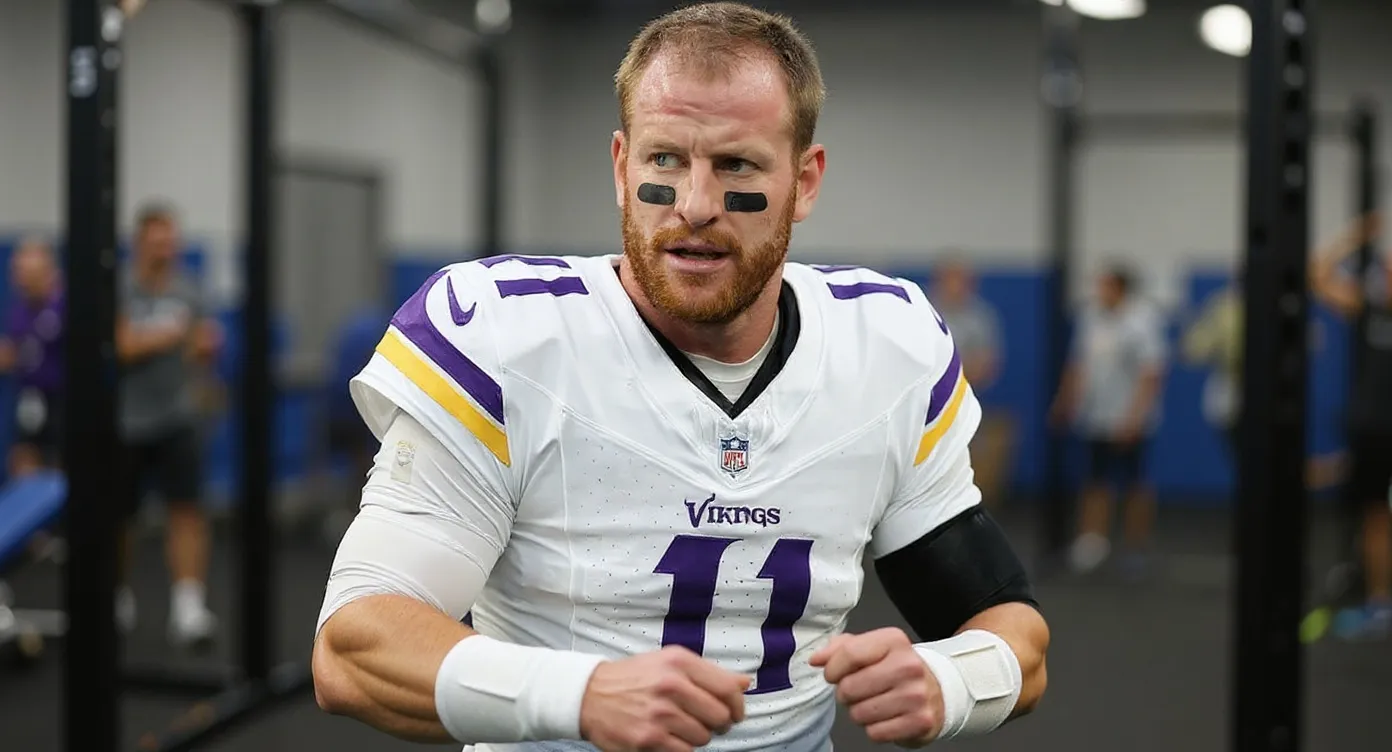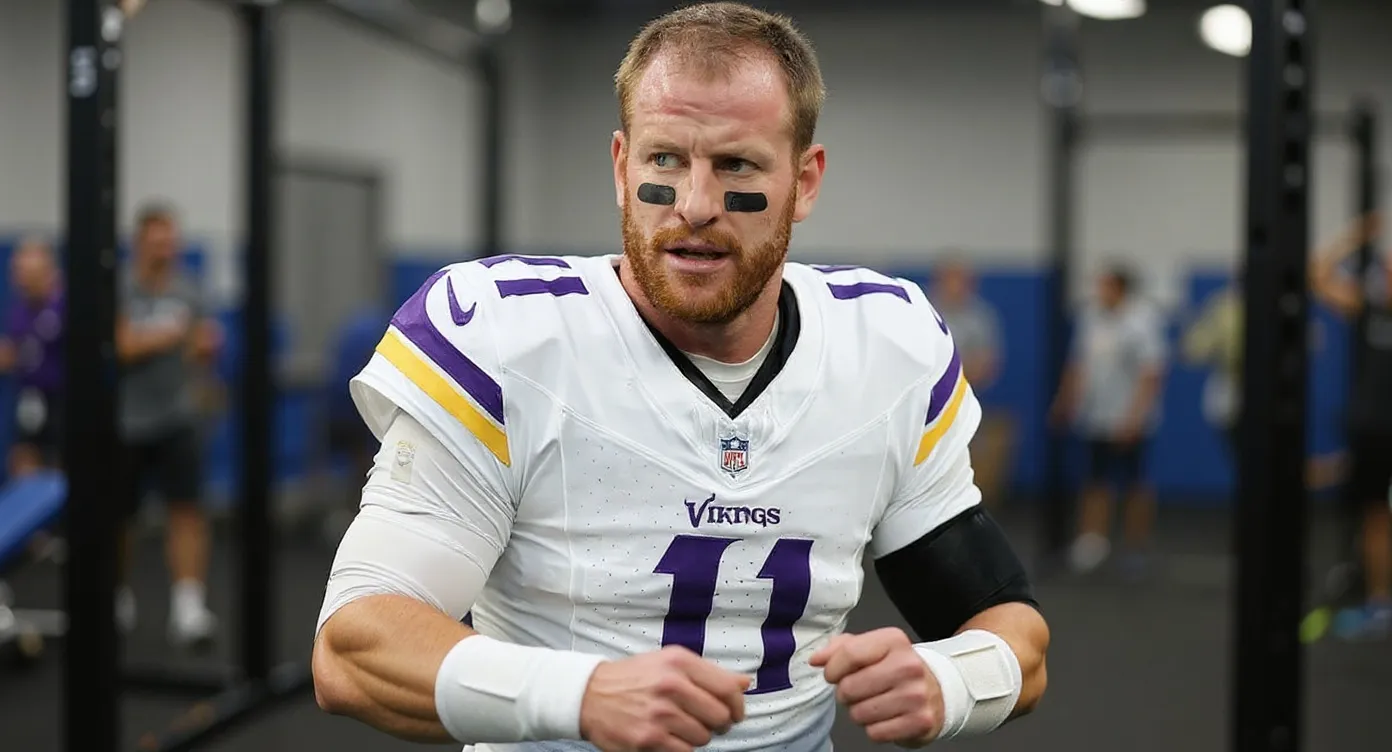
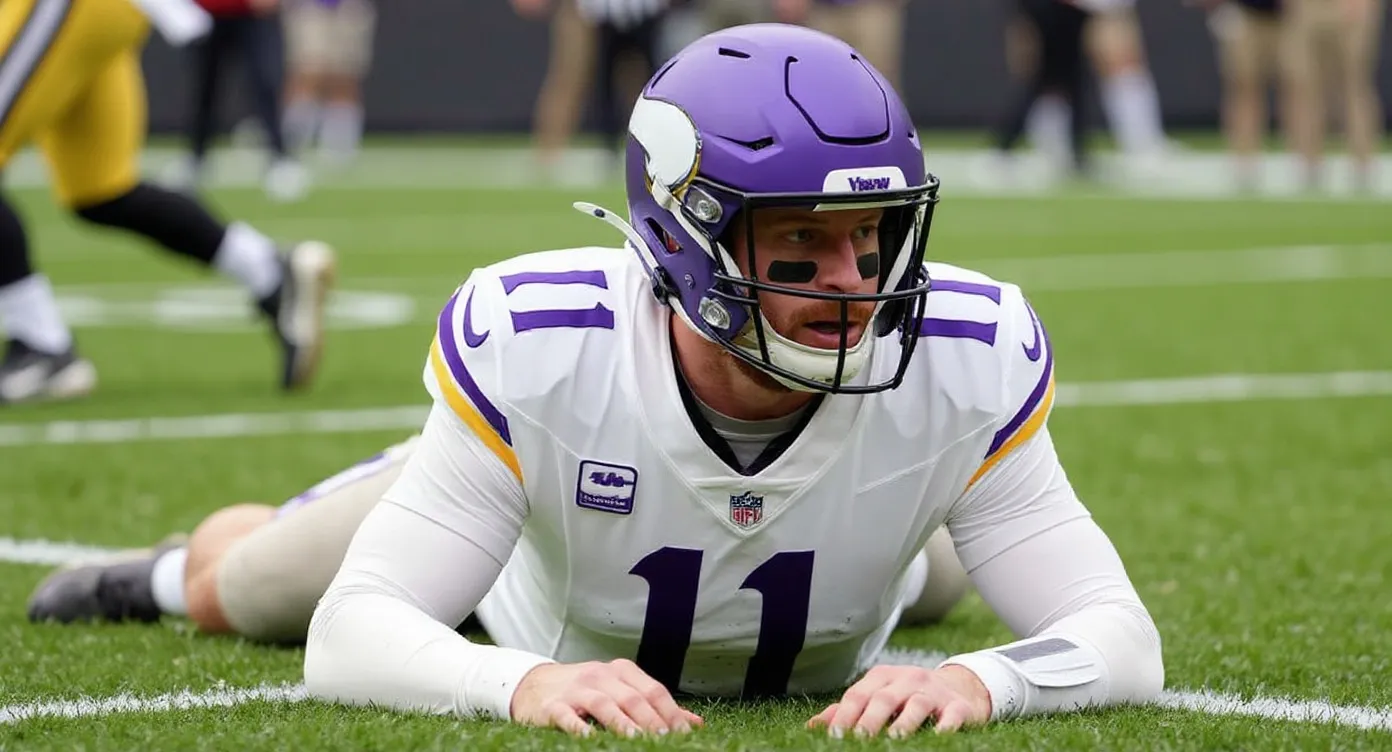
In a stunning turn of events, the Minnesota Vikings’ playoff aspirations have been dealt a severe blow as their starting quarterback, Carson Wentz, faces a season-ending surgery on his left shoulder.
The Minnesota Vikings’ 2024 playoff push took a critical hit when starting quarterback Carson Wentz was diagnosed with a left shoulder injury requiring season-ending surgery, effectively closing the book on his year before the calendar reached November.
The Fallen Warrior: Carson Wentz’s Brutal Injury
With Wentz out, the Vikings wasted no time elevating first-round rookie J.J. McCarthy to the starting role, handing him the keys to the offense ahead of a Week 9 road matchup against the Detroit Lions — one of the NFC’s most dangerous teams.
The injury confirmation arrived at one of the worst possible moments in the Vikings’ schedule. Minnesota had been firmly positioned in the NFC playoff picture, and Wentz’s experience managing games, reading defenses, and operating in two-minute situations had been central to that standing. His absence doesn’t just remove a player — it removes a layer of organizational stability that took years to build.
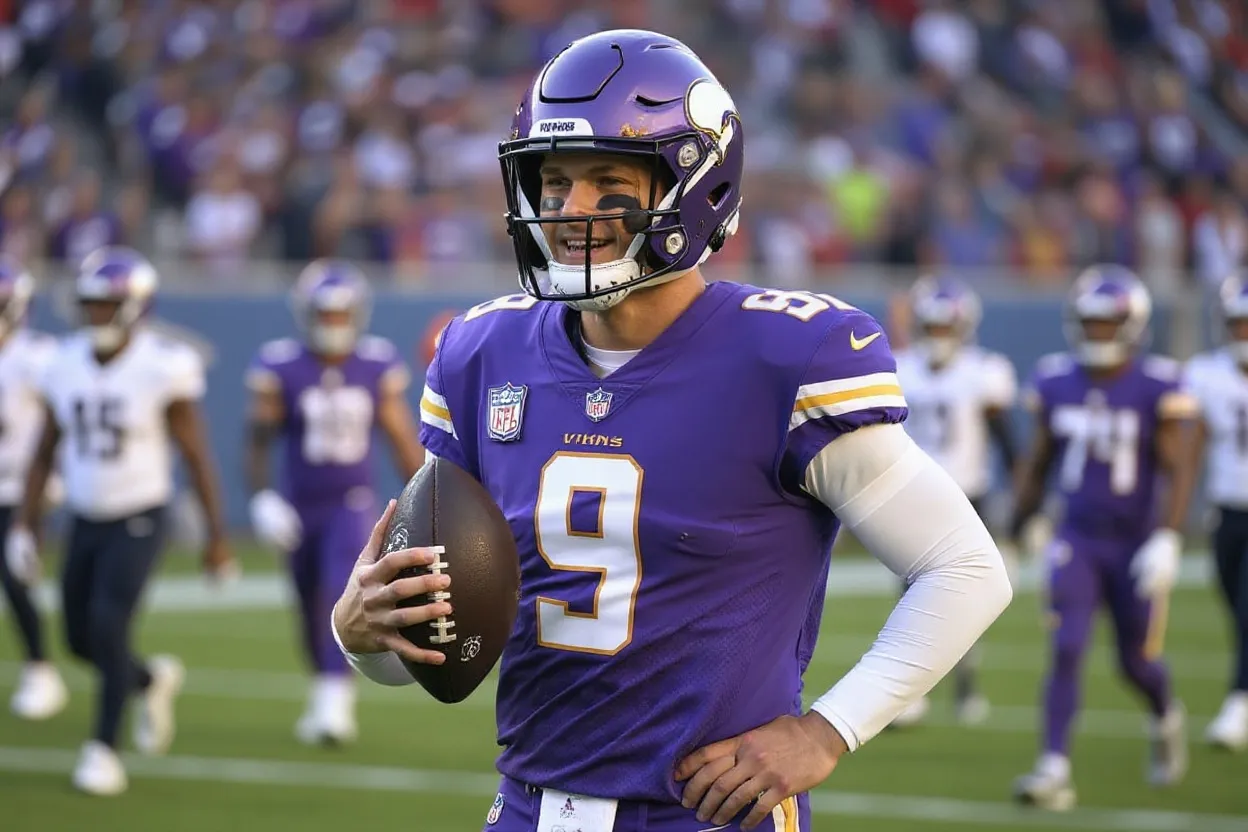
Rookie Revelation: J.J. McCarthy’s Moment to Shine
The timing compounds the difficulty. Detroit enters Week 9 as one of the NFC’s most complete teams, with a defense capable of exposing inexperienced quarterbacks through disguised coverages and aggressive front-seven pressure. For McCarthy, there is no softer landing — his first extended NFL audition comes against one of the conference’s most unforgiving environments.
The Vikings made the announcement official ahead of the Week 9 trip to Detroit, confirming what injury reports had been signaling for days. McCarthy’s promotion to QB1 was immediate, leaving the coaching staff a narrow window to adjust the game plan around a quarterback with fewer than 50 NFL pass attempts to his name.
Those who had been monitoring Wentz’s health closely were not caught off guard by the surgery news. But the official confirmation still carries real weight — Minnesota had structured its offensive identity around a veteran quarterback capable of managing complexity, and that foundation is now gone for the remainder of the season.
Vikings’ Gridiron Gamble: Navigating the Uncharted Waters
How McCarthy handles the transition — and how fast he can close the gap between college instincts and NFL execution — will likely define Minnesota’s season. The difference between a playoff berth and an early offseason could come down to a rookie’s development curve playing out in real time.
Wentz’s season deteriorated under relentless pressure from opposing defensive fronts, a pattern that ultimately proved unsustainable.
He absorbed 19 sacks totaling 125 yards lost before the left shoulder gave out — a figure that reflects both the offensive line’s ongoing protection issues and the cumulative physical toll of absorbing contact week after week at the NFL level. That sack total is not just a health concern; it signals a structural problem in pass protection that doesn’t disappear with a quarterback change.
Wentz also contributed 57 rushing yards on 11 carries before the injury, providing a dual-threat dimension that gave Minnesota’s offense an element of unpredictability. That mobility, however modest, added stress to opposing defenses and opened up play-action opportunities that the Vikings will now need to replicate through scheme rather than quarterback athleticism.
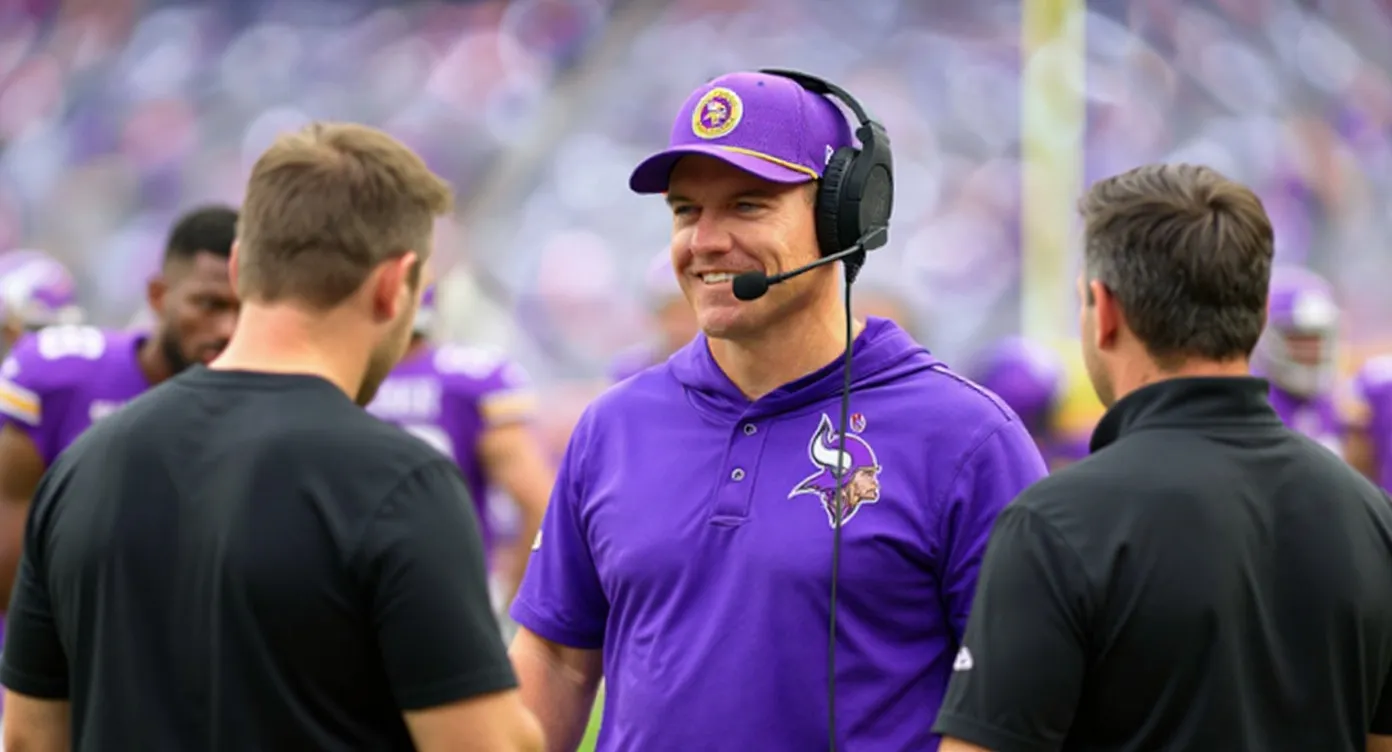
Defying the Odds: Can Minnesota Overcome the Setback?
Replacing the veteran steadiness Wentz brought to late-game management, red zone decision-making, and two-minute drill execution is not something any coaching staff can simply draw up on a whiteboard. Those are skills built through years of NFL reps, and no amount of preparation fully substitutes for lived experience under pressure.
McCarthy enters the starting role with early-season numbers that are encouraging in flashes but still reflect a quarterback in the early stages of NFL calibration: 331 passing yards on 48 attempts, a 58.3% completion rate, 2 touchdown passes, and 3 interceptions. He also added 58 rushing yards on 8 carries with a rushing touchdown, showing the mobility that made him attractive as a prospect.
Those are the production lines of a quarterback still adjusting to NFL speed, defensive complexity, and the mental processing demands of a 17-week season. The problem is that the situation no longer allows for a gradual development timeline — McCarthy is being asked to perform at a starter’s level before most rookies have even settled into a backup role.
McCarthy was the 10th overall pick in the 2024 NFL Draft out of Michigan, where he quarterbacked the Wolverines to a College Football Playoff national championship under head coach Jim Harbaugh, as the Detroit News reported. His pedigree is legitimate — he won at the highest level of college football and demonstrated the poise and decision-making that scouts prize in franchise quarterback prospects.
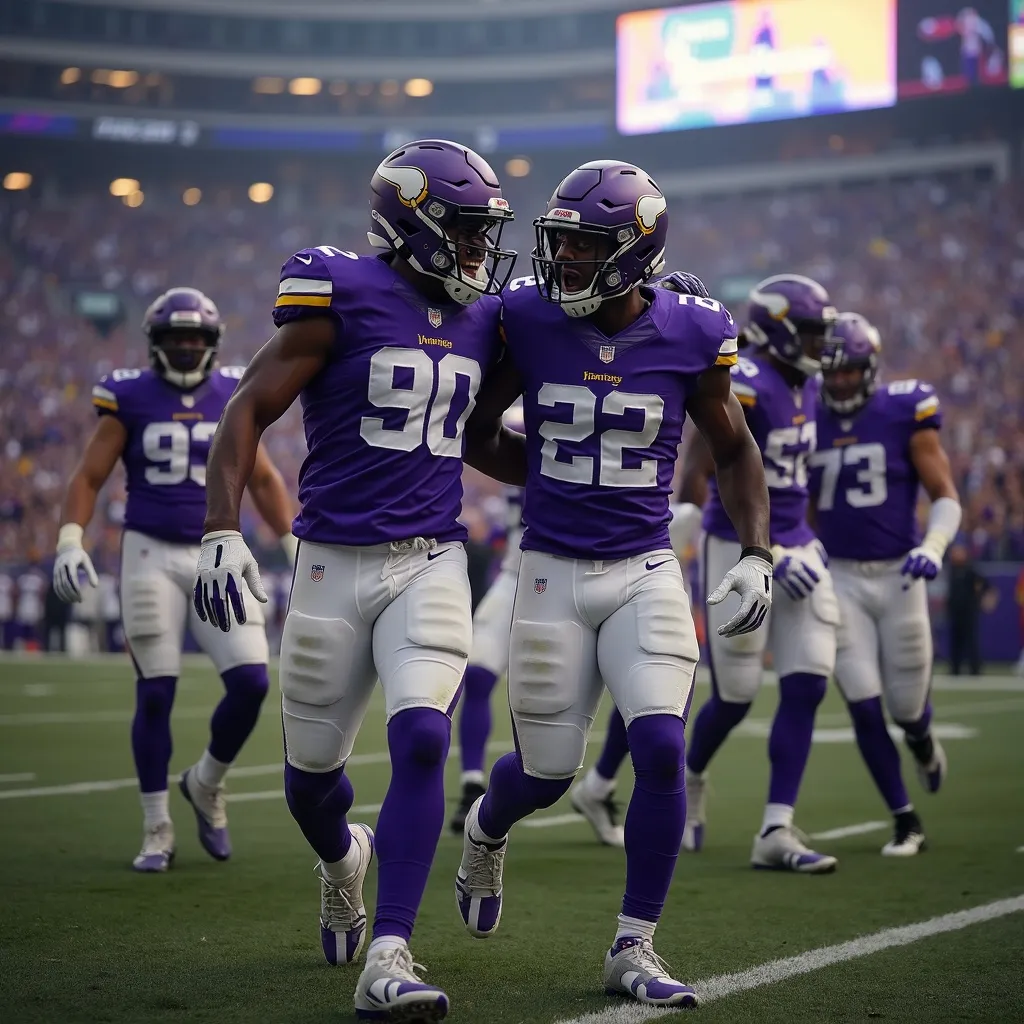
The Comeback Trail: Wentz’s Road to Redemption
The Vikings made a calculated long-term investment in McCarthy’s ceiling when they selected him in the first round, and now they need an accelerated return on that investment. His ability to process pre-snap information quickly, protect the football against Detroit’s pass rush, and execute efficiently under pressure will serve as the first real measure of whether that draft-day conviction was justified.
Head coach Kevin O’Connell and offensive coordinator Wes Phillips now face the challenge of rebuilding an offensive structure around a quarterback with a fraction of Wentz’s NFL experience. The schematic adjustments they make in the coming weeks will be as important as anything McCarthy does on the field.
Through eight weeks, Minnesota’s offense had been operating at a productive clip — 587 plays run, 2,927 total yards accumulated, and 200 points scored. Those numbers reflect a functional unit that was moving the ball and finishing drives at a respectable rate under Wentz’s direction.
The concern, however, is the pass protection. The Vikings surrendered 224 yards on 35 sacks through the first eight weeks — a protection problem that becomes significantly more dangerous with a rookie quarterback who is still developing the ability to identify pressure pre-snap, manipulate the pocket, and get the ball out on time before the rush arrives.