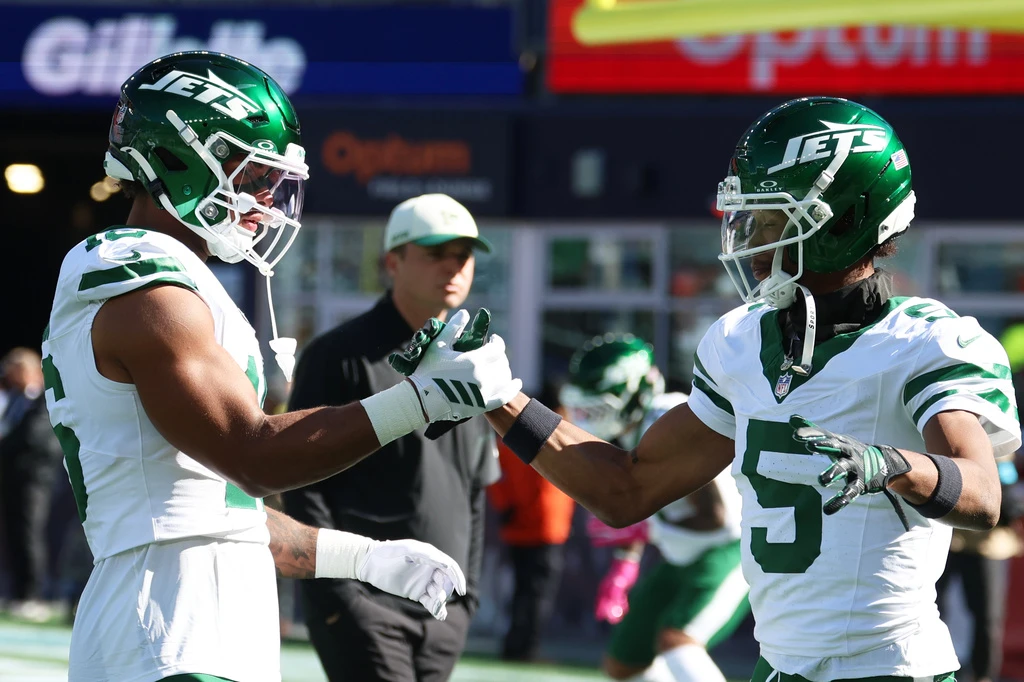
The New York Jets and Miami Dolphins enter their Week 7 meeting with losing records, but the standings do not tell the same story about both AFC East teams.
Through games completed on Oct. 22, New York is 2-4 with 112 points scored and 122 allowed. Miami is 0-5 with 70 points scored and 132 surrendered, according to the NFL standings.
That leaves the Jets with a minus-10 point differential, or an average margin of minus-1.7 points per game. The Dolphins’ minus-62 differential works out to minus-12.4 points per game.
The gap illustrates the central difference between the two roster transitions. New York is trying to remain competitive while integrating a large collection of young talent. Miami is operating under much tighter salary-cap constraints and giving prominent roles to an unusually large rookie class.
Both teams have accumulated draft assets and moved away from expensive veterans. Neither, however, has publicly said it is trying to lose.
In fact, Dolphins general manager Jon-Eric Sullivan said before the season, “We’re here to win.” Describing either organization as intentionally losing would go beyond the available evidence.
What can be established is that both front offices have accepted short-term limitations as part of longer roster-building projects.
New York converted veteran stars into premium picks
Jets general manager Darren Mougey and head coach Aaron Glenn are in their second season together after New York finished 3-14 in 2025.
The clearest evidence of the organization’s change in direction came before the 2025 trade deadline. New York sent cornerback Sauce Gardner to Indianapolis and defensive tackle Quinnen Williams to Dallas, turning two established defensive players into a collection of players and high draft selections.
According to the Jets’ official account of the trades, the Gardner deal returned wide receiver Adonai Mitchell and Indianapolis’ first-round picks in 2026 and 2027. The Williams trade brought defensive tackle Mazi Smith, Dallas’ 2026 second-round selection and the Cowboys’ 2027 first-round pick.
Those transactions helped New York build one of the NFL’s most valuable draft portfolios. The Jets eventually made three first-round selections in 2026: edge defender David Bailey at No. 2, tight end Kenyon Sadiq at No. 16 and wide receiver Omar Cooper Jr. at No. 30.
They also retain their own 2027 first-round selection in addition to the picks acquired from Indianapolis and Dallas. Draft positions and ownership can change through later trades, but New York currently has the potential to make six first-round selections across the 2026 and 2027 drafts.
That is a more precise description than saying the Jets are simply waiting for the future. New York has already begun using the capital it acquired, and its first-year players are contributing immediately.
Bailey has started all six games and recorded 31 combined tackles, five sacks and three forced fumbles, according to the Jets’ official statistics. Three of his sacks came in a 17-12 victory over Cleveland.
Sadiq has 15 receptions for 158 yards and one receiving touchdown. He also scored on a three-yard run in the season opener. His biggest performance came against Detroit, when he caught seven passes for 105 yards and a touchdown.
Cooper missed four games after suffering an ankle injury in Week 1, but he returned against New England with six receptions for 103 yards and a touchdown. Including his 30-yard reception before the injury, Cooper has 133 receiving yards through two appearances.
The rookies’ early production does not establish that the rebuild will succeed. It does show that the Jets are already receiving meaningful returns from the first stage of their draft investment.
Geno Smith gives the Jets a competitive bridge
New York’s quarterback strategy also complicates the suggestion that the team has abandoned the present season.
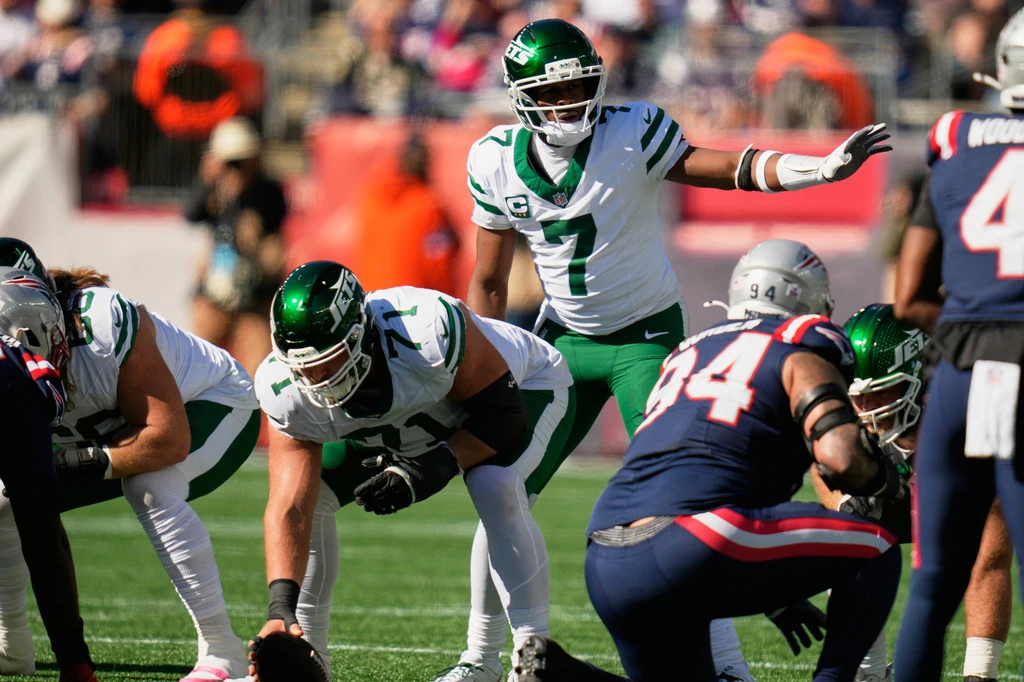
The Jets acquired veteran Geno Smith during the offseason, and he has provided steady production through six starts. Smith has completed 122 of 177 attempts for 1,336 yards, seven touchdowns and one interception. His 68.9% completion rate and 101.8 passer rating have helped New York remain competitive despite its 2-4 record, according to his official team profile.
Smith’s presence gives the Jets time to evaluate the rest of the roster without forcing a rookie quarterback into the lineup. New York did select Cade Klubnik in the fourth round, but the team has not committed publicly to using a future first-round pick on another quarterback.
The available evidence therefore supports describing Smith as a veteran bridge. It does not support treating the Jets’ next quarterback decision as settled.
New York is also carrying substantial financial residue from earlier roster decisions. A pre-draft salary-cap review placed the Jets at approximately $111.2 million in 2026 dead money, the third-highest total in the league at that point. That broader figure is more useful than attributing an unverified $48 million specifically to Aaron Rodgers and Justin Fields.
Even with those constraints, the Jets’ minus-10 point differential suggests they are closer to fielding a competitive team than their record alone implies. Their challenge is turning narrow margins and promising individual performances into consistent results.
Miami’s overhaul is broader and more financially restrictive
Miami’s transition began with a complete leadership change. The Dolphins hired Sullivan as general manager in January 2026 and named Jeff Hafley their head coach later that month.
Sullivan has repeatedly described Miami as a “draft-and-develop” organization. His stated model is to build a young roster, retain the players who become difference-makers and use outside free agency selectively. That philosophy is consistent with Miami’s offseason decisions, although it should not be interpreted as an admission that the team is sacrificing games.
The Dolphins entered the season with a historically large amount of dead salary-cap space.
A pre-draft estimate placed the figure at approximately $179.2 million, more than $67 million above the next-highest team at the time. The total included charges associated with players no longer on the roster, including Tua Tagovailoa, Tyreek Hill, Jaylen Waddle, Jalen Ramsey, Minkah Fitzpatrick and Bradley Chubb.
Dead money is a cap charge tied to a player who has been traded, released or retired. It does not necessarily represent cash being paid during the current season, but it reduces the accounting room available to construct the active roster.
Miami also traded Waddle to Denver in March, before the 2026 regular season. The Dolphins received the 30th, 94th and 130th selections in the 2026 draft while sending Waddle and the 111th pick to the Broncos, according to the official transaction announcement.
That timing matters because the original draft incorrectly credited Waddle with 2026 receiving statistics for Miami. He could not have produced regular-season numbers for the Dolphins after being traded several months before the season began.
Miami used the additional capital as part of a 13-player draft class, the largest of the 2026 cycle. The group included two first-round selections, offensive lineman Kadyn Proctor at No. 12 and cornerback Chris Johnson at No. 27, followed by linebacker Jacob Rodriguez at No. 43.
All three have moved directly into major roles.
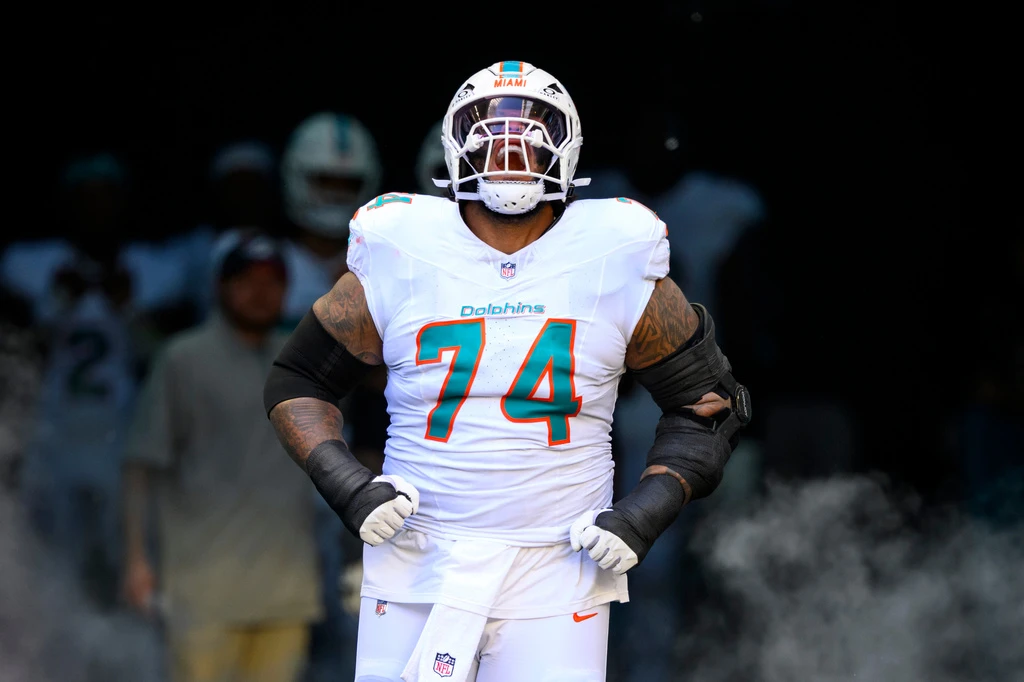
Proctor has started on the offensive line, while Johnson and Rodriguez have played extensively on defense. Rodriguez has been the most statistically prominent of the group. Through five games, he has 57 combined tackles, an average of 11.4 per game, plus an interception. His total led the NFL after Miami’s Week 5 loss to Cincinnati, according to the Dolphins’ official review.
Rodriguez also made 18 tackles against Minnesota. The Dolphins identified that performance as the franchise’s rookie single-game record since tackles became an official statistic in 1994.
Those achievements are significant, but they have come within a difficult team start. Miami has scored only 14 points per game while allowing 26.4. Young-player development may be an important part of the season, but it does not erase the offensive and defensive shortcomings behind the 0-5 record.
The next stage must be measured by more than draft position
The Jets and Dolphins have both emphasized younger, more affordable rosters, yet their immediate circumstances are different.
New York has a productive veteran quarterback, a relatively modest negative point differential and three 2026 first-rounders already contributing. Miami has a new leadership team, the league’s largest 2026 draft class and far heavier dead-money constraints.
That distinction makes firm predictions about 2027 premature. Neither team has publicly guaranteed that it will contend next season, and future cap-space projections can change through contract extensions, releases, restructures and trades.
For now, the most useful measures are player development, positional stability and improvement in team performance. The Jets need their promising rookie production to translate into more victories. The Dolphins need their young starters to develop while the front office works through the financial consequences of the previous roster.
Sunday’s meeting will not determine whether either rebuilding plan ultimately works. It will, however, provide another test of whether the young players at the center of those plans are beginning to close the gap between long-term promise and present-day results.