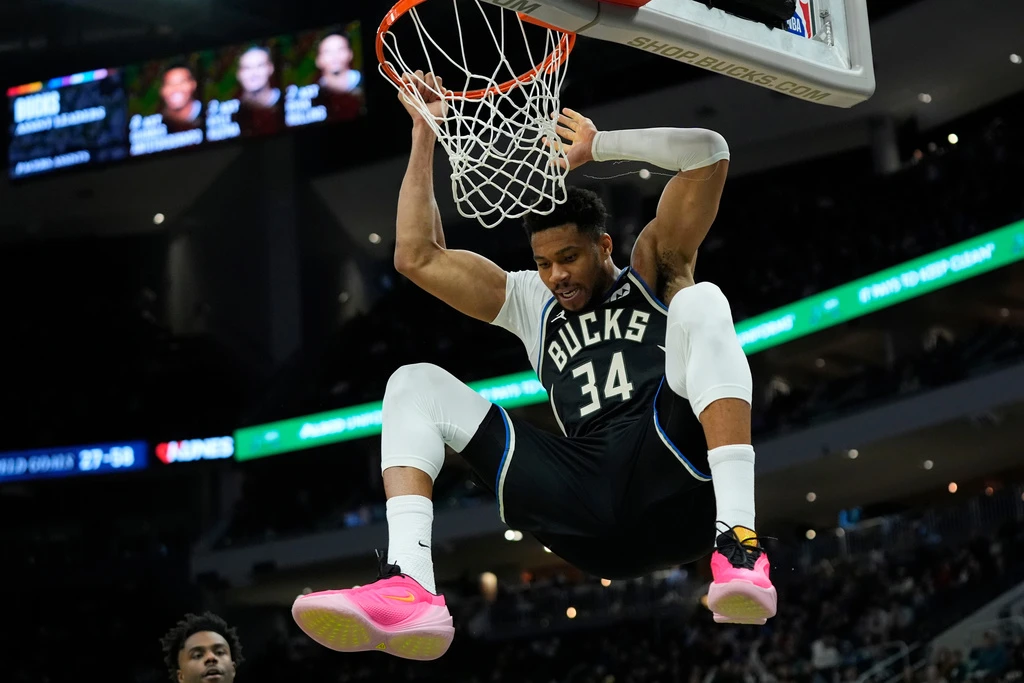
The Milwaukee Bucks have made a seismic decision—Giannis Antetokounmpo, a two-time MVP with two years remaining on his contract, is now available on the trading block.
The Milwaukee Bucks have made one of the most stunning front-office decisions in recent NBA history — placing Giannis Antetokounmpo, a two-time MVP with two years and roughly $113 million remaining on his supermax contract, officially on the trade market.
Giannis earned the “Greek Freak” nickname for a reason: at 6 feet 11 inches and 243 pounds, he combines the speed of a guard with the power of a center, a physical profile that has no true precedent in NBA history and has made him one of the most unguardable players the league has ever seen.
Drafted 15th overall out of Greece in 2013, Giannis has spent 12 seasons building one of the most decorated individual resumes in franchise history — 10 All-Star selections, two MVP awards (2019, 2020), a Defensive Player of the Year honor in 2020, and a Finals MVP in 2021, all catalogued by Basketball-Reference. That he now faces an uncertain future with the organization that developed him from a raw teenager into a global superstar makes this moment genuinely historic.
This is not a leak or a negotiating tactic. Bucks ownership has publicly signaled that waiting until October — when training camp opens and Giannis would have just one year left on his deal — is not an option. The franchise needs clarity on its direction before the 2026 NBA Draft, and that urgency is driving the timeline.
The decision to make Giannis available did not emerge from a single bad season. It is the product of years of compounding organizational dysfunction — coaching instability, roster mismanagement, and a failure to build a sustainable supporting structure around a generational talent.
Doc Rivers was dismissed after three seasons that produced a 97-103 regular-season record, two first-round playoff exits, and a missed postseason entirely. His tenure exposed a fundamental disconnect between coaching philosophy and player expectations, and the dysfunction was compounded by a devastating injury to Damian Lillard that derailed the franchise’s most ambitious roster construction in years.
The Giannis-Lillard partnership was supposed to be Milwaukee’s shortcut back to championship contention. Instead, it became a cautionary tale — a high-cost, high-expectation pairing that never found its footing due to Lillard’s Achilles injury, inconsistent roster depth, and a coaching staff that could not stabilize the locker room around two franchise-level stars.
Milwaukee’s 2021 championship now stands as an isolated peak rather than the beginning of a dynasty. In the five seasons since, the Bucks have failed to advance past the second round, and management has run out of patience for incremental fixes that have consistently fallen short of the standard that title set.
Ten Teams Are Ready to Pounce: Who Has the Assets to Land Giannis?
The willingness to trade Giannis — the player who delivered Milwaukee its first championship in 50 years — a title NBA.com chronicled — signals something deeper than a roster reset. It raises a fundamental question about whether even a generational talent can overcome structural organizational failure, and whether the Bucks’ front office has the credibility to rebuild from the rubble of its own decisions.
The moment Milwaukee made Giannis available, the league’s most ambitious franchises began calculating their offers. From Golden State’s championship infrastructure to Miami’s defensive identity, multiple contenders are positioning themselves for what would be the most significant trade acquisition since Kevin Durant joined the Warriors in 2016.
The Lakers, Celtics, Cavaliers, Rockets, Timberwolves, Knicks, and Trail Blazers all possess the combination of young talent, draft capital, and salary-matching contracts that Milwaukee’s front office is demanding in return for a player of Giannis’s caliber.
Western Conference contenders including the Nuggets, Mavericks, and Suns — who reached the NBA Finals in 2021 — also represent serious bidders with the organizational credibility and asset depth to construct competitive packages. Any of these teams landing Giannis would immediately reshape the conference’s power structure.
Each potential destination offers a different pathway to contention. Some franchises bring young star power and long-term upside; others offer proven veterans, immediate championship windows, and the draft capital Milwaukee needs to begin a legitimate rebuild. The Bucks will weigh all of it.
Trades of this magnitude — a supermax player in his prime with two years remaining — typically require multiple first-round picks, at least one established young star, and salary-matching veterans. The complexity of assembling a package that satisfies Milwaukee while also fitting under the second apron of the luxury tax makes this one of the most logistically challenging deals in recent memory.
Bucks ownership has been direct about the stakes. As co-owner Jimmy Haslam stated: “Before the draft is a natural time. Because if Giannis does play somewhere else, we’ve got to have a lot of assets. That’s [general manager] Jon [Horst]’s job to do, and if he’s here, then you build the team differently.” That is not the language of a franchise bluffing — it is a franchise setting a hard deadline.
What follows is a high-stakes auction unlike anything the league has seen in years. Only the franchises willing to overpay in assets, absorb risk, and move decisively will have a real shot at landing the most coveted trade target in the NBA.
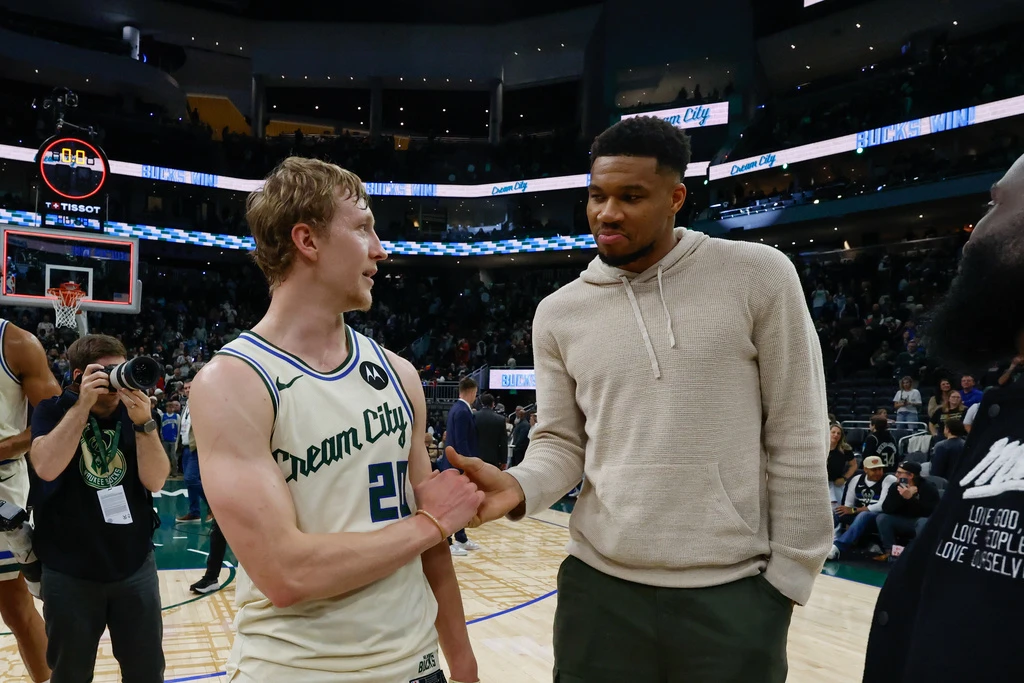
The Heat’s Desperate Gamble: All-In or Nothing After Play-In Heartbreak
The competition sharpens when you factor in Giannis’s current production. He is averaging 27.6 points per game in the 2025-26 season while remaining one of the league’s elite rim protectors and switchable defenders. Every front office bidding on him is calculating the same equation: does acquiring him now, at this cost in assets, open a genuine championship window — or does it mortgage the future for a two-year gamble?
The Miami Heat have spent four consecutive seasons trapped in the NBA’s most frustrating middle ground — good enough to make the play-in tournament, not good enough to make a deep playoff run. That stagnation has become organizationally unacceptable.
A play-in elimination loss to the Charlotte Hornets crystallized the problem. The Heat are not a bad team, but they are not a contender, and the gap between those two things has not closed despite multiple offseason adjustments. The front office now faces a binary choice: continue tinkering at the margins or make a move that fundamentally changes the franchise’s ceiling.
Pursuing Giannis is Miami’s nuclear option — a declaration that the Heat Culture era of incremental development and system-first basketball is no longer sufficient to compete at the highest level in the modern NBA.
The fit is genuinely compelling. Pairing Giannis with Bam Adebayo would create one of the most versatile and physically imposing frontcourts in the league, with both players capable of defending multiple positions and operating as primary playmakers. Under Erik Spoelstra — one of the most tactically sophisticated coaches in the NBA — that combination could anchor a legitimate championship contender.
Miami’s trade package centers on Tyler Herro, a proven 20-plus point-per-game scorer, alongside Kel’el Ware, one of the more intriguing young bigs in the league, plus multiple first-round picks. Whether that package clears Milwaukee’s asking price remains the central question, but the Heat have the pieces to make a serious offer.
For Miami, this is not routine trade speculation. It is an organizational inflection point — an acknowledgment that the current roster construction has reached its ceiling and that bold action is the only path back to the conference finals and beyond.
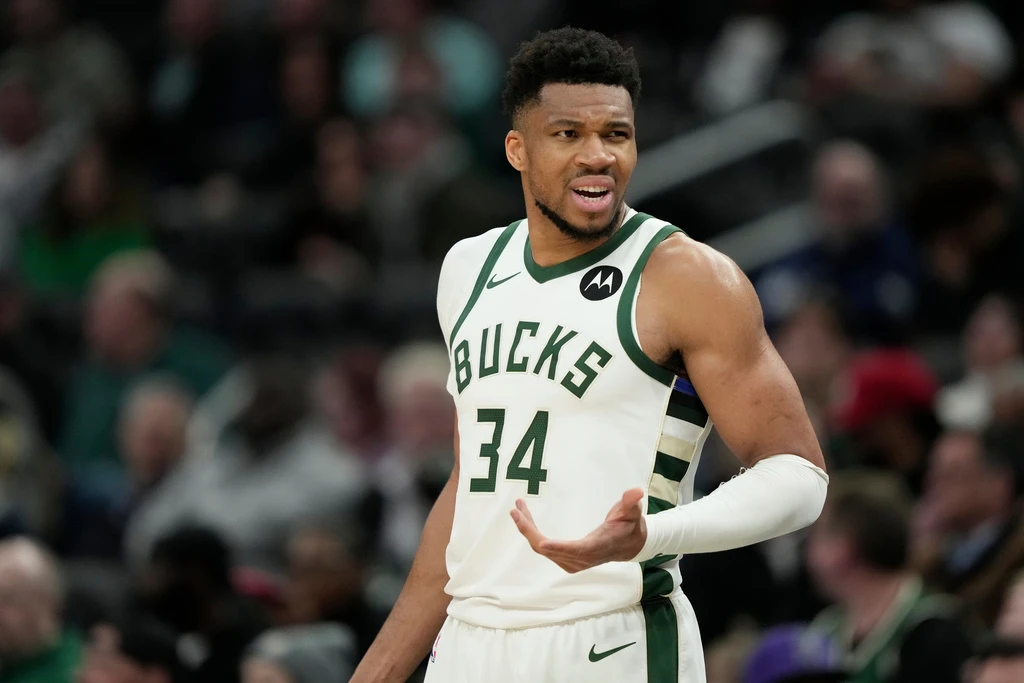
The Rebuild Begins: Meet the Five Coaches Who Could Lead Milwaukee’s Reset
Geography and conference positioning matter here. A Giannis-Adebayo pairing in the East would immediately make Miami one of the two or three most dangerous teams in the conference, with a realistic path to multiple Finals appearances within the two-year contract window.
Whether or not a Giannis trade materializes, the Bucks are executing a full organizational reset. The roster, the coaching staff, and the front-office philosophy are all under review simultaneously — a level of structural upheaval the franchise has not seen since the pre-Giannis era.
Doc Rivers’ dismissal after three seasons — a 97-103 record, two first-round exits, and one missed playoff — was the most visible symptom of a deeper problem. The coaching staff never established the kind of trust and accountability that championship-level teams require, and the disconnect between Rivers’ system and the expectations of a locker room built around a two-time MVP proved irreconcilable.
Replacing Rivers is the easier part of the equation. The harder challenge is identifying a coach with the vision, credibility, and interpersonal skills to rebuild a fractured locker room — and to do so while inheriting either the wreckage of a post-Giannis rebuild or the pressure of maximizing a superstar’s final contract years.
Taylor Jenkins is the frontrunner with the most relevant credentials. He transformed the Memphis Grizzlies from a lottery team into a legitimate playoff contender, developing Ja Morant and a young core into one of the most exciting teams in the Western Conference before his departure. His track record with player development and culture-building is exactly what Milwaukee needs.
Darvin Ham brings championship pedigree from his time on Milwaukee’s own 2021 title staff, while James Borrego has demonstrated the ability to run a modern offensive system and develop young talent during his tenure in Charlotte and New Orleans.
Sam Cassell and Chris Quinn represent the next generation of NBA coaching candidates — respected voices within the league’s coaching community whose reputations have grown steadily through their work as assistants on high-functioning staffs.