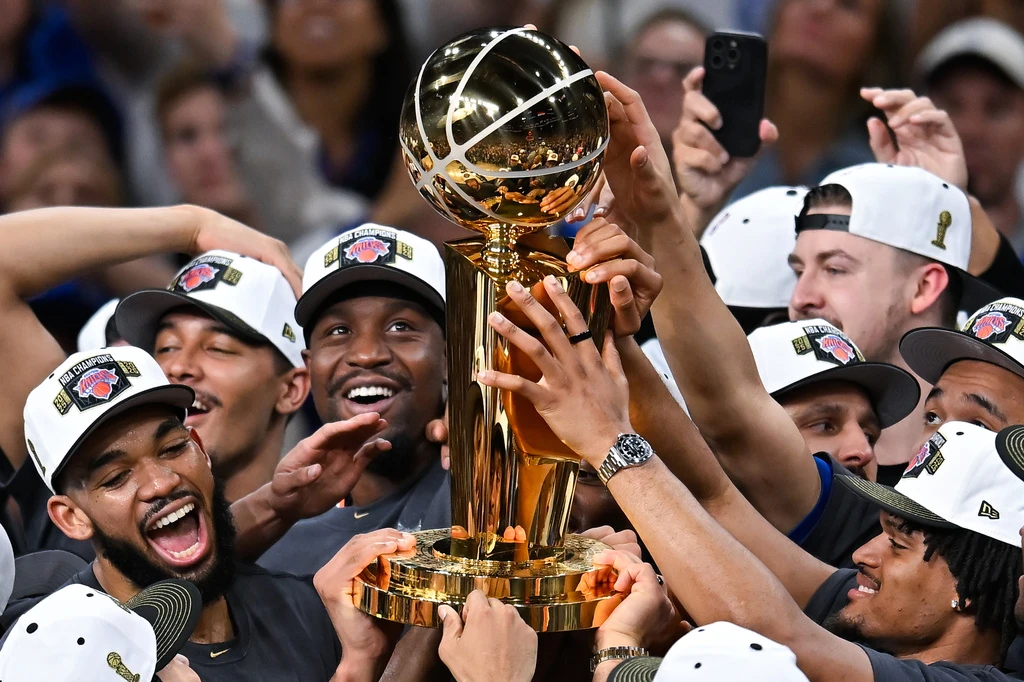
The San Antonio Spurs’ remarkable season came to a heartbreaking end in the NBA Finals, but their youthful core has them poised for sustained success in the years ahead.
The Spurs’ Promising Future
The San Antonio Spurs’ season ended on the NBA’s biggest stage, but a five-game Finals loss to the New York Knicks doesn’t define what this franchise is building — it confirms it. A young core that reached the championship round in Year 2 of a deliberate rebuild has the rest of the league on notice.
San Antonio’s season concluded under the brightest lights in professional basketball, but the 4-1 series result against New York tells an incomplete story. The fuller picture — a roster anchored by three players still years from their primes, navigating the NBA Finals for the first time — signals that the Spurs aren’t a surprise contender. They’re a program under construction, and the construction is going exceptionally well.
Losing the NBA Finals hurts. Losing it in five games to a Knicks franchise that hadn’t won a championship since 1973, the last title in New York Knicks history as noted by Fox News, compounds that pain. But context matters here: San Antonio wasn’t supposed to be in this series. The Spurs earned their way to the Finals through four rounds of playoff basketball with a roster that was still accumulating the kind of high-stakes experience that can’t be simulated in the regular season. The collapses, the momentum swings, the late-game breakdowns — all of it is now institutional knowledge that this group carries into next season. The Spurs paid for that education in losses. The return on that investment is coming.
Heartbreak in the Finals
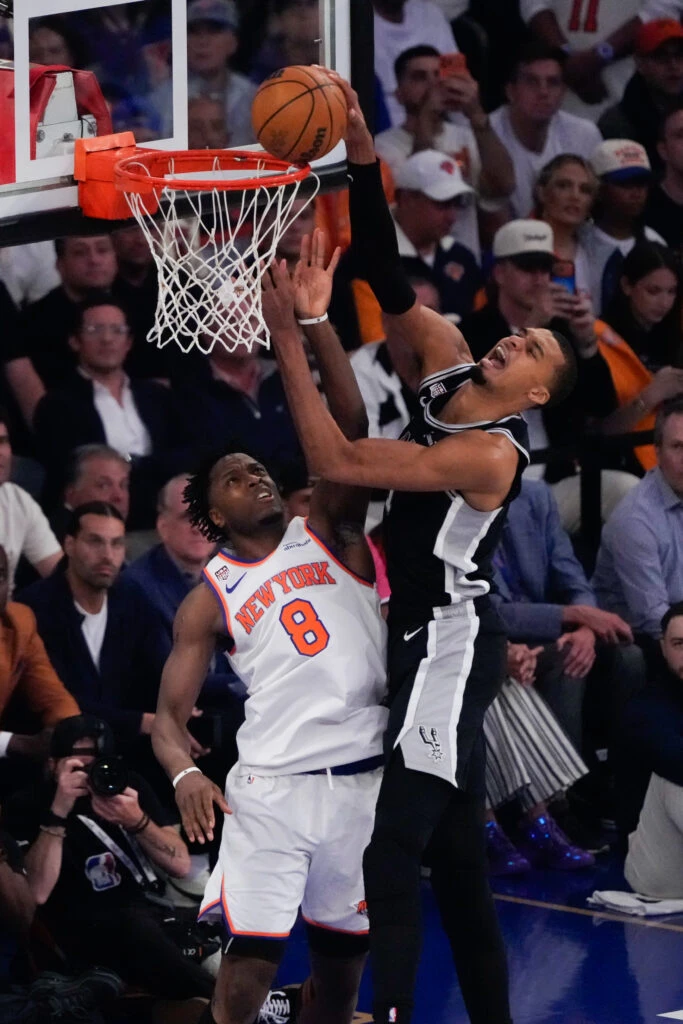
San Antonio’s run to the Finals — in only the second year of a youth-centered rebuild — reframes the 4-1 series result entirely. This wasn’t a team that backed into the championship round on a favorable bracket or a soft conference. The Spurs earned every series win with a roster still learning what sustained playoff pressure actually demands. The experience absorbed across those five Finals games — the defensive breakdowns, the offensive stalls, the inability to protect leads in the final minutes — is precisely the kind of hard-won knowledge that no amount of regular season basketball can replicate. San Antonio paid for it in losses. It will collect on that investment when this group returns to this stage, and the evidence suggests that return is a matter of when, not if.
Few credible analysts had the Spurs in the Finals conversation when training camp opened in October. The head coach was in his first year on the job, the supporting cast was unproven at the playoff level, and the roster’s average age made a deep postseason run look optimistic at best. Victor Wembanyama, Stephon Castle, and Dylan Harper made all of that look irrelevant by March. The three collectively outperformed every reasonable preseason projection, carrying a franchise with modest championship expectations through the most demanding stretch of basketball their careers had seen. The Finals loss stings. The trajectory it confirms does not.
The statistical case for this group’s ceiling is already compelling, and none of them have reached their prime. Wembanyama posted 736 made field goals and swatted 277 shots across the season — a block total that placed him among the league’s elite rim protectors and reinforced his standing as the most complete defensive big man in the NBA. Castle distributed 655 assists, a playmaking volume that typically takes guards three or four seasons to reach consistently at the NBA level. Harper added physical versatility and rebounding presence that gave San Antonio a three-headed core capable of creating mismatches at multiple positions on both ends of the floor. Together, they gave the Spurs a two-way identity that made them genuinely difficult to scheme against across an entire playoff run — no small achievement for a group this young, and a foundation that most franchises spend a decade trying to assemble.
Analyzing the Collapse
Wembanyama logged over 158,000 seconds of court time across the regular season and playoffs combined — a workload that underscored both his indispensability to everything San Antonio runs and the depth concerns that became critical in the Finals. After the series ended, he framed the experience with the kind of perspective that signals a player who understands exactly what he’s building toward: “As a team, there’s no better experience than the one we just lived.” That’s not a consolation statement. That’s a warning to the rest of the league about what’s coming next. When the most important player on a Finals-losing team sounds like that in the immediate aftermath, the organization has something worth protecting — and worth building around for the next decade.
The Finals appearance was the most significant postseason result for the franchise since the Tim Duncan dynasty produced its last championship in 2005, but it concluded in a way that made the developmental gaps impossible to ignore. San Antonio now knows precisely where it stands and precisely what it needs to close the distance on a championship-caliber Knicks team. That clarity — earned through a five-game Finals loss rather than a second-round exit — will shape every major organizational decision this offseason. There is a meaningful difference between knowing you need to improve and knowing exactly how. The Spurs now have the latter, and that’s a more valuable offseason starting point than most franchises ever get.
The most damaging pattern across the five games wasn’t a talent deficit — it was execution under pressure. The Spurs held double-digit leads in every game of the series and failed to protect a single one of them. Late-game defensive rotations broke down at critical junctures, offensive sets stalled when possessions mattered most, and San Antonio repeatedly surrendered momentum in the final five minutes of close games. These are not talent failures. They are experience failures — the kind that only repeated playoff exposure at the highest level can correct over time. The good news for San Antonio is that experience is the one resource the Spurs are guaranteed to accumulate, and this core is young enough to accumulate a great deal of it.
Retooling for Redemption
The Knicks, ending a championship drought that stretched back to their 1973 title, made San Antonio pay for every lapse with the kind of veteran composure that comes from sustained high-stakes basketball. New York’s 4-1 series win was constructed almost entirely on capitalizing in the moments the Spurs couldn’t close out. Wembanyama’s team-high plus-minus of plus-860 across the season illustrated just how dominant he was individually — and how much the roster around him still needs to grow to match his level when games are decided in the final two minutes. The gap between Wembanyama’s individual performance and San Antonio’s collective execution in crunch time was the defining tension of the entire series, and it’s the gap the front office must close this summer.
The Spurs’ front office and coaching staff now face the harder, more consequential work: diagnosing precisely where the series unraveled and constructing a roster that doesn’t repeat those breakdowns the next time San Antonio reaches this stage. The Finals loss provides a detailed blueprint of what needs to change — and the organizational stability to address it methodically rather than reactively. Panic-driven roster reconstruction is the wrong response to a Finals appearance at this stage of a rebuild. Surgical, targeted improvement is the right one, and the Spurs have the assets and the cap flexibility to pursue it on their own terms.
First-year head coach Mitch Johnson was navigating his debut postseason as a head coach at the same time his players were navigating theirs — a compounding of inexperience that showed most clearly in the late-game situations where the series was ultimately decided. Johnson acknowledged after the series that inexperience at multiple organizational levels contributed to the collapses. The learning curve was steep, it was visible, and it cost San Antonio in the moments that separated the two franchises most clearly. That shared experience between a young coach and a young roster is either a liability or an asset depending entirely on how the offseason is managed and what adjustments Johnson makes to his late-game decision-making before next October. The coaching staff’s ability to install better crunch-time systems will be just as important as any roster move the front office makes.
Extending the Dynasty
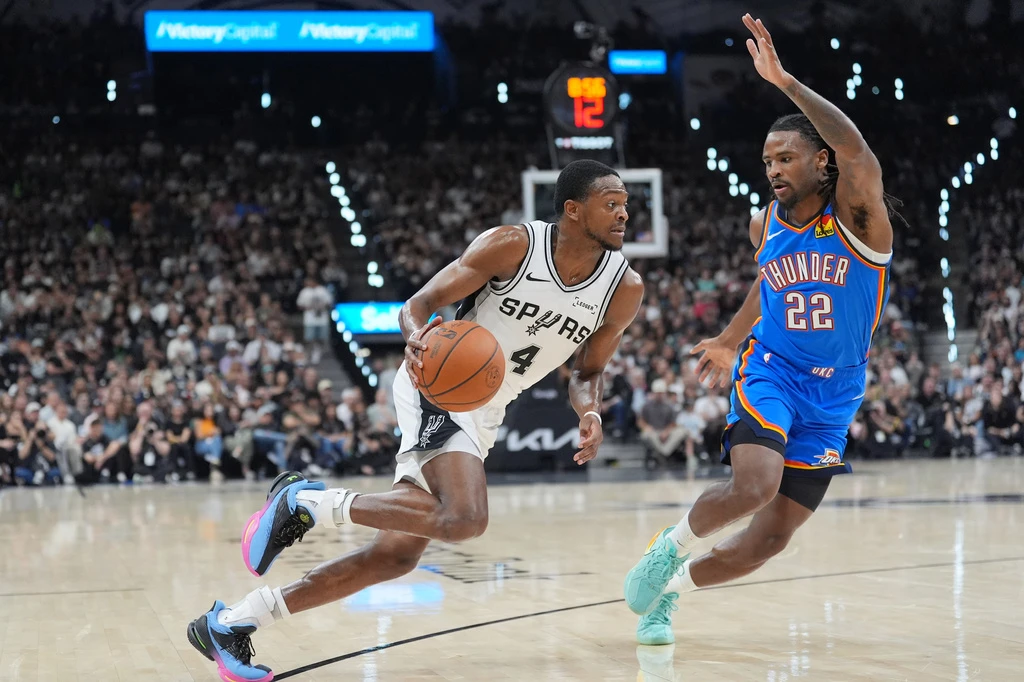
Veterans De’Aaron Fox and Harrison Barnes were acquired specifically to provide the steadying influence that young rosters need when playoff pressure peaks. Neither delivered consistently enough when it mattered most. Fox attempted 502 three-pointers across the season but couldn’t generate the reliable shot creation the Spurs needed in crunch-time possessions during the Finals. Barnes, who launched 388 attempts from beyond the arc, went cold at the worst possible moments in the series. The depth problem at center compounded everything — Wembanyama absorbed enormous minutes without a capable backup to distribute the load, and the fatigue was visible in Games 4 and 5 when San Antonio needed him operating at full capacity. Addressing the backup center role this offseason isn’t optional. It’s the most pressing structural need on the roster, and failing to solve it risks burning out the franchise’s most important asset before his prime years arrive.
The organizational response to the loss has been measured rather than reactive — a deliberate posture that reflects genuine confidence in the core rather than panic about a result that, in full context, represents the most significant progress this franchise has made in over a decade. San Antonio isn’t blowing anything up. It’s building on what it already has, and the front office’s public messaging has been consistent: the core stays intact, the additions will be targeted, and the goal is a championship, not just another Finals appearance.
Wembanyama, Castle, and Harper are all under contract for the foreseeable future, giving San Antonio a foundation that most rebuilding franchises would surrender significant assets to acquire. Castle’s 655 assists and Harper’s 369 total rebounds this season represent production floors, not ceilings, for players still in the early stages of their NBA careers. The front office’s stated approach is to keep the core intact and add the complementary pieces that can convert a Finals appearance into a championship run — a strategy that requires precision in free agency and the trade market rather than wholesale roster reconstruction. The Spurs don’t need to reinvent themselves. They need to sharpen the edges, and they have the financial flexibility and draft capital to do exactly that.
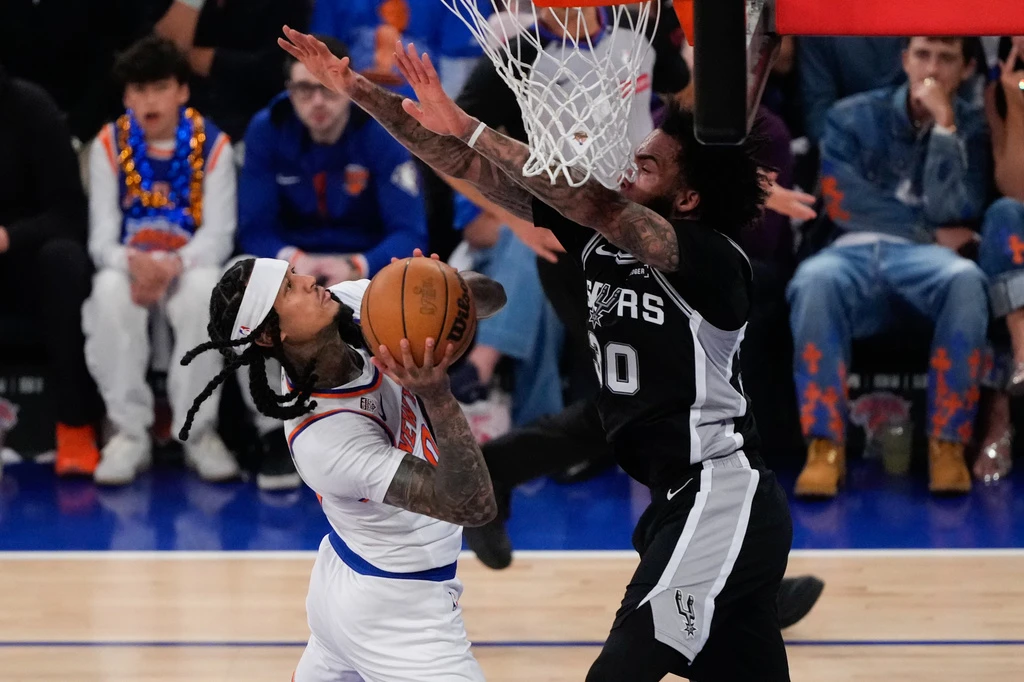
The most urgent roster need is a stretch big capable of spacing the floor, drawing defensive attention away from the paint, and giving Wembanyama room to operate in the pick-and-roll. San Antonio’s offense was most dangerous when defenses had to account for multiple perimeter threats simultaneously — a reliable floor-spacer at the four or five would open driving lanes, reduce the defensive attention Wembanyama draws in the post, and address the spacing problem that New York’s defense exploited repeatedly in the series. Both free agency and the trade market will be evaluated this summer with that specific need at the top of the priority list. Getting that piece right could be the single most impactful roster decision the franchise makes this offseason, and the Spurs have the cap room to pursue it aggressively.
Securing long-term extensions for Wembanyama and Julian Champagnie — who knocked down 257 three-pointers this season and emerged as one of the team’s most consistent and reliable perimeter weapons — is expected to top the front office’s offseason agenda. Both players are extension-eligible, and locking them up would send a clear organizational signal about the franchise’s commitment to continuity while protecting the core from future uncertainty. For a team that just played in the NBA Finals in Year 2 of a rebuild, that kind of long-term stability isn’t just a priority — it’s the foundation everything else gets built on. The Spurs lost the 2026 championship. The window to win one isn’t closing. It’s opening, and the front office knows it.
The broader league context makes San Antonio’s position even more striking. Only a handful of franchises in NBA history have reached the Finals within two years of beginning a full-scale rebuild, and fewer still have done it with a core as young and controllable as the one the Spurs currently have under contract. The Tim Duncan era produced five championships, as documented by Britannica, but it was built incrementally — Duncan arrived in 1997, and San Antonio didn’t win its first title until 1999, two years into his tenure. Wembanyama arrived in 2023, taken No. 1 overall by the San Antonio Spurs. The Spurs were in the Finals by 2026. The timeline is accelerating, and the rest of the Western Conference is already adjusting its projections accordingly. What took the Duncan era two years to accomplish came with a roster far more experienced than the one Wembanyama is currently leading.
What separates the Spurs’ situation from other young teams that have made deep playoff runs is the specific combination of individual talent and organizational infrastructure surrounding it. Gregg Popovich’s legacy — the culture, the player development systems, the front office continuity — didn’t disappear when the dynasty ended. It became the scaffolding for whatever comes next. Mitch Johnson inherited a program with institutional knowledge baked into its DNA, and while his first Finals appearance ended in a loss, the framework he’s working within gives him a meaningful advantage over coaches rebuilding from scratch elsewhere in the league. That organizational continuity is an underrated competitive advantage, and it’s one the Spurs have maintained through a full rebuild cycle without sacrificing the culture that made them a dynasty in the first place.
The 2026-27 season will arrive with San Antonio carrying a different kind of weight — not the weight of a team trying to prove it belongs, but the weight of a team expected to compete for a championship. That’s a harder burden to carry, and it will test this core in ways the 2025-26 season didn’t. But if the Spurs address the depth at center, lock up their key pieces on long-term deals, and give Mitch Johnson another offseason to refine his late-game systems, the franchise that just lost the NBA Finals in five games could be the one hoisting the Larry O’Brien Trophy twelve months from now. The foundation is already there. The work is just beginning, and for the first time in over a decade, San Antonio has every reason to believe the work is going to pay off.
The Western Conference landscape heading into 2026-27 will be shaped significantly by how rival front offices respond to what the Spurs just demonstrated. Oklahoma City, Denver, and Minnesota all have legitimate championship aspirations, and none of them will treat San Antonio as a soft draw the way some did entering this past postseason. The Spurs earned that respect the hard way — by winning four playoff series and pushing the eventual champions to five games in the Finals. That credibility changes how opponents prepare for them, how free agents evaluate them, and how the league’s broader power structure positions itself heading into next season. San Antonio is no longer a surprise. It’s a target, and that distinction matters.
The player development dimension of this story deserves more attention than it typically receives in Finals loss narratives. Wembanyama, Castle, and Harper all showed measurable improvement from the start of the regular season to the end of the playoff run — a trajectory that suggests the Spurs’ development infrastructure is functioning at a high level. Castle’s assist numbers grew as the playoffs progressed. Harper’s defensive engagement intensified in the later rounds. Wembanyama’s shot-blocking became more selective and more impactful as the series wore on. These aren’t coincidences. They’re the product of a coaching staff and front office that prioritizes player development as a competitive strategy, not just a talking point. If that trajectory continues into next season, the gap between where this team is and where it needs to be to win a championship is smaller than the 4-1 series result suggests.
For Spurs fans who lived through the lean years between the end of the Duncan era and Wembanyama’s arrival, the 2026 Finals appearance represents something more than a promising result — it represents proof that the franchise’s identity survived the rebuild intact. San Antonio didn’t sacrifice its organizational principles to accelerate the timeline. It didn’t trade away future assets for short-term relevance. It drafted well, developed its players, hired a coach who fits the culture, and let the process work. The result was a Finals appearance in Year 2. The expectation, now, is a championship in Year 3 or 4. That’s not an unreasonable expectation. It’s the logical conclusion of everything this franchise has built since the 2023 draft lottery changed the trajectory of the entire organization.