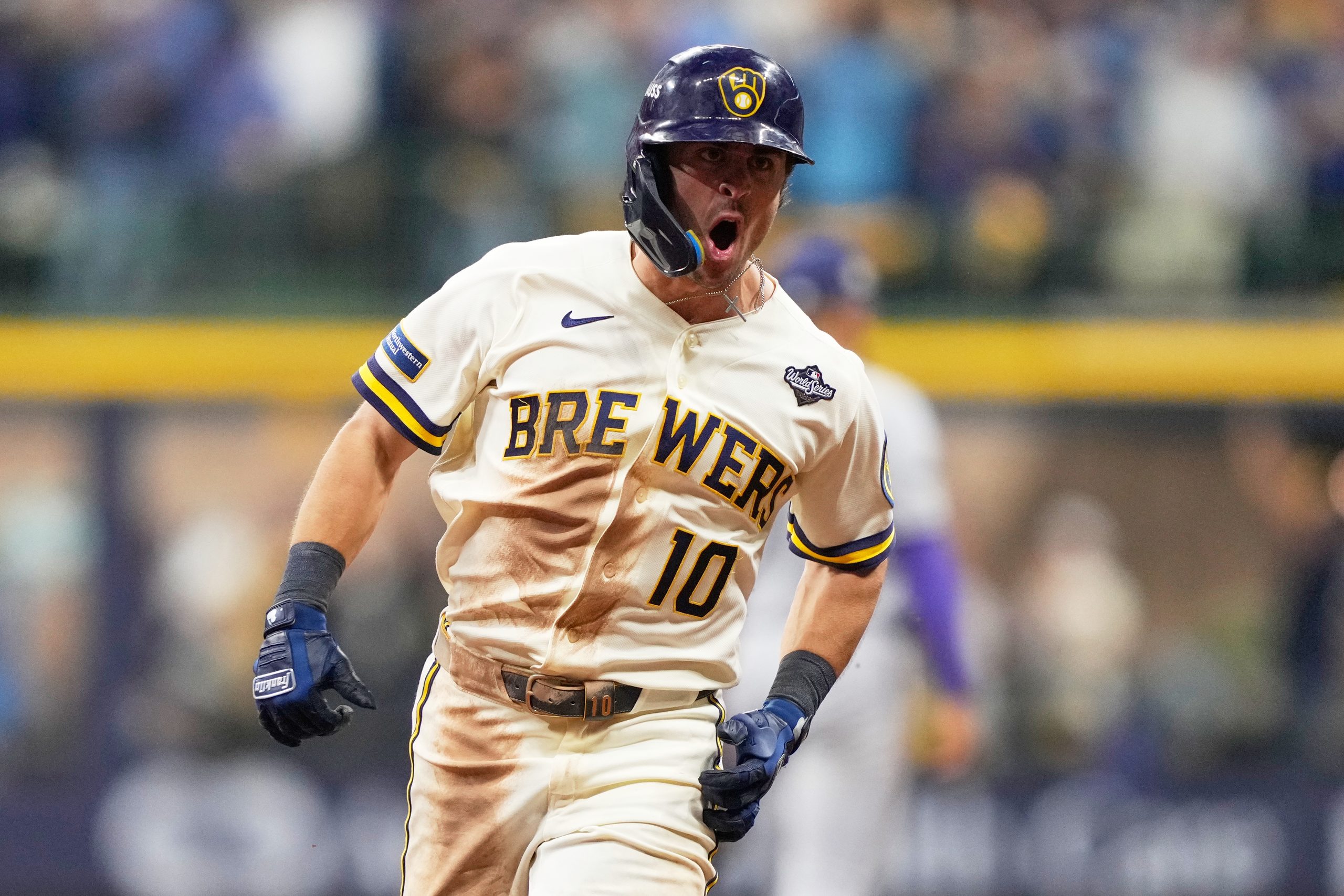
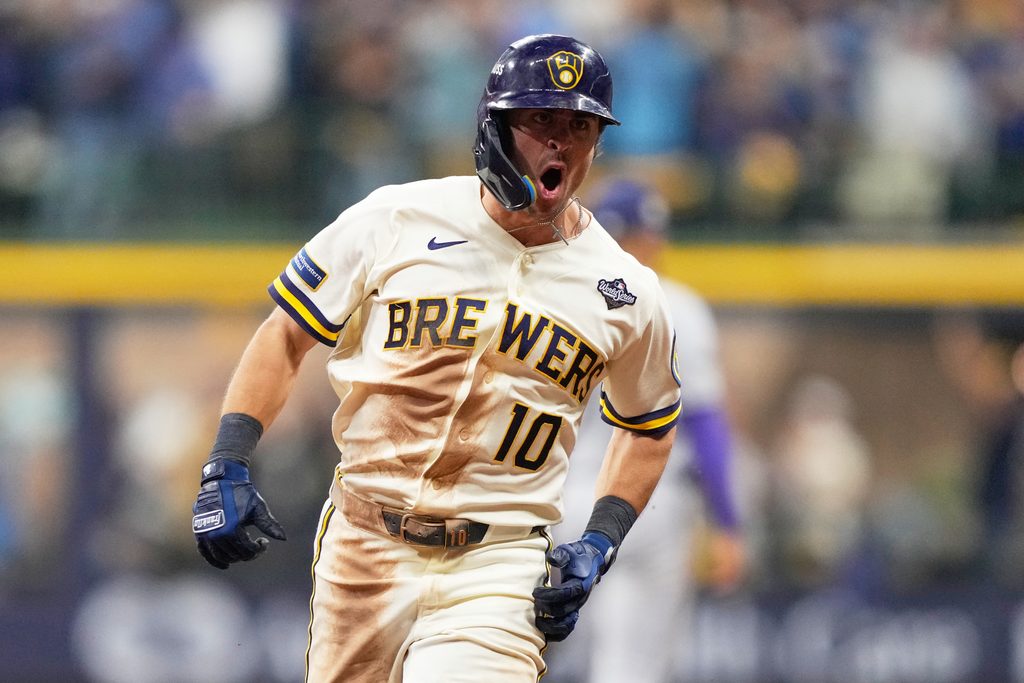
Sal Frelick entered Game 2 of the World Series with four regular-season home runs, a damaged right shoulder and reduced playing time against left-handed pitching. He left it with one of the defining swings of Milwaukee’s postseason.
Frelick’s sixth-inning home run tied the Tampa Bay Rays at 4-4 before rookie Cooper Pratt delivered a go-ahead RBI single in the seventh. The Brewers held on for a 5-4 victory at American Family Field on Oct. 24, taking a 2-0 lead in the best-of-seven series.
The home run was dramatic, but the way Milwaukee reached that moment was just as revealing. The Brewers did not erase a four-run deficit with one explosive inning. They steadily extended at-bats, created traffic and forced Tampa Bay’s pitchers to work. Frelick’s nine-pitch confrontation with left-handed reliever Ian Seymour was the clearest expression of that approach.
Milwaukee subsequently beat Tampa Bay 10-1 in Game 3, moving within one victory of the first World Series championship in franchise history. That result changed the series context, but it did not diminish the importance of Frelick’s Game 2 swing. Without that comeback, the Brewers would not have carried an unbeaten record into the third game.
Milwaukee Chipped Away at an Early Deficit
The Rays scored four times in the first inning against Brewers starter Logan Henderson. Chandler Simpson and Junior Caminero produced run-scoring singles before Liam Hicks hit a two-run homer, the first home run of the series.
Milwaukee responded before the inning ended. William Contreras brought home Jackson Chourio with a ground-ball single, and Garrett Mitchell’s two-out hit reduced the deficit to 4-2.
The Brewers added another run in the fourth. Pratt walked, Frelick singled and David Hamilton reached when first baseman Jonathan Aranda could not handle his ground ball, allowing Pratt to score. Tampa Bay still led, but the advantage had been reduced to one run.
That gradual comeback placed Frelick at the plate to open the sixth against Seymour. According to MLB.com’s Game 2 account, the Rays ultimately threw 184 pitches in the game. Frelick contributed to that workload while putting four balls in play at hard-hit velocity.
The combination mattered. Milwaukee did not simply wait for a home run; it repeatedly made Tampa Bay record difficult outs. Frelick’s homer was the payoff after five innings of sustained pressure.
Nine Fastballs, One Decisive Mistake
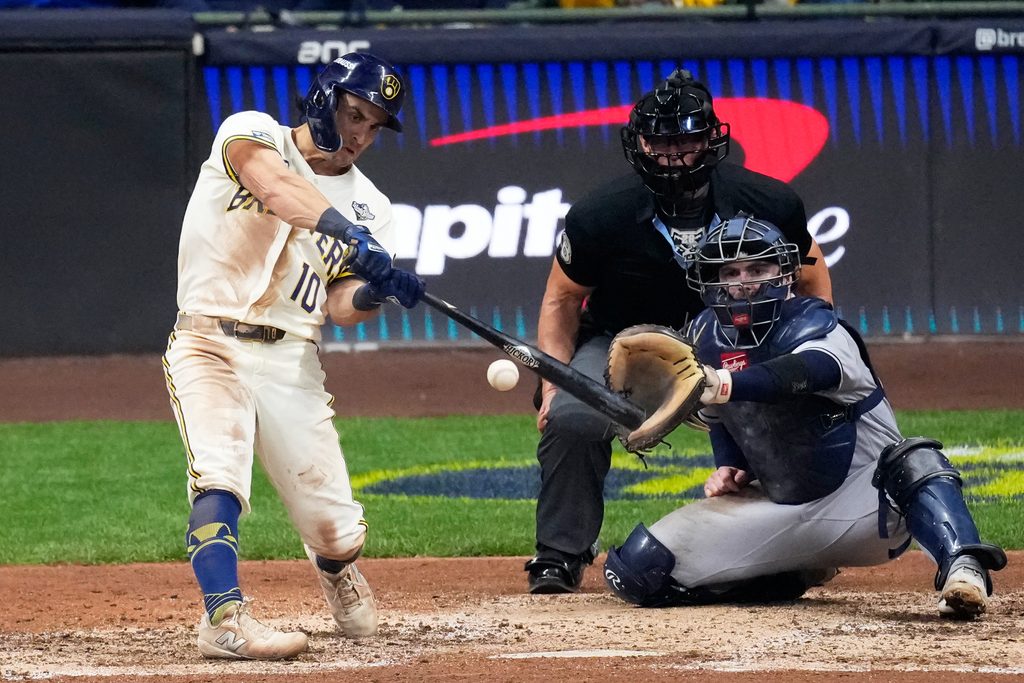
Seymour challenged Frelick exclusively with fastballs during their nine-pitch encounter. He alternated sinkers and four-seamers through the first eight pitches while Frelick fouled off four offerings and worked the count full.
On the ninth pitch, Seymour threw a four-seamer for a second consecutive time. The 92.9 mph pitch caught too much of the plate, and Frelick drove it over the center-field wall.
The result was unusual in several ways. Frelick had not homered since July 11 and finished the regular season with only four home runs and a .614 on-base-plus-slugging percentage. The blast was also just the fourth home run of his major-league career against a left-handed pitcher, including postseason play. During the 2026 regular season, he had homered once in 98 plate appearances against left-handers, according to MLB’s account of the at-bat.
“I don’t hit a lot of home runs, especially to center,” Frelick said afterward. “So just happy that one got out.”
Frelick did not deliver the winning run. That came an inning later, when Pratt sent Kevin Kelly’s outside sinker into right field to score Brice Turang. But Frelick transformed the game from a comeback attempt into a tie, giving the bottom of Milwaukee’s lineup another chance to decide it.
The Brewers’ rally also carried historical weight. It was their second victory of the postseason after trailing by at least four runs. MLB reported that only four previous teams—the 1996 Yankees, 2002 Angels, 2005 White Sox and 2022 Phillies—had recorded two such comebacks in one postseason.
A Difficult Regular Season Made the Matchup More Surprising
Frelick’s Game 2 performance contrasted sharply with his regular-season production. Official MLB Statcast records show that he batted .230 with a .295 on-base percentage, a .319 slugging percentage, four home runs and 40 RBIs over 111 games and 384 plate appearances.
His season was interrupted by a right shoulder injury. Frelick went on the injured list July 18 with what the team initially described as a strain. When Milwaukee activated him on Aug. 25, he disclosed that imaging had shown a torn labrum, although he said the medical staff believed much of the structural damage could have been longstanding. He completed 10 rehabilitation games with Triple-A Nashville before returning.
The absence also changed Milwaukee’s outfield rotation. Rookie Luis Lara received most of the work in right field while Frelick was sidelined and posted a .711 OPS during that period. After returning, Frelick was used more selectively and frequently matched against right-handed pitching, as detailed in the Brewers’ injury update.
That made Murphy’s decision to leave the left-handed-hitting Frelick in against Seymour notable. The matchup did not favor Frelick’s established power record, but the at-bat rewarded his ability to remain competitive through repeated two-strike pitches.
A Multi-Sport Background Built Around Competition
Frelick is officially listed by MLB at 5-foot-9, not 5-foot-8 as stated in the original draft. Long before becoming a first-round baseball selection, he played football, hockey and baseball at Lexington High School in Massachusetts.
As a senior quarterback, he threw for 1,940 yards and 30 touchdowns and was named Massachusetts Gatorade Football Player of the Year. His Boston College biography credits him with 12 varsity letters across the three sports.
Frelick concentrated on baseball at Boston College, where he batted .359 and won ACC Defensive Player of the Year as a junior in 2021. Milwaukee then selected him with the 15th overall pick in that year’s MLB draft, a detail confirmed by the Brewers’ official draft announcement.
Manager Pat Murphy has compared Frelick’s competitiveness with that of former Boston Red Sox second baseman Dustin Pedroia, whom Murphy coached at Arizona State. The comparison is not about identical playing styles or physical ability. It concerns the confidence and intensity both players brought to situations in which they were not physically imposing by major-league standards.
Frelick described that approach more simply after Game 2: “I just always felt like that was where I was able to get my edge, just turn everything into a competition.”
Game 2 Became Part of a Larger Pattern
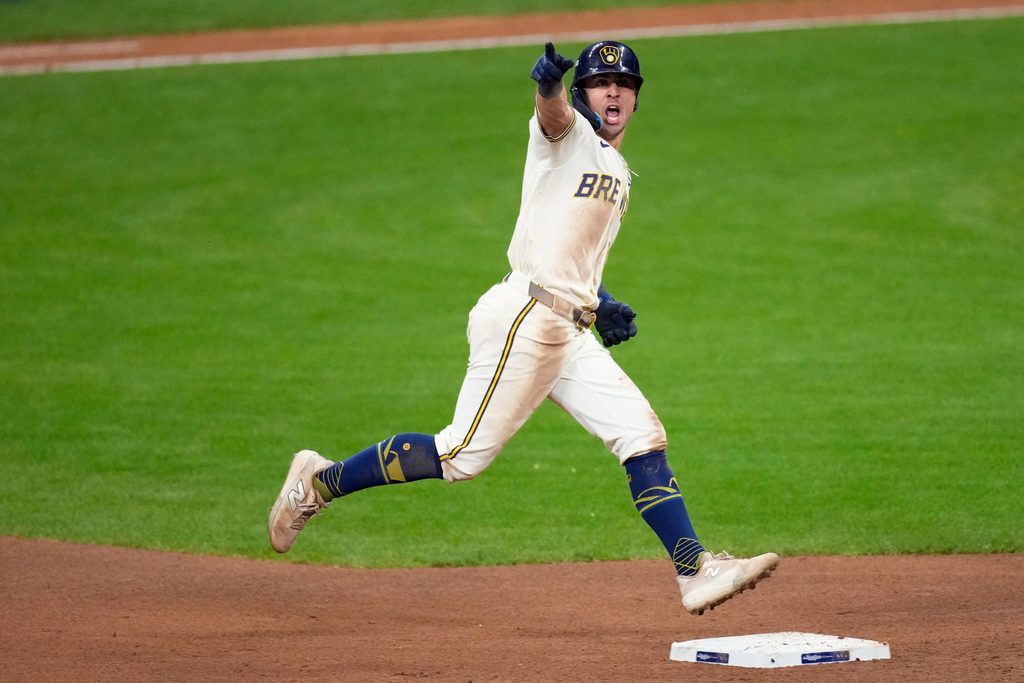
Frelick said rounding the bases produced “sort of this blackout feeling,” but he quickly recognized that Milwaukee had only tied the game. That response fit the circumstances. His home run was essential, but three innings remained, and Pratt, Aaron Ashby and the Brewers’ defense still had to complete the victory.
The performance also proved to be more than an isolated highlight. In Game 3, Frelick added an RBI double during Milwaukee’s eight-run fifth inning and later made a diving catch in right field. The Brewers won 10-1 and took a 3-0 series lead, according to MLB’s Game 3 report.
Frelick’s Game 2 homer stands out because it came from a player whose 2026 season had been defined by limited power, a significant shoulder injury and a narrower role. Yet the at-bat also represented something broader than an individual redemption story. He fouled off difficult pitches, forced Seymour deeper into the count and capitalized when the reliever finally missed.
That was Milwaukee’s comeback formula in miniature: extend the confrontation, apply pressure and give the next hitter another opportunity.