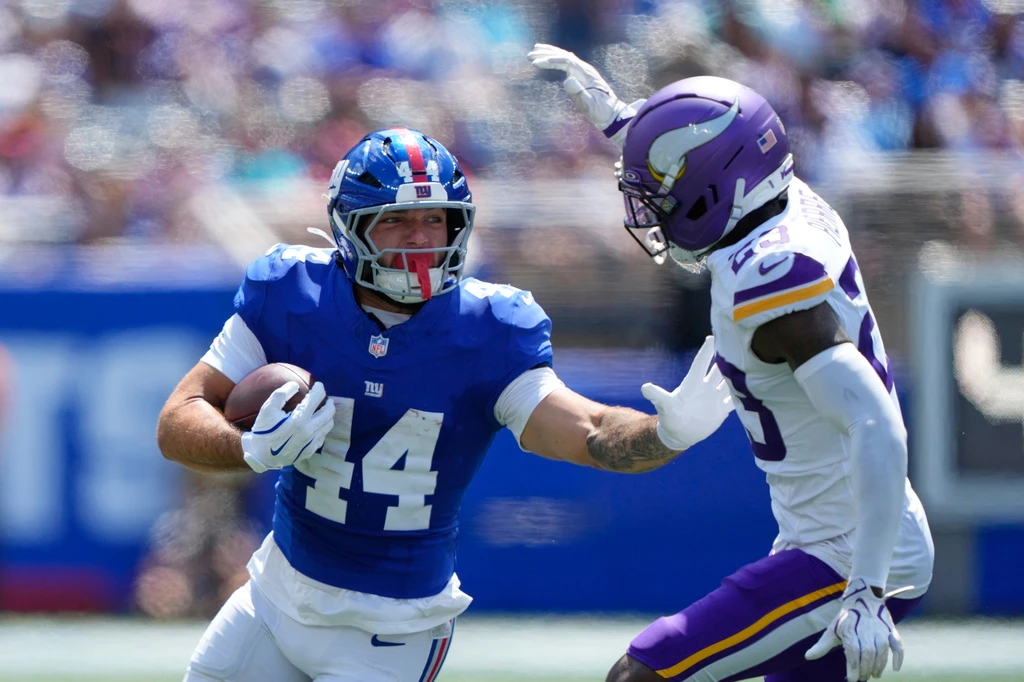
New York Giants running back Cam Skattebo faced one of the most difficult decisions of his young career after suffering a devastating ankle injury just seven games into his NFL debut season.
The dislocated ankle not only threatened his immediate future on the field but also triggered a personal rule he had established for himself, one that could have ended his football career entirely.
What followed was a month-long internal struggle that would ultimately determine whether the promising rookie would ever wear a Giants uniform again.
The Injury That Almost Ended Everything: What Skattebo Won’t Tell You
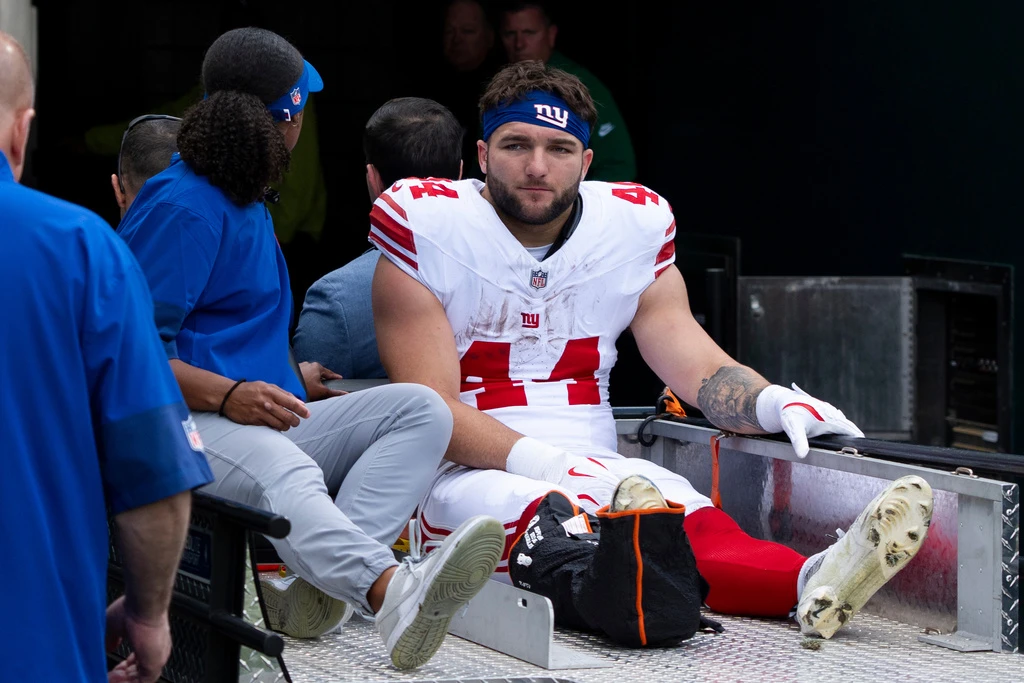
The injury occurred during Week 8 of Skattebo’s rookie campaign, a rematch against the Philadelphia Eagles that ended in a 38-20 loss for the Giants.
In the second quarter, Skattebo went down with what would later be diagnosed as a dislocated right ankle, an injury severe enough to end his season immediately. The timing couldn’t have been worse for the fourth-round draft pick who had just begun to establish himself as a legitimate force in the Giants’ backfield.
Prior to the injury, Skattebo had been building momentum in his professional career. From Weeks 4 through 7, he consistently delivered over 90 scrimmage yards per game, showcasing the physicality and ferocity that had made him a standout at Arizona State.
His performance brought energy to what many considered a struggling Giants offense, and he appeared poised for a breakout rookie season. The ankle injury abruptly halted that trajectory, leaving both Skattebo and the organization uncertain about what would come next.
What made this injury particularly significant wasn’t just the physical damage but the mental toll it would take on the young running back. The dislocated ankle represented more than just a temporary setback. For Skattebo, it became a test of his commitment to the sport and forced him to confront questions about his future that he had hoped would never arise so early in his professional career.
The Secret Rule That Nearly Cost Him His Career
Before entering the NFL, Skattebo had made a pact with himself that would come back to haunt him in his darkest moment. Cam Skattebo: I gave myself one rule when I moved from college to the NFL and it was if I ever got a major injury, I was done playing. “Mike Florio“: if he ever sustained a major injury, he would walk away from the game entirely. This self-imposed guideline wasn’t made lightly or in jest, but represented a genuine boundary he had set for his own well-being and future.
The reasoning behind such a rule remains deeply personal, but it speaks to the concerns many athletes have about long-term health and quality of life beyond their playing days. Football, particularly at the professional level, takes an enormous physical toll on players’ bodies. Skattebo’s rule suggested he had thought carefully about the risks and had predetermined a line he wouldn’t cross. When the ankle dislocation occurred in Week 8, that line had seemingly been reached.
This internal commitment created an immediate crisis for Skattebo as he lay in a hospital bed processing his diagnosis. The injury clearly qualified as major by any reasonable standard, which meant his own rule demanded he retire from football. At just seven games into his NFL career, having signed his rookie contract only months earlier in June 2025, Skattebo faced the prospect of walking away from everything he had worked toward.
One Month That Changed His Mind—But Was It the Right Decision?
The first thirty days following the injury represented the most challenging period of Skattebo’s recovery, though not for the reasons most would expect.
While the physical pain and rehabilitation were certainly difficult, it was the mental battle that proved most taxing. During an appearance on Up & Adams, Skattebo opened up about his internal struggle, admitting that the first month had him questioning whether he truly wanted to continue playing football.
The mental gymnastics were exhausting as Skattebo wrestled with his predetermined rule against the reality of his situation. He found himself repeatedly thinking about the fact that this career-threatening injury had come just seven games into his professional journey. The timing seemed particularly cruel, as he had barely scratched the surface of what he could accomplish in the NFL. Yet his rule had been clear, and he had made it for valid reasons that still held weight.
Somewhere around the one-month mark, something shifted in Skattebo’s perspective. The exact catalyst for this change remains unclear, but he made the pivotal decision to continue his football career despite his earlier commitment.
His simple statement captured the resolution of his internal conflict: he knew he had to go back and play. Whether this decision represented growth, compromise, or simply the competitive fire that burns in elite athletes, Skattebo had chosen to give himself another chance at the career he had worked so hard to build.
From Retirement Thoughts to 2,000-Yard Dreams: The Untold Recovery Story
Once Skattebo committed mentally to returning, his physical rehabilitation progressed remarkably well. The recovery process that had seemed so daunting during that first month began to show tangible results as spring arrived.
He returned to practice during the offseason program and demonstrated enough progress to participate in preseason activities without complications, a testament to both his physical resilience and the quality of care provided by the Giants’ medical staff.
Despite the successful recovery, Skattebo remained acutely aware of the mental challenges that accompany serious injuries. Speaking at the Giants Town Hall, he acknowledged the ups and downs of the rehabilitation process, emphasizing that the mental battle had been the hardest part.
Trusting his ankle fully again required more than just physical healing; it demanded a psychological breakthrough that would allow him to play with the same fearless style that had defined his early success.
Interestingly, Skattebo’s brush with retirement seems to have only intensified his ambitions for the upcoming season. Rather than approaching his return with caution or modest expectations, he has set extraordinarily high goals for himself.
He dismissed his rookie performance of 400 yards on 100 carries as unsuccessful, projecting instead that he will surpass 2,000 rushing yards on 300 carries over a full 17-game season. These lofty expectations suggest that his decision to continue playing wasn’t just about returning to form but about proving something much greater to himself and others.
Week 1 Return: What His Comeback Really Means for the Giants
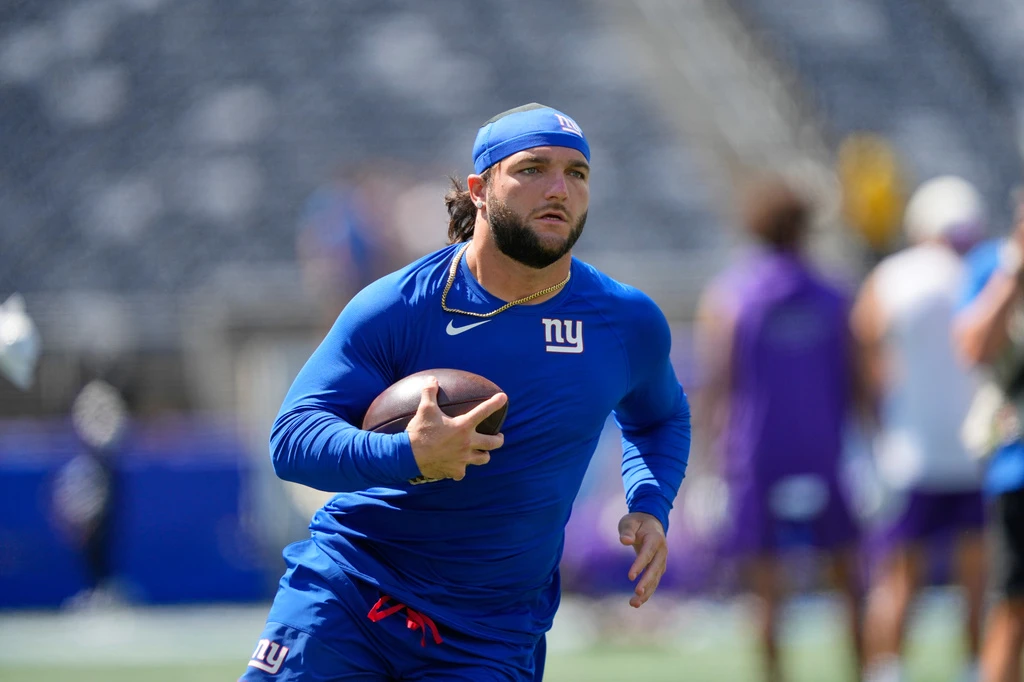
Skattebo’s planned return for Week 1 represents more than just one player coming back from injury. For the Giants organization, his presence in the lineup against the Dallas Cowboys signals the return of a dynamic element that had been sorely missed.
His physicality and willingness to play with intensity had brought much-needed energy to the offense during his brief healthy stretch as a rookie, and the team is counting on that same spark to ignite their season.
The significance of his comeback extends beyond statistics and game plans. Skattebo’s journey from contemplating retirement to targeting 2,000 rushing yards embodies the resilience that defines successful NFL careers.
His ability to overcome not just the physical injury but also the mental barrier of his own rule demonstrates a maturity that typically takes years to develop. This experience may ultimately prove more valuable than an uninterrupted rookie season would have been.
As Week 1 approaches, all eyes will be on how Skattebo performs and whether he can recapture the form that made him such a promising prospect before the injury. His story serves as a reminder that the path to NFL success is rarely linear and that sometimes the greatest obstacles athletes face are the ones they create for themselves.
Whether he reaches his ambitious 2,000-yard goal remains to be seen, but his decision to continue playing has already given him something more important: a second chance to write his own story.