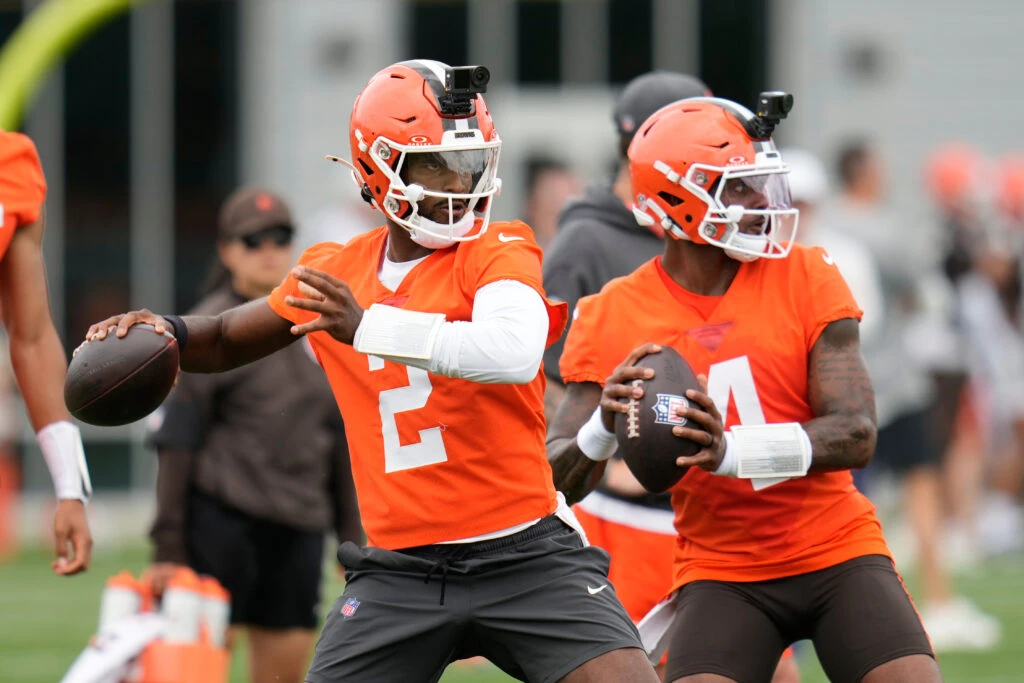
The Cleveland Browns have made their quarterback call: Deshaun Watson will start the 2026 season opener, ending a months-long competition with Shedeur Sanders that stretched from OTAs through the preseason under first-year head coach Todd Monken.
The decision came after a deliberate evaluation process that Monken refused to shortcut. From the opening week of training camp through back-to-back preseason games, both Watson and Sanders rotated with the first team — a structured approach that reflected just how consequential the choice was for the franchise heading into 2026.
Watson Wins the Job: How the Browns’ QB Battle Ended
For the second consecutive year, Cleveland ran an open competition for its starting quarterback spot. ESPN’s report from July 27 framed the contest as a battle between nine-year veteran Watson and second-year player Sanders — a dynamic that defined the entire offseason program under Monken.
The Athletic reported on July 29 that Monken made clear he would not rush a decision before the season began on Sept. 13, and that preseason game settings would carry particular weight for both quarterbacks. Browns.com confirmed on Aug. 16 that the race remained “relatively close” deep into the preseason, with both players continuing to rotate with the first-team offense.
Watson ultimately emerged as the starter for the 2026 season opener, with Sanders slotting behind him on the depth chart. CBS Sports’ Browns page lists “starter Deshaun Watson” ahead of Sanders — the clearest confirmation of where the competition landed.
Offensive Firepower: Newcomers Ignite Excitement Among Wide Receiver Corps
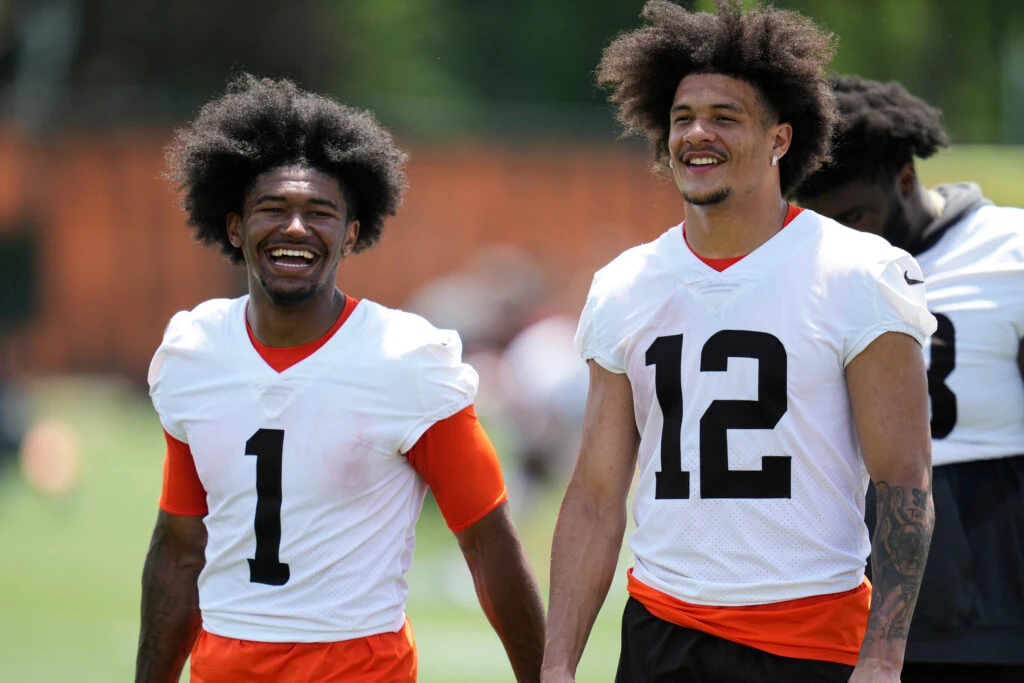
Beyond the quarterback room, Cleveland’s passing game showed genuine signs of life during camp. Cleveland.com reported on Aug. 9 that Watson capped Day 9 of training camp by connecting with Isaiah Bond on a 25-yard touchdown strike to close out a two-minute drill — a moment that highlighted the developing chemistry between the veteran quarterback and his young targets.
The receiver group carried that momentum into the regular season. CBS Sports surfaced a “Browns Rookie WRs Making Noise Through 4 Weeks” feature in early October, alongside a separate piece headlined “Deshaun Watson Saw Denzel Boston’s Breakout Coming for Browns” — evidence that Cleveland’s young pass catchers became a legitimate storyline well beyond the preseason. The offensive picture heading into 2026 carried real optimism, with a reworked offensive line also debuting alongside those developing receivers.
Rookie wide receivers KC Concepcion and Denzel Boston were part of the young wideout group that drew attention throughout camp and into the early weeks of the season. Boston in particular emerged as a breakout candidate, with Watson himself flagging the second-year receiver’s trajectory, per CBS Sports’ Oct. 7 reporting.
Isaiah Bond gave Cleveland another weapon in the passing game. Cleveland.com’s Aug. 9 camp report documented Watson targeting Bond on a 25-yard touchdown — a concrete example of the connection the two were building as the competition for the starting job played out around them.
Reshuffling the Trenches: Offensive Line Seeks Stability Amidst Changes
Cleveland’s offensive line question was answered by the time the preseason opener arrived. Browns.com reported on Aug. 16 that the Browns debuted a defined starting five against the Bears: Spencer Fano at left tackle, Zion Johnson at guard, Elgton Jenkins at center, Teven Jenkins at right guard, and Tytus Howard at right tackle — a group that was slated to handle the first drive of that game.
The continuity that lineup provides matters for whoever takes snaps behind it. Interior line stability reduces communication breakdowns at the point of attack, keeps run-blocking assignments clean, and gives the quarterback a more predictable protection picture. Cleveland’s ability to hold that group together through the regular season will go a long way toward determining how efficiently the offense functions.
Monken’s evaluation of both quarterbacks — as outlined by The Athletic on Aug. 1 — centered on how they operated at the line of scrimmage, their command of the huddle, and their understanding of the scheme’s concepts. A settled offensive front makes each of those criteria easier to assess clearly, and harder for a quarterback to mask deficiencies.
Preseason Reps: Watson and Sanders Face Their First Live Test
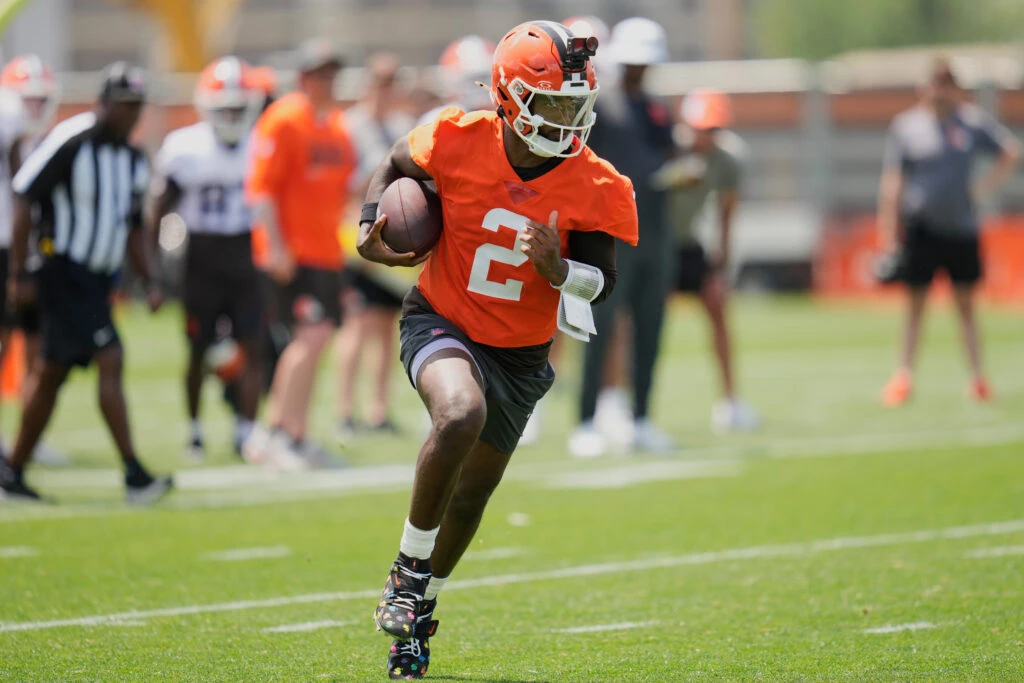
The preseason opener against Chicago — a 34-10 Browns loss — gave both quarterbacks their first live evaluation window. According to Andscape’s Aug. 17 recap, Watson started and played the first half, completing 11 of 15 passes and guiding two scoring drives. Sanders took over in the second half and went 6-of-11 for 79 yards, but threw an interception on his final snap.
For Watson, the game carried weight beyond the stat line. Andscape noted it was his first time on an NFL field since 2024 — he tore his right Achilles in October of that year and sat out the entire 2025 season following a second Achilles surgery in January 2025. The nine-year veteran had started just 19 regular-season games since joining Cleveland in 2022, making his return to game action one of the more significant storylines of the preseason.
Browns.com reported on Aug. 16 that both quarterbacks would continue rotating with the first team after the Chicago game, with Sanders drawing the start in the second preseason game against Buffalo. Monken explained the decision plainly: “I did feel going into last game that it was relatively close in terms of both having an opportunity at the starting position, so it would be unfair to not go into the next game and give Shedeur that same opportunity.”
Monken’s Process: Patience and Precision Drive the QB Decision
The Athletic’s July 29 report made Monken’s timeline explicit: the Browns had no obligation to name a starter before the season kicked off on Sept. 13, and he had no intention of forcing a premature call. Most of Cleveland’s regulars would play in the preseason, Monken said, and those live settings would carry “especially important” weight for the quarterbacks specifically.
ESPN identified Monken as the Browns’ first-year head coach overseeing the competition — a detail that added its own layer of stakes to the process. A new head coach staking his opening season on a quarterback decision, with two legitimate options still splitting first-team reps deep into August, made for one of the more closely watched camp battles in the AFC.
The Athletic’s Aug. 1 report captured Monken’s specific evaluation framework: “The most important thing is, from a process standpoint, how we (are) operating at the line of scrimmage,” Monken said. “Where are their eyes (on pass dropbacks)? Have they taken command of the huddle, and then cadence, and then understanding the concepts? I think they’re all doing good. They’re all fine.”
That process ultimately produced a clear answer. Browns.com’s Aug. 16 update showed Monken still treating the race as close, with Sanders set to start the second preseason game and both quarterbacks sharing first-team reps through joint practices. By the time the 2026 season arrived, however, Watson had earned the opening-day assignment — the end result of a competition Monken ran on his own terms and his own timeline.