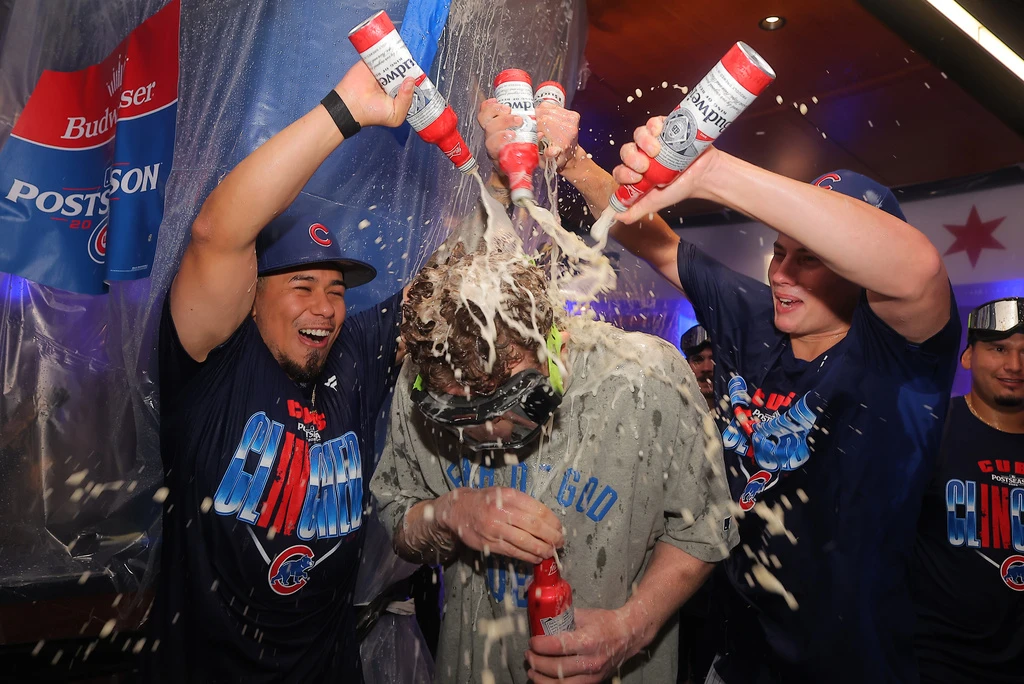
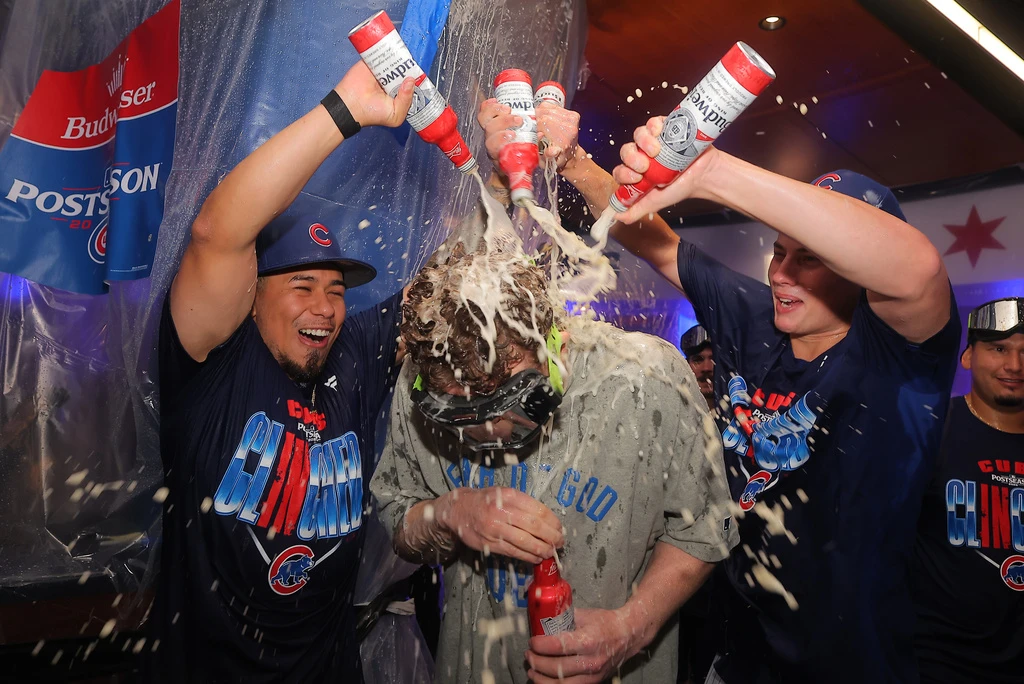
Pete Crow-Armstrong and Yordan Alvarez reached the same destination by sharply different routes.
Crow-Armstrong, the Chicago Cubs’ elite center fielder, won the 2026 National League Most Valuable Player Award after pairing historic power and speed with exceptional defense. Alvarez, the Houston Astros’ designated hitter, captured the American League honor with the strongest overall offensive season in baseball.
Both were unanimous selections by the Baseball Writers’ Association of America. Each received all 30 first-place votes and the maximum 420 points. It is only the third season in which both MVP winners have been unanimous, following 2023 and 2024, according to MLB.
The results were decisive, but they were not the surprises suggested by the original draft. Both players entered the announcement as clear favorites after being named finalists on November 3. Shohei Ohtani and Brice Turang joined Crow-Armstrong among the NL finalists, while Junior Caminero and Bobby Witt Jr. completed the AL group.
Their victories did break a familiar pattern. This is the first season since 2020 in which neither Ohtani nor Aaron Judge won an MVP award. That does not establish that their era is over, particularly with Ohtani finishing second in the NL vote. Instead, the results show that two different forms of value were impossible for voters to overlook.
Crow-Armstrong Delivered Value in Every Phase
Crow-Armstrong’s candidacy began with one of the rarest statistical combinations in baseball.
The 24-year-old hit .280 with a .372 on-base percentage and a .570 slugging percentage. He finished with 45 home runs, 41 stolen bases, 107 RBI and an NL-leading 119 runs while playing all 162 games. His .942 OPS ranked second in the NL behind Alvarez’s major-league-leading mark.
The 45 home runs tied Kyle Schwarber for the major-league lead. Crow-Armstrong also amassed an MLB-best 357 total bases and 78 extra-base hits, giving the Cubs both elite production and durability at a premium defensive position. MLB’s official Hank Aaron Award announcement details his complete offensive line.
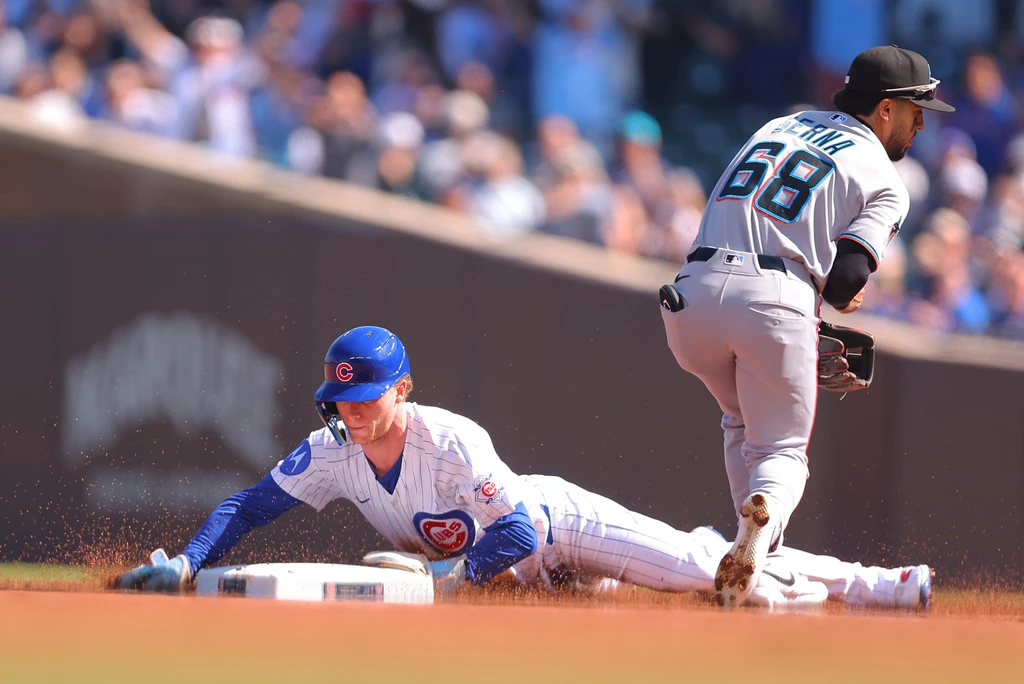
His defining milestone arrived on September 24. After already reaching 40 home runs, Crow-Armstrong stole second base against the Miami Marlins to become the seventh player in MLB history with at least 40 homers and 40 steals in one season. He was the first Cubs player to accomplish the feat. MLB’s account of the milestone also notes that Chicago clinched a postseason berth with a 2-1 victory that day.
The season was not simply a collection of counting statistics. Crow-Armstrong led the majors with 10.6 FanGraphs wins above replacement, 3.6 wins ahead of Witt, the next-closest position player. MLB reported that it was the first time since 1954 that the leading two players were separated by at least 3.0 fWAR.
That gap helps explain why the NL vote was unanimous despite Ohtani’s presence on the ballot. Crow-Armstrong’s value came from hitting, baserunning, availability and center-field defense rather than one dominant skill.
He led major-league position players with 26 Outs Above Average and 26 Fielding Run Value, according to MLB’s season-end reporting. FanGraphs also credited him with a major-league-best 23 defensive runs. Those figures supported his second consecutive Gold Glove and first Platinum Glove, which recognizes the best overall defender in each league.
The combination gave Crow-Armstrong an unusually broad MVP case. He could change a game at the plate, on the bases or in the outfield, and he remained in the lineup for the entire regular season.
The official BBWAA results reflect that dominance. Ohtani finished second with 264 points, while Turang placed third with 190. Crow-Armstrong became the first Cubs MVP since Kris Bryant in 2016 and the 10th MVP winner in franchise history.
Alvarez Built the AL’s Best Offensive Resume
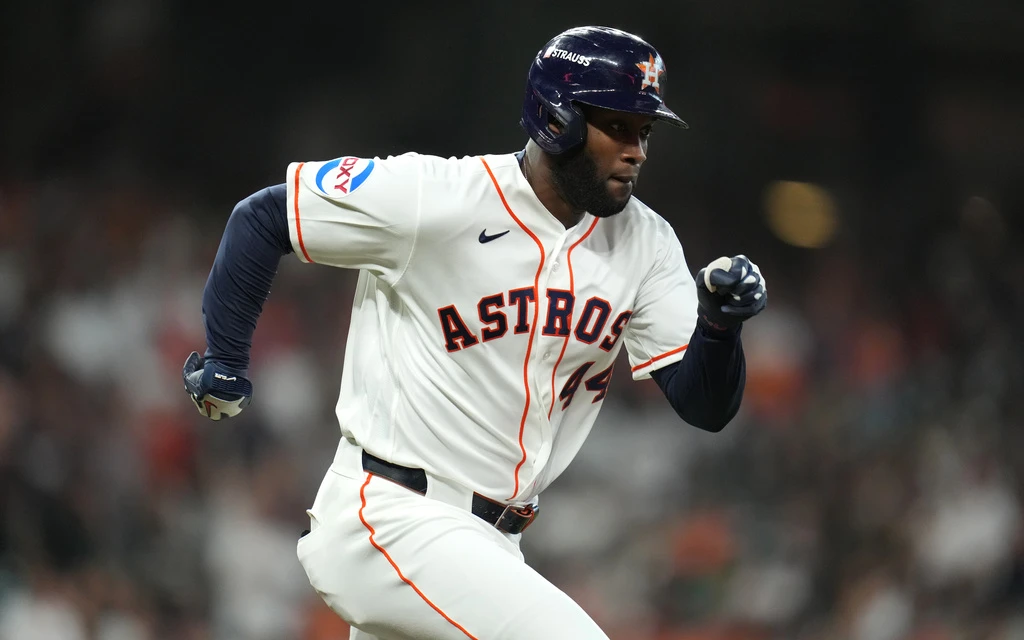
Alvarez’s case rested overwhelmingly on his bat, but the gap between him and the rest of the American League was large enough to overcome the traditional disadvantage faced by designated hitters.
After injuries limited him to 48 games in 2025, Alvarez played 158 games and produced career highs in home runs and RBI. He batted .316 with a .432 on-base percentage, a .601 slugging percentage and a 1.033 OPS. He added 42 home runs, 106 RBI, 105 runs, 34 doubles and 109 walks.
Alvarez led the AL in batting average, on-base percentage, slugging percentage, OPS, total bases, walks and extra-base hits. His 341 total bases and 77 extra-base hits were both league highs. He finished second in RBI and tied for second in home runs.
His batting title made him the third different Astros player to win one, joining Jose Altuve and Yuli Gurriel. More significantly, Alvarez became only the third player since 1970 to win an AL batting title while hitting at least 40 home runs, following Miguel Cabrera and Judge.
Pitchers repeatedly chose not to challenge him. Alvarez drew 33 intentional walks, breaking Jeff Bagwell’s Astros record of 27 from 1997. MLB reported that only Judge, with 36 in 2025, has drawn more in an American League season.
That combination of contact, power and patience distinguished Alvarez from a field containing several strong candidates. Caminero finished second in the voting with 267 points, while Witt placed third with 188. Alvarez, Caminero and Witt were the only AL players included on every ballot, but Alvarez was the only first-place selection. The complete totals are available in the BBWAA’s official AL voting table.
Alvarez is not the first full-time designated hitter to win an MVP award. Ohtani established that precedent when he won the 2024 NL MVP while serving exclusively as a designated hitter. Alvarez is, however, the first primarily designated hitter to win the award in the American League and only the second such winner overall. He made 25 appearances in left field during the 2026 season.
His victory also places him alongside Bagwell and Altuve as the third Astros player to win an MVP. Bagwell won the 1994 NL award before Houston moved to the American League, and Altuve won the 2017 AL award.
Two MVP Cases, One Unanimous Conclusion
Crow-Armstrong and Alvarez also won their first Hank Aaron Awards on November 11, one day before the MVP results were announced. That award recognizes the top offensive performer in each league through a combined vote involving fans and a panel of Hall of Famers and previous winners.
The shared honors should not obscure what separated their MVP cases. Alvarez was baseball’s most complete hitter, leading the majors in all three slash-line categories. Crow-Armstrong supplied elite offense while adding baserunning and some of the game’s best defense at a demanding position.
The distinction is important because MVP voting is not governed by a single model of value. Alvarez demonstrated that a primarily one-dimensional role can still produce overwhelming value when the offensive performance is exceptional. Crow-Armstrong showed how power, speed, defense and durability can combine to create an even larger all-around contribution.
Their wins also deserve a more measured interpretation than declaring the Judge-Ohtani period finished. Judge’s 2026 season was affected by injuries, while Ohtani still finished second in the NL. Both remain plausible future winners.
What changed in 2026 was not necessarily baseball’s entire hierarchy. It was the identity of the players who produced the clearest regular-season cases. Crow-Armstrong and Alvarez did enough to remove every first-place vote from the debate.