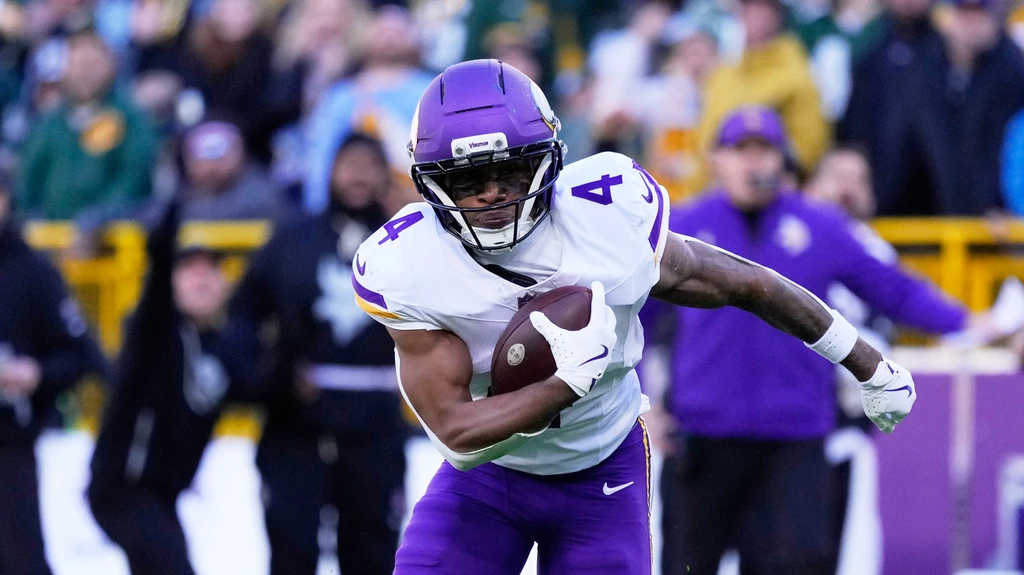
The Minnesota Vikings and San Francisco 49ers are preparing for one of the most intriguing matchups of the 2026 NFL season, with both teams bringing impressive records and contrasting strengths into their Week 11 meeting.
San Francisco enters Sunday’s game in Mexico City at 8-1, powered by an offense averaging 31.2 points per game. Minnesota is close behind at 7-2, with a defense that has allowed an NFL-low 14.0 points per game.
Those numbers suggest a compelling contest, but the matchup becomes even more interesting when examining how the two teams produce their results.
The 49ers have been exceptionally effective at extending drives, while the Vikings have built their success around disrupting opposing quarterbacks and forcing turnovers.
The deciding factor could be whether Minnesota can interrupt San Francisco’s offensive rhythm without leaving opportunities for explosive plays.
Why Third Downs Could Determine the Winner
Few statistics illustrate the contrast between these teams better than their performances on third down.
According to the NFL’s official Week 11 statistical report, San Francisco leads the league with a 52.0% third-down conversion rate.
That success allows the 49ers to maintain possession, wear down defensive units and create additional scoring opportunities.
Minnesota presents a different challenge.
The Vikings lead the NFL with 37 sacks through nine games, while ranking among the league’s strongest defenses in generating turnovers. Their 17 takeaways have helped limit the damage caused by an offense that has struggled to produce consistent yardage.
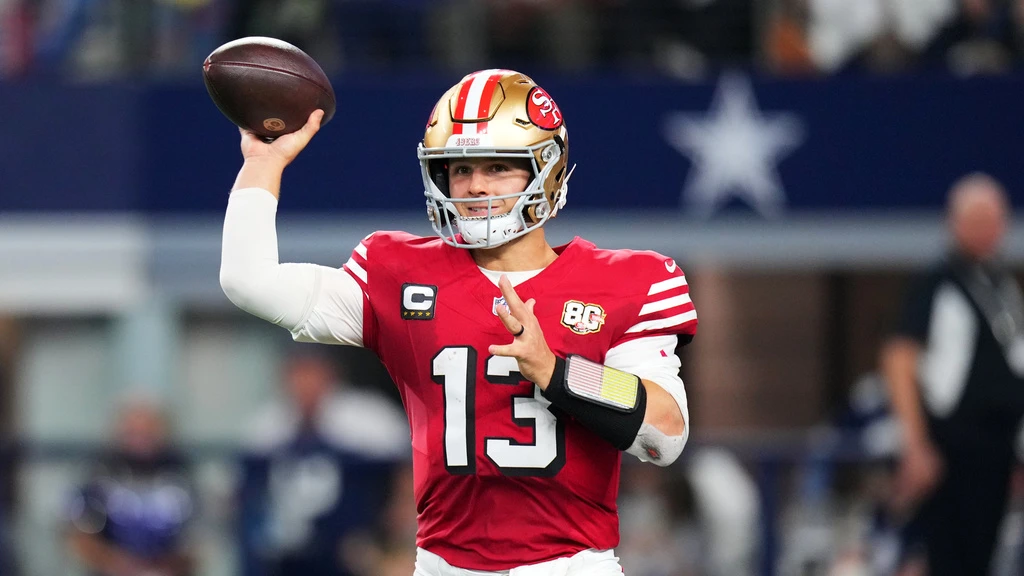
For Minnesota, the objective is straightforward: create difficult down-and-distance situations and prevent quarterback Brock Purdy from finding comfortable passing opportunities.
However, San Francisco’s offensive line has protected its quarterback remarkably well.
The 49ers have allowed just 13 sacks, the third-fewest in the NFL entering Week 11.
That creates one of the game’s most interesting statistical confrontations.
Minnesota excels at reaching quarterbacks, but San Francisco excels at keeping defenders away from its passer.
If the Vikings can disrupt the pocket early, they could prevent the 49ers from sustaining the lengthy drives that have powered their offense.
If San Francisco maintains its usual protection, Minnesota’s defense could find itself spending considerably more time on the field than it prefers.
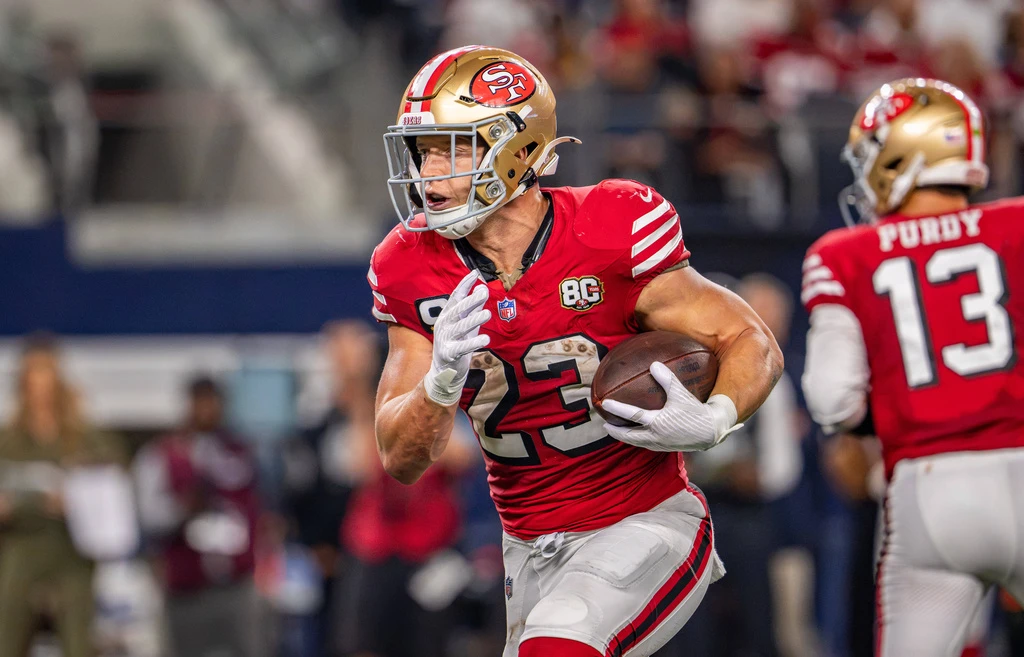
Christian McCaffrey Gives San Francisco Multiple Ways to Attack
Stopping the 49ers requires more than pressuring Purdy.
Running back Christian McCaffrey remains one of the team’s most versatile offensive weapons, contributing both as a traditional ball carrier and as a receiver.
Through nine games, McCaffrey has accumulated 950 yards from scrimmage and 13 total touchdowns.
His most recent performance demonstrated just how difficult he can be to contain.
Against the Dallas Cowboys in Week 10, McCaffrey produced 223 yards from scrimmage, including 161 receiving yards, and scored three touchdowns in San Francisco’s 46-40 victory.
That versatility creates difficult choices for opposing defenses.
When McCaffrey remains in the backfield, defenders must respect the possibility of a rushing play. When he moves into a receiving role, he can create favorable matchups against linebackers or defensive backs.
Minnesota’s defense has been excellent against the pass, allowing just 161.4 passing yards per game. Its rushing defense, however, ranks 17th at 111.9 yards allowed per contest.
San Francisco could attempt to exploit that difference by establishing an effective running game before expanding its passing attack.
The challenge for Vikings defensive coordinator Brian Flores will be applying pressure without compromising the coverage and tackling discipline needed to contain McCaffrey.
Kirk Cousins Gives Minnesota’s Offense a New Opportunity
While San Francisco’s offense has been remarkably productive, Minnesota faces a different challenge.
The Vikings average just 19.6 points and 271.8 total yards per game, ranking 25th and 31st in those categories, respectively.
Those numbers help explain why the team’s recent quarterback change has attracted considerable attention.
Minnesota reacquired Kirk Cousins from the Las Vegas Raiders ahead of the November trade deadline, bringing a familiar veteran back into Kevin O’Connell’s offense.
Cousins made his return against the Green Bay Packers in Week 10 and delivered an encouraging performance.
He completed 21 of 31 passes for 207 yards, two touchdowns and one interception as the Vikings secured a 30-10 victory.
The quarterback demonstrated an ability to distribute the football to established contributors and younger players.
Justin Jefferson finished with nine receptions for 74 yards, while Myles Price and Gavin Bartholomew caught touchdown passes.
The performance offered reasons for optimism, particularly considering how little preparation time Cousins had following the trade.
However, the matchup against San Francisco presents a different test.
The 49ers allow only 82.6 rushing yards per game, the second-lowest figure in the NFL.
If Minnesota struggles to establish its running game, Cousins may need to shoulder a greater portion of the offensive responsibility.
That would place additional importance on third-down execution, pass protection and Jefferson’s ability to create separation against San Francisco’s secondary.
The Vikings cannot assume their defense will consistently hold an offense as productive as the 49ers to a low score.
Generating sustained drives and converting scoring opportunities could be just as important as forcing turnovers.
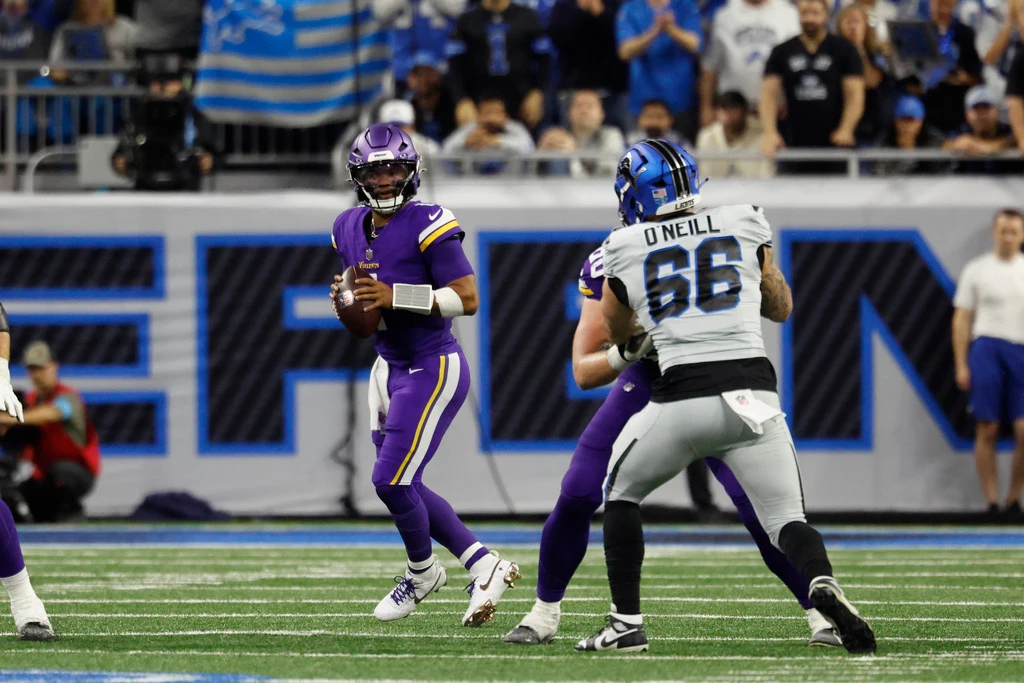
Injuries Could Influence Both Teams’ Plans
Player availability remains another important factor heading into Sunday’s matchup.
According to Minnesota’s November 18 injury report, quarterback Kyler Murray did not participate in Wednesday’s practice because of a hamstring injury.
Wide receiver Jordan Addison also missed practice after undergoing thumb surgery earlier in the week.
Tight end T.J. Hockenson was a limited participant with a wrist injury, while outside linebacker Andrew Van Ginkel was limited because of a quadriceps issue.
These developments could affect both sides of Minnesota’s preparation.
If the Vikings are missing established receiving options, Cousins may need to continue relying on the younger players who contributed against Green Bay.
Meanwhile, San Francisco is monitoring several players of its own.
Wide receiver Mike Evans did not practice Wednesday because of an Achilles injury, while cornerback Renardo Green participated on a limited basis with a back issue.
McCaffrey also sat out Wednesday’s session, although the team listed his absence as a rest day rather than an injury.
These are practice designations, not final game-availability decisions. Both teams are expected to provide additional updates before kickoff.
What the Matchup Means for the NFC Playoff Race
The meeting has implications beyond a single regular-season victory.
At 8-1, San Francisco enters Week 11 with one of the NFC’s strongest records. Minnesota, at 7-2, remains close enough that a head-to-head victory would improve its position considerably.
The result could also offer useful information about how both teams match up against playoff-caliber competition.
For the 49ers, successfully moving the football against Minnesota would demonstrate that their offensive approach can remain effective against one of the league’s most disruptive defenses.
For the Vikings, limiting San Francisco while finding more consistent offensive production would strengthen the argument that they can challenge the conference’s leading contenders.
Neither outcome would guarantee postseason success, but both teams have something meaningful to prove.
Three Factors That Could Decide Vikings vs. 49ers
The matchup ultimately comes down to three connected questions.
Can Minnesota generate pressure without exposing its secondary? The Vikings have produced more sacks than any other team, but San Francisco’s protection and versatile offensive personnel make aggressive defensive calls particularly challenging.
Can the 49ers sustain their third-down efficiency? A team converting 52% of its third downs has an advantage in controlling possessions. Minnesota must create stops before San Francisco can establish long drives.
Can Kirk Cousins keep Minnesota competitive offensively? The Vikings’ defense has carried a significant share of the team’s success, but limiting turnovers and converting scoring opportunities will be essential against an opponent averaging more than 31 points.
These factors make Sunday’s contest particularly compelling.
The Vikings and 49ers are succeeding through different approaches, yet both depend on execution in critical situations.
For Minnesota, that means creating pressure and giving its offense additional opportunities. For San Francisco, it means protecting Purdy, maintaining a balanced attack and avoiding costly mistakes.
Their Week 11 showdown at Estadio Banorte in Mexico City kicks off Sunday, November 22, at 8:20 p.m. Eastern.
With both teams competing near the top of the NFC, the result could have a meaningful influence on the conference’s playoff race.