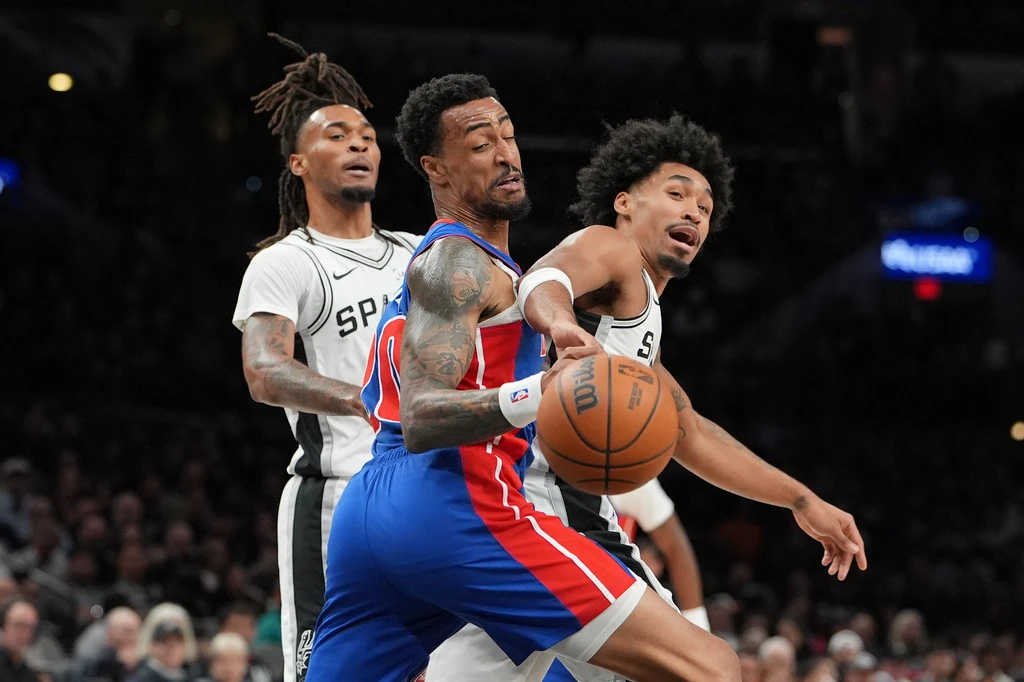
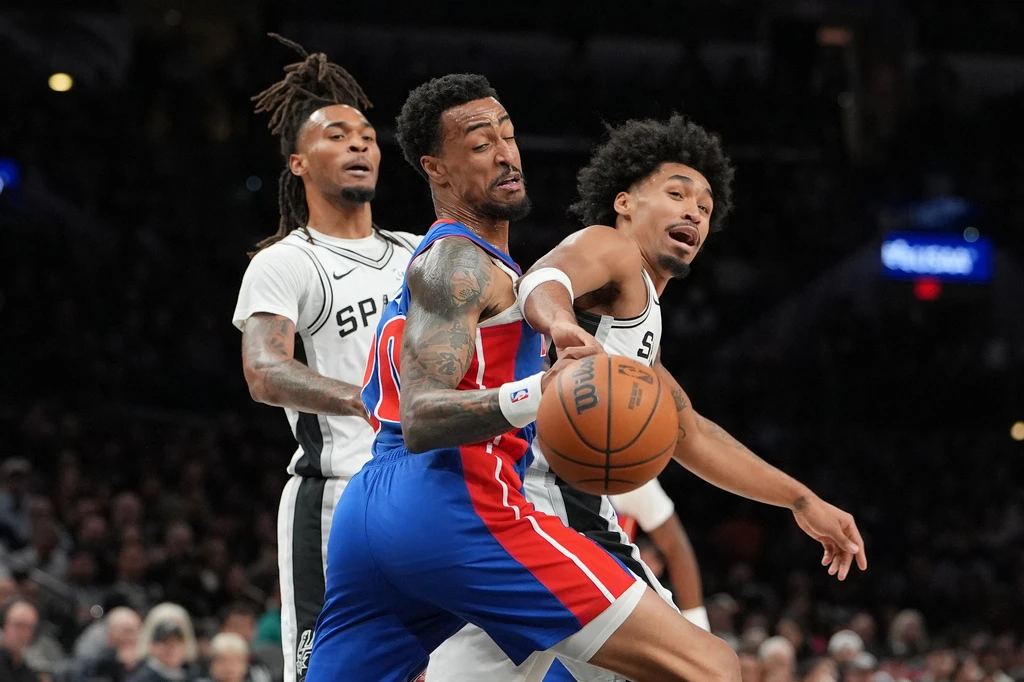
The San Antonio Spurs suffered more than a disappointing defeat on Tuesday, as a late injury to rising guard Dylan Harper added uncertainty to an already frustrating night.
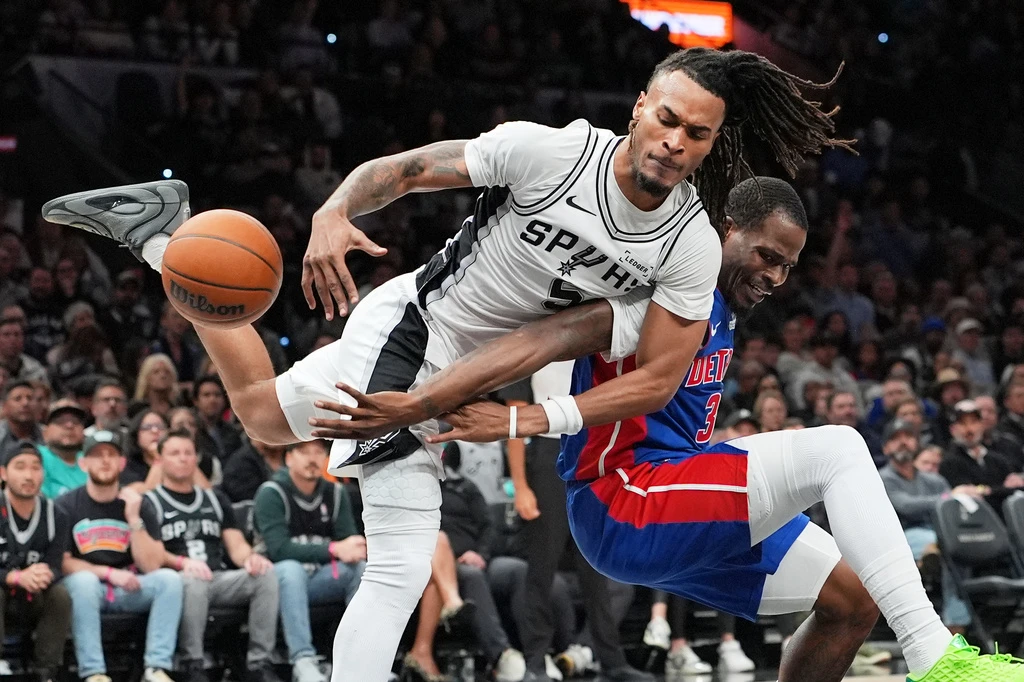
With just 53.6 seconds remaining in San Antonio’s 105-93 loss to the Detroit Pistons at Frost Bank Center, Harper slipped while moving up the court and fell awkwardly. The 20-year-old remained on the floor in visible discomfort before receiving assistance to leave the game.
Harper appeared to be experiencing pain around his groin and hip area, although the Spurs had not confirmed a specific diagnosis or recovery timeline following the contest.
The incident overshadowed an otherwise productive individual performance from Harper, who finished with 20 points, four rebounds and two assists. It also came as Detroit ended San Antonio’s impressive 12-game winning streak, handing the Spurs their first defeat since October 23.
For a team that entered the night with one of the NBA’s most productive offenses, the immediate concern now extends beyond a single loss.
What Happened to Dylan Harper Against the Pistons?
The injury occurred during the closing minute of the fourth quarter as teammate Stephon Castle attempted to move the ball up the floor.
Harper was positioning himself to receive a pass when he lost his footing and went down. His legs separated awkwardly during the fall, and he immediately showed signs of discomfort.
Initial reports suggested a slippery area of the playing surface may have contributed to the incident. However, the exact cause of the slip had not been established, and local reporting indicated that the presence of a wet spot was unconfirmed.
Victor Wembanyama quickly approached his teammate, while Keldon Johnson and team personnel helped Harper toward the locker room.
Following the game, Spurs head coach Mitch Johnson acknowledged the fall but could not provide a definitive medical update.
Speaking to reporters, Johnson said he was “hoping for the best” while emphasizing that the team did not yet know the extent of the problem.
Wembanyama also expressed concern about the injury, describing the moment as a “terrible feeling” while acknowledging that he did not have additional information about Harper’s condition.
According to the NBA’s official box score, Harper played 34 minutes and 32 seconds, shooting 8-of-14 from the field and 4-of-5 from the free-throw line.
His 20 points made him San Antonio’s second-leading scorer behind Wembanyama.
How Detroit Ended San Antonio’s 12-Game Winning Streak
Before Harper’s injury became the major concern, the Spurs had already experienced an unusually difficult night against a determined Detroit team.
San Antonio entered the matchup riding its longest winning streak in 11 years. The Spurs had won 12 consecutive games, building momentum behind Wembanyama’s defensive presence and an increasingly effective transition offense.
Tuesday initially appeared to be another opportunity to extend that run.
San Antonio established a 14-point advantage during the second quarter, but Detroit gradually took control.
Cade Cunningham led the Pistons with 27 points, while Daniss Jenkins delivered 25 points, including 21 after halftime. Ausar Thompson contributed an impressive all-around performance with 14 points, 12 assists, nine rebounds and five steals.
Detroit outscored San Antonio 52-39 across the second and third quarters, reversing the early deficit and forcing the Spurs to chase the game.
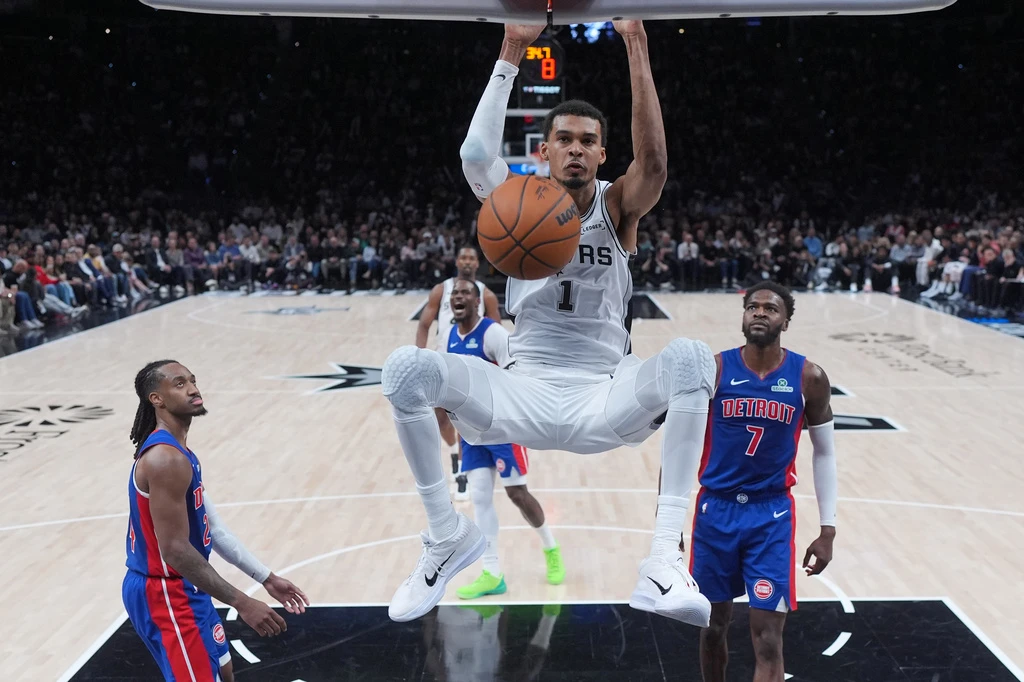
Wembanyama finished with 25 points and 18 rebounds, but San Antonio struggled to generate consistent offense against Detroit’s defensive pressure.
The Spurs shot 41.6% from the field and made just nine of their 40 three-point attempts. De’Aaron Fox scored six points on 3-of-10 shooting, while Castle added 10 points and seven assists.
Harper was one of San Antonio’s more efficient scorers, converting 57.1% of his field-goal attempts.
The defeat dropped the Spurs to 12-3 and demonstrated that even a team enjoying a dominant stretch can encounter difficulties when its offensive rhythm breaks down.
It also created a more pressing question: whether San Antonio would have one of its most productive young guards available for its next game.
Why Harper’s Development Has Been So Important to the Spurs
Harper’s potential absence matters because his role has expanded considerably since his rookie season.
Selected second overall in the 2025 NBA Draft out of Rutgers, Harper spent much of his first season contributing from the bench.
His performances earned him a place on the NBA All-Rookie First Team, establishing him as an important part of San Antonio’s long-term plans.
The 2026-27 season has brought another step forward.
After moving into the starting lineup, Harper entered Tuesday’s matchup averaging 18.3 points, 5.5 rebounds, 4.7 assists and one steal through 14 appearances.
Including his 20-point performance against Detroit, his averages moved to approximately 18.4 points, 5.4 rebounds and 4.5 assists through 15 games.
Those numbers demonstrate his growing importance as both a scorer and a secondary playmaker.
Just two days before facing Detroit, Harper delivered a career-high 31 points in a 110-102 victory over the Utah Jazz. He also collected nine rebounds and recorded four assists.
Earlier in November, he contributed 18 points and 10 assists against Chicago, demonstrating his ability to influence games through passing as well as scoring.
His development has given San Antonio another player capable of creating opportunities without relying exclusively on Wembanyama or Fox.
The Surprising Statistics Behind Harper’s Offensive Impact
One of the most important elements of Harper’s breakout season has been his contribution to San Antonio’s transition offense.
According to an NBA analysis published November 17, the Spurs entered the Detroit game leading the league in fast-break scoring at 19.9 points per game.
That represented a substantial improvement from the previous season, when San Antonio ranked 10th in the category.
Harper was central to that development.
Before facing Detroit, he had recorded 64 fast-break points, the fourth-highest total in the NBA. His ability to push the pace after defensive rebounds helped create scoring opportunities before opponents could organize their half-court defense.
The 6-foot-5 guard also displayed notable efficiency around the basket.
The NBA reported that Harper was converting 78.6% of his attempts at the rim, leading all qualifying guards attempting at least five such shots per game.
Those statistics help explain why his availability could affect much more than the team’s scoring totals.
Harper provides the Spurs with another downhill attacking option alongside Fox and Castle. His ability to advance the ball, pressure defenders and finish near the basket adds variety to an offense built around Wembanyama’s unique skills.
If Harper misses time, San Antonio may need to distribute those responsibilities among its remaining guards rather than simply replacing his points.
Harper’s Playoff Experience Shows Why San Antonio Values Him
Although Harper is only in his second NBA season, he has already experienced high-pressure postseason basketball.
During San Antonio’s run to the 2026 NBA Finals, Harper established himself as a dependable contributor against elite competition.
One of his most memorable performances came on May 18, 2026, in Game 1 of the Western Conference Finals against the Oklahoma City Thunder.
Harper produced 24 points, 11 rebounds, six assists and seven steals as San Antonio earned a 125-118 double-overtime victory.
According to the NBA’s official game recap, Harper became the first rookie since Magic Johnson in 1980 to register at least 20 points, 10 rebounds, five assists and five steals in a playoff game.
His performance demonstrated an ability to contribute across several areas rather than depending exclusively on his scoring.
San Antonio eventually reached the Finals against the New York Knicks, losing the championship series 4-1.
Even in defeat, Harper produced encouraging numbers.
The NBA’s official Finals statistics show that he averaged 18.0 points, 6.4 rebounds and 3.0 assists across five games.
He was San Antonio’s second-leading scorer in the series behind Wembanyama, who averaged 26.0 points.
Those postseason contributions provide additional context for Harper’s growing role. His current importance to the rotation reflects both his early-season development and the experience he gained during last season’s playoff run.
How San Antonio Could Adjust if Harper Misses Time
The Spurs have multiple established guards capable of taking on additional responsibilities, but losing Harper for any meaningful period would require adjustments.
Fox remains an important offensive creator and could handle more possessions if San Antonio needs additional scoring and playmaking from its backcourt.
Castle offers another option as a ball-handler and facilitator. His seven assists against Detroit demonstrated his involvement in the offense even on a night when his shooting was inconsistent.
Devin Vassell could also see greater offensive responsibility, particularly through perimeter shooting and half-court scoring opportunities.
However, replacing Harper’s combination of rim pressure, transition scoring and playmaking would be more complicated than assigning his minutes to a single player.
San Antonio’s offensive success has come partly from having several guards who can attack in different ways.
The team may need to rely more heavily on collective production if Harper is unavailable.
Fox acknowledged after Tuesday’s game that the Spurs have previously managed periods without certain players and could face a similar challenge again.
That experience may provide reassurance, but it does not establish how long Harper might be sidelined.
What Comes Next for Dylan Harper and the Spurs?
The Spurs are scheduled to host the Los Angeles Clippers on Thursday, November 19, at 7 p.m. Central Time.
Harper’s availability for that matchup remains uncertain pending further information from the organization.
Although the fall appeared uncomfortable, the available evidence does not establish whether he sustained a minor injury, a more significant problem or something that will affect his playing time beyond Tuesday’s game.
There is also no confirmed recovery timetable.
For now, the distinction between the visible incident and a medical diagnosis is important. A player’s reaction after a fall cannot reliably determine the severity of an injury.
San Antonio will need to assess Harper’s condition before making decisions about his return.
Regardless of the eventual diagnosis, Tuesday’s events illustrated both the unpredictability of an NBA season and the increasingly important role Harper occupies within the Spurs’ rotation.
The winning streak has ended, but San Antonio still holds a 12-3 record and retains the core of a roster that reached the NBA Finals only months earlier.
The team’s next challenge is determining whether Harper can continue contributing to that progress immediately or whether his teammates will need to carry additional responsibilities in his absence.