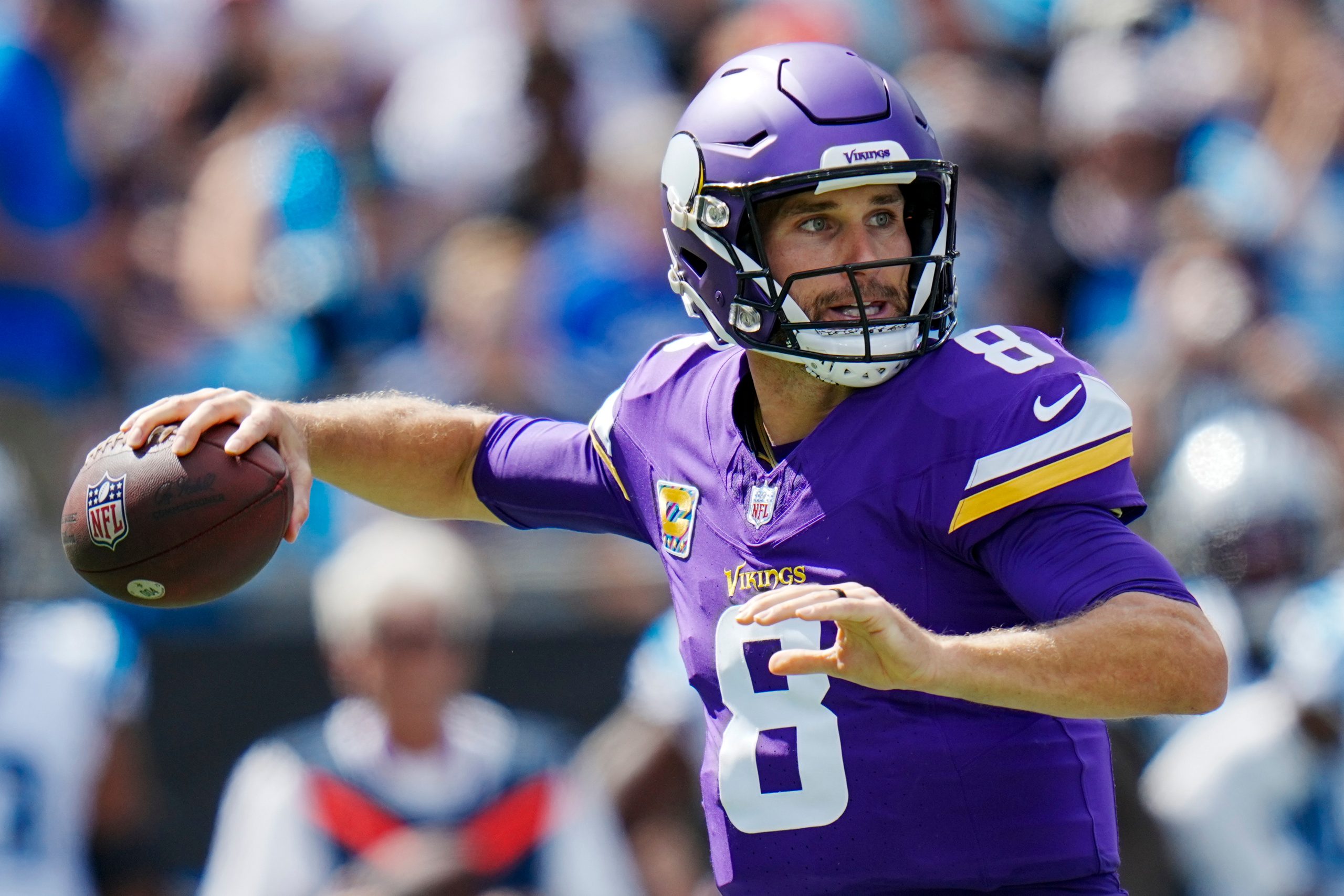
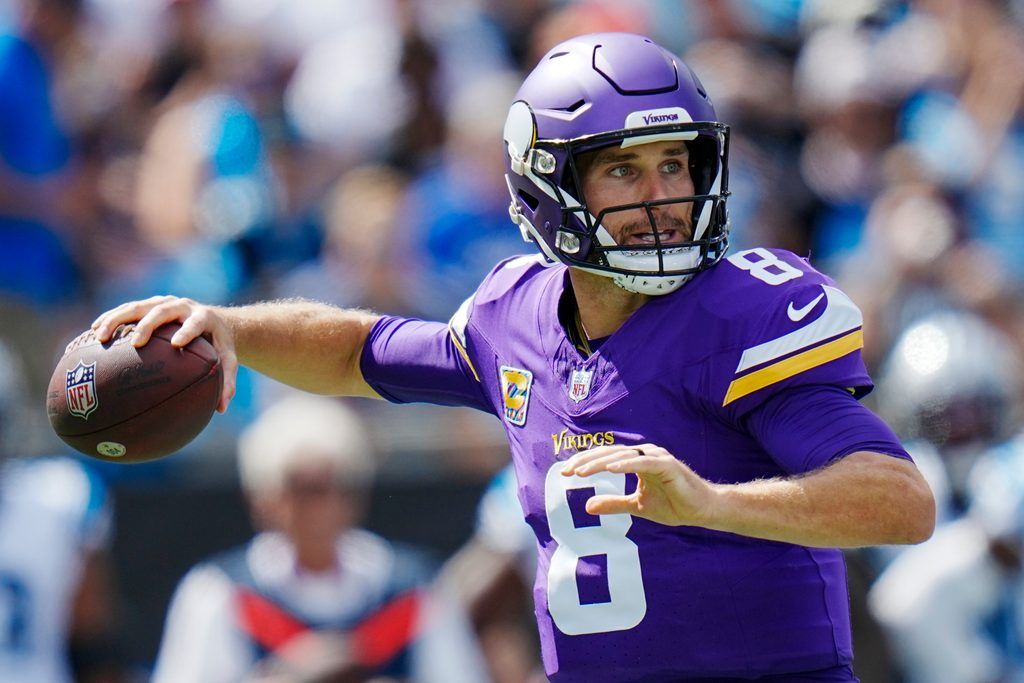
The Minnesota Vikings have reunited with Kirk Cousins, acquiring the veteran quarterback from the Las Vegas Raiders for a 2027 third-round draft pick ahead of the NFL trade deadline.
Both teams confirmed the Nov. 10 transaction, although Minnesota said the deal remained contingent on Cousins passing a physical. The move sends Cousins back to the franchise he represented for six seasons from 2018 through 2023.
For Minnesota, the trade is an attempt to stabilize an offense that has not matched the performance of its defense. For Las Vegas, it clears the way for rookie Fernando Mendoza, the first overall pick in the 2026 NFL Draft, to become the starting quarterback.
Familiarity Makes Cousins a Practical Midseason Addition
Cousins arrives with knowledge of head coach Kevin O’Connell’s offense and established relationships with Justin Jefferson, Jordan Addison, T.J. Hockenson and several Minnesota offensive linemen.
That familiarity does not guarantee an immediate transition, but it could reduce the adjustment period that normally comes with changing quarterbacks during a season. Cousins played under O’Connell in 2022 and 2023, passing for 6,878 yards, 47 touchdowns and 19 interceptions across 25 regular-season starts.
His 2023 season ended when he tore his Achilles tendon during Minnesota’s Week 8 victory at Green Bay. The injury began an extended period of quarterback turnover for the franchise.
Eight other players have started games for Minnesota since Cousins’ final 2023 appearance: Jaren Hall, Joshua Dobbs, Nick Mullens, Sam Darnold, J.J. McCarthy, Carson Wentz, Max Brosmer and Kyler Murray. The Vikings’ decision to bring Cousins back reflects the difficulty they have had finding a lasting answer.
The current season has continued that pattern. Murray has started six games, while Wentz has also seen significant action. In Minnesota’s 23-6 loss to Buffalo, Wentz completed eight of 25 passes and threw two interceptions while replacing the injured Murray.
Minnesota remains 6-2 after opening the season with six consecutive victories, but back-to-back losses have exposed the offense’s limitations. Through eight games, the Vikings have produced 2,134 total offensive yards and 1,437 net passing yards, according to the team’s official statistics.
Cousins, by comparison, threw 20 touchdown passes in nine starts for Las Vegas. Minnesota’s entire offense has recorded eight passing touchdowns this season. The schedules are not identical, but the contrast helps explain why the Vikings were willing to surrender a third-round selection.
Cousins Brings Productive 2026 Numbers
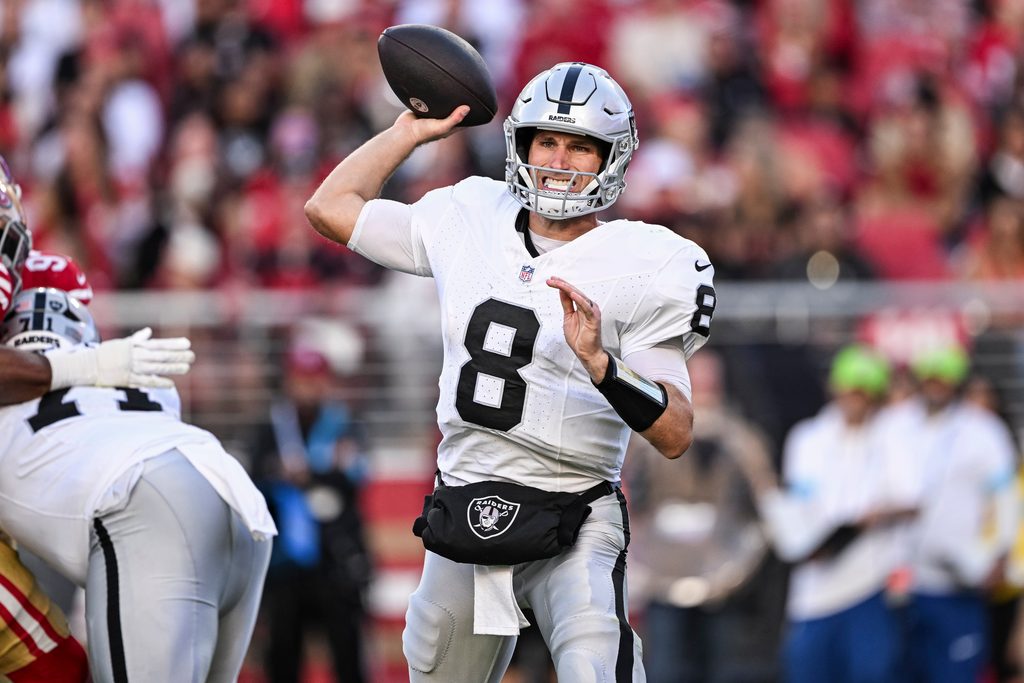
Cousins was not merely serving as a placeholder for the Raiders. The 38-year-old completed 202 of 315 passes for 2,340 yards, 20 touchdowns and eight interceptions. His 64.1% completion rate produced a 97.1 passer rating.
His Raiders tenure included uneven performances, but also several efficient outings. Cousins threw three touchdown passes in each of Las Vegas’ first three games and recorded another three-touchdown performance in a Week 8 victory over the New York Jets.
During the Raiders’ season-opening 27-13 win over Miami, he completed 21 of 30 passes for 160 yards, three touchdowns and two interceptions. A 13-yard touchdown pass to Ashton Jeanty made Cousins the 15th quarterback in NFL history to reach 300 career touchdown passes, according to the Raiders’ announcement.
That milestone tied John Elway’s career total at the time; it did not surpass it, as the original draft claimed.
Cousins’ most recent start was less encouraging. He threw three interceptions in a 38-17 loss to San Francisco. Minnesota is therefore acquiring a productive but imperfect veteran, rather than a guaranteed solution.
Jefferson Could Benefit From Greater Stability
Jefferson’s production provides another reason for the trade. He has caught 31 passes for 393 yards and four touchdowns in seven appearances this season, an average of approximately 56.1 receiving yards per game. He has been targeted 51 times.
Those numbers are well below the standards Jefferson established earlier in his career. However, it would be too simplistic to attribute the decline entirely to quarterback play. Injuries, protection, play selection and opposing coverages can also affect a receiver’s production.
Cousins nevertheless offers an established connection with Jefferson. Across Cousins’ final two seasons in Minnesota, Jefferson accumulated 3,133 receiving yards despite missing seven games in 2023. Reuniting the pair gives the Vikings a credible opportunity to improve the timing and consistency of their passing game.
The larger challenge will be converting possession into points. Minnesota has scored 16 or fewer points in five of its eight games, and its offense has struggled to sustain drives even while the defense has kept the team in contention.
Raiders Turn the Offense Over to Fernando Mendoza
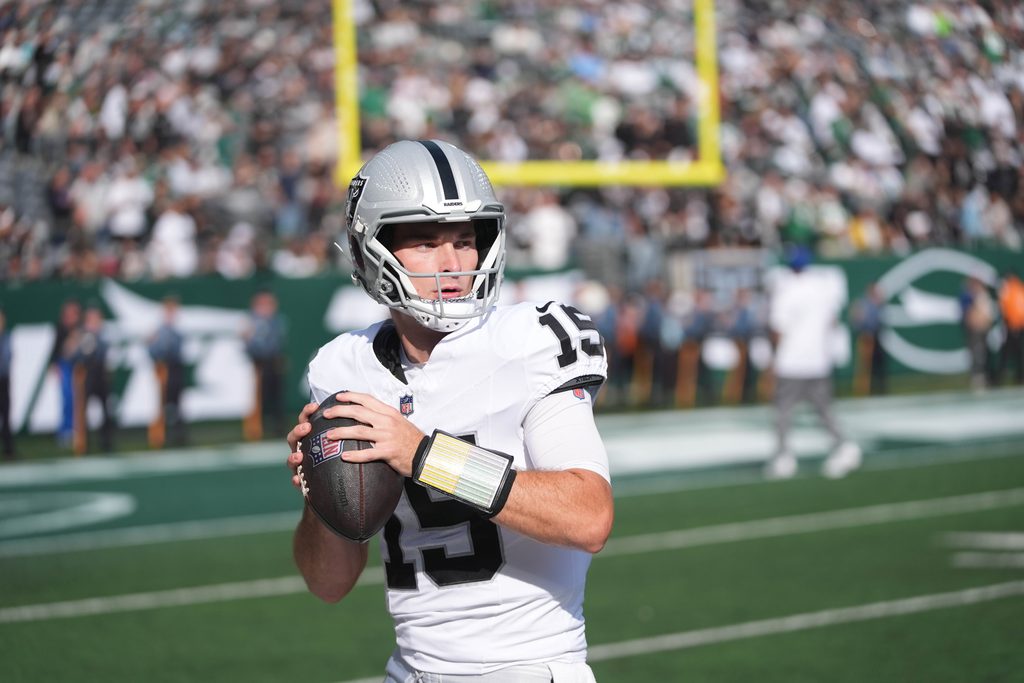
Las Vegas’ side of the trade is centered on Mendoza, not simply on the draft pick it received.
Mendoza won the 2025 Heisman Trophy, not the 2026 award as stated in the original article. He led Indiana to a Big Ten championship and later a national title, finishing the full 2025 season with 3,535 passing yards, 41 touchdown passes and six interceptions. His award year and college statistics are documented by the Heisman Trophy.
The Raiders selected Mendoza first overall in the 2026 draft and have now named him their starter. His NFL experience is limited to one relief appearance, when he completed six of eight passes for 48 yards in a loss to New England.
That creates obvious uncertainty for a 4-5 Raiders team that has not been eliminated from postseason contention. Cousins had a 97.1 passer rating and twice as many touchdown passes as interceptions, so Las Vegas is giving up competent present-day production to accelerate the development of its intended long-term quarterback.
General manager John Spytek said Minnesota initiated the trade and that Las Vegas had not been actively shopping Cousins. That context suggests the Raiders viewed the third-round pick and an earlier transition to Mendoza as sufficient value once the opportunity arose.
A Significant Test for Both Franchises
Cousins could make his second Vikings debut against Green Bay at Lambeau Field, the site of his final appearance for Minnesota in 2023. His availability will depend on the completion of the trade process and the Vikings’ assessment of his readiness.
The move gives Minnesota a quarterback with relevant experience, current production and familiarity with its most important offensive players. It does not solve every problem on an offense that has struggled in several areas, and the cost of a third-round pick is meaningful.
For Las Vegas, the decision begins the Mendoza era earlier than initially expected. The Raiders gain a future asset but accept the volatility that comes with starting a rookie.
The trade is therefore less about nostalgia than timing. Minnesota is using draft capital to protect a 6-2 season, while Las Vegas is prioritizing its long-term quarterback despite remaining within reach of the playoff race.