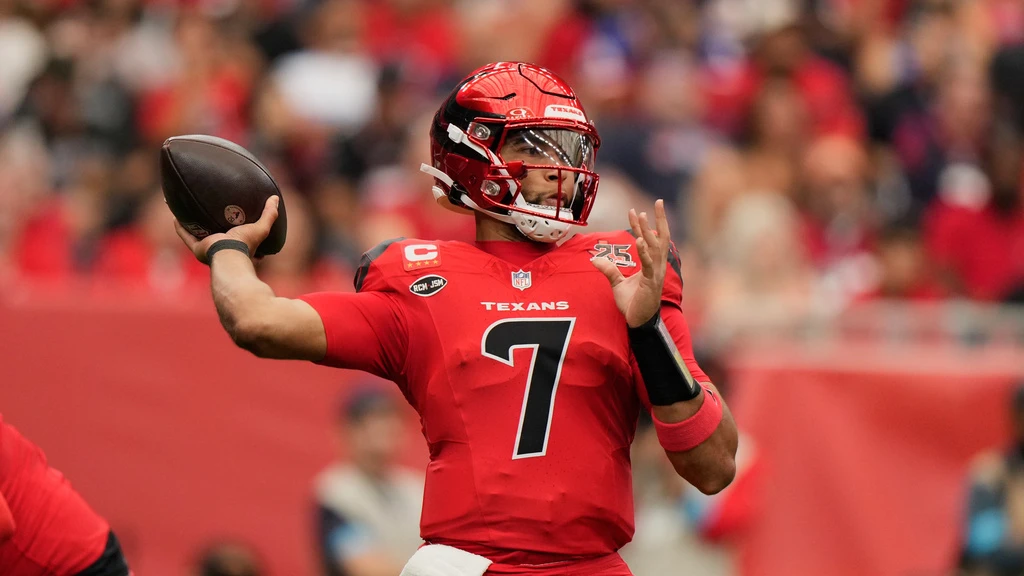
C.J. Stroud did not simply walk away from $55 million in guaranteed money.
The more accurate story is that the Houston Texans quarterback declined a reported extension with an average value of roughly $55 million per season, choosing to wait for a deal with better overall terms.
The distinction matters. Houston and Stroud did not disclose the proposed contract’s length, guarantees, signing bonus or cash flow.
ESPN reporters DJ Bien-Aime and Jeremy Fowler reported that two sources compared the offer with Trevor Lawrence’s $55 million-per-year extension with Jacksonville.
They also reported that Stroud and agent David Mulugheta submitted a counteroffer without demanding that he become the NFL’s highest-paid quarterback. ABC13’s publication of the ESPN report provides the clearest available account of the negotiations.
No agreement was reached before the season, but Stroud was not left without contractual protection. Houston had already exercised his fully guaranteed fifth-year option, worth approximately $25.9 million for 2027. That gives the Texans control of his contract for another season while allowing both sides to revisit a long-term extension after the 2026 campaign.
The result is a calculated negotiation strategy rather than an all-or-nothing financial gamble.
Stroud’s Performance Has Strengthened His Position
Through seven games, Stroud has completed 160 of 247 passes for 1,867 yards, 11 touchdowns and one interception. Those totals produce a 64.8% completion rate and approximately 7.6 yards per attempt. His passer rating stands at 100.7.
The figures match the game-by-game totals published in Stroud’s official NFL statistics. They also illustrate why waiting could prove profitable: Stroud has protected the football while producing at a level that keeps him in the upper portion of the league’s quarterback rankings.
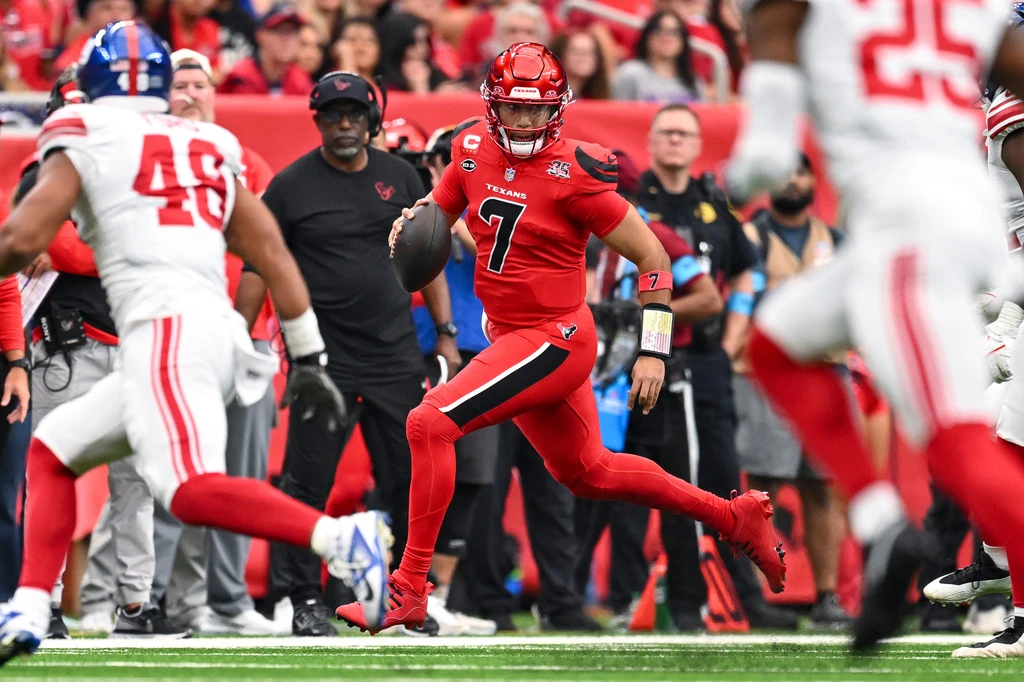
His individual performance has not translated into a strong team record. Houston entered its bye at 2-5 after an overtime loss to the New York Giants on Oct. 25. Stroud completed 17 of 28 passes for 153 yards and two touchdowns in the 27-21 defeat, according to the NFL’s game log.
That contrast is central to his next negotiation. Quarterback contracts are not determined solely by team wins, especially when the player is performing efficiently. At the same time, postseason success could materially strengthen Stroud’s case for a deal near the top of the market.
The remaining schedule therefore carries financial significance for both sides. Stroud can improve his leverage by sustaining his efficiency and helping Houston recover from its slow start. The Texans, meanwhile, must decide how much of their record reflects quarterback play and how much belongs to the roster around him.
The Reported Offer Was Significant, but Its Security Is Unknown
An average annual value of approximately $55 million would place Stroud in expensive company. At the beginning of the season, that figure matched the reported annual averages of quarterbacks including Lawrence, Joe Burrow, Jordan Love and Josh Allen, while remaining below the top of the market.
Annual value, however, does not reveal how favorable a contract is to the player. Two deals carrying the same yearly average can differ substantially in fully guaranteed money, practical guarantees, payment timing, option bonuses and the number of seasons a team can realistically retain the player.
Because the complete Houston proposal has not been made public, it is impossible to determine exactly how much financial security Stroud declined. Describing the situation as turning down “$55 million guaranteed” would be unsupported.
What has been reported is that Houston made an offer, Stroud’s camp countered and the sides remained apart. General manager Nick Caserio characterized the discussions as professional rather than contentious, while Stroud indicated he was comfortable continuing without an immediate extension.
“If you chase the deal or the contract, I think that’s when you kind of lose yourself,” Stroud said when discussing his approach.
His decision does expose him to familiar risks. An injury, a prolonged decline in performance or another disappointing postseason appearance could weaken his bargaining position. On the other hand, another strong season could allow him to negotiate in a quarterback market that may be considerably more expensive in 2027.
The $70 Million Figure Is a Projection, Not a Demand
The possibility of a $70 million annual average has generated attention, but it should not be presented as Stroud’s confirmed asking price.
The ESPN report said an industry source believed quarterbacks could push the market toward $70 million per year as members of the 2024 draft class become eligible for extensions. That is a market projection, not evidence that Stroud demanded $70 million from Houston.
Whether he can approach that figure will depend on several variables: his performance over the rest of 2026, Houston’s results, contracts signed by other quarterbacks and the continued growth of the NFL salary cap. The amount and structure of guaranteed compensation will also matter more than the headline average alone.
Stroud already has a strong foundation for negotiations. Houston selected him second overall in the 2023 draft, and he won the Associated Press Offensive Rookie of the Year award after leading the Texans to a division title and a playoff victory.
His 470-yard, five-touchdown performance against Tampa Bay that season established an NFL rookie record for single-game passing yards and tied the rookie record for touchdown passes in a game, according to NFL Research.
Those accomplishments demonstrate his ceiling, but his next contract will be based on the full body of his work rather than his rookie season alone.
Houston’s Salary Cap Adds Pressure, but It Does Not Prevent a Deal
Houston also must manage a crowded future salary-cap position. ESPN, citing Over the Cap, reported that the Texans were projected to be $41.52 million above the 2027 cap based on their existing commitments.
That figure is a snapshot, not an immovable deficit. Future cap projections change as the league sets its official limit and teams release players, make trades or restructure contracts. A Stroud extension could even lower his scheduled 2027 cap charge by spreading bonus money across later seasons.
Such restructuring would provide immediate room while shifting costs into future years. The Texans must therefore balance short-term flexibility against the long-term expense of contracts already awarded to other core players.
Houston’s exercised option also means Stroud is not scheduled to become a free agent immediately after this season. The team has time, although waiting may make a long-term agreement more expensive if his performance and the quarterback market continue to rise.
For Stroud, the strategy is straightforward: play well enough that Houston’s reported $55 million-per-year proposal becomes a starting point rather than a missed opportunity. For the Texans, the question is no longer whether they can keep him for 2027. It is whether delaying an extension will increase the eventual price of keeping him beyond it.