The 2026 NBA playoffs are revealing a startling truth: teams with balanced scoring threats systematically dismantle traditional superstar-dependent squads.
The 2026 NBA playoffs are delivering a hard lesson that front offices across the league can no longer ignore: teams built around balanced, multi-threat rosters are systematically dismantling squads constructed around a single superstar.
The Oklahoma City Thunder’s commanding 3-0 series lead over the Los Angeles Lakers — with an average winning margin of 19.6 points per game — is the most visible proof of that thesis. OKC’s ability to generate defensive pressure at every position, without leaning on any one player to carry the load, has exposed the structural limitations of the Lakers’ star-dependent model.
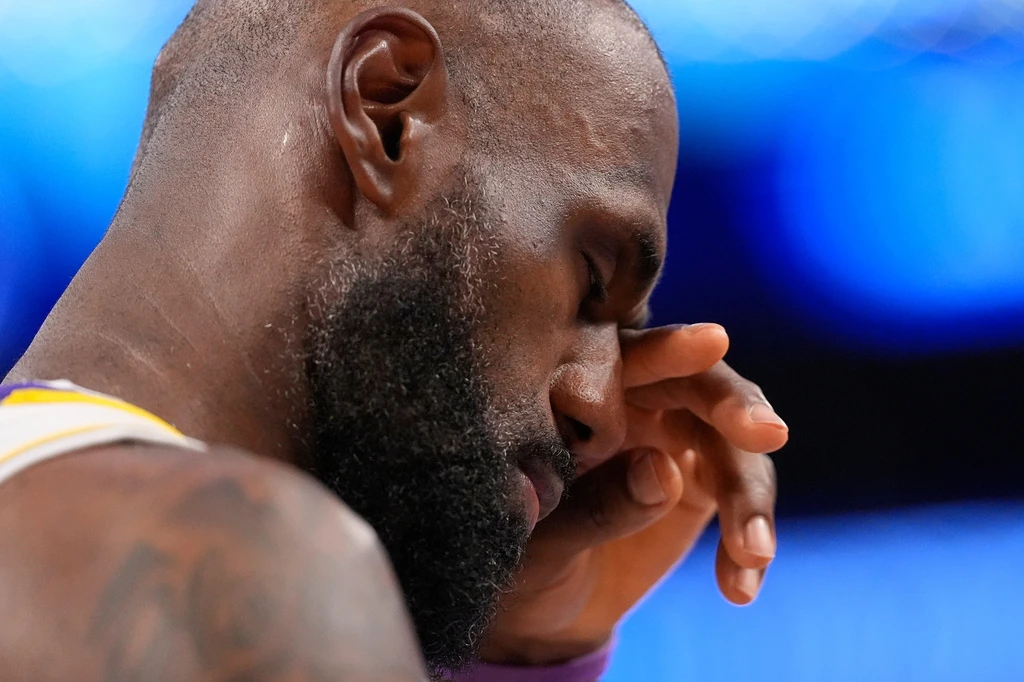
The Lakers have built their identity around elite individual talent for decades, and that formula has produced 17 championships, as documented by Britannica. But in this series, it isn’t LeBron James’ production that’s the problem — it’s that the Thunder’s five-deep rotation creates mismatches the Lakers simply cannot solve. There’s no weak link to exploit, no defensive assignment to hide.
Game 1 set the tone immediately. OKC dismantled Los Angeles 108-90, with Chet Holmgren posting 24 points and 12 rebounds to anchor the effort. Shai Gilgeous-Alexander and Ajay Mitchell each added 18 points, and that distribution of offensive production is precisely what makes this Thunder team so difficult to game-plan against. When three or four players can hurt you on any given night, doubling one of them only opens the floor for the others.
The Thunder earned the Western Conference’s No. 1 seed for the third consecutive year, and they carry genuine championship credibility into this matchup. OKC captured its first NBA title since relocating to Oklahoma City in May 2025, with Gilgeous-Alexander taking home Finals MVP honors, per the NBA. This is a team that knows how to close out a series.
Reaching back-to-back conference finals for the first time since the Kevin Durant era of 2011-12 underscores just how much organizational continuity and front-office discipline have driven OKC’s resurgence. This isn’t a one-year window — it’s a sustained program.
The Thunder aren’t the only team making this case. The Detroit Pistons’ balanced scoring attack has similarly overwhelmed the Cleveland Cavaliers in their series, reinforcing that what OKC is doing isn’t a fluke — it’s a blueprint that multiple franchises have now successfully executed.
Wembanyama’s Injury Twist
For years, the conventional wisdom held that you needed a top-five player to win a championship. The 2026 playoffs are complicating that narrative in real time. Superstar-dependent rosters are losing ground to teams with depth, defensive versatility, and multiple reliable scoring options — and the gap is not close.
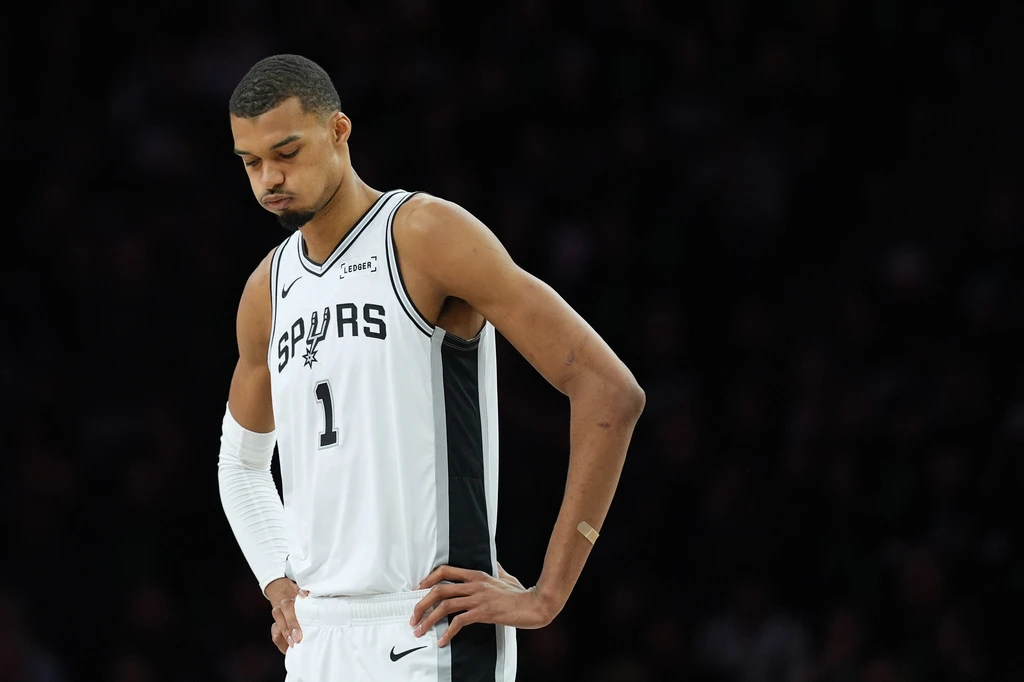
Victor Wembanyama’s hard fall and subsequent entry into concussion protocol sent an immediate shockwave through the Spurs-Trail Blazers first-round matchup. For a San Antonio team that has built its entire offensive and defensive identity around the 7-foot-4 phenom, losing him — even temporarily — threatened to unravel everything the franchise has constructed around him.
What happened next, though, was telling. The Spurs responded with a composed Game 2 performance that defied the panic most teams would have shown after losing their franchise player. San Antonio didn’t collapse — they competed, and they won.
Wembanyama’s absence forces uncomfortable questions that every contender must eventually answer: Can this roster function at a playoff level without its most important player? Is the supporting cast deep enough to sustain a series run? And critically — how long can San Antonio afford to wait before the window closes on this first-round matchup?
The Spurs’ response has been more than just a feel-good story. It signals genuine organizational depth — coaching adjustments, role players stepping into expanded responsibilities, and a collective refusal to fold. That kind of resilience doesn’t happen by accident. It’s built through roster construction and culture.
Wembanyama’s injury may ultimately serve as the defining subplot of the 2026 postseason: a stress test for the new playoff paradigm. The teams advancing deepest aren’t necessarily the ones with the highest ceiling — they’re the ones with the most reliable floor when things go wrong.
Whether Wembanyama returns at full capacity or remains limited, his situation has already become a case study in how health fragility can reshape playoff brackets overnight. One awkward landing, one concussion protocol, and a series that looked like a formality suddenly becomes a genuine question mark.
The contrast with OKC’s roster construction is impossible to ignore. The Thunder have built a team that can absorb adversity — whether that’s an off night from Gilgeous-Alexander, a foul trouble situation for Holmgren, or a short-term injury — without a significant drop in competitive output. That structural resilience is a competitive advantage that doesn’t show up in any box score.
Defense Is Stealing Series—And Breaking All the Rules
Kevin Durant’s late scratch before Game 1 of the Lakers-Rockets series added another data point to the injury narrative running through this postseason. Even the most talented rosters are one warm-up session away from a completely different series, and no amount of star power insulates a team from that reality.
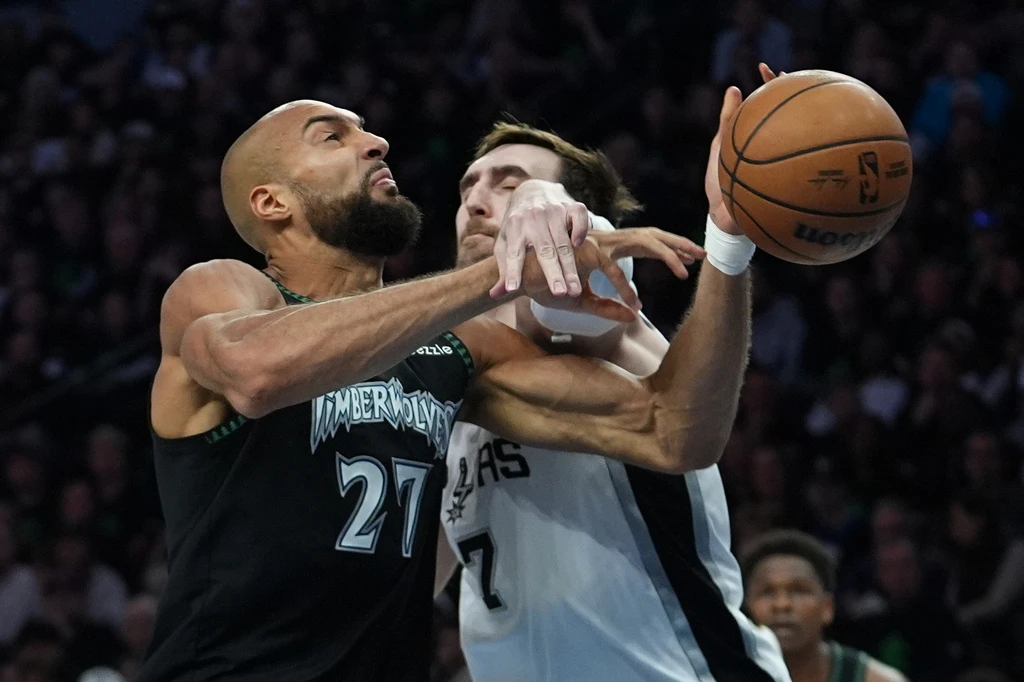
Rudy Gobert’s defensive performance against Nikola Jokic in Game 2 of the Timberwolves-Nuggets series produced one of the first round’s most stunning results — a road win for Minnesota that few saw coming. Gobert’s ability to take away Jokic’s preferred angles in the paint, force him into contested mid-range attempts, and limit his impact on the glass demonstrated that even a three-time MVP can be neutralized with the right scheme and the right personnel executing it.
Jokic remains one of the most difficult offensive players in NBA history to contain — his combination of size, vision, and touch is genuinely unique. But Gobert’s performance proved that disciplined, physically demanding interior defense, applied consistently over 48 minutes, can limit even that level of production enough to swing a game.
The Thunder’s defensive scheme against the Lakers operates on a similar principle. OKC doesn’t just defend — they suffocate. Their rotations are coordinated, their closeouts are disciplined, and their ability to take away the Lakers’ primary actions has reduced Los Angeles to a half-court offense that generates little rhythm and even less momentum. The result is a series that has felt lopsided from the opening tip.
OKC’s 108-90 Game 1 victory wasn’t a fluke, and the near-20-point average margin across three games confirms it. Defensive excellence in the playoffs doesn’t just win individual games — it compounds. When a team cannot establish offensive rhythm across multiple games, the psychological toll begins to match the statistical one.
By the time opponents realize they’re in a defensive stranglehold, the damage is already done. Halftime deficits become insurmountable not because the talent gap is that wide, but because the mental weight of being controlled for 24 straight minutes breaks competitive will.
Taken together — OKC’s systematic dismantling of the Lakers, Gobert’s shutdown of Jokic, the Pistons’ balanced attack against Cleveland — the 2026 playoffs are making a collective argument: defensive identity and roster depth are outperforming offensive firepower and isolation-based systems. That’s a meaningful departure from the three-point revolution that defined the previous decade of playoff basketball.
Gobert’s Game 2 performance against Jokic stands as the clearest individual example of this shift. Perimeter-based scoring systems, no matter how sophisticated, can be neutralized when a team commits fully to interior defense and executes that commitment at an elite level over an entire game.
The Clutch Gene Is Real—And Jalen Brunson Just Proved It
The Thunder’s approach against the Lakers takes that principle and scales it across an entire series. Three games of coordinated defensive intensity haven’t just beaten the Lakers — they’ve broken them. The psychological damage of being held below 90 points repeatedly, of watching your best players get taken out of their comfort zones possession after possession, is cumulative and devastating.
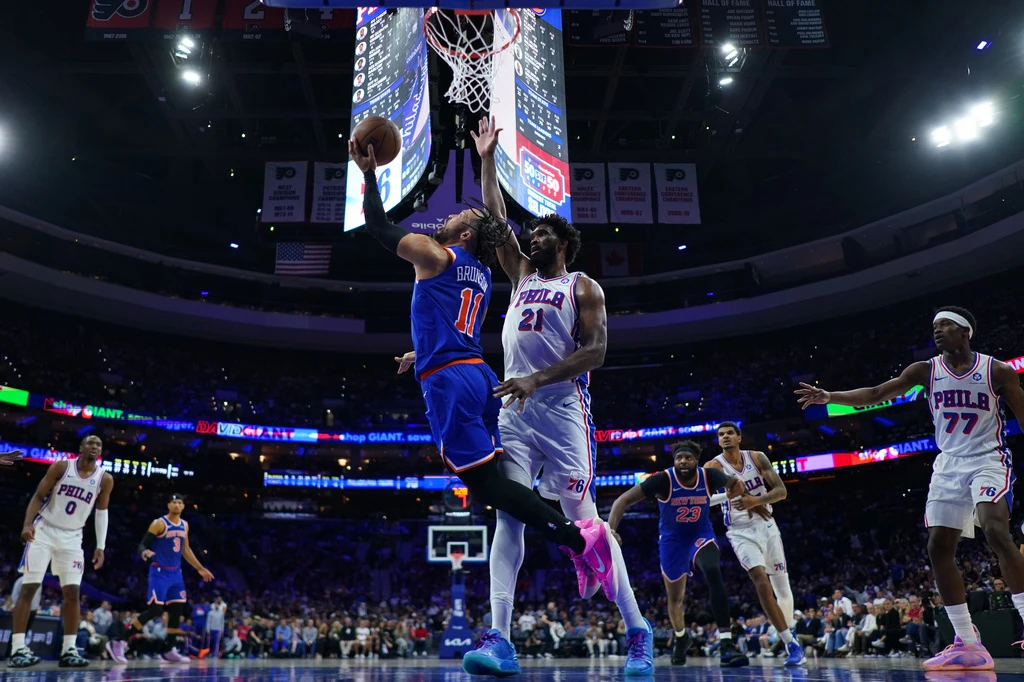
The New York Knicks’ series advantage over the Philadelphia 76ers hasn’t been built on three-point barrages or the kind of highlight-reel offense that drives social media engagement. New York isn’t winning this series with spectacular basketball.
They’re winning it with Jalen Brunson. His ability to execute in the final minutes of close games — to make the right read, get to his spot, and convert difficult shots with defenders draped over him — has been the decisive factor in multiple games. Brunson doesn’t just make big shots; he makes the right shot at the right moment, repeatedly, without visible hesitation.
That quality is genuinely difficult to defend against, and it’s more psychologically damaging than a 40-point explosion. A 40-point game is an outlier. Brunson’s late-game execution is a pattern — and opponents know it’s coming and still can’t stop it.
Brunson’s crunch-time precision has taken on an almost mechanical quality in this series. He operates without panic, processes the defense quickly, and delivers in moments that have historically separated playoff contenders from pretenders. His shot-making under pressure isn’t a new development — he’s been building this reputation since his 2023 playoff run — but it has reached a new level of reliability in 2026.
The NBA has long tried to quantify clutch performance through metrics like points in the final five minutes of close games, and by those measures, Brunson ranks among the league’s elite. But the full impact of his late-game presence extends beyond any single stat line — it’s the cumulative effect of opponents knowing what’s coming and being unable to prevent it.
The Knicks aren’t trying to outscore the 76ers. They’re trying to outexecute them in the moments that decide games, and Brunson is the primary instrument of that strategy. New York’s offensive system is built to get him the ball in the right situations, and he has delivered consistently enough to make it a reliable closing formula.
Availability Is the New Superstardom
The mental dimension of facing Brunson in the fourth quarter is real and measurable in opponent behavior. Defenders over-commit, help rotations break down, and fouling decisions become reactive rather than disciplined — all because Philadelphia knows the ball is going to Brunson and he’s probably going to make the shot. That kind of psychological leverage, earned entirely through demonstrated performance, is worth more than any single statistical advantage.
Kevin Durant’s late scratch before Game 1 against the Houston Rockets handed the Lakers an unexpected lifeline — and a reminder that playoff basketball can pivot on a single injury report. Durant’s absence reshuffled the entire series dynamic before it even began, illustrating how quickly a team’s competitive outlook can change regardless of talent level or preparation.
Wembanyama’s ongoing injury situation casts a similar shadow over San Antonio’s postseason trajectory. The Spurs entered 2026 as one of the league’s most intriguing young contenders, but sustaining that momentum without their franchise centerpiece — even for a handful of games — tests the depth of everything they’ve built around him.
The injury toll across the 2026 conference semifinals is reinforcing one of the most uncomfortable truths in playoff basketball: roster health is a competitive variable that no amount of talent, preparation, or coaching can fully control. The healthiest team in a series wins more often than the most talented one — and the gap between those two outcomes is widening.
That represents a genuine shift in how front offices should be evaluating roster construction, and how analysts should be assessing championship probability as the postseason progresses.
Teams that distributed their talent investment across multiple capable contributors — rather than concentrating resources in one or two max-contract stars — are proving better equipped to absorb the inevitable injury disruptions of a playoff run. Depth isn’t just a luxury in the 2026 postseason; it’s a structural requirement for sustained competitiveness.
The Thunder’s depth advantage over the Lakers is quantifiable beyond this series. OKC averaged a +29.3-point differential across their regular-season matchups with Los Angeles, a margin that reflected not just talent disparity but a fundamental difference in how each franchise has approached roster construction. That foundation made the current series rout predictable, even if the margin has still been striking.
The Lakers’ structural vulnerability is straightforward: if LeBron James or Anthony Davis misses significant time, Los Angeles has no viable path to advancing. There is no third option capable of carrying offensive possessions at a playoff level, no defensive anchor who can compensate for Davis’ absence in the paint.
Historic Implications and Conference Finals Outlook
The Thunder, by contrast, have demonstrated throughout this series that they can generate winning basketball from multiple sources. Holmgren, Gilgeous-Alexander, Mitchell, and others have all had significant moments across these three games. That distributed production isn’t accidental — it’s the result of deliberate roster construction and a coaching staff that has developed multiple players into reliable playoff contributors. The principle extends throughout the 2026 bracket: organizational philosophy is determining outcomes more than individual brilliance.
With the Lakers facing potential elimination in Game 4, the historical weight of this moment is significant and measurable. This isn’t just another playoff loss — it’s a potential franchise-defining outcome for one of the NBA’s most storied organizations.
The Lakers have been swept only nine times in franchise history, and LeBron James — in his 22nd NBA season — has never been swept before the conference finals. A sweep here would be unprecedented territory for James personally and a jarring outcome for a franchise that has defined itself through playoff success across multiple eras.
For the Thunder, advancing would mean back-to-back conference finals appearances — their first such consecutive run since the Kevin Durant, Russell Westbrook, and James Harden era of 2011-12. That historical parallel is not lost on a franchise that has spent years rebuilding toward this level of sustained postseason relevance.
The organizational continuity that produced this run — patient draft development, disciplined roster management, and a coaching staff that has maximized the talent available — reflects a long-term commitment to building a program rather than chasing short-term star acquisitions. OKC’s two championships and sustained Western Conference presence represent the payoff for that approach.
Should the Thunder advance, they will face either the San Antonio Spurs or the Minnesota Timberwolves in the conference finals — two teams that, in different ways, embody the same principles of balanced scoring, defensive commitment, and roster resilience that have defined OKC’s playoff run. Any of those matchups would be a genuine test of whether the Thunder’s model holds up against opposition built on similar foundations.