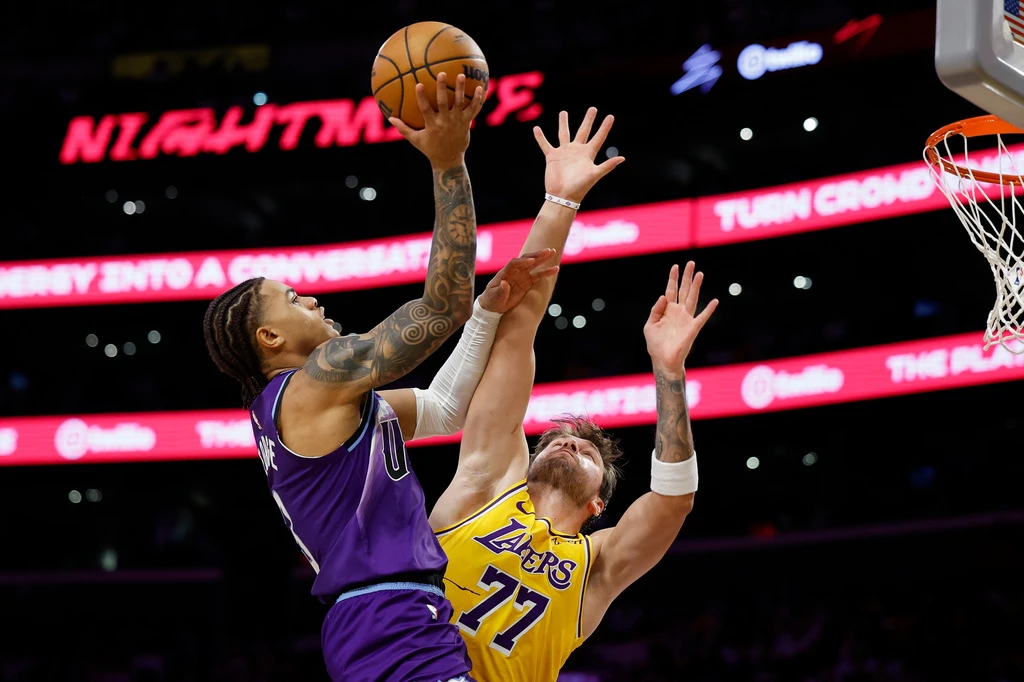
The Utah Jazz delivered one of their most impressive performances of the young NBA season on Wednesday, November 18, defeating the Los Angeles Lakers 109-97 at Crypto.com Arena. The victory ended Los Angeles’ nine-game winning streak and exposed offensive weaknesses that Utah successfully exploited throughout the contest.
Keyonte George led the Jazz with 30 points and 10 assists, providing the offensive spark Utah needed to overcome the Western Conference leaders. The Jazz improved to 3-13, while the Lakers dropped to 13-3.
Despite committing 23 turnovers, Utah controlled the final quarter and held Los Angeles to just 97 points. The result illustrated how effective shooting and sustained defensive pressure can overcome mistakes against even the strongest opponents.
Utah Jazz Take Control After Lakers’ Fast Start
Los Angeles opened the game aggressively, building momentum with a 14-1 first-quarter run. The Lakers finished the opening period ahead 34-29, seemingly positioned to extend their winning streak.
However, Utah responded in the second quarter, outscoring Los Angeles 27-20 to take a 56-54 halftime lead.
The third quarter ended with neither team gaining a significant advantage. Both sides scored 22 points, leaving Utah ahead 78-76 entering the final period.
The Jazz then delivered their strongest quarter of the night, outscoring the Lakers 31-21.
George contributed nine fourth-quarter points, helping Utah establish the separation it had struggled to create earlier.
The closing stretch demonstrated Utah’s ability to respond under pressure. Rather than allowing Los Angeles to reclaim control, the Jazz maintained their offensive production while limiting the Lakers’ opportunities to mount a comeback.
According to the official NBA game summary, Utah’s performance was particularly impressive given the Lakers’ early momentum.
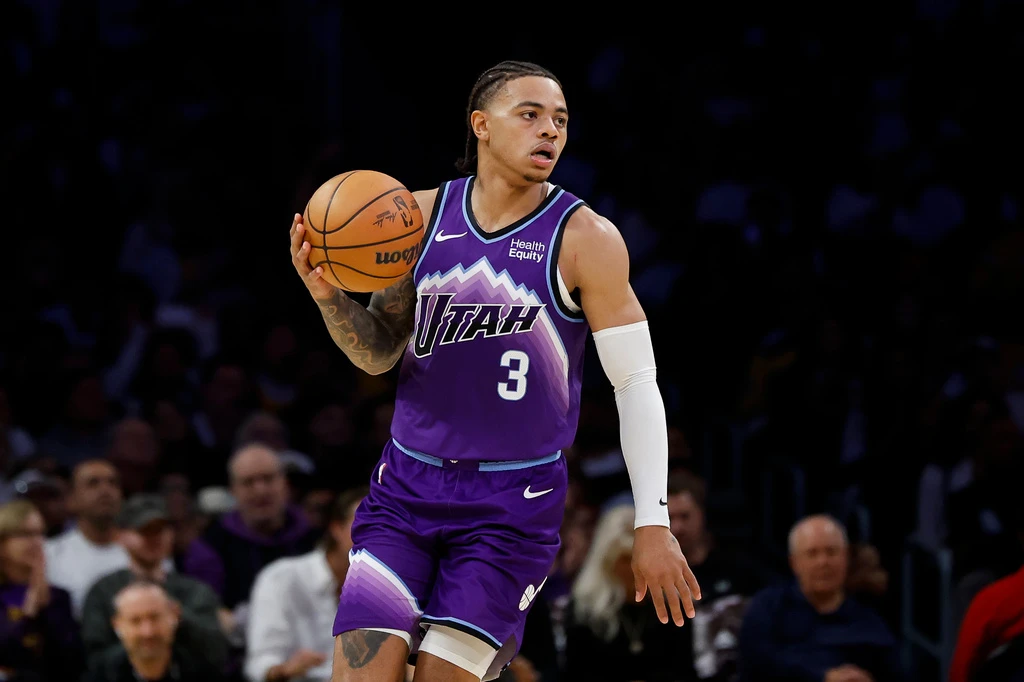
Keyonte George Leads Utah with 30 Points and 10 Assists
George was the central figure in Utah’s victory, finishing with 30 points, 10 assists and one rebound in approximately 39 minutes.
He shot 9-for-17 from the field and converted five of his 10 three-point attempts. His ability to score from multiple areas of the court helped Utah maintain its offensive rhythm.
George’s contribution extended beyond his scoring. His 10 assists reflected his role in creating opportunities for teammates, particularly when the Lakers attempted to disrupt Utah’s offensive possessions.
Several other Jazz players made significant contributions.
Ace Bailey finished with 19 points and eight rebounds, providing additional scoring and activity on the glass. Svi Mykhailiuk added 15 points, connecting on four three-pointers, while Josh Green contributed 11 points without missing a field-goal attempt.
Mo Bamba supplied an important presence around the basket with 16 rebounds and two blocked shots.
Together, these performances allowed Utah to avoid relying exclusively on George’s scoring. The Jazz had multiple players capable of contributing when Los Angeles shifted its defensive attention.
Lakers’ Shooting Problems Prove Costly Despite Turnover Advantage
One of the most revealing aspects of the game was the difference between the number of opportunities each team created and how efficiently those opportunities were used.
Los Angeles attempted 89 field goals compared with Utah’s 77, giving the Lakers a considerable advantage in shot volume.
However, the Jazz converted 37 field goals, while Los Angeles made only 34.
The Lakers shot 38.2% from the field, compared with Utah’s 48.1%.
Three-point shooting created another significant difference.
Utah made 14 of its 37 attempts from beyond the arc, while Los Angeles converted just nine of 33.
Those five additional three-pointers gave the Jazz a 15-point advantage from long-range baskets, exceeding the final 12-point margin of victory.
The Lakers did capitalize on Utah’s turnovers, scoring 29 points from those opportunities. However, Los Angeles also committed 18 turnovers, allowing Utah to score 26 points off mistakes.
This nearly balanced the points-off-turnovers category, leaving shooting efficiency as one of the clearest differences between the teams.
The takeaway was straightforward: Los Angeles generated more attempts but failed to convert enough of them.
Luka Dončić Scores 29 but Struggles with Efficiency
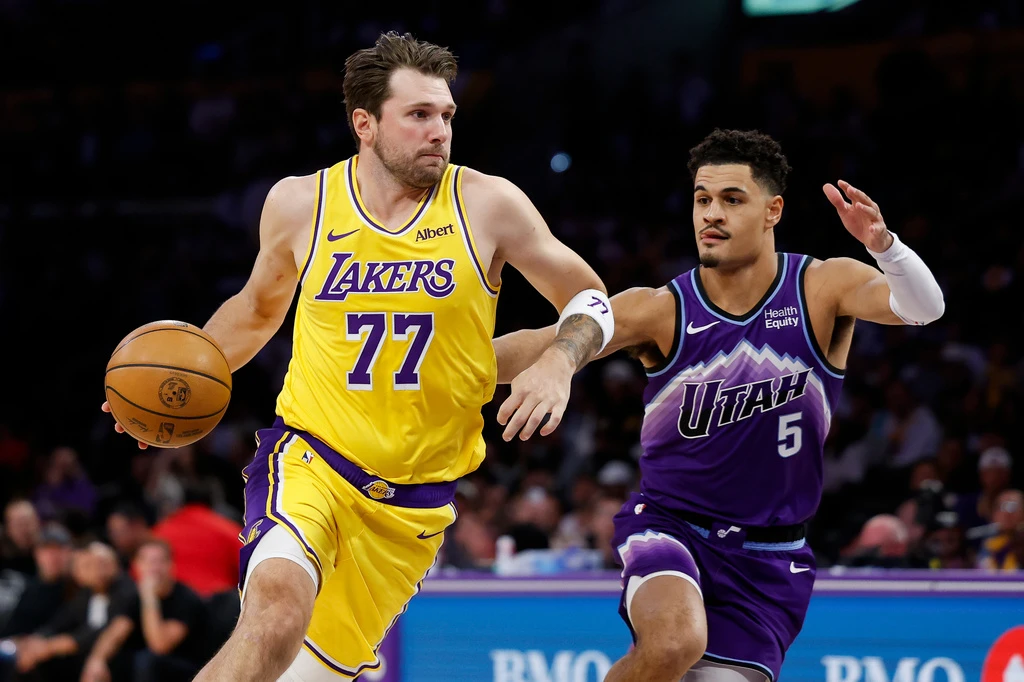
Luka Dončić led the Lakers with 29 points, seven assists and five rebounds, although his shooting numbers reflected the team’s broader offensive difficulties.
Dončić finished 10-for-28 from the field and 2-for-12 from three-point range. He also committed nine turnovers, creating additional challenges for a Lakers offense that struggled to establish consistency.
His individual scoring total was substantial, but Los Angeles needed greater efficiency to overcome Utah’s balanced attack.
Quentin Grimes provided support with 20 points, seven rebounds and four assists, including four successful three-pointers.
Nevertheless, the Lakers struggled to generate consistent scoring across the full 48 minutes.
After producing 34 points in the opening quarter, Los Angeles scored just 63 over the remaining three periods.
That decline illustrates how dramatically the game’s offensive balance shifted after the Lakers’ fast start.
Austin Reaves’ Injury Adds to Lakers’ Offensive Challenges
The Lakers played without Austin Reaves, who has been dealing with a left heel injury.
Reaves provides Los Angeles with another scoring and ball-handling option, making his absence relevant when evaluating the team’s offensive performance.
Without him, the Lakers had fewer established options to help initiate offense and distribute scoring responsibilities.
However, the defeat cannot be attributed solely to his absence. Utah’s defensive effort, Los Angeles’ inconsistent shooting and the Jazz’s strong fourth quarter all contributed to the outcome.
The NBA’s November 20 injury report subsequently listed Reaves as out against the Sacramento Kings because of a left heel contusion and bone bruise.
His recovery remains an important consideration as Los Angeles looks to restore its offensive consistency.
What Utah’s Victory Reveals About Both Teams
For Utah, the result demonstrated the value of balanced contributions and maintaining composure after an early deficit.
The Jazz had entered the game with only two victories, making this a particularly meaningful result against a Lakers team that had won nine consecutive games.
Utah’s ability to win despite 23 turnovers was especially notable. The Jazz overcame those mistakes through more efficient shooting, contributions from multiple players and a strong defensive finish.
George’s performance also offered an encouraging example of how he can influence games as both a scorer and facilitator.
For Los Angeles, the defeat provided a reminder that generating additional possessions does not guarantee offensive success.
The Lakers created more field-goal opportunities but were unable to match Utah’s efficiency.
Their fourth-quarter struggles were particularly damaging, with the offense producing just 21 points during the decisive period.
Although one loss does not erase a successful start to the season, the performance highlighted areas Los Angeles must address to maintain its position among the Western Conference’s leading teams.
Lakers Look to Respond After Winning Streak Ends
The Lakers’ nine-game winning streak ended with a disappointing offensive performance, but their 13-3 record still reflected an impressive opening stretch to the season.
For Utah, the victory offered a positive result in an otherwise difficult start.
The Jazz demonstrated that defensive pressure, timely three-point shooting and balanced scoring can make the difference against a more successful opponent.
George’s 30-point, 10-assist performance was the headline contribution, but Utah’s team-wide execution ultimately secured the 109-97 victory.
As Los Angeles evaluates its offensive struggles and awaits Reaves’ return, Utah can build on a performance that showed its ability to compete with one of the conference’s strongest teams.
Sources: NBA Game Summary and Box Score | Official Utah Jazz Game Takeaways | NBA Injury Report — November 20, 2026