
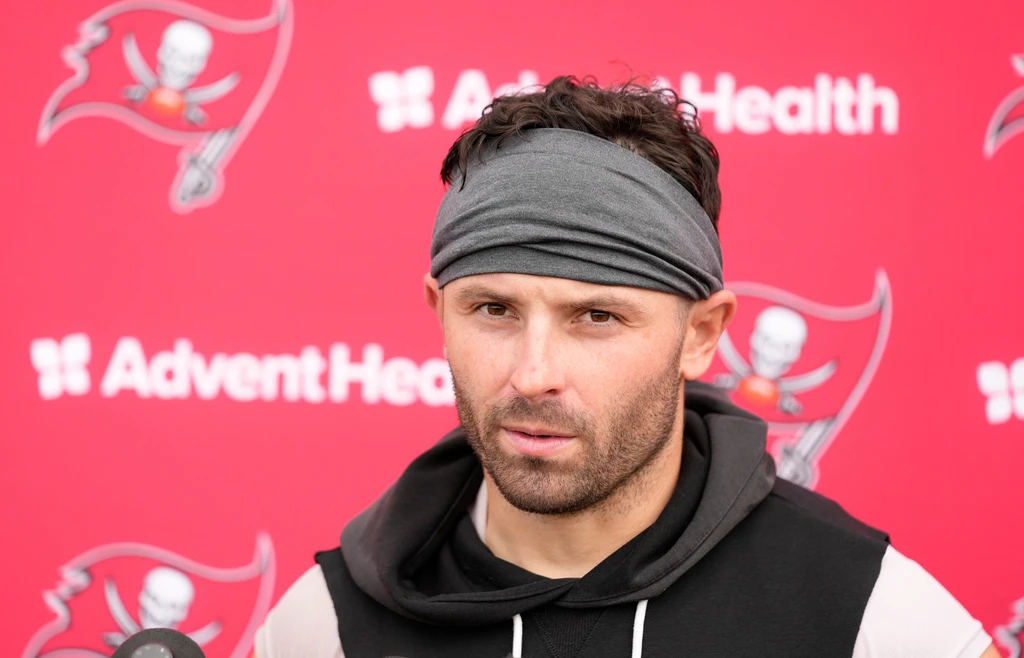
Baker Mayfield and the Tampa Bay Buccaneers find themselves locked in a contract dispute that’s caught the attention of NFL insiders across the league.
According to recent reporting, the two sides aren’t close on reaching an agreement for a new extension.
This carries significant weight, particularly given Mayfield’s previous flourishing relationship with the franchise—on March 10, 2024, he signed a lucrative three-year extension worth up to $100 million with $50 million guaranteed, affirming the organization’s commitment to him as their long-term franchise quarterback.
Yet circumstances have shifted dramatically. Mayfield’s impressive trajectory makes the current impasse all the more puzzling.
In 2024, he threw 41 touchdown passes, completed 71.4% of his passes for 4,500 yards, and led the Buccaneers to a 10–7 record and their franchise-best fourth consecutive NFC South division title while earning his second consecutive Pro Bowl selection. But 2025 revealed a starkly different reality.
Mayfield completed 358 of 561 passing attempts for a 63.2% completion percentage—significantly down from his elite 2024 form—while 56 passing touchdowns and a 90.6 passer rating reflected a quarterback struggling amid organizational turmoil.
After a promising 5–1 start, the Buccaneers unraveled, losing four of their next five games and missing the playoffs. The collapse was further complicated when Mayfield suffered a non-throwing shoulder injury during a loss to the Rams. This standoff isn’t merely routine negotiation—it represents a fundamental disconnect between what Mayfield believes he’s worth and what the franchise is willing to commit.
His 2025 season, which included 3,693 passing yards and 11 interceptions alongside 405 rushing yards on 62 attempts, occurred amid a Buccaneers team beleaguered by injuries to key receivers and a late-season collapse.
For a quarterback who’d previously demonstrated elite-level performance yet now faces questions about durability and team success, the absence of a lucrative, guaranteed deal signals troubling questions about organizational confidence.
What’s Really Holding Up the Negotiations?
The offseason negotiations between Mayfield and Tampa Bay operate within a complex web of factors extending far beyond simple salary discussions.
One critical question looms: does the franchise view Mayfield’s recent injury and statistical decline as temporary setbacks tied to external circumstances, or as indicators of diminished long-term value? His 2025 metrics reveal the concerns.
His adjusted QBR of 122, while respectable, masks inconsistency—his 17.1 yards per pass attempt showcases occasional explosiveness, yet his 358 completions on 561 attempts reveal efficiency gaps plaguing modern quarterback evaluations.
When a team brings in a quarterback as a long-term solution yet hesitates to commit significant guaranteed money, it typically signals concerns about performance trajectory, injury history, or shifting organizational priorities.
The Buccaneers’ reluctance appears shaped by both his 2025 output and broader quarterback market dynamics. Tampa Bay may be deliberately holding back, wary of overpaying a quarterback coming off a playoff miss and a shoulder injury raising durability questions.
Meanwhile, Mayfield’s demands likely anchor to the inflated quarterback market rates circulating throughout the league—his expectations tied to his elite 2024 season and previous contract value.
This creates a fundamental collision: Mayfield anchors his demands to 2024 performance and the surging QB contract landscape, while the Buccaneers remain reluctant based on 2025 performance and injury concerns.
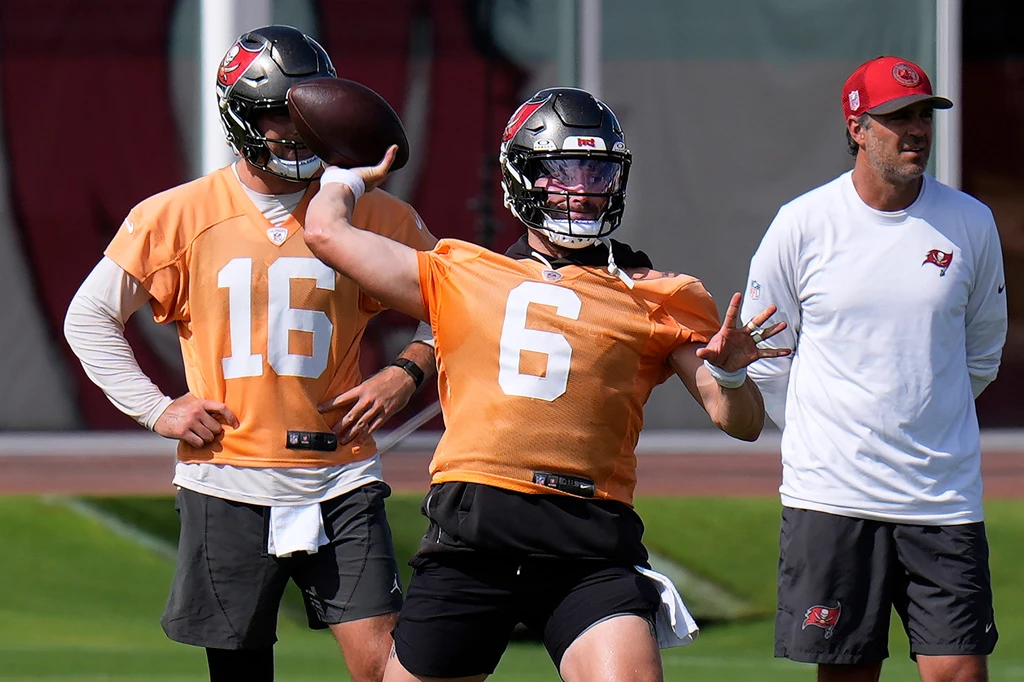
The Broader QB Crisis: Baker Isn’t Alone in Contract Limbo
Mayfield’s contract situation represents just one piece of a larger quarterback crisis unfolding across the NFL. Other notable quarterbacks face similar uncertainty regarding extensions and long-term commitments.
Players like Sam Darnold confront questions about whether franchises view them as permanent solutions.
Meanwhile, younger quarterbacks like Bryce Young face pressure proving they can justify massive draft investments, while emerging prospects like Fernando Mendoza force organizations to question whether proven veterans or developing talent represent better long-term investments.
This landscape reveals a league-wide contradiction: while the quarterback contract market is expected to surge with several high-profile players signing record-breaking deals, teams are simultaneously becoming increasingly cautious about long-term extensions.
This suggests organizations have learned painful lessons from past over-commitments to underperforming quarterbacks. Mayfield’s own experience—securing a massive $100 million extension in March 2024 based on exceptional performance, only to see circumstances shift in 2025—exemplifies how quickly evaluations change.
The paradox forces a recalibration of how franchises evaluate quarterback assets.
Teams are weighing immediate needs against future financial flexibility, refusing to lock themselves into multi-year deals without absolute certainty about durability and sustained performance, even as market pressures push salary expectations upward.
The Clock Is Ticking: What Happens If No Deal Gets Done?
As the offseason calendar advances, the window for resolving Mayfield and the Buccaneers’ dispute narrows considerably.
Without a resolution, the quarterback enters the upcoming season in a vulnerable position—lacking guaranteed money and facing potential trade rumors or organizational instability.
For Mayfield, this means operating under a cloud of uncertainty, particularly troubling given his recent shoulder injury raises legitimate durability questions that could affect his market value in any potential trade scenario.
His 2025 workload—37 total sacks while shouldering a substantial offensive burden across 561 passing attempts—underscores the durability concerns.
Meanwhile, the Buccaneers confront their own complications. An unsettled quarterback situation creates roster instability that reverberates throughout the organization, affecting team chemistry, offensive line development, and playoff aspirations.
The fact that Mayfield’s negotiations are being documented for Netflix’s upcoming ‘Quarterback’ season adds another layer of pressure—both player and organization know this dispute will be scrutinized by millions, adding public pressure to private talks.
Without resolution, both sides risk entering the season undermined by lingering resentment or miscalculation about market values.
For Tampa Bay, this unresolved tension could define their entire 2026 campaign, transforming a routine contract negotiation into a factor determining playoff viability and organizational direction for years to come.
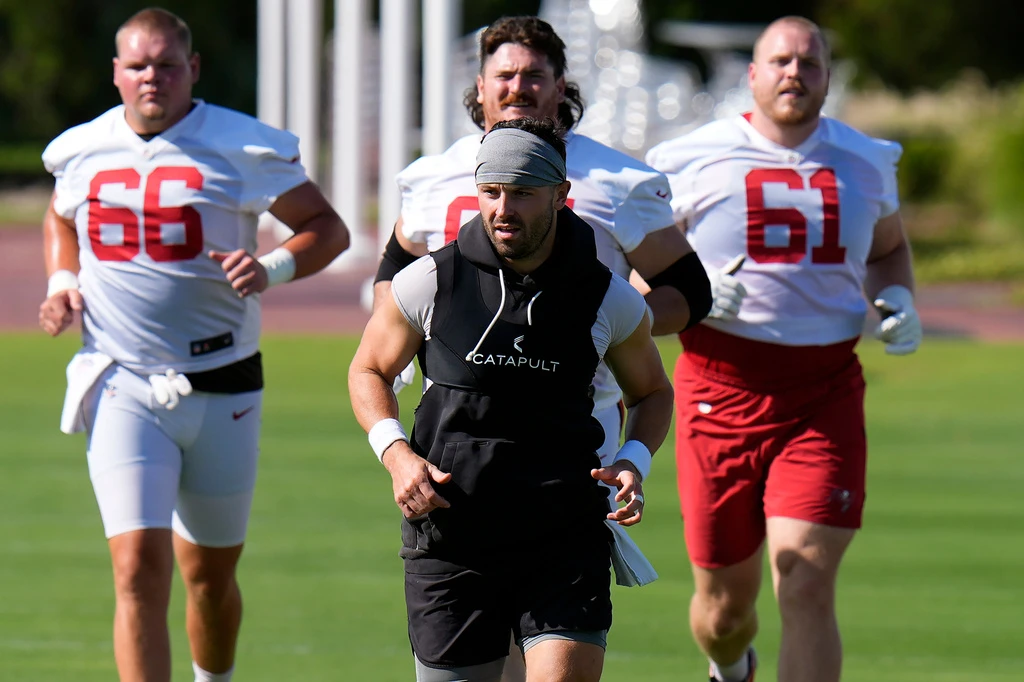

The Public’s Take: A League Divided on Mayfield’s Value
The Mayfield-Buccaneers impasse has sparked considerable debate within the broader football community about what exactly the quarterback is worth.
At the heart of the disagreement lies a fundamental question: Is Mayfield a legitimate franchise cornerstone deserving of top-tier compensation, or a streaky performer whose inconsistency makes him a risky investment for massive guaranteed money?
Many observers sympathize with the Buccaneers’ cautious approach.
The argument isn’t that Mayfield is incapable—his flashes of brilliance are undeniable—but rather that his performance trajectory remains too unpredictable to justify the kind of financial commitment typically reserved for elite quarterbacks.
When a player alternates between genuine excellence and mediocrity, front offices understandably hesitate before locking in long-term deals.
From this perspective, the Buccaneers’ reluctance reflects prudent financial stewardship rather than a lack of faith in their quarterback.
Yet the counterargument carries equal weight, particularly when examining the broader quarterback marketplace. The uncomfortable reality for Tampa Bay is that capable quarterbacks are scarce commodities in professional football.
Letting Mayfield walk creates a void that’s extraordinarily difficult to fill.
The prospect of resetting with a rookie, tanking for draft position, or cycling through available alternatives represents a potentially catastrophic organizational setback.
For a franchise that’s positioned competitively and has won consecutive division titles, pivoting away from a known quantity—however imperfect—introduces far greater risk than maintaining the status quo. This dynamic creates a peculiar negotiating position for both sides.
The Buccaneers can’t afford to dismiss Mayfield entirely, even if they’re reluctant to overpay him. Meanwhile, Mayfield understands his leverage isn’t unlimited; the team won’t simply capitulate to unreasonable demands.
What emerges from this tension is prolonged stalemate, as neither side is willing to move dramatically toward the other. The months passing without meaningful progress underscore how intractable these negotiations have become.
Beyond evaluating Mayfield’s performance, observers have noted another critical element: the sheer duration of these negotiations without resolution.
Contract discussions that stretch across months without meaningful progress often signal deeper dysfunction than simple salary disagreements.
When parties remain this far apart for extended periods, it raises questions about whether either side truly believes an agreement remains possible.
This extended timeline has created a narrative of futility—a sense that despite both parties’ stated desire to reach a deal, fundamental incompatibilities may prove insurmountable.
The lingering uncertainty about Mayfield’s future with the franchise adds another wrinkle to assessments of his long-term prospects.
Some predict his eventual departure, viewing this standoff as merely the prelude to a trade or free agency departure that could reshape his career trajectory entirely.