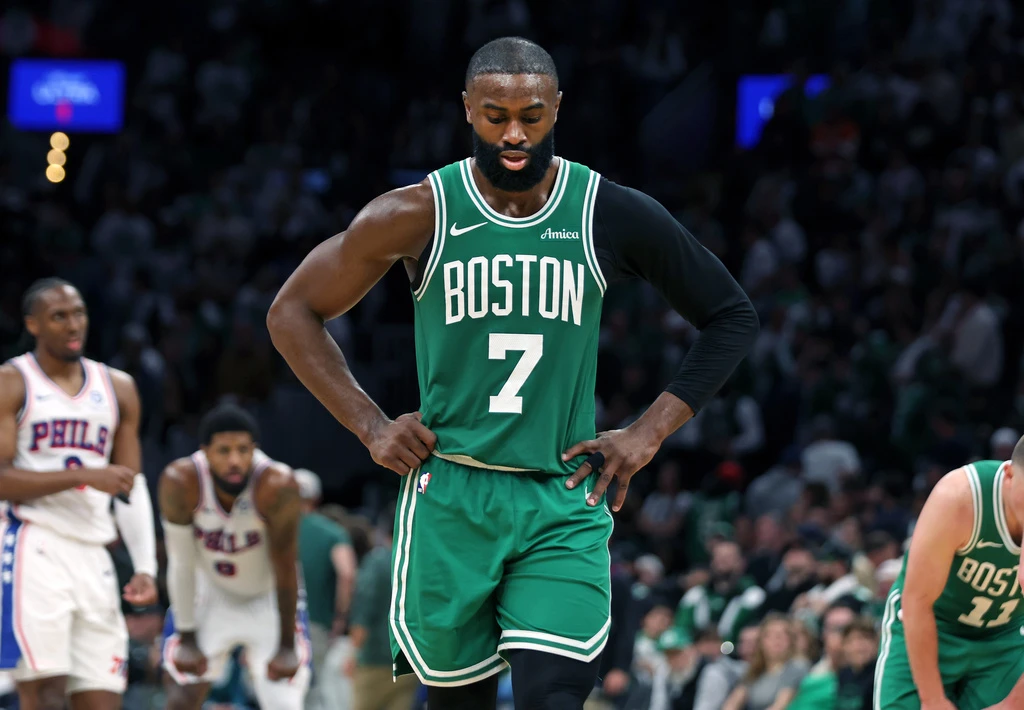
When the Celtics and 76ers completed their blockbuster trade centered on Jaylen Brown, NBA front offices collectively leaned back in their chairs.
When the Celtics and 76ers finalized their blockbuster trade centered on Jaylen Brown, the ripple effects reached every corner of the NBA. Front offices across the league paused, reassessed, and started asking harder questions about how they value established stars — and what it costs to let one walk.
This wasn’t a routine roster move. It signaled a broader philosophical shift in how contending franchises approach roster construction, asset management, and long-term competitive windows during one of the most consequential offseasons in recent memory.
Brown’s exit from Boston didn’t happen in a vacuum. Tensions had been building for months, most visibly when the Celtics made an aggressive push to acquire Giannis Antetokounmpo — a pursuit that Brown reportedly interpreted as a direct signal that the organization was ready to move on from him. That perception, whether fully accurate or not, fractured the relationship between player and franchise beyond repair. By the time trade discussions intensified, both sides were ready to move forward separately.
What made Brown’s departure particularly striking was the timing. During Jayson Tatum’s injury absence, Brown stepped into a lead role and delivered at an elite level — finishing with 2,218 points, a 47.7% field goal percentage, and 532 rebounds over the stretch in question. Those numbers weren’t just good; they were MVP-caliber production that forced the entire league to recalibrate how it viewed him as an individual asset rather than as Tatum’s co-star.
Despite that performance, Boston’s organizational ambivalence about retaining him became increasingly apparent. Executives around the league took note immediately. The moment the deal was confirmed, front offices began dissecting what it meant for Eastern Conference power dynamics — and whether the Celtics had made a calculated bet or a costly miscalculation.
The trade ignited internal debates in front offices league-wide about the true market value of a player like Brown. His 1.321 scoring efficiency and 79.5% free throw percentage painted the picture of a well-rounded, high-volume scorer who could function as a primary option — not just a complementary piece. The question teams wrestled with: had Boston undervalued what it had, or had the relationship deteriorated to the point where no return package could fully compensate for the loss?
The Great Center Gold Rush: Why Every Team Suddenly Needs a Big
Opinions split sharply. Some executives viewed Philadelphia’s acquisition as brilliant positioning — adding a proven scorer and two-way wing to a roster built around Joel Embiid. Others questioned the financial and competitive logic on both ends of the deal. What wasn’t debatable: the transaction immediately reshuffled the Eastern Conference hierarchy and forced every franchise from Miami to Milwaukee to revisit its own roster assumptions heading into the new season.
One of the most unexpected storylines to emerge from this offseason was a league-wide scramble for elite center talent — a position that had been systematically devalued by the analytics-driven shift toward perimeter-oriented basketball over the previous decade. That calculus changed fast.
Walker Kessler became one of the most coveted players on the market, with multiple franchises competing aggressively for his services. The appeal was straightforward: a 70.3% field goal percentage and demonstrated defensive versatility, including 108 rebounds in limited playing time, made him one of the most efficient big men available. Teams that had previously deprioritized the center position suddenly recognized the competitive edge a dominant interior presence could provide.
The Lakers’ pursuit of Kessler was the most aggressive — and the most expensive. Los Angeles committed to a four-year, $130 million contract and surrendered unprotected first-round picks in 2031 and 2033, along with first-round swap rights in 2028 and 2030, all sent to Utah. That’s an extraordinary price for a player still establishing himself as a starter, and it reflects just how desperate contenders had become for proven interior talent. The pick cost alone represents a significant long-term gamble on a franchise already operating with limited draft capital.
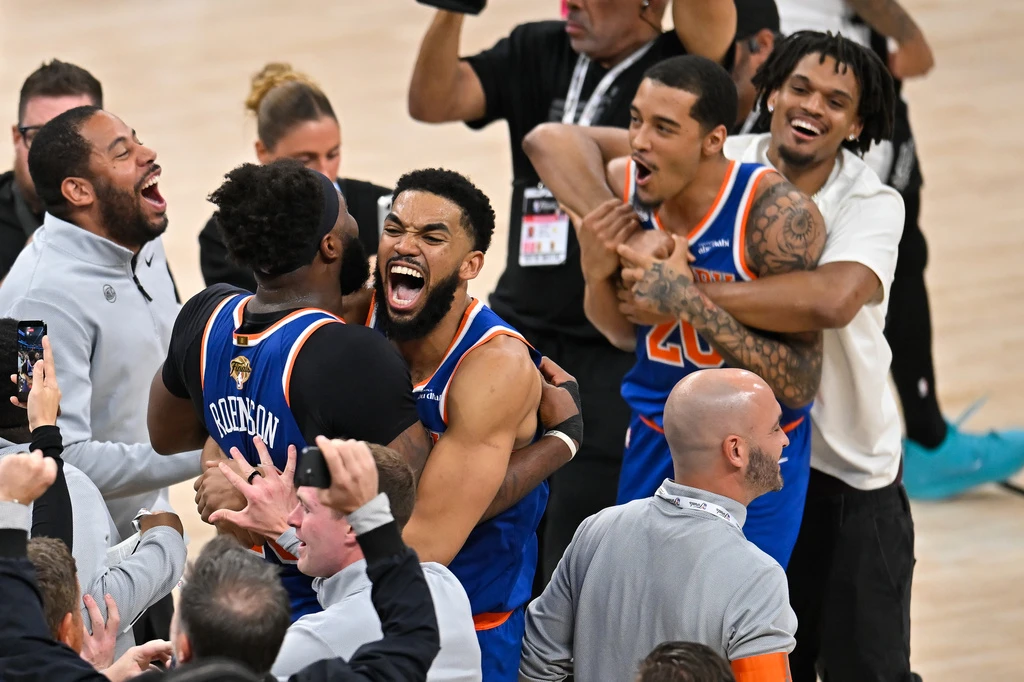
Mitchell Robinson’s move from the Knicks to the Celtics reinforced the same trend from a different angle. Robinson’s 72.3% field goal percentage and 624 rebounds demonstrated the kind of defensive infrastructure Boston was actively seeking to replace what it lost in the Brown deal. New York, meanwhile, signaled a willingness to reshape its frontcourt identity — a notable pivot for a team that had leaned heavily on Robinson’s rim protection in recent seasons.
The spending frenzy around centers reflected a sophisticated realization that had been building quietly in analytics departments: elite interior presence influences games in ways that efficiency models had historically underweighted. Rim protection, offensive rebounding, and pick-and-roll coverage don’t always show up cleanly in box scores, but they shape possession outcomes in ways that compound over an 82-game season.
Teams leveraged mid-level exceptions, sign-and-trade structures, and cap space to facilitate these acquisitions. But the scale of the commitments — particularly the Lakers’ pick-heavy package — raises legitimate questions about whether market enthusiasm outpaced sound asset management. Surrendering unprotected first-round picks in 2031 and 2033 is a bet that Los Angeles will remain a contender deep into the next decade, which is far from guaranteed.
Salary Cap Disappointment
The center market frenzy ultimately confirmed something the league had been reluctant to fully acknowledge: despite 15 years of perimeter-first basketball philosophy, foundational paint presence still wins games. The teams that recognized this shift early gained a meaningful competitive edge. Those that waited paid a premium.
The 2025–26 salary cap landed at $154.647 million per the NBA — a figure that arrived well below the projections many front offices had used to structure their offseason plans. Teams had anticipated a more generous number that would expand spending flexibility and allow for aggressive roster upgrades. Instead, the lower-than-expected cap forced rapid, uncomfortable recalibration across the league.
The financial constraint hit hardest for franchises that had already made aggressive commitments during the first 24 hours of free agency — a window when teams often move quickly to secure targets before the market shifts. Those early deals, negotiated against optimistic cap projections, suddenly looked far more expensive relative to available flexibility.
Every major roster decision became a genuine dilemma: pursue star talent or build depth? Lock up free agents or preserve cap space for mid-season flexibility? Trade for immediate impact or protect future assets? There were no clean answers, only trade-offs — and the teams that had managed their payroll most carefully in prior years found themselves with the most options.
The 2023 Collective Bargaining Agreement added another layer of complexity through its second tax apron, set at approximately $17.5 million above the luxury tax line. Teams operating above that threshold face significant restrictions, including the loss of the mid-level exception — one of the primary tools franchises use to add quality veterans without consuming full cap space. For big-market teams already deep into luxury tax territory, this provision effectively capped their ability to improve the roster through conventional means.
The timing proved particularly damaging. Franchises had structured their offseason blueprints around cap projections that didn’t materialize, locking themselves into expensive commitments before the actual numbers were confirmed. By the time the real cap figure was announced, many teams had already exhausted their flexibility on deals that now looked financially precarious.
The miscalculation hit teams pursuing premium interior talent especially hard. Centers like Kessler and Robinson commanded top-of-market contracts at precisely the moment cap space was tighter than anticipated. Executives who had planned to absorb those costs within a more generous cap structure suddenly found themselves navigating a much narrower margin for error.
The lower cap shifted negotiating leverage in unexpected directions. Teams that had exercised payroll discipline in previous seasons — avoiding luxury tax exposure and preserving exceptions — suddenly held the strongest hand. For contenders already deep in the tax, the situation forced painful choices: which veterans to release, which young players to prioritize, and which championship windows were still realistically open.
Analytics Have Taken Over: Welcome to the New NBA Decision-Making Era
The gap between projected and actual cap figures may seem like a technical accounting issue, but its competitive consequences were immediate and significant. In a league where roster construction margins are measured in millions, a lower-than-expected cap doesn’t just limit spending — it forces teams to make decisions they weren’t prepared to make, often under time pressure that favors mistakes.
Step inside any NBA front office today and the transformation is visible. Whiteboards covered in scouting notes have given way to dashboards populated with efficiency metrics, shot quality models, and defensive impact scores. Advanced analytics no longer serve as a supplement to human judgment — in many organizations, they’ve become the primary decision-making framework.
Every significant transaction — trades, free agent signings, contract extensions — now passes through layers of statistical modeling before executives sign off. Player valuations are stress-tested against multiple scenarios, lineup combinations are simulated before deals close, and salary commitments are evaluated against projected performance curves rather than past reputation alone.
This represents a fundamental departure from the scouting and intuition-based approach that defined NBA roster construction for most of the league’s history. The shift didn’t happen overnight, but it has accelerated sharply over the past five years as front offices have invested heavily in analytics infrastructure and hired personnel with quantitative backgrounds alongside traditional basketball operations staff.
The analytics revolution has created a shared language across the league — one where expected value, true shooting percentage, and defensive rating carry more weight in salary negotiations than a player’s reputation, marketability, or championship pedigree. That standardization has made the market more efficient in some respects, but it has also compressed the information advantages that once separated analytically sophisticated front offices from the rest of the field.
Teams now systematically evaluate talent through a dense matrix of metrics: shooting percentages at various distances, defensive efficiency by coverage type, spacing impact on teammate shot quality, and pace-adjusted contributions that account for the quality of competition faced. No single number captures a player’s full value, but the combination of these data points has made player evaluation more precise than at any prior point in league history.
In Brown’s case, his 1.4 assist-to-turnover ratio and 0.52 shooting efficiency served as critical reference points in evaluating his overall impact beyond raw scoring totals. Those numbers helped quantify his playmaking reliability and shot quality — factors that matter enormously when projecting how a player will perform as a primary option rather than a secondary scorer operating off a star teammate’s gravity.
The analytical framework extends to free agency evaluation as well, where teams apply complex valuation models to both restricted and unrestricted free agents. These models attempt to project future performance against contract cost, accounting for age curves, injury history, and positional scarcity. The goal is to identify market inefficiencies — players whose statistical profiles suggest they’re being undervalued relative to their actual on-court impact.
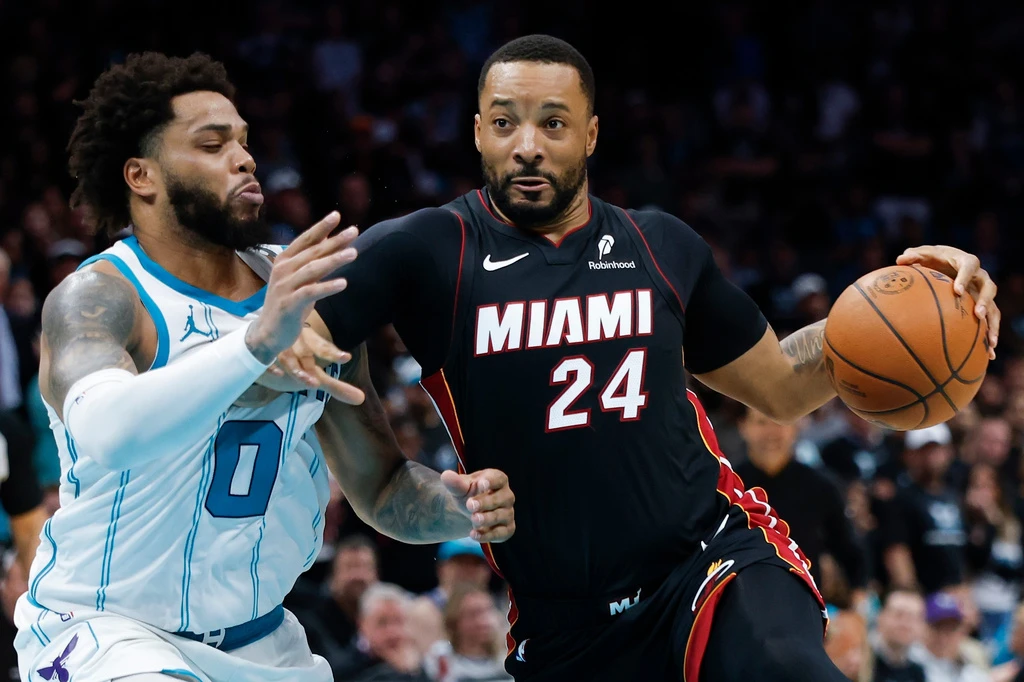
Comparative benchmarking has become a standard tool in salary negotiations. Marcus Smart’s 1.216 scoring efficiency and Norman Powell’s 1.409 scoring efficiency, for example, provided concrete reference points for front offices evaluating similar players at similar price points. Rather than negotiating based on reputation or market feel, teams now anchor discussions in measurable performance data — a shift that has changed the dynamics of contract talks at every level of the market.
The result has been a measurable reduction in the subjectivity that once made roster construction as much art as science. Decisions that previously depended heavily on a scout’s gut feeling or a coach’s personal preference now require statistical justification. That discipline has helped teams avoid some of the expensive mistakes that plagued previous eras of NBA roster management.
But the analytics revolution has also created a paradox. As more franchises adopt similar modeling frameworks and gain access to comparable data sets, the competitive advantages those tools once provided have begun to erode. When every team is running roughly equivalent efficiency models, the edge shifts back toward execution — player development, coaching, culture, and the ability to attract talent — rather than information asymmetry.
Private Equity Enters the Game: Could Money Men Change Everything?
The front offices extracting the most value from analytics today are those that have moved beyond basic efficiency metrics and developed proprietary models that capture dimensions of performance the standard frameworks miss. Teams still operating primarily on conventional statistics find themselves perpetually a step behind, not because they lack data, but because they lack the infrastructure to translate data into actionable competitive advantages.
A quieter but potentially transformative force is reshaping how NBA franchises operate at the ownership level. Private equity investors — bringing Wall Street capital discipline and corporate restructuring logic to basketball operations — have begun acquiring stakes in NBA franchises, and their influence on team strategy is starting to show.
Unlike traditional sports owners who often prioritize winning above financial returns, private equity investors approach franchise ownership through an ROI framework. Their capital flexibility can enable aggressive roster moves that traditional ownership structures might resist on financial grounds, but their profit-maximization orientation also introduces priorities that don’t always align with competitive goals.
The tension is real and growing. Some executives welcome private equity involvement as a modernizing force — one that brings financial discipline, operational efficiency, and access to capital that smaller-market franchises in particular have historically lacked. Others worry that the profit-first mentality will eventually override competitive considerations, particularly when expensive roster decisions conflict with short-term financial targets.
Private equity investors bring analytical rigor to franchise operations that extends well beyond basketball decisions. Every expense — from player salaries to coaching staff to arena operations — gets evaluated through a return-on-investment lens. Luxury tax payments, which can run into the tens of millions of dollars for deep-pocketed contenders, face particular scrutiny from investors accustomed to optimizing capital allocation rather than simply spending to win.
These investors also bring familiarity with sophisticated financial instruments that can enable creative transactions within NBA rules. Sign-and-trade structures, for example, allow teams to recover compensation for departing free agents who would otherwise walk without return — a mechanism that private equity-backed ownership groups are well-positioned to leverage given their comfort with complex deal structures.
The potential competitive implications cut in multiple directions. Private equity capital could enable smaller-market franchises to compete more aggressively for talent, narrowing the financial gap between large and small markets. Alternatively, it could create new imbalances if well-capitalized investor groups concentrate in major markets and use their financial resources to outspend rivals in ways the current CBA doesn’t fully constrain.
The Real Crisis: Why Local TV Money Is Disappearing and What Happens Next
League executives are monitoring the trend closely, and the NBA’s ownership approval process provides some regulatory oversight. But as private equity involvement accelerates — and it will — the fundamental question isn’t whether these investors will reshape competitive dynamics. It’s how dramatically that reshaping will alter the sport’s balance of power, and whether the league’s governance structures are equipped to manage the consequences.
Beneath the headline transactions and offseason maneuvering, a structural financial threat is quietly building across the league: the accelerating collapse of local television revenue. For decades, regional sports network deals provided franchises with predictable, substantial income that helped fund competitive rosters and maintain financial stability across markets of varying sizes. That foundation is eroding fast.
Cord-cutting has moved from a trend to a structural reality. Younger audiences have largely abandoned linear television, and the advertising dollars that followed traditional cable subscribers are migrating to streaming platforms that don’t yet generate equivalent revenue for sports rights holders. The Diamond Sports Group bankruptcy tracked by Sportico — which left multiple NBA teams without local broadcast partners — illustrated just how fragile the regional sports network model had become.
The revenue decline isn’t uniform across markets, but it’s widespread enough to create systemic pressure. Teams in smaller markets that relied most heavily on local TV deals as a percentage of total revenue face the steepest challenges. But even large-market franchises are feeling the impact as regional networks struggle to maintain subscriber bases and advertising rates.
The financial stakes extend beyond individual franchises. The NBA’s salary cap and luxury tax thresholds are calculated based on Basketball Related Income — a figure that includes local television revenue. If local TV money continues to decline, it creates a potential cascade effect: lower BRI projections could constrain cap growth, limiting player salaries and reducing the spending flexibility that drives competitive roster construction. The 2023 CBA’s structure, which tied spending thresholds to revenue generation, makes the league particularly vulnerable to this dynamic. Teams must urgently develop alternative revenue streams — streaming partnerships, direct-to-consumer digital products, premium in-arena experiences, and international media rights — to offset shrinking traditional broadcast income.
The competitive balance implications are significant. Wealthy franchises with diversified revenue streams and strong national brand recognition can absorb local TV revenue losses more easily than small-market teams that depend on regional income to fund payroll. If the gap widens, it could accelerate the talent concentration in major markets that the luxury tax system was designed to discourage.
For a franchise like Boston, where players including Brown (2,218 points), Norman Powell (1,373 points), and Marcus Smart (708 points) generated substantial local media interest and viewership, the decline in television revenue directly undermines the financial infrastructure that supports championship-caliber roster investment. Losing a player of Brown’s profile doesn’t just affect on-court performance — it reduces the local audience draw that justifies broadcast rights valuations in the first place.
The NBA’s long-term financial health depends on solving this revenue puzzle before the erosion reaches a tipping point. The league has taken steps toward direct-to-consumer streaming through its new national media rights deals, but local market revenue remains a critical and increasingly unstable component of the overall financial model. Franchises that treat local TV money as a guaranteed baseline are operating on an assumption that no longer holds.
Solving the problem will require genuine innovation — not incremental adjustments to a model that’s already breaking down. Creative streaming partnerships, investment in digital content infrastructure, and a fundamental rethinking of how basketball generates revenue at the local level are all necessary components of a sustainable path forward. The franchises that move fastest on this transition will be best positioned to maintain competitive rosters regardless of what happens to traditional broadcast revenue. Those that wait for the market to stabilize may find themselves making roster decisions constrained by financial pressures that have nothing to do with basketball.