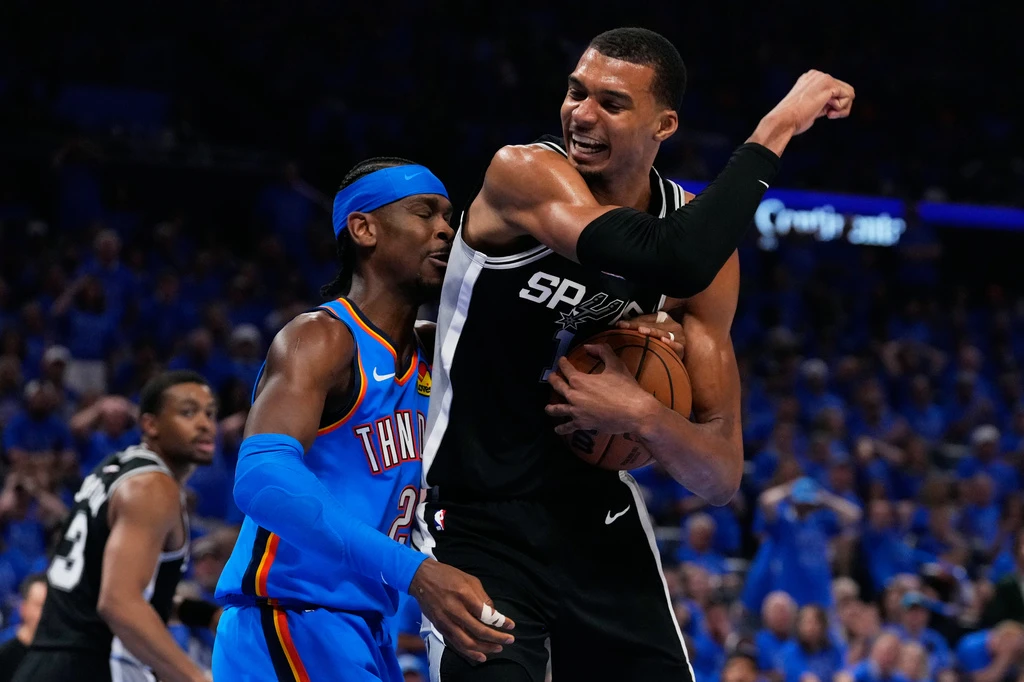
 Oklahoma City Thunder guard Shai Gilgeous-Alexander (2) and San Antonio Spurs forward Victor Wembanyama (1) battle for a rebound during the second half of Game 1 in a third-round NBA basketball playoffs series Monday, May 18, 2026, in Oklahoma City. (AP Photo/Tony Gutierrez) The San Antonio Spurs are headed to the NBA Finals for the first time since 2014. Victor Wembanyama and the Spurs beat the Oklahoma City Thunder 111-103 in Game 7 of the 2026 Western Conference Finals, finishing a 4-3 upset of the defending champions on their home floor at Paycom Center. Wembanyama was named Western Conference Finals MVP, anchoring a series that opened with one of the most memorable Game 1 performances in playoff history and ended with San Antonio winning twice in Oklahoma City. This performance builds on his extraordinary 2025-26 season, during which he averaged 25.0 points and 11.5 rebounds while earning Defensive Player of the Year honors — an award the NBA announced he won unanimously — cementing his status as an all-around force capable of dominating championship-caliber moments. The series opened with San Antonio stealing home-court advantage in a 122-115 double-overtime thriller on May 18, according to ESPN’s game recap. Wembanyama posted 41 points, 24 rebounds and three blocks across 49 minutes, becoming the youngest player with at least 40 points and 20 rebounds in a playoff game at 22 years and 134 days old. Rookie Dylan Harper added 24 points, 11 rebounds, six assists and a franchise-record seven steals—the first rookie with 20 points, 10 rebounds, five assists and five steals in a playoff game since Magic Johnson in 1980, per NBA.com. For San Antonio, this series victory represented validation that their methodical path through earlier rounds had prepared them for championship-caliber basketball against the defending champions.
Game 1 Set the Tone: Wembanyama’s Historic Double-OT Night
The most memorable aspect of the series opener wasn’t just Wembanyama’s dominance—it was the dramatic swings that nearly broke the other way. Chet Holmgren swatted Wembanyama’s shot at the regulation buzzer to force overtime, per ESPN. Wembanyama answered with a tying 3-pointer from well behind the arc late in the first extra period to force a second overtime, where San Antonio finally pulled away. The Thunder stars did not vanish, contrary to early takes after the loss. Alex Caruso led Oklahoma City with 31 points, Jalen Williams scored 26 and Shai Gilgeous-Alexander added 24 in the defeat. This raises important questions about how the rest of the series would unfold and whether San Antonio’s defensive scheme could continue neutralizing Oklahoma City’s offensive flow. The answers would significantly influence the series trajectory and reshape Western Conference Finals expectations. 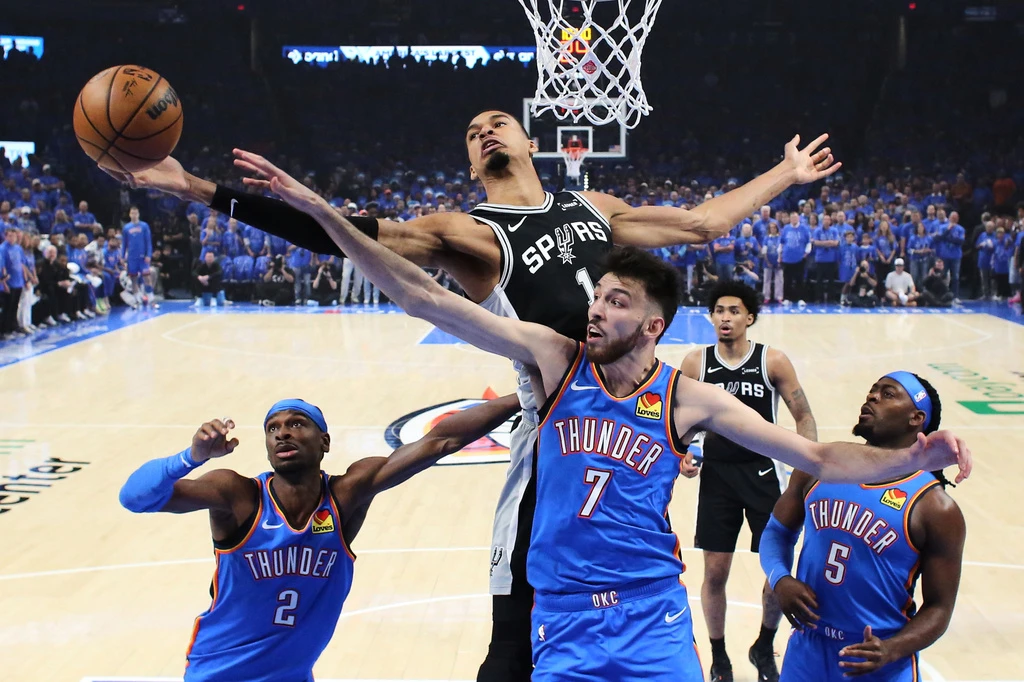
How the Spurs Seized the Western Conference Finals
The rest of the Western Conference Finals swung wildly before San Antonio held the last punch, according to ESPN’s series results. Oklahoma City answered the Game 1 loss with two straight blowouts—a 122-113 win in Game 2 and a 123-108 victory in Game 3 in San Antonio—to grab a 2-1 series lead. The Spurs responded with a dominant 103-82 defensive masterpiece in Game 4, flattening the defending champions and evening the series. Game 5 tilted back Oklahoma City’s way, 127-114, as Gilgeous-Alexander scored 32 while Wembanyama was held to 20, per NBA.com. San Antonio forced Game 7 with a 27-point rout in Game 6, winning 118-91, before closing it out 111-103 in Oklahoma City. The swing games followed a clear pattern: when Wembanyama played like the best player on the floor, the Spurs won; when Oklahoma City contained him, the series tilted back their way. San Antonio’s presence as legitimate Finals contenders reframed the entire conference hierarchy, adding to the historical significance of their achievement in dethroning the defending champions.
Game 7 In Oklahoma City: Champagnie’s Threes And A Kornet Block
The finale followed the series’ script: San Antonio started and ended the Western Conference Finals with a road win, NBA.com reported. Wembanyama scored 22 points and grabbed seven rebounds while the supporting cast delivered the swing plays. Julian Champagnie was the difference from deep, finishing with 20 points—18 of them on 3-pointers—giving the Spurs the spacing they needed against Oklahoma City’s defense. Wembanyama led seven San Antonio scorers in double figures, spreading the scoring load against the Thunder. Gilgeous-Alexander poured in 35 points in defeat, but the Thunder could not get the final stop. A late Luke Kornet block helped seal it, and the defending champions were dethroned on their own court. If the Spurs’ balanced attack and defensive resilience could continue, they would emerge as the West’s Finals representative, poised to challenge whatever Eastern opponent ultimately prevailed. 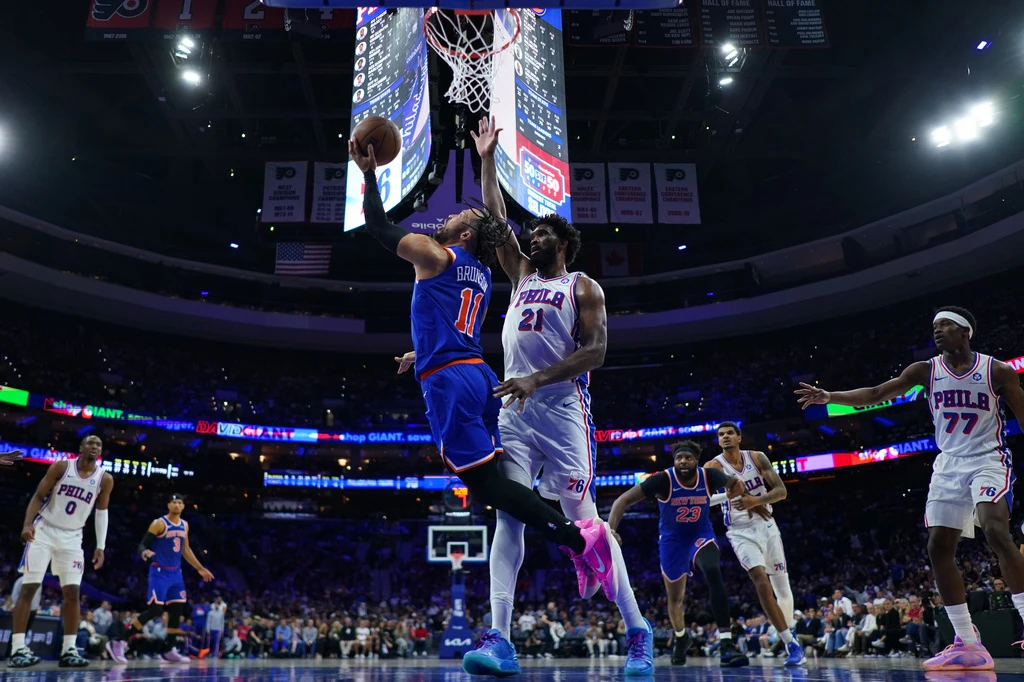
The East’s Quiet Dominance: Brunson and the Knicks Claim the Title
While Western Conference drama captivated headlines, the Eastern Conference Finals presented its own compelling narrative. The New York Knicks swept the Cleveland Cavaliers 4-0 to reach the title round, demonstrating remarkable consistency and clutch execution throughout their playoff run. The reward for San Antonio’s Western Conference triumph was a trip to the NBA Finals, where the Knicks were waiting. New York beat the Spurs 4-1 for the franchise’s third championship and first since 1973, per Wikipedia’s Finals summary. The series produced Finals history: in Game 4, the Knicks rallied from 29 points down in the third quarter—the largest comeback in NBA Finals history—with OG Anunoby winning it on a tip-in in the final seconds. Jalen Brunson was named Finals MVP, capping a postseason run that positioned New York as legitimate champions after years of rebuilding. 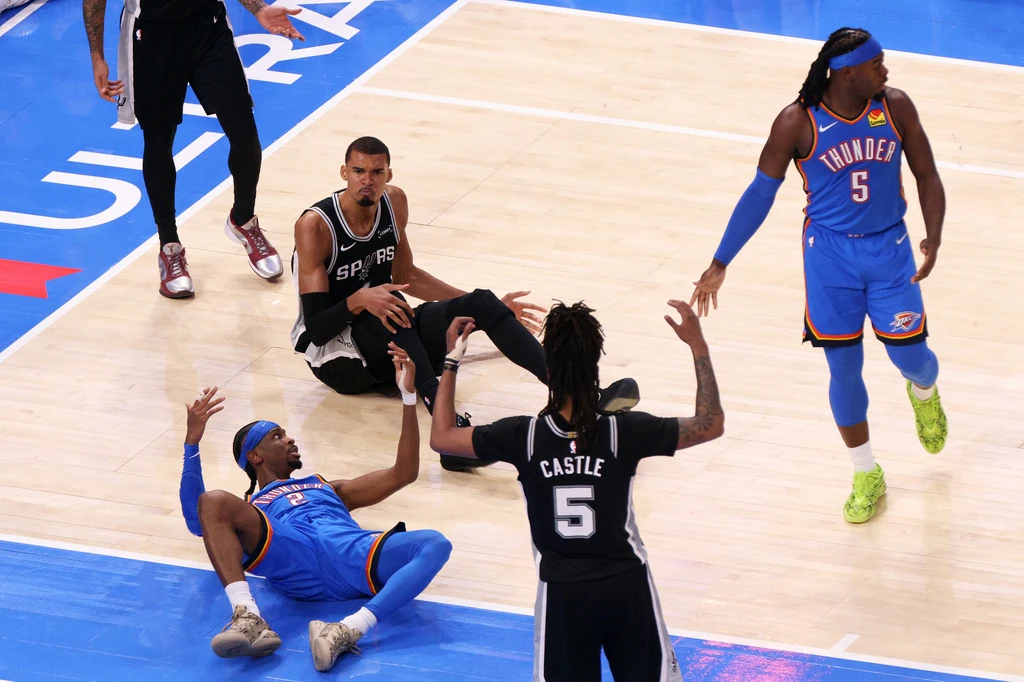
What’s Next: The Spurs’ Future And The Road Ahead
Despite falling short in the Finals, San Antonio’s future looks bright. A core of Wembanyama, Harper, Castle and Fox reached the Finals ahead of schedule, and the reigning Defensive Player of the Year is only getting started. The Spurs’ journey through the 2026 playoffs demonstrated a methodical, defense-oriented philosophy that translates effectively into championship-caliber basketball. Their bench players made significant contributions throughout the postseason, demonstrating organizational depth that proved invaluable against elite competition. This trajectory matters because it suggests the Spurs aren’t a one-dimensional team riding Wembanyama’s individual brilliance into contention—they’ve developed a cohesive system emphasizing depth and defensive principles. For more on the roster questions facing the league’s top teams, see our look at the hidden concerns that could derail 2026-27 title contenders and how veteran moves like LeBron’s move to Philadelphia are reshaping the field. Keep up with the offseason and next year’s chase on our NBA coverage hub.