The Los Angeles Dodgers have never been shy about spending money, but what they are preparing to do this offseason could redefine the financial ceiling of Major League Baseball entirely.
Already carrying a record $476 million payroll — the largest financial advantage any team has held in MLB history — the Dodgers are positioning themselves to pursue Kyle Tucker, the most coveted free agent on the market.
This is not a routine roster move.
This is a franchise making a calculated statement: that winning is the only acceptable outcome, and that no price tag is too steep to achieve it.
Quick Takeaways
- The Dodgers already carry a record $476 million payroll, the highest in MLB history, and are still actively pursuing top free agents.
- Kyle Tucker is the No. 1 free agent on the market, a five-tool outfielder nicknamed “King Tuck” who posted elite production in Houston before hitting free agency.
- A Tucker signing would push Los Angeles into unprecedented financial territory, raising serious questions about competitive balance across the league.
- The Dodgers’ model is built on deferred money and creative accounting, allowing them to absorb massive contracts without triggering the luxury tax at face value.
- Other contenders — including the Yankees, Cubs, and Mets — are also in the Tucker sweepstakes, but the Dodgers’ resources and winning culture give them a structural edge.
- This pursuit could accelerate calls for MLB to reform its luxury tax structure, a debate that has been simmering for years.
Kyle Tucker: Why “King Tuck” Is the Most Valuable Player on the Market
The Statistical Case for Tucker
Kyle Tucker is not a one-dimensional slugger or a platoon bat.
He is a complete baseball player — a left-handed hitter with plus power, elite plate discipline, above-average speed, and a Gold Glove-caliber right field arm.
During his time with the Houston Astros, Tucker established himself as one of the most consistent offensive producers in the American League.
He posted an OPS above .850 in multiple seasons, hit 30 or more home runs, and drove in over 100 runs while maintaining a walk rate that put him in the top tier of MLB hitters.
His 2023 season — 29 home runs, 112 RBI, and a .257/.350/.496 slash line — was a legitimate MVP-caliber campaign that went somewhat underappreciated given the Astros’ roster depth.
Defense and Baserunning Add Another Layer
Tucker’s value extends well beyond the box score.
He is a legitimate threat on the bases, consistently posting double-digit stolen base totals while running smart routes that minimize outs.
In right field, his range and arm strength grade out as above average by Statcast metrics, making him a genuine two-way contributor rather than a designated hitter masquerading as an outfielder.
For a Dodgers team that already has Shohei Ohtani and Mookie Betts anchoring the lineup, adding Tucker would create one of the most dangerous top-to-bottom batting orders in modern baseball history.
The Dodgers’ Financial Machine: How They Keep Spending
Deferred Money and the Luxury Tax Loophole
The Dodgers’ ability to keep signing elite players while technically managing luxury tax exposure comes down to one word: deferral.
The most famous example is Shohei Ohtani’s $700 million contract, of which $680 million is deferred, as reported by the Associated Press — meaning the actual present-day luxury tax hit is dramatically lower than the headline number.
This structure allows the Dodgers to sign players at enormous nominal values while keeping their competitive balance tax figure artificially compressed.
It is a legal and increasingly common strategy, but the Dodgers have executed it at a scale no other franchise has matched.
Their front office, led by president of baseball operations Andrew Friedman, has turned financial engineering into a competitive weapon.
The $476 Million Payroll in Context
To understand how extraordinary the Dodgers’ current payroll is, consider the comparison.
The second-highest payroll in baseball typically runs somewhere between $280 million and $320 million.
The Dodgers are not just ahead of the competition — they are operating in a different financial stratosphere.
Even with the luxury tax penalties that kick in at escalating rates for repeat offenders, the Dodgers have shown a consistent willingness to absorb those costs as a cost of doing business.
Owner Mark Walter and the ownership group have made clear that winning is the organizational mandate, and the payroll reflects that priority without apology.
Who Else Is Chasing Tucker — And Why the Dodgers Have the Edge
The Competition for Tucker’s Signature
The Dodgers are not the only franchise circling Kyle Tucker.
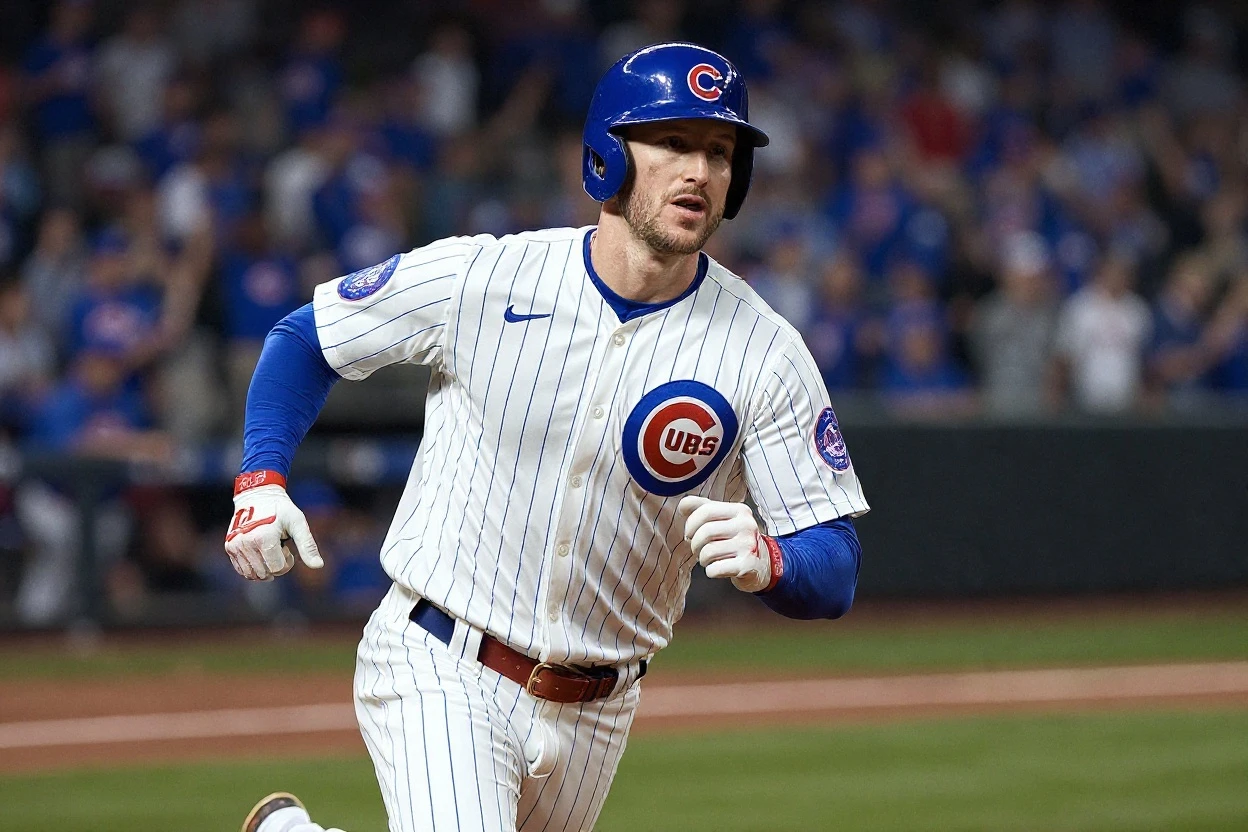
The New York Yankees, Chicago Cubs, and New York Mets have all been connected to Tucker in varying degrees of seriousness.
The Yankees need outfield help after years of inconsistency in the corner spots.
The Cubs are in a competitive window and have the financial flexibility to make a run.
The Mets, under Steve Cohen’s ownership, have shown they are willing to spend at Dodger-level numbers.
But the Dodgers bring something the others cannot fully replicate: a proven championship infrastructure, a roster already loaded with elite talent, and a track record of maximizing free agent acquisitions.
For a player like Tucker — who has already won a World Series in Houston and knows what a winning environment looks like — the Dodgers represent the clearest path to sustained contention.
What a Tucker Contract Might Look Like
Industry projections for Tucker’s contract have ranged widely, but the consensus among analysts and agents points to a deal in the range of $250 million to $300 million over eight to ten years.
Some projections push higher, particularly if a bidding war develops between the Dodgers and the Mets.
Given the Dodgers’ history with deferred structures, it is entirely plausible that they offer Tucker a deal with a headline number north of $300 million but with significant back-loading that reduces the immediate luxury tax impact.
That kind of creative structuring has become the Dodgers’ signature move, and Tucker’s camp would need to weigh the present-day value of any offer carefully.
What a Tucker Signing Would Mean for the Dodgers’ Roster
Fitting Tucker Into an Already Loaded Lineup
The Dodgers’ current roster is already one of the most talent-dense in baseball.
Shohei Ohtani is the centerpiece — a generational two-way player who won the NL MVP in his first Dodger season and led the team to a World Series title.
Mookie Betts, when healthy, remains one of the best all-around players in the game.
Freddie Freeman is a perennial All-Star at first base.
Teoscar Hernández provides power and versatility in the outfield.
Adding Tucker to this group would give the Dodgers a lineup with no obvious weak spots from top to bottom.
Manager Dave Roberts would have the luxury of constructing a batting order where the No. 6 or No. 7 hitter is a player who would be a cleanup bat on most other rosters.
Pitching Depth Remains the One Question Mark
The Dodgers’ pitching staff has been a source of both brilliance and concern in recent seasons.
The team has dealt with significant injuries to its rotation, relying heavily on a depth-first approach that has worked but carries inherent risk.
Yoshinobu Yamamoto, signed to a $325 million deal before the 2024 season, per MLB.com, is the long-term anchor of the rotation.
Tyler Glasnow provides frontline upside when healthy.
But the Dodgers’ pitching depth beyond those two names remains a legitimate concern heading into the next competitive window.
A Tucker signing would address the offense — which frankly needs no addressing — while the pitching questions remain partially unresolved.
That calculus is worth noting even as the Tucker pursuit dominates the headlines.
Reading the Tucker Pursuit as a Blueprint for the Rest of Baseball
How Other Teams Should Respond to the Dodgers’ Model
If you are a fan of any team other than the Dodgers, the Tucker pursuit raises a practical question: what can your team realistically do to compete?
The honest answer is that most franchises cannot match the Dodgers dollar-for-dollar.
But the teams that have come closest to challenging Los Angeles in recent years — the Braves, the Astros, the Phillies — have done so by building deep farm systems, developing homegrown talent, and making targeted acquisitions rather than trying to win a spending war they cannot win.
The Braves’ model, in particular, offers a useful counterpoint to the Dodgers’ approach.
Atlanta built one of baseball’s most explosive offenses through a combination of elite drafting, player development, and smart extensions — a strategy that produced a World Series title in 2021, as MLB.com documented, and sustained contention in the years since.
You can read more about how Atlanta constructed that offensive machine in our breakdown of how the Braves built baseball’s most explosive offense.
The Luxury Tax Reform Debate Gets Louder
The Dodgers’ spending has reignited a debate that MLB’s Players Association and team owners have been circling for years: is the current luxury tax structure actually functioning as a competitive balance mechanism?
The evidence suggests it is not — at least not for a franchise with the Dodgers’ revenue base and ownership commitment.
The luxury tax was designed to discourage runaway spending by imposing escalating penalties on repeat offenders.
But for the Dodgers, those penalties are simply a line item in a budget that their revenue streams can absorb without meaningful consequence.
The next collective bargaining agreement — the current CBA runs through the 2026 season — will almost certainly include a serious push from small-market teams and the commissioner’s office to restructure the tax thresholds and penalty rates.
The Tucker pursuit, if it results in another $300 million-plus signing, will only accelerate that conversation.
The Verdict on the Dodgers’ Blockbuster Pursuit
There is a version of this story where the Tucker signing is simply the next logical step in the Dodgers’ dynasty-building arc — a franchise doing what franchises with unlimited resources do.
But the scale of what Los Angeles is attempting deserves more than a shrug.
The Dodgers are not just building a good team.
They are constructing a roster that, if Tucker signs, would represent the most concentrated collection of elite offensive talent in the modern era of baseball.
Ohtani, Betts, Freeman, and Tucker in the same lineup is not a roster — it is a statement about what happens when financial dominance meets organizational excellence.
The competitive implications are real and worth taking seriously.
The Dodgers’ model — deferred contracts, aggressive spending, and a front office that treats the luxury tax as a cost of doing business rather than a ceiling — has produced back-to-back World Series appearances and a championship.
If Tucker joins the fold, the 2026 Dodgers could be the most formidable team the sport has seen in a generation.
For context on how the broader MLB landscape is shifting heading into 2026, our look at how the 2026 MLB season is already defying expectations provides essential background on the competitive environment the Dodgers are operating in.
And for fans tracking the trade and free agent market beyond Tucker, the key trade chips and blockbuster scenarios ahead of the 2026 MLB trade deadline offer a broader view of how the roster landscape could shift before the season reaches its decisive stretch.
What Comes Next — and Why Every Baseball Fan Should Be Watching
The Tucker sweepstakes will likely reach its conclusion before spring training opens, with the Dodgers holding structural advantages that are difficult for any competitor to overcome.
If Los Angeles lands Tucker, the conversation immediately shifts to whether any team in baseball can realistically challenge them over the next three to five years.
The next development to watch is whether the Cubs or Mets force a genuine bidding war that pushes Tucker’s contract into territory that even the Dodgers find uncomfortable — or whether Los Angeles simply outbids the field with the kind of creative, deferred-heavy offer that has become their trademark.
Either outcome will tell you something important about where the financial limits of this sport actually sit.
The Dodgers are not just pursuing Kyle Tucker.
They are daring the rest of baseball to stop them.