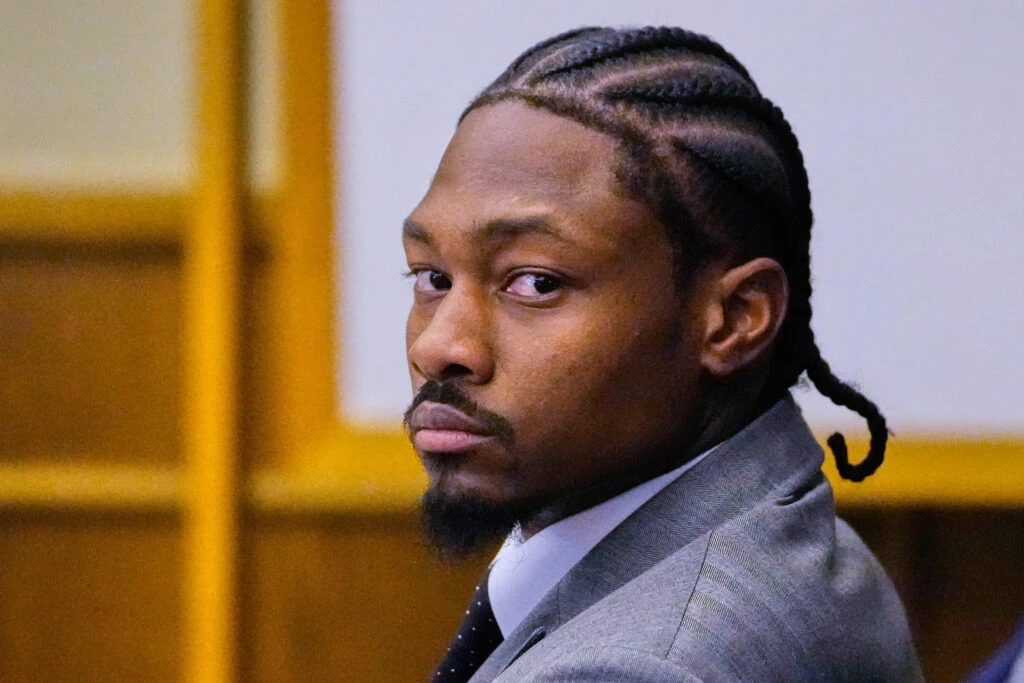
After the New England Patriots released Stefon Diggs following his recovery from a torn ACL, the veteran wide receiver’s future seemed uncertain. Yet despite navigating one of football’s most devastating injuries, Diggs demonstrated his resilience by leading the Patriots in both catches and receiving yards during the 2025 season, recording 99 receptions for 1,013 yards and 10 touchdowns.
His average of 19.8 yards per reception showcased his ability to create explosive plays downfield, while his 60-yard long reception proved his deep-threat capability remained intact.
The Washington Commanders recognized this potential when others remained hesitant. At 32 years old, Diggs represented a risk—but also an opportunity few franchises were willing to seriously consider. His journey from castoff to priority free agent signing illustrates a fundamental NFL truth: production speaks louder than injury history.
This trajectory aligns with a career marked by consistent excellence. Diggs was, as NBC News noted, a fifth-round draft pick by the Minnesota Vikings in 2015 who became a four-time Pro Bowl selection and was repeatedly ranked among the NFL’s Top 100 players.
Diggs’ performance in New England sent a clear signal to decision-makers: he wasn’t finished. Across 122 games played in 2025, he accumulated 122 receiving targets and 55 receiving first downs, demonstrating sustained involvement in the Patriots’ offensive system. The Patriots may have moved on, but the Commanders saw a different narrative unfolding.
This decision would reshape Washington’s offensive ambitions heading into the 2026 campaign. It aligned with a broader organizational commitment to building a championship roster around young quarterback Jayden Daniels and capitalizing on unprecedented momentum—the Commanders had just won their first playoff game since 2005 and reached the NFC Championship Game for the first time since 1991, milestones 247Sports documented.
Why Washington Couldn’t Resist This Risky Gamble
The Commanders committed one year and $12 million to Diggs on August 5, 2026, making a deliberate calculation that his experience and proven track record outweighed the uncertainty of his late signing. Quarterback Jayden Daniels desperately needed another established receiving option to complement Terry McLaurin, and Diggs offered exactly that pairing.
Daniels’ exceptional 2025 season demonstrated his dual-threat capability: 822 passing yards with 26 passing touchdowns alongside 413 rushing yards and 6 rushing touchdowns under offensive coordinator Kliff Kingsbury’s innovative play-calling.
What made Diggs particularly valuable was his positional flexibility and proven excellence at the highest levels. An offensive coordinator’s dream, Diggs could line up inside or outside the formation, creating matchup nightmares for defensive coordinators and providing Daniels with multiple reliable read options.
His versatility meant the Commanders could attack coverage schemes from various angles and keep opposing defenses constantly adjusting. Notably, Diggs led all NFL receivers in 2020 with 127 receptions and 1,535 receiving yards, totals NBC News tracked.
The Commanders’ offseason strategy extended well beyond the Diggs acquisition. The team added offensive tackle Laremy Tunsil to strengthen the line, tight end Chig Okonkwo to diversify Daniels’ receiving options, and bolstered running back depth with Rachaad White and Jerome Ford.
Meanwhile, Terry McLaurin provided complementary receiving prowess: 52 receptions for 809 yards with 12 receiving touchdowns. This layered approach suggested Washington wasn’t seeking a quick fix, but rather constructing a multifaceted offensive ecosystem designed to sustain competitive excellence.
However, the compressed timeline presented an immediate challenge. Unlike receivers who sign during the offseason and have months to develop chemistry with their quarterbacks and offensive line, Diggs arrived late to Washington’s preparation cycle.
He would miss substantial portions of training camp and preseason—critical windows for building timing and understanding the nuances of a new playbook. The real question wasn’t whether Diggs could play at an elite level, but whether rushed integration would limit his immediate impact.
The ACL Wildcard: Can He Stay Healthy and Productive?
Lurking beneath this exciting acquisition sits an uncomfortable reality: Diggs’ torn ACL represents both his greatest obstacle and the Commanders’ biggest gamble.
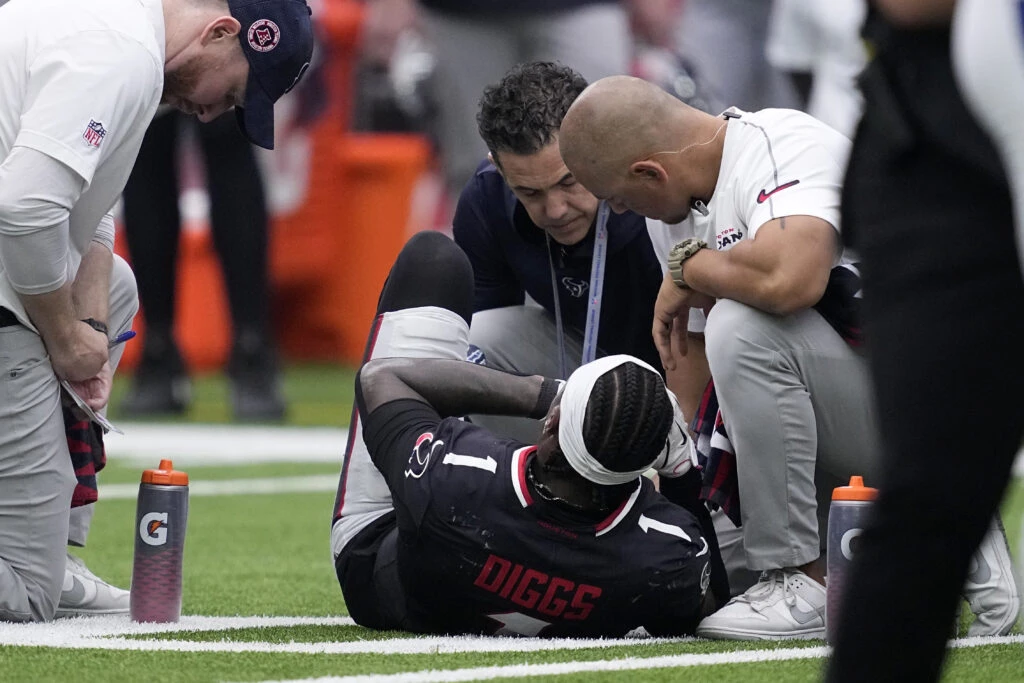
While his statistical output with New England proved his ability to perform at elite levels while recovering, the injury fundamentally changes the calculus of his long-term reliability. Diggs suffered the injury during Week 8 of the 2024 season with the Houston Texans, a torn ACL NFL.com reported, then spent months rehabilitating before proving his readiness with the Patriots.
ACL injuries typically require 12-18 months for full recovery, and Diggs would be operating in that critical window during the 2026 season. The initial months of his Patriots tenure may have allowed him to ease back into competition, but the Commanders’ offense demands immediate contribution.
His elite 19.8 yards-per-reception average came while still navigating post-injury rehabilitation, suggesting his explosiveness hasn’t been compromised—yet whether that translates to a new system remains uncertain. Game-speed play requires cuts, lateral movement, and explosive acceleration—precisely the physical demands that pose the greatest challenges for ACL recovery.
Even the slightest setback could cascade into devastating consequences. A reaggravation or compensatory injury could derail not only Diggs’ season but also the entire Washington offensive strategy built around his presence. The team is banking on his experience and documented work ethic to navigate this vulnerability, but injuries rarely cooperate with organizational timelines or hopes.
Jayden Daniels Finally Gets His Weapon—But at What Cost?
For Jayden Daniels, the Diggs acquisition represents a transformative opportunity in his first full NFL season as a starter. The 2024 Offensive Rookie of the Year now has access to elite receiving depth that Washington’s recent resurgence has made feasible. Pairing a young, talented quarterback with one of the most accomplished wide receivers in league history creates theoretical offensive dynamite. With Daniels operating at a 60.6% completion percentage across 302 passing attempts and 189 completions, adding Diggs alongside Terry McLaurin provides dual-threat receiving options that can stretch defenses vertically and horizontally.
Opposite McLaurin, Diggs creates an impossible choice for defensive coordinators: which elite receiver do you prioritize in coverage? This combination should theoretically unlock the Commanders’ offensive potential. Daniels finally has not just one established target, but two proven playmakers who can operate effectively in space, create separation, and consistently move the chains.
Kingsbury’s sophisticated offensive system thrives on giving quarterbacks multiple weapons and forcing defenses into constant mental processing—adding Diggs to an already dynamic attack amplifies these advantages exponentially.
Yet this optimistic scenario faces significant obstacles. Daniels absorbed 22 total sacks during the 2025 season, indicating offensive line vulnerabilities that could limit the window for the deep shots Diggs excels at creating. The compressed timeline and Diggs’ lingering health concerns inject considerable uncertainty into the equation.
If the pairing clicks immediately and the roster develops cohesion across all units, the Commanders transform from a rebuilding project into a legitimate NFC Championship contender. If integration proves difficult or Diggs’ injury history resurfaces, Washington may regret not investing in a younger receiver with full offseason preparation already completed.