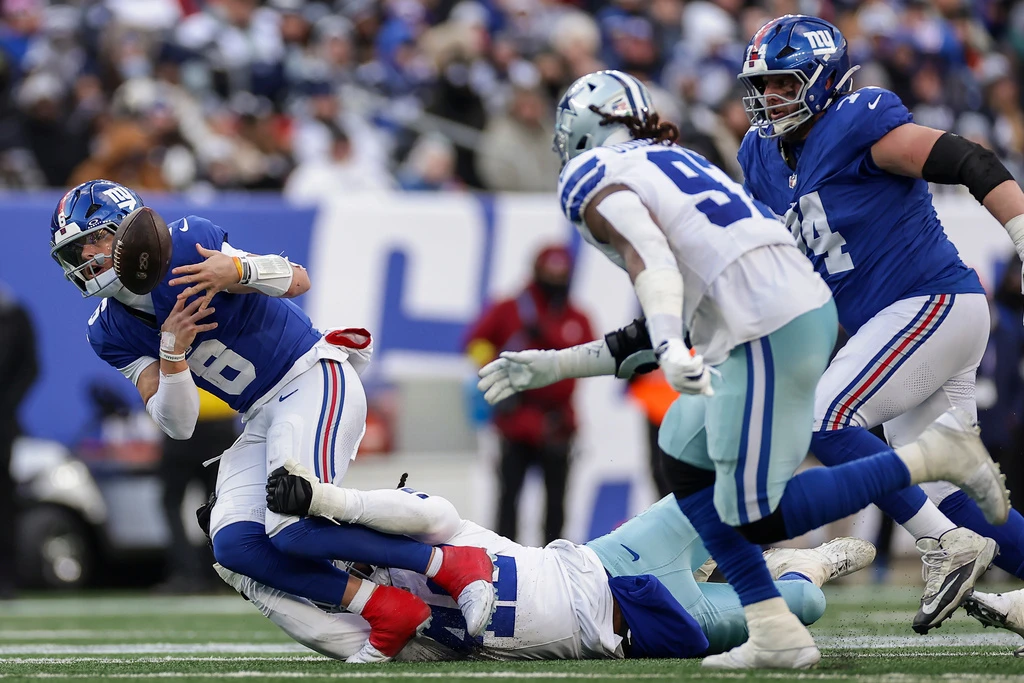
The veteran defensive end has agreed to terms with the Houston Texans, reuniting with the franchise that selected him with the No. 1 overall pick in the 2014 NFL Draft, a selection later recounted by the Seattle Seahawks. The agreement was initially reported by NFL Network insiders Mike Garafolo, with Clowney’s arrival still subject to the completion of a physical.
More than a decade after entering the league as one of the most highly anticipated defensive prospects of his generation, Clowney now returns to Houston as an experienced rotational defender, leader and potential difference-maker for a team with championship ambitions.
Clowney Comes Home After Productive Cowboys Season
Clowney’s return follows a productive 2025 season with the Dallas Cowboys.
Despite appearing in only 13 games and starting six, he recorded 8.5 sacks, 41 combined tackles, four passes defended, one forced fumble and two fumble recoveries. His 8.5 sacks led the Cowboys, demonstrating that he can still create pressure and finish plays in the backfield.
That performance was especially encouraging given where Clowney is in his career. He is no longer expected to play every defensive snap or carry a pass rush by himself. Instead, he can be used strategically in favorable situations, moved around the formation and paired with younger defenders who command attention from opposing offensive lines.
Houston offers precisely that kind of opportunity.
The Texans already have established pass rushers Will Anderson Jr. and Danielle Hunter leading their defensive front. Clowney will not have to arrive as the defense’s primary threat. His role can instead focus on adding depth, creating matchup problems and keeping Houston’s top edge defenders fresh throughout the season.
A Full-Circle Return to the Texans
Clowney’s first period in Houston began when the Texans selected him first overall in 2014 following an outstanding college career at South Carolina.
His rookie season was disrupted by injuries, limiting him to four games. Over time, however, he developed into a disruptive and versatile defender capable of lining up in multiple positions.
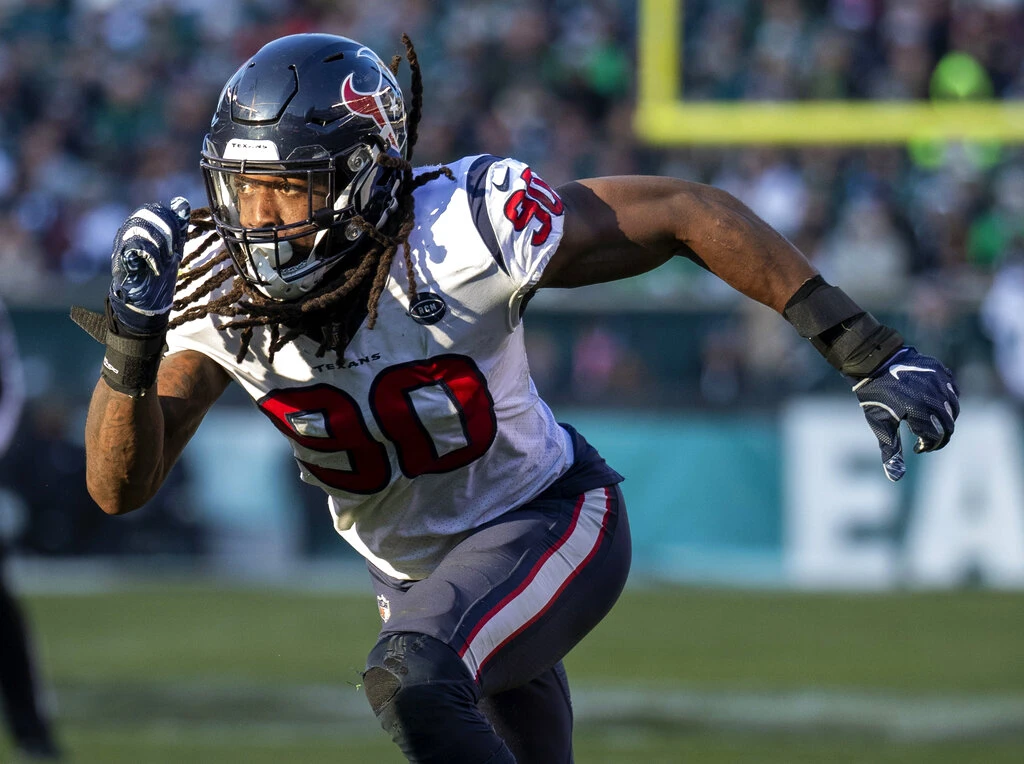
Clowney produced some of his strongest seasons with the Texans. He recorded 9.5 sacks in 2017 and another nine in 2018, earning three consecutive Pro Bowl selections from 2016 through 2018, as Sky Sports detailed. He was also effective against the run, using his speed, size and ability to penetrate the backfield to disrupt plays before they could fully develop.
His original tenure ended after the 2018 season. Houston used its franchise tag on Clowney in 2019 before trading him to the Seattle Seahawks shortly before the start of the regular season, as CBS Sports reported.
He subsequently played for the Tennessee Titans, Cleveland Browns, Baltimore Ravens, Carolina Panthers and Cowboys. That journey gave Clowney experience in several defensive systems and transformed him from a highly scrutinized former top pick into one of the league’s most experienced defensive linemen.
Now, he returns to an organization that looks considerably different from the one he left.
Why Clowney Chose Houston
Clowney reportedly received other offers, including opportunities that could have provided more money or a clearer path to a starting position. His decision to return to Houston was influenced by family, familiarity and the opportunity to pursue a championship.
Clowney still has strong personal connections to the Houston area, making the move meaningful beyond football. He has also spoken about how he has matured since his first stint with the Texans and how he now wants to help guide younger players.
That leadership could be valuable on a talented Houston roster.
Clowney entered the NFL with enormous expectations and spent much of his early career being evaluated against his draft position. At this stage, however, the Texans are not signing him in the hope that he will become the next transformational superstar.
They are adding an established veteran who has recorded 66.5 career sacks across 153 regular-season games. He has also accumulated 450 combined tackles, 36 passes defended, 16 forced fumbles and 11 fumble recoveries.
Those numbers reflect a long and productive career, even if it has not always followed the path imagined when he entered the league.
How Clowney Fits Houston’s Defense
Clowney’s most immediate value may come from his versatility.
Although he is commonly described as an edge rusher, he has never been limited to simply rushing from one position. He can line up outside the offensive tackle, shift inside on passing downs, set the edge against running plays or attack gaps with his first-step explosiveness.
That flexibility gives the Texans more options when constructing pressure packages.
Opposing offenses will already need to account for Anderson and Hunter. Adding Clowney to selected third-down packages could make it more difficult for offensive lines to determine where pressure is coming from and which defender should receive additional blocking help.
Clowney’s presence should also help Houston manage the workload of its other defensive linemen. The NFL season is long, and teams rarely make deep playoff runs using only two reliable pass rushers. Injuries, fatigue and changing matchups make defensive-line depth especially important.
Rather than asking Clowney to play nearly every snap, Houston can place him in situations that maximize his remaining strengths.
He could be particularly useful against physical rushing attacks, mobile quarterbacks and opponents that struggle to handle pressure from multiple positions.
A Low-Risk Addition With Meaningful Upside
The reunion represents a calculated move for both sides, but it should not be viewed as a desperate gamble.
For Houston, Clowney adds experience to an already talented defense without forcing the team to redesign its entire system around him. Reports indicate that his agreement is a one-year deal carrying a base value of approximately $5.5 million and incentives that could push it to $8 million.
That structure gives Clowney an opportunity to earn more through performance while limiting Houston’s long-term financial commitment.
For Clowney, the move provides a chance to contribute to a contender in a city he considers home. He will also be surrounded by enough defensive talent that opponents cannot consistently devote their blocking scheme to stopping him.
The arrangement does not require Clowney to reproduce his best Pro Bowl seasons. If he can remain healthy, defend the run and provide timely pressure, the signing could deliver significant value.
Clowney’s Career Deserves More Nuance
Clowney’s career has often been discussed through the lens of what he did not become.
Because he was the first pick in his draft, every injury, quiet statistical stretch or change of team attracted added attention. Sack totals also became the primary measurement used to evaluate him, even though his impact has frequently extended beyond that single statistic.
Clowney has been an effective run defender, a disruptive presence and a player capable of affecting an offense without always recording the final tackle. At the same time, injuries and inconsistency prevented him from becoming the year-after-year superstar some expected.
Both realities can be true.
He may not have developed into a perennial Defensive Player of the Year candidate, but lasting more than a decade in the NFL and remaining productive into his thirties is a significant accomplishment. His 8.5-sack performance for Dallas showed that he still has enough explosiveness and technique to contribute when placed in the right role.
Houston is now betting that its defensive system can provide that role.
What Clowney’s Return Means for the Texans
Clowney’s arrival strengthens a defensive front that already contains high-level talent.
His signing also signals that Houston is focused on competing immediately. Veteran additions of this kind are generally made by teams that believe additional depth could make a difference during a playoff race.
Clowney does not need to become the face of the defense. Anderson, Hunter and the rest of Houston’s core already carry much of that responsibility. What the Texans need from Clowney is reliable complementary production.
That could mean generating pressure on an important third down, forcing a running back to change direction, helping contain a mobile quarterback or allowing another defender to reach the passer.
Those contributions may not always produce headline statistics, but they can decide close games.
A Different Kind of Homecoming
Clowney is returning to Houston under circumstances that are very different from those surrounding his arrival in 2014.
Then, he was a 21-year-old prospect expected to help transform the franchise. Now, he is a 33-year-old veteran joining an established contender and embracing a more specialized role.
That difference may ultimately make the reunion work.
Houston no longer needs Clowney to justify his draft position. The Texans need him to contribute to a deep defense, share what he has learned and make impactful plays when his number is called.
For Clowney, the opportunity is about more than revisiting the past. It is a chance to help the team that drafted him pursue its future—and potentially add a memorable final chapter to an already eventful NFL career.