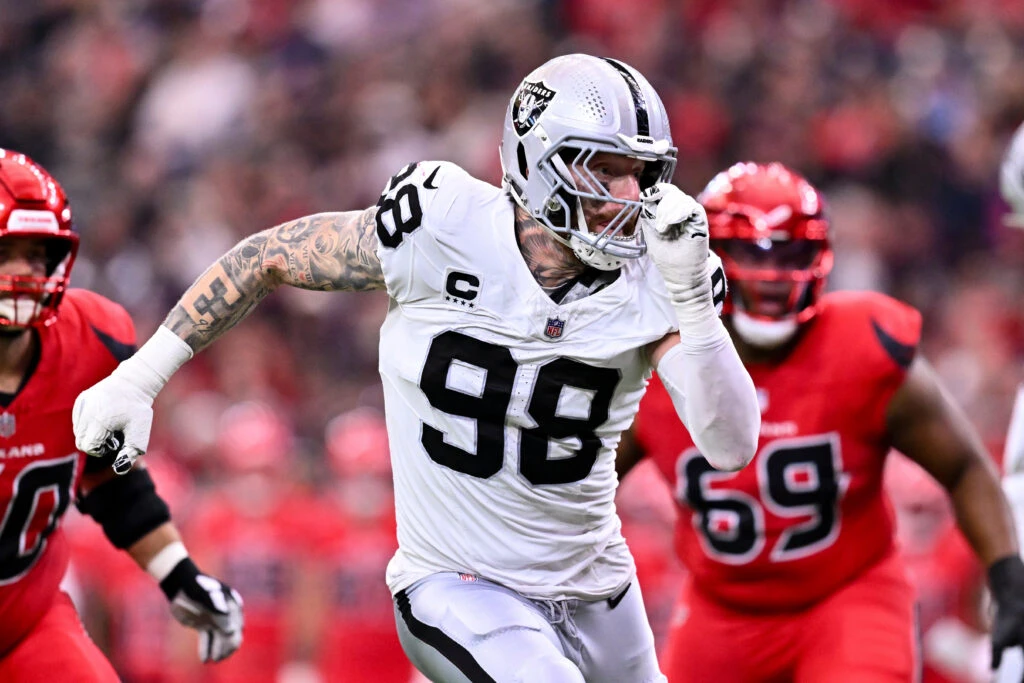
League sources confirm the Las Vegas Raiders are exploring a potential trade of Maxx Crosby this offseason—a stunning development given his elite status as a defensive end. The catalyst: a fundamental disagreement over injury management.
When Raiders brass decided to shut down the star edge rusher for the final two games due to a knee injury, Crosby rejected the organization’s directive.
According to NFL insider Jay Glazer, his response was unequivocal—he walked out of the facility. This wasn’t a quiet exit or behind-the-scenes negotiation. It was a visible, unmistakable statement signaling irreparable fractures between one of the franchise’s most important defensive pieces and the organization itself.
Now 27, Crosby ranks as the NFL’s highest-paid non-quarterback following his March 2025 contract extension: $106.5 million over three years with $91.5 million guaranteed, according to the NFL.
For a player of his caliber—someone who’s recorded 324 pressures since 2019, 40 more than any other player—such a public stand represents a watershed moment in his Raiders tenure, underscoring broader organizational dysfunction.
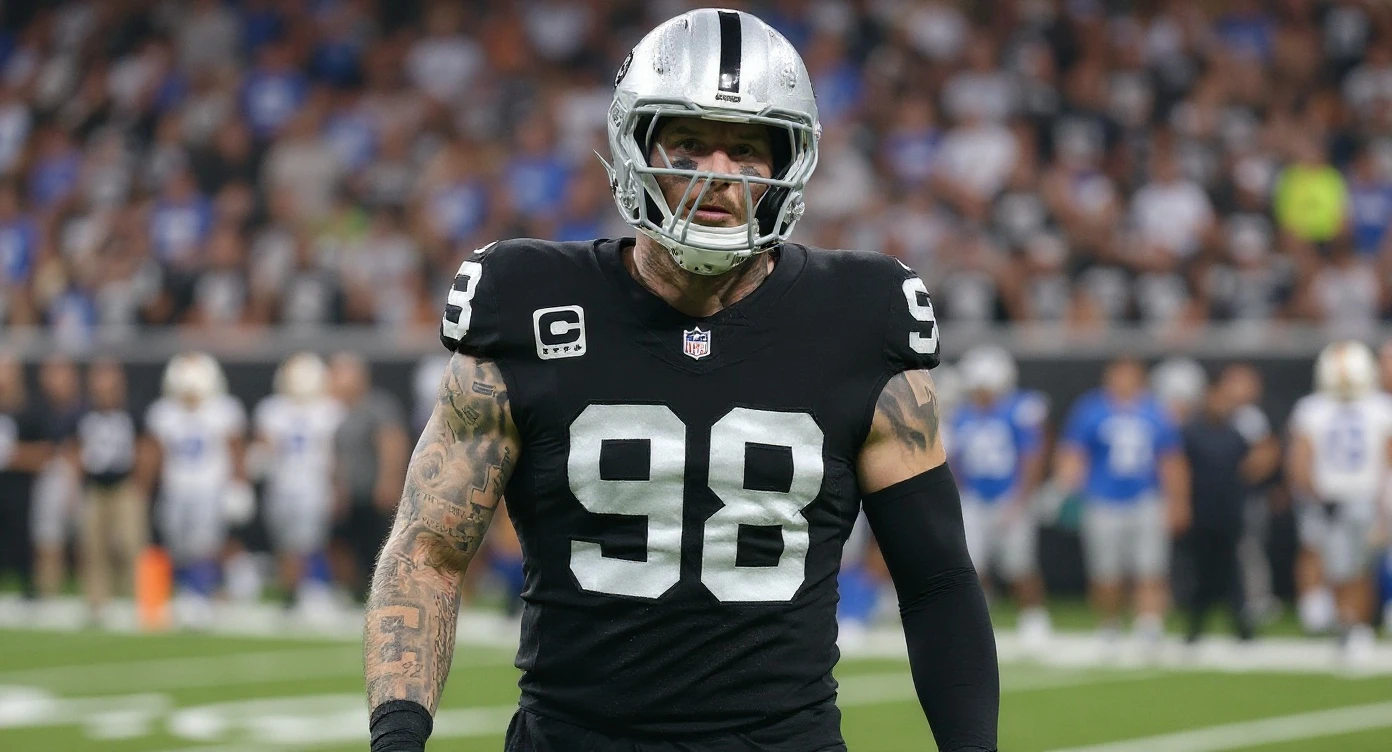
Why the Raiders Are Suddenly Willing to Let Their Star Go
The deteriorating relationship between Maxx Crosby and the Raiders organization reflects deeper institutional problems extending well beyond one player or one season.
After five Pro Bowl selections and years of dominant performance, Crosby increasingly clashed with how the franchise manages elite talent.
Drafted in the fourth round (106th overall) in 2019 from Eastern Michigan, as Eastern Michigan Athletics documented, he evolved into a generational pass rusher, finishing 2023 with 14.5 sacks, a career high per the Raiders, and ranking tenth in the NFL Top 100 Players of 2024.
The breaking point arrived when organizational health decisions collided directly with Crosby’s own assessment. This echoes a troubling Raiders pattern—rigid decision-making and player agency repeatedly failing to align.
Defensive challenges intensified further when Christian Wilkins landed on the physically unable to perform list with a season-ending foot injury, exemplifying cascading defensive vulnerabilities plaguing the franchise.
These aren’t isolated incidents but symptoms of a franchise struggling to navigate modern player empowerment while grappling with defensive injuries and structural instability.
The Raiders’ difficulty maintaining harmony with their most talented players, coupled with personnel injuries, suggests systemic communication breakdowns from coaching staff to medical decision-making, ultimately undermining foundational stability.
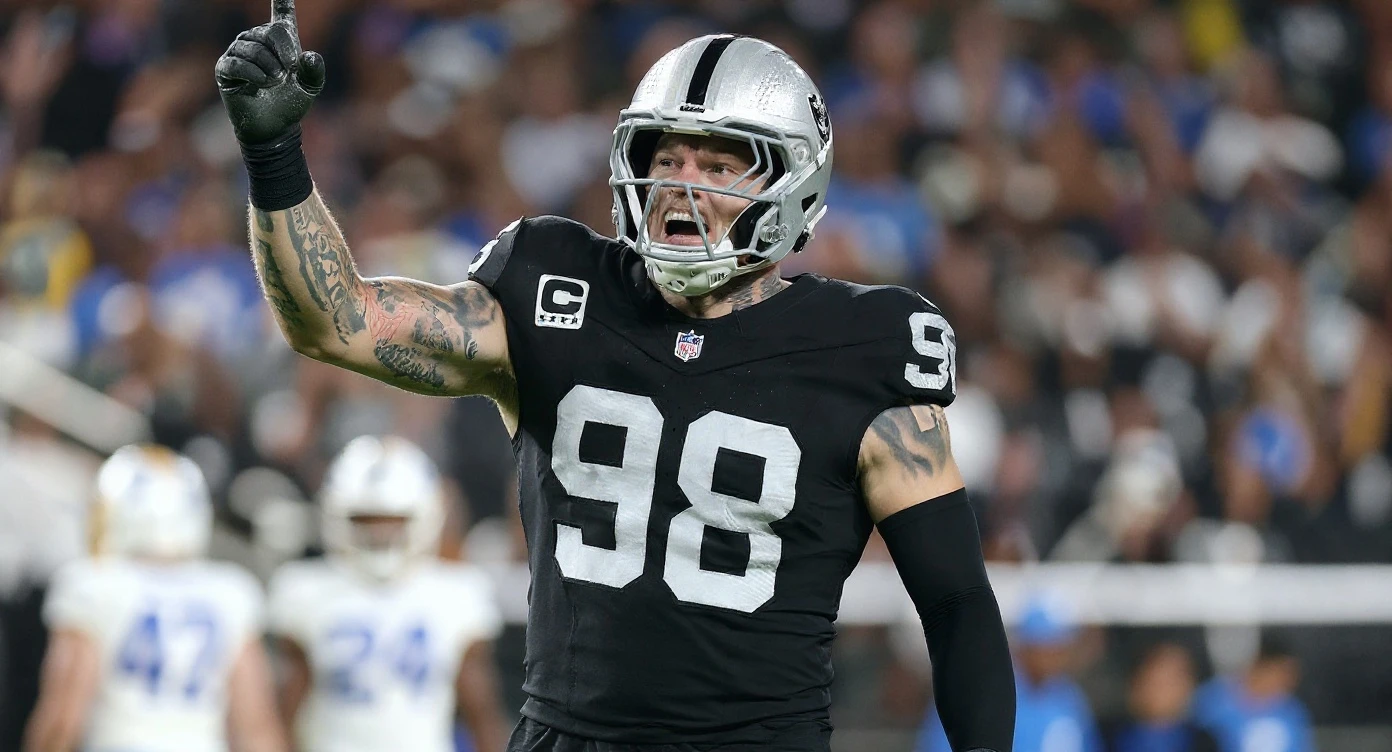
The Eye-Watering Price Tag: Why Teams Are Hesitating
Las Vegas hasn’t been subtle—they’re demanding two first-round draft picks plus an additional player for Crosby’s departure.
This substantial asking price reflects both his genuine value as an elite defender and the Raiders’ determination to extract maximum compensation.
Potential suitors must weigh defensive priorities against the compensation demanded.
The Dallas Cowboys and Chicago Bears have emerged as potential fits, each facing defensive urgency.
The Cowboys, ranked 31st in points allowed, recently demonstrated their willingness to trade for defense by acquiring linebacker Logan Wilson from Cincinnati for a 2026 seventh-round pick. Any organization considering Crosby must evaluate not only his exceptional talent and relatively young age at 27 but also the organizational tensions that preceded this situation.
His career trajectory illustrates precisely why Maxx is an elite player. I’ve been very upfront from the start when I got here that we’re in the business of having really good players on the team, and we need a lot more of them. And it’s hard to build a great team without elite players. “John Spytek“: since 2019, Crosby has accumulated 324 pressures—40 more than Nick Bosa, the next-closest player—making him arguably the league’s most consistent and productive defensive end. The hefty compensation demands signal the Raiders’ unwillingness to accept a discount, effectively putting the burden on interested teams to justify such an expenditure.
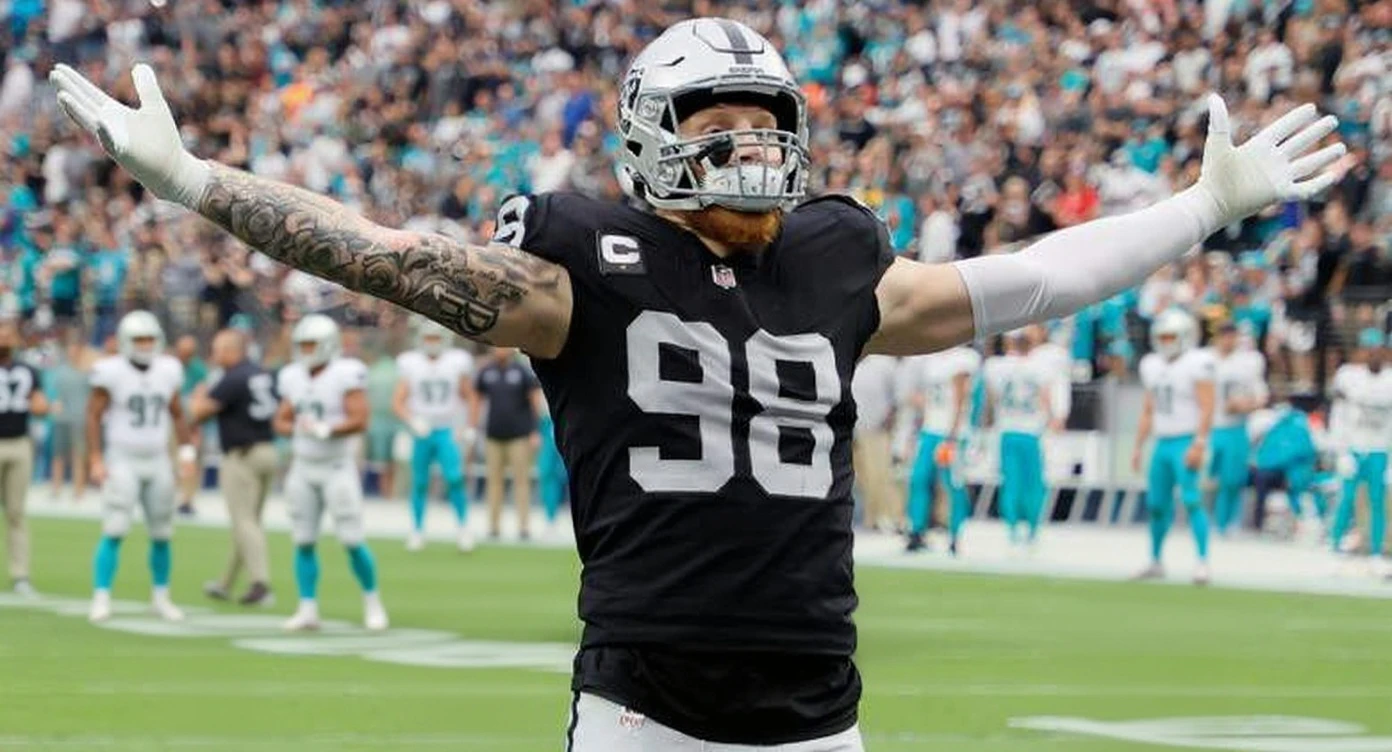
The Untold Story: When Player Autonomy Clashes with Team Control
This situation transcends immediate trade speculation and touches on fundamental philosophical tensions reshaping professional sports. Crosby’s departure from the Raiders facility represents more than a contract dispute—it embodies growing power dynamics between elite players and franchise management in the modern NFL.
When he disagreed with being shut down and walked away, he exercised agency over his career and body, directly challenging the Raiders’ traditional hierarchy of decision-making authority.
This collision between player autonomy and organizational control raises profound questions about how franchises should handle injury management, player communication, and respect owed to franchise cornerstones.
The Raiders’ rigid approach, prioritizing organizational directives over dialogue with their star performer, has catastrophically backfired.
In an era where top-tier talent increasingly holds significant leverage, organizations that fail to adapt their management philosophy risk alienating the very players upon which their success depends.
This situation may ultimately catalyze broader changes in how NFL franchises approach relationship management with elite performers, forcing teams to reconsider whether authoritarian decision-making models remain viable in fostering long-term organizational stability and player retention.