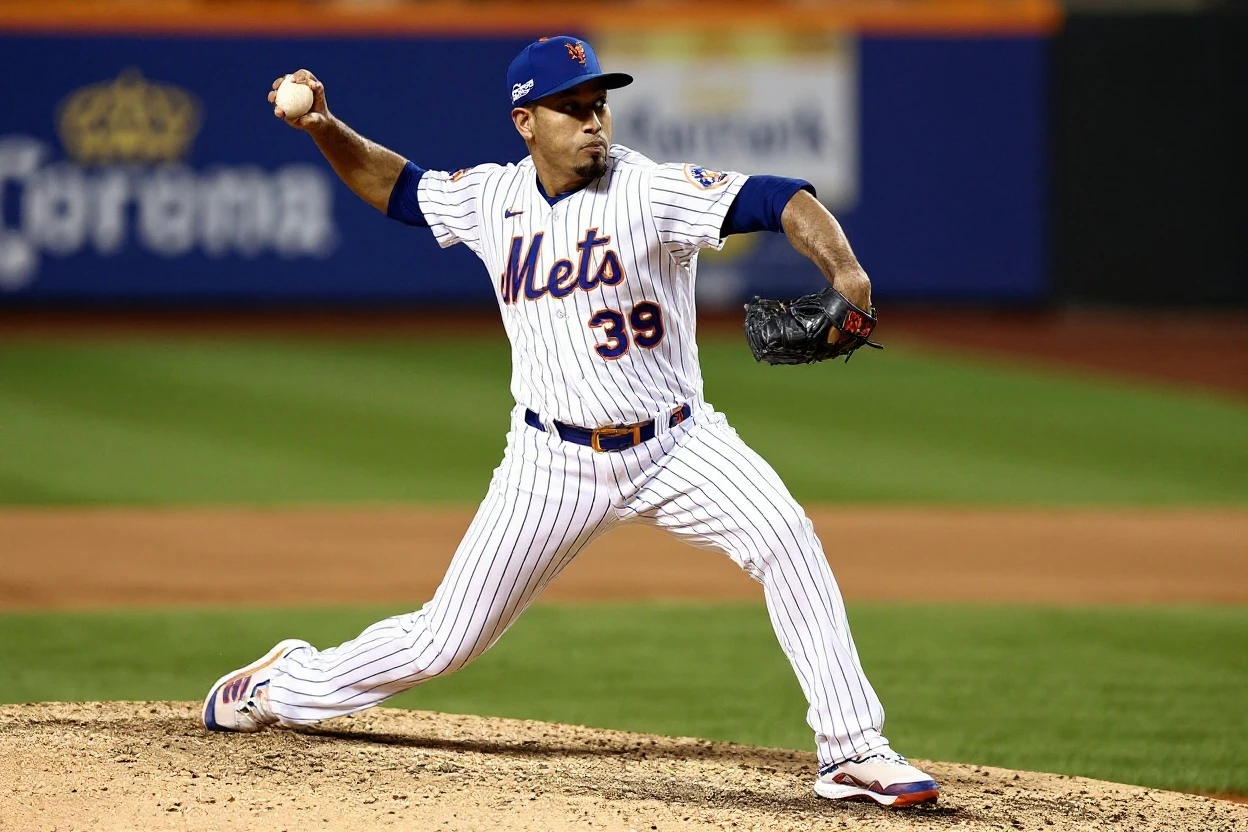
The Los Angeles Dodgers landed the top reliever on the free-agent market, announcing a three-year, $69 million deal with closer Edwin Díaz on December 12, 2025. The agreement does more than shore up the ninth inning — it pushed the club’s total deferred-payment obligations past $1.06 billion owed to nine players, a financial milestone that underscores just how aggressively Los Angeles has structured its roster-building strategy.
Dodgers’ Deferred Commitments Cross $1.06 Billion After Díaz Deal
The Dodgers’ signing of Edwin Díaz is the latest chapter in a financial playbook unlike anything else in baseball. According to FOX Sports and the Associated Press, Díaz won’t receive the final dollar of his $69 million until 2047 — and his contract pushed Los Angeles’ total deferred obligations to $1,064,500,000, a figure confirmed by ESPN and Dodgers Way.
That’s not a rounding error or a projection. It’s a verified, billion-dollar-plus commitment spread across nine players, with the Dodgers’ steepest single-year exposure — $102.3 million — hitting in both 2038 and 2039, per FOX Sports/AP.
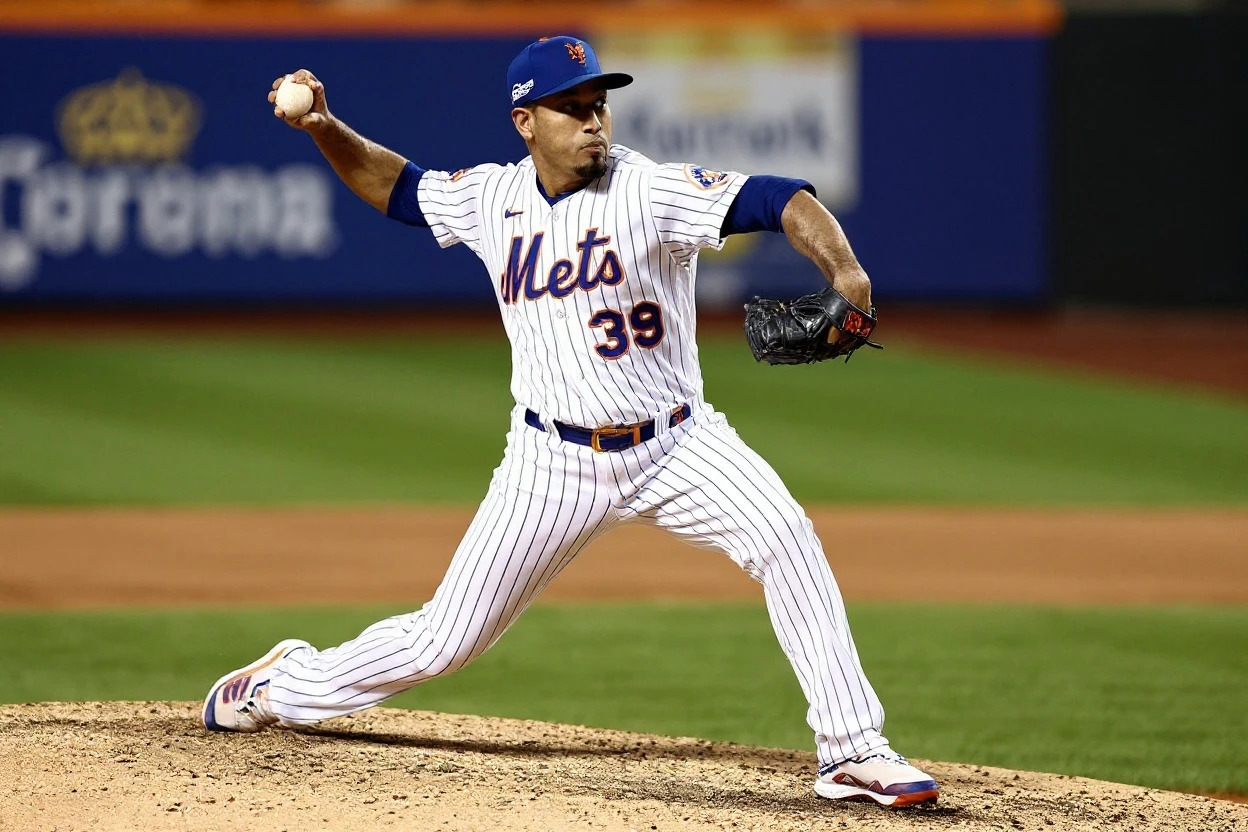
Edwin Díaz: The $69 Million Bullpen Anchor
Díaz enters Dodger blue as one of the most decorated closers in the game. According to FOX Sports and the Associated Press, he posted 28 saves in 31 chances last season with a 1.63 ERA and a 6-3 record for the Mets, striking out 98 batters in 66⅓ innings — elite numbers by any measure.
Over nine seasons split between Seattle and New York, Díaz has accumulated 253 saves in 294 chances, per FOX Sports/AP. His return to that level is particularly notable given that he missed the entire 2023 season after tearing the patellar tendon in his right knee during a World Baseball Classic celebration, as MLB.com reported.
The Dodgers targeted Díaz to fix a specific, documented problem. MLB.com reported that Tanner Scott — signed for four years and $72 million ahead of the 2025 season — struggled badly in his first year in Los Angeles, posting a 4.74 ERA and blowing 10 saves, a total that led the Majors. Díaz now figures to slot into the closer’s role, giving the club a proven ninth-inning option.
Díaz’s Deferral Structure: $13.5 Million Spread Across 12 Years
The mechanics of Díaz’s deal are worth unpacking. Per FOX Sports/AP and Spotrac, he receives a $9 million signing bonus payable February 1, a $14 million salary in 2026, and $23 million in each of the following two seasons. The Dodgers defer $4.5 million from each contract year, for a total of $13.5 million in deferred money.
Those payments are distributed in $450,000 July 1 installments: the 2026 deferral runs from 2036 to 2045, the 2027 deferral from 2037 to 2046, and the 2028 deferral from 2038 to 2047, according to Spotrac. It’s a structure that keeps present-day payroll manageable while extending the club’s financial obligations well into the next decade.
The Díaz deal is one piece of a much larger deferred-payment map. According to Bleacher Report, the Dodgers’ full deferral roster includes Shohei Ohtani ($680 million, paid 2034–43), Mookie Betts ($115 million in salaries from 2033–44, plus $5 million of his signing bonus from 2033–35), Blake Snell ($66 million, 2035–46), Freddie Freeman ($57 million, 2028–40), Will Smith ($50 million, 2034–43), Teoscar Hernández ($32 million, 2030–39), Tommy Edman ($25 million, 2037–44), and Tanner Scott ($21 million, 2035–46). Dodgers president of baseball operations Andrew Friedman acknowledged the weight of those commitments, telling MLB.com: “It’s a real cost, so try to bake it in and factor it into the decision.”
2038 and 2039: The Dodgers’ Peak Deferred-Payment Years
The sheer scale of Los Angeles’ deferred obligations comes into sharpest focus when you look at the calendar. FOX Sports and the AP pinpoint 2038 and 2039 as the Dodgers’ most expensive deferred-payment years, with $102.3 million due in each of those two seasons alone.
ESPN confirmed that Díaz’s signing pushed the club’s total deferred commitments past $1 billion. Friedman has been direct about the team’s approach, telling MLB.com that deferrals are “a real cost” the organization actively factors into every contract decision — not a financial sleight of hand, but a deliberate trade-off the front office has chosen to make repeatedly.
Díaz Slots Into the Closer Role as Dodgers Double Down on the Bullpen
This is the second consecutive offseason in which the Dodgers have made a major investment in relief pitching, a notable shift from the franchise’s historical approach. MLB.com noted that the club had not typically spent big on the bullpen in prior years before committing to Scott and now Díaz in back-to-back winters.
General manager Brandon Gomes framed the philosophy clearly. “We’re not just gonna sign a reliever to sign a reliever,” Gomes told MLB.com. “Making sure we’re adding guys we feel like are impact talent.” With Díaz now figured to close and Scott expected to bounce back from his difficult 2025, the Dodgers have invested more than $140 million in their late-inning infrastructure over two offseasons — a bet that the bullpen will no longer be the team’s weak link come October.