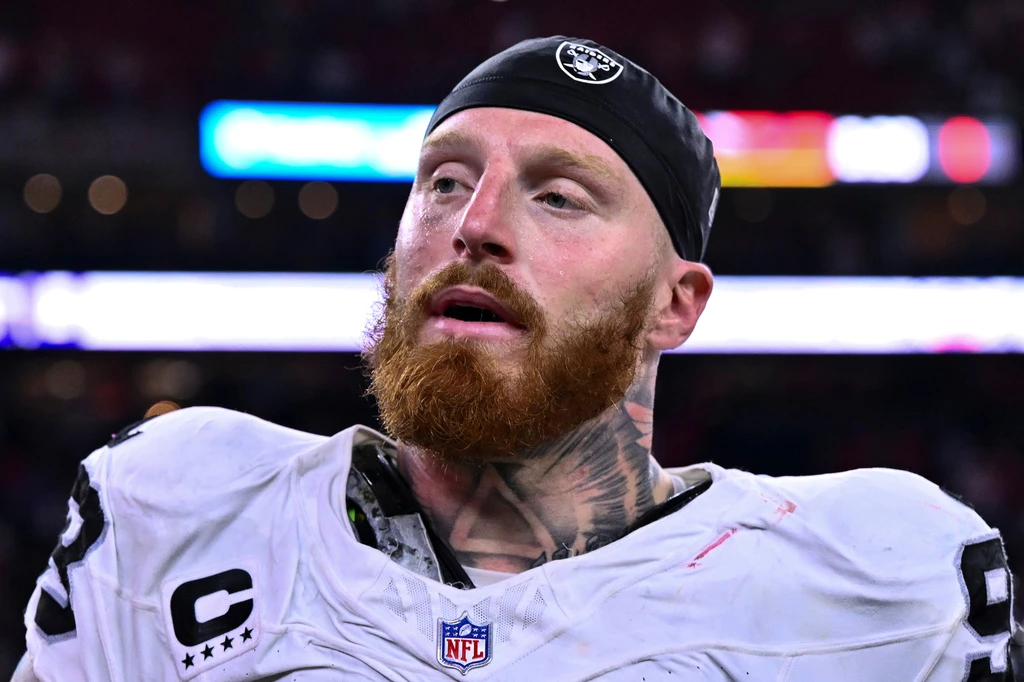
For the first time, league insiders have confirmed what was once unthinkable: the Las Vegas Raiders are open to trading Maxx Crosby, the five-time Pro Bowler who has anchored their defense for years.
League insiders have now confirmed what once seemed unthinkable: the Las Vegas Raiders were actively willing to trade Maxx Crosby, the five-time Pro Bowl edge rusher who has been the face of their defense since arriving as a fourth-round pick out of Eastern Michigan in 2019, the No. 106 selection the Raiders announced.
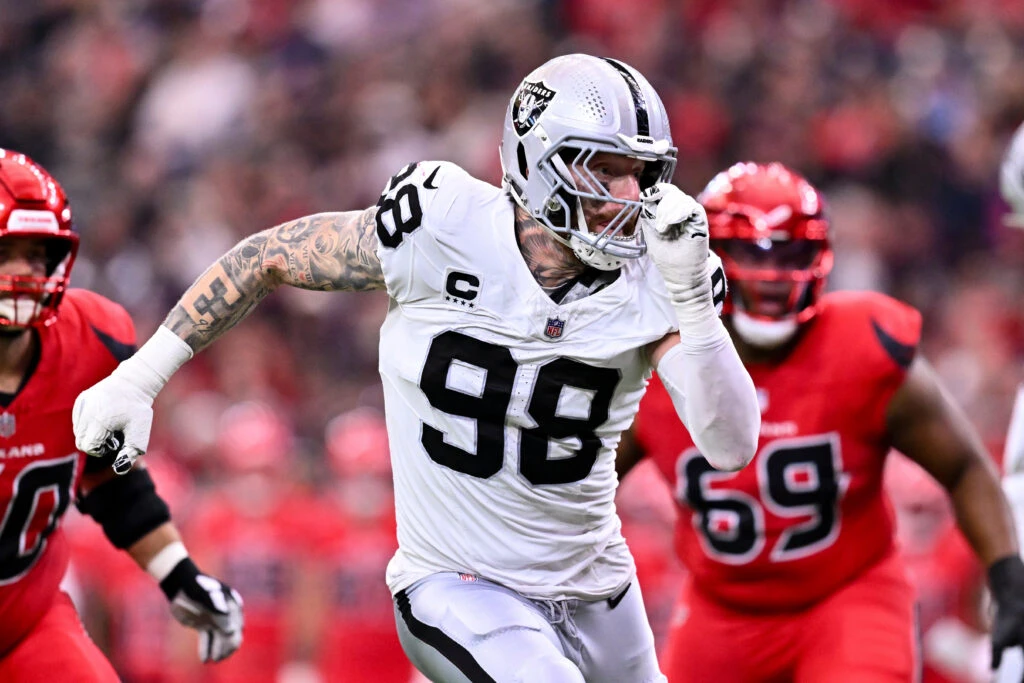
The confirmation didn’t come through a splashy press conference or an agent-driven media campaign — it surfaced through back channels, which made it all the more significant. Crosby isn’t just another movable piece on a rebuilding roster. He’s a four-time double-digit sack producer who earned Pro Bowl nods in five straight seasons and, by most advanced metrics, ranked among the top edge rushers in the NFL throughout his tenure in Las Vegas.
This isn’t routine offseason noise. Crosby has been the defensive identity of the Raiders franchise for the better part of six years — a relentless pass rusher who posted double-digit sacks in multiple seasons, earned five consecutive Pro Bowl selections, and consistently graded among the league’s elite at his position. Moving him wouldn’t just be a roster transaction. It would strip the organization of its most recognizable defensive voice, its locker room anchor, and the one player opposing offenses had to scheme around every single week.
The Raiders’ willingness to entertain trade discussions signals something far deeper than a contract dispute or a salary cap calculation. It points to organizational fractures that have been quietly widening since the franchise relocated to Las Vegas in 2020. In that span, the Raiders have cycled through multiple head coaches and general managers, posting just one winning season and failing to advance past the wild-card round. Crosby has watched that instability from the inside, and the tension between a player who demands a winning culture and a front office that keeps resetting the clock eventually reached a breaking point.
Why Crosby Kept His Trade Request a Secret—And What That Reveals
What makes this situation particularly telling is how it surfaced. There was no dramatic press conference, no cryptic Instagram post, no agent-driven leak designed to manufacture public pressure. League sources conveyed the Raiders’ openness to trade discussions through back channels — a calculated, deliberate signal rather than a reactive one. That measured approach suggests the organization had already done the internal math on moving on from the best defensive player they’ve had since the franchise left Oakland.
At the core of the friction was a fundamental clash between Crosby’s preparation standards and the organization’s decision-making culture. Crosby built his entire brand on relentless offseason work, year-round conditioning, and a professional standard that became central to his public identity. When front office decisions appeared to conflict with or undercut that approach, the disconnect wasn’t purely professional — it was personal. A player who defines himself by his work ethic doesn’t easily reconcile with an organization that appears to operate on a different set of values.
Despite his mounting frustration, Crosby never took his grievances public. His trade request remained in private conversations, away from beat reporters and social media speculation. For a player with his platform, his fanbase loyalty in Las Vegas, and his leverage as one of the most productive pass rushers in the league, that restraint was both deliberate and significant.
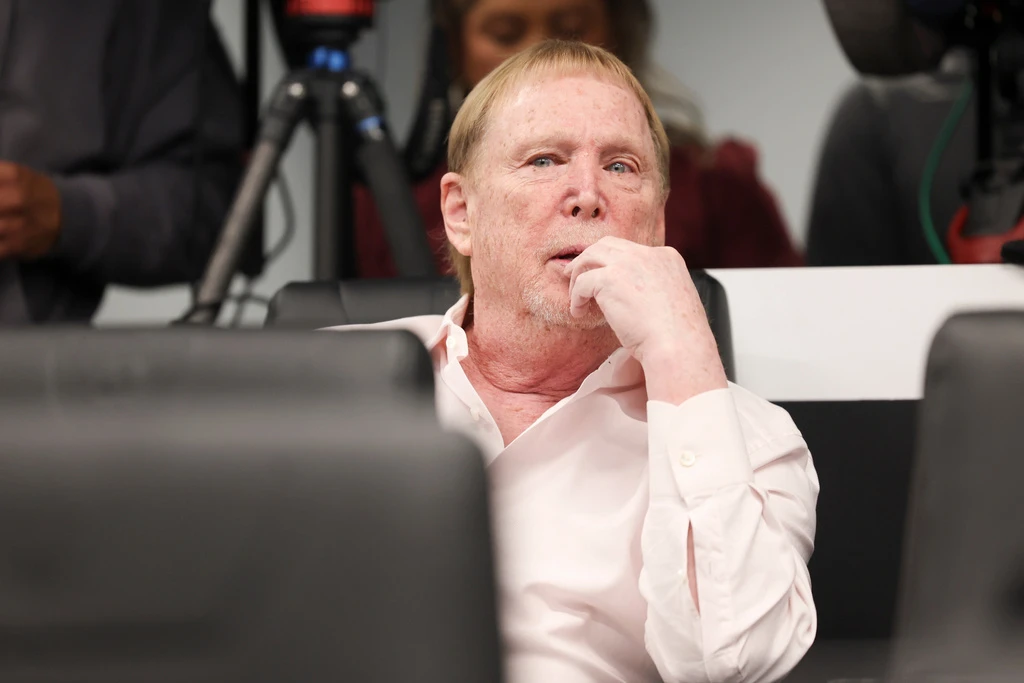
That discretion reflected genuine respect for owner Mark Davis and the Raiders fan base that had embraced Crosby as one of the few constants in an otherwise turbulent era for the franchise. He understood that going public would damage the organization and punish fans who had no role in the decisions that frustrated him. That kind of self-awareness is rare in a league where player-team disputes routinely play out on social media and through anonymous agent sources within hours of a disagreement.
But loyalty, even genuine loyalty, has a breaking point.
The Moment Everything Changed: How the Raiders Lost Their Cornerstone
Behind closed doors, the frustration compounded over time. Sources close to the situation indicated that Crosby felt increasingly sidelined from meaningful organizational conversations — a player of his stature being managed rather than consulted, informed rather than included. That dynamic, sustained over multiple seasons, creates a pressure that no contract extension or verbal reassurance can fully relieve. Elite players don’t just want to be paid; they want to feel like they matter to the direction of the franchise.
His decision to pursue a trade wasn’t a betrayal of the Raiders or their fans — it was a recognition that the environment had become incompatible with his professional goals and personal standards. The public silence he maintained throughout became its own message: a player who respected the franchise enough not to burn it down on his way out, but who had clearly already made his decision internally long before any trade discussions became official.
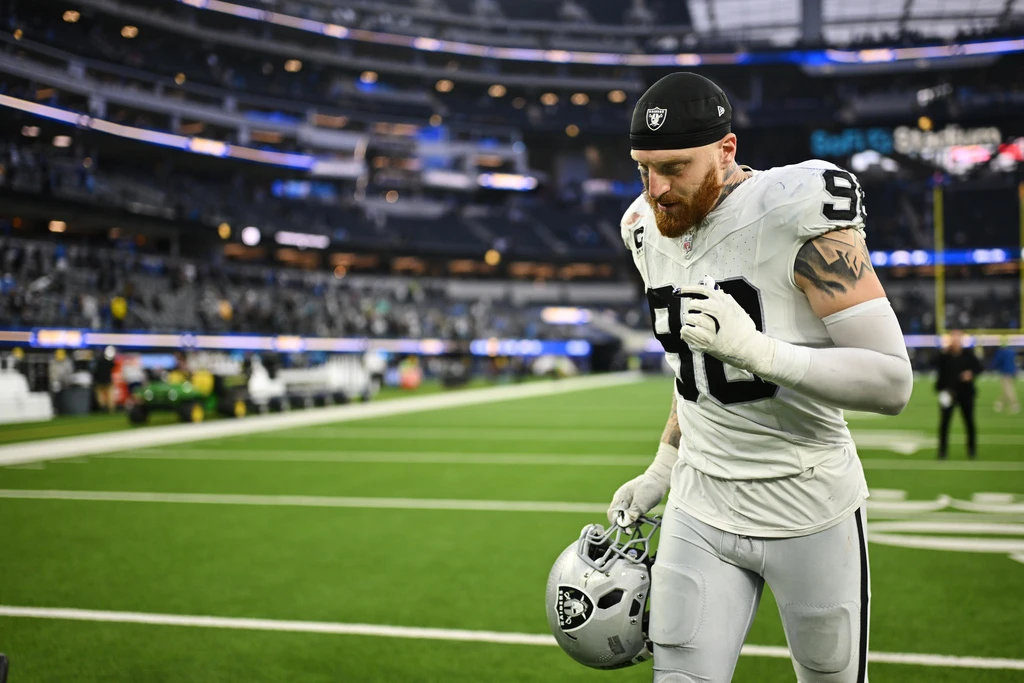
The breaking point arrived late in the 2025 season. The Raiders shut Crosby down during the final stretch of the year — a decision that, from a pure asset-management standpoint, carries some surface-level logic. Protecting a 27-year-old edge rusher from unnecessary wear in a lost season is defensible on paper, particularly for a franchise that was already looking ahead to the offseason.
Crosby didn’t read it that way. Being sidelined without substantive dialogue — without any real acknowledgment of what he had invested in the franchise over six seasons — landed as a dismissal. It signaled, in his interpretation, that the organization viewed him as a depreciating asset to be managed rather than a cornerstone to be respected. That perception, once formed, is extraordinarily difficult to reverse regardless of what comes after.
The breakdown exposed a communication failure that runs deeper than one roster decision. Leadership believed they were making a pragmatic, forward-looking call; Crosby experienced it as a statement about his standing within the organization. Both things can be true simultaneously, and that’s precisely what makes these situations so difficult to repair once the damage is done.
What Comes Next: The Trade Attempt and a Franchise at a Crossroads
No contract restructure was going to close that gap. The damage wasn’t financial — it was relational. Crosby is under contract through the 2027 season on a deal that pays him among the top edge rushers in the league. When a player of his competitive makeup concludes that the organization no longer sees him as central to its identity, money becomes largely irrelevant to the conversation.
By the time the 2025 season ended, Crosby had reached a conclusion: Las Vegas was no longer the right environment for the final, highest-stakes chapter of his career. He wanted to compete for a Super Bowl, and he wanted to do it somewhere that valued his input as much as his production — a franchise that would treat him as a partner rather than a commodity.
Crosby’s potential departure forced the Raiders to confront uncomfortable truths — not just about this specific situation, but about a broader organizational culture that has consistently struggled to retain and develop elite talent since the move to Las Vegas. The franchise has had just one playoff appearance in the past five seasons, and the inability to build a winning environment around one of the league’s best defensive players raises serious questions about the direction of the organization going forward.
On March 7, 2026, the Raiders and Baltimore Ravens reached a trade agreement that would send Crosby to Baltimore in exchange for the Ravens’ first-round picks in both 2026 and 2027 — a significant return that reflected his standing as one of the premier pass rushers available on the trade market. Two first-round picks for a player entering his prime is the kind of haul that signals genuine league-wide demand.
Three days later, the deal collapsed. Baltimore withdrew after Crosby failed his physical, a development that left both franchises recalibrating their offseason plans. The Ravens subsequently pivoted to Trey Hendrickson to address their pass-rush needs, while the Raiders were left holding a situation that had grown considerably more complicated — a disgruntled star, a failed trade, and no clear resolution in sight.
For Las Vegas, the failed trade compounded an already difficult offseason narrative. Players around the league watch closely how franchises handle their best players — and the Crosby situation, from the late-season shutdown to the collapsed Baltimore deal, will factor into how future free agents and trade targets evaluate the Raiders as a destination. Reputation in the player market is built slowly and damaged quickly.