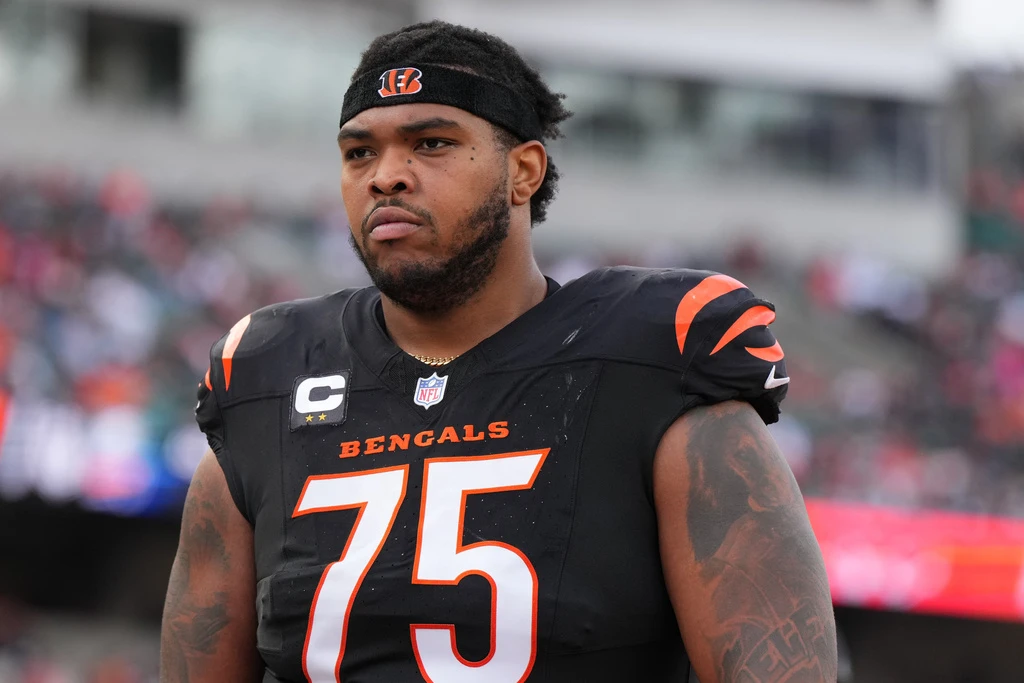
The Cincinnati Bengals made a calculated move to protect their franchise quarterback, agreeing to a two-year contract extension with left tackle Orlando Brown Jr. that keeps one of the NFL’s most important offensive linemen anchored in Cincinnati through the 2027 season.
For a team built around Joe Burrow’s ability to operate from a clean pocket, the timing of this deal matters as much as the contract itself. Brown arrived in Cincinnati as a free agent signing and quickly established himself as the anchor of an offensive line that had been a persistent vulnerability for the Bengals — a unit that famously allowed Burrow to absorb punishment at a rate that threatened his long-term availability. Locking Brown in on an extension signals that the front office understands what it took years and one Super Bowl run to learn: you cannot build a championship offense without protecting your quarterback.
This article breaks down the contract details, what Brown brings to the Bengals’ offensive scheme, how this move fits into Cincinnati’s broader roster-building strategy, and what it means for Burrow’s prospects heading into the 2026 season and beyond.
- The Bengals extended Orlando Brown Jr. on a two-year deal, securing their starting left tackle through the 2027 season.
- Brown is one of the most experienced left tackles in the NFL, with multiple Pro Bowl selections and a track record of protecting elite quarterbacks.
- The extension addresses one of Cincinnati’s most critical roster needs — offensive line stability — after years of inconsistency up front.
- Joe Burrow’s health and performance are directly tied to his protection, making this deal one of the most consequential the Bengals have made in the Burrow era.
- The move fits a broader pattern of Cincinnati investing in its offensive infrastructure, including extensions for skill position players like Ja’Marr Chase and Tee Higgins.
- Brown’s age and durability profile make a two-year window a reasonable commitment that gives the Bengals flexibility without overextending.
Orlando Brown Jr.’s Track Record: What Cincinnati Is Paying For
A Pedigree Built Across Multiple Franchises
Orlando Brown Jr. is not a project or a reclamation story — he is a proven commodity at one of the most demanding positions in professional football.
Brown was selected in the third round of the 2018 NFL Draft by the Baltimore Ravens, where he developed under one of the league’s most demanding offensive line coaching staffs.
He earned Pro Bowl recognition and eventually forced a trade to the Kansas City Chiefs, where he protected Patrick Mahomes during back-to-back Super Bowl runs — a credential that carries significant weight when evaluating a left tackle’s ability to perform under pressure.
After his time in Kansas City, Brown signed with the Bengals, bringing championship-level experience to a franchise that had been searching for a reliable answer at left tackle for years.
His résumé includes protecting two of the most accomplished quarterbacks of the modern era — Mahomes and Lamar Jackson — which tells you everything about the level of trust offensive coordinators place in him.
Physical Profile and Playing Style
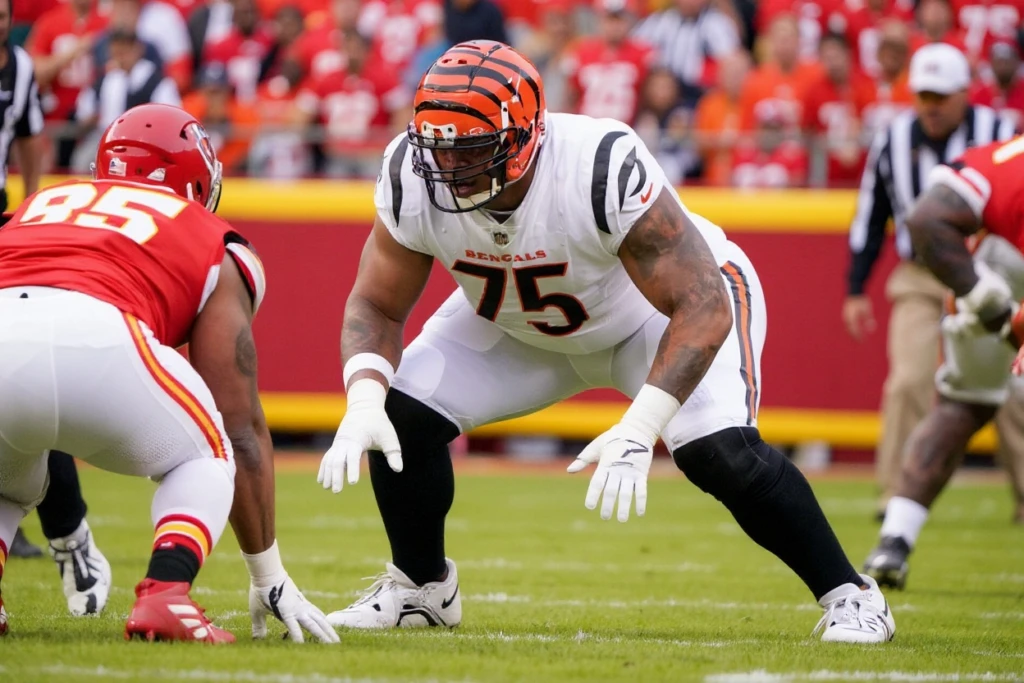
At 6 feet 8 inches and over 340 pounds — the size Pro Football Reference lists on his player profile — Brown possesses the size and length that NFL pass rushers find genuinely difficult to navigate around.
His game is built on anchor strength and positional discipline rather than elite athleticism, which makes him a more durable and consistent performer than tackles who rely on quickness to compensate for technique deficiencies.
In pass protection — the metric that matters most when evaluating a left tackle protecting a right-handed quarterback’s blind side — Brown has consistently graded among the better performers at his position when healthy.
His run-blocking has been a secondary strength, contributing to the Bengals’ ability to establish a ground game that keeps defenses from teeing off exclusively on Burrow’s passing attack.
Why This Extension Is About More Than One Player
The Burrow Protection Imperative
Joe Burrow’s injury history is not a footnote — it is the central organizing concern of the Cincinnati Bengals’ front office.
Burrow tore his ACL in 2020 and suffered a calf injury that cost him significant time in 2023, both of which ESPN has documented, and has dealt with various other ailments that have periodically disrupted what should be one of the most dominant quarterback careers in the league.
The common thread running through Burrow’s injury concerns is the physical toll of playing behind an inconsistent offensive line.
When the Bengals went to Super Bowl LVI following the 2021 season, Burrow was sacked seven times in a loss to the Rams — a performance that exposed just how vulnerable Cincinnati’s protection could be on the biggest stage.
Investing in Brown’s extension is, at its core, an investment in Burrow’s availability and longevity.
A quarterback of Burrow’s caliber — one who has already demonstrated the ability to carry a franchise to a Super Bowl — is worth protecting at virtually any cost on the offensive line.
The Broader Offensive Line Investment
The Brown extension does not exist in isolation.
The Bengals have been systematically addressing their offensive line over the past several years, recognizing that the talent at skill positions — Burrow, Ja’Marr Chase, Tee Higgins — is only as valuable as the protection those players receive.
Cincinnati’s front office has shown a willingness to spend at premium positions, as evidenced by the massive extensions handed to Ja’Marr Chase and Tee Higgins, and the addition of defensive interior talent like Dexter Lawrence to the defensive line.
Locking up Brown continues that pattern of building a complete roster rather than concentrating resources exclusively at the glamour positions.
Contract Structure and Financial Context
What a Two-Year Deal Means for Both Sides
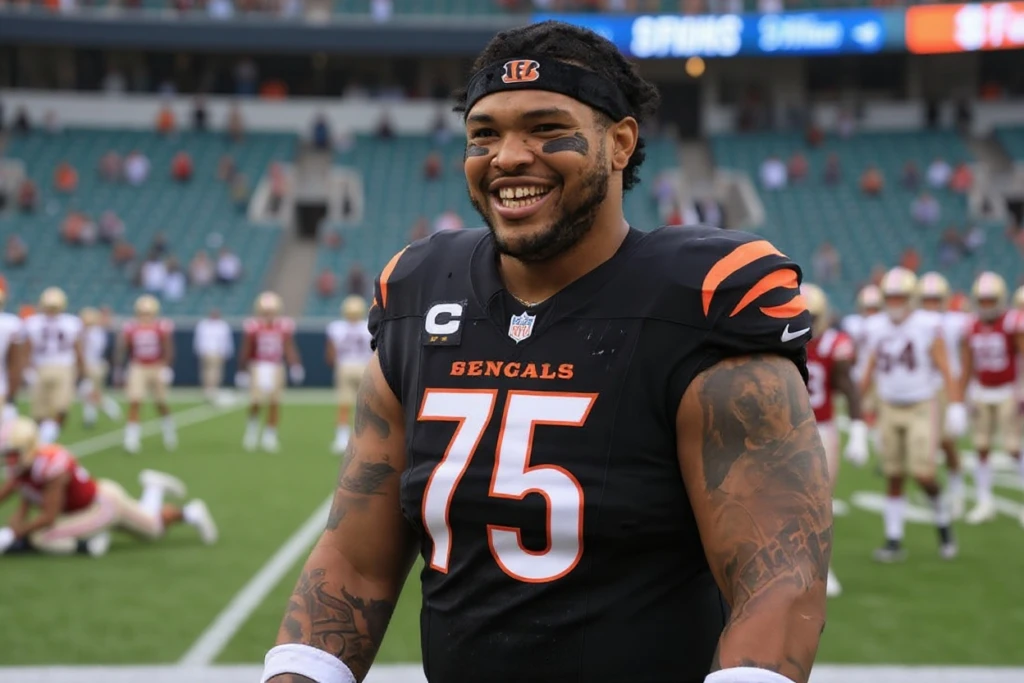
The two-year structure of Brown’s extension is notable for what it communicates about both the player and the franchise.
For the Bengals, a two-year commitment rather than a longer deal reflects the reality of Brown’s age — he is in his late 20s, which for an offensive lineman represents the back half of a prime window rather than the beginning of one.
A shorter extension gives Cincinnati the flexibility to reassess the position in two years without being locked into a long-term obligation that could hamper cap flexibility as Burrow’s own contract demands grow.
For Brown, a two-year deal provides security while leaving open the possibility of another contract — either an extension with Cincinnati or a free agent opportunity — before he reaches the age at which offensive linemen typically begin to decline.
The financial terms reflect the market rate for a proven, experienced left tackle with Brown’s credentials.
Left tackle remains one of the most expensive positions to fill in free agency, and teams that allow quality starters to walk typically spend more replacing them than they would have spent retaining them.
The Bengals appear to have recognized that calculus and acted accordingly.
Cap Implications for Cincinnati’s Roster
The NFL salary cap creates a zero-sum environment where every dollar committed to one player is a dollar unavailable for another.
The Bengals are operating in a cap environment shaped by significant commitments to Burrow, Chase, and Higgins — three players who collectively represent the core of the franchise’s offensive identity.
Adding Brown’s extension to that financial picture requires careful management, but the alternative — allowing Brown to play out his deal and potentially leave in free agency — would force Cincinnati to either overpay a replacement or accept a downgrade at the most important position on the offensive line.
The front office’s decision to extend Brown now, rather than waiting until the final year of his deal, suggests confidence in their cap management and a preference for certainty over the risk of a bidding war.
Reading the Bengals’ Offensive Line Depth Chart
How Brown Fits the Current Roster Construction
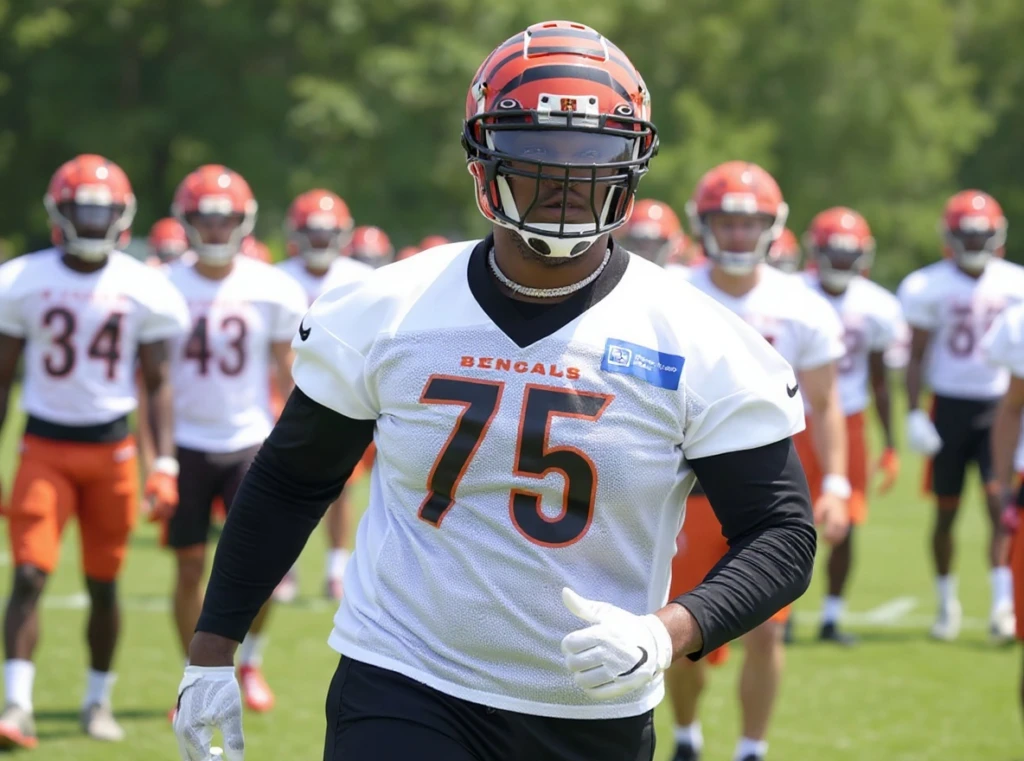
With Brown locked in at left tackle, the Bengals can direct their attention and resources to other areas of the offensive line that may require upgrades.
The interior of the line — center and the two guard spots — has been an area of ongoing evaluation for Cincinnati, and the certainty provided by Brown’s extension allows the coaching staff to build around a known quantity on the blindside.
Right tackle is another position that will require monitoring, as the balance of the line depends on having competent protection on both edges.
Brown’s presence at left tackle does not solve every problem on the offensive line, but it eliminates the most critical uncertainty and gives the Bengals a foundation to build from.
Scheme Fit Under Cincinnati’s Offensive System
The Bengals’ offensive system under coordinator Brian Callahan’s successor places a premium on Burrow’s ability to operate from the pocket with time to work through his progressions.
Burrow is not a scrambler who can consistently escape pressure — his value comes from his processing speed, accuracy, and ability to deliver the ball on time to receivers running precise routes.
That style of play demands a left tackle who can win one-on-one matchups against elite edge rushers without requiring help from a tight end or running back.
Brown’s size and technique make him well-suited to that assignment, and his experience protecting Mahomes — another quarterback who operates primarily from the pocket — demonstrates his ability to handle that responsibility at the highest level.
Putting the Brown Extension in Historical Context
Left Tackle Stability and Quarterback Success
The relationship between left tackle stability and quarterback performance is one of the most well-documented patterns in NFL history.
Quarterbacks who play behind consistent, high-quality left tackle protection tend to post better statistics, suffer fewer injuries, and sustain their performance over longer careers than those who cycle through multiple starters at the position.
The examples are numerous: Joe Thomas protected Baker Mayfield’s predecessors in Cleveland for years, and the contrast between Thomas’s tenure and the chaos that followed his retirement illustrated exactly what a franchise loses when it cannot find a reliable answer at the position.
On the positive side, Trent Williams’s arrival in San Francisco transformed Brock Purdy from an undrafted afterthought into a legitimate MVP candidate — a transformation that speaks directly to how much the position matters.
The Bengals are betting that Brown can provide that kind of stabilizing influence for Burrow, and the historical evidence suggests that bet is well-founded.
Comparing Brown to Other Recent Left Tackle Extensions
| Player | Team | Contract Length | Pro Bowl Selections | Notable QBs Protected |
|---|---|---|---|---|
| Orlando Brown Jr. | Cincinnati Bengals | 2-year extension | Multiple | Mahomes, Jackson, Burrow |
| Trent Williams | San Francisco 49ers | 6-year, $138.06M per Spotrac | 11 | Purdy, Garoppolo |
| Laremy Tunsil | Washington Commanders | Multi-year | 3 | Daniels, Watson |
| Dion Dawkins | Buffalo Bills | Multi-year | 1 | Allen |
Brown’s extension places him in the company of tackles who have earned long-term commitments from franchises built around elite quarterbacks — a peer group that validates both his ability and the Bengals’ judgment in retaining him.
What This Means for the Bengals’ 2026 Season Outlook
Stability Up Front Translates to Offensive Efficiency
Offensive line continuity is one of the most underrated factors in NFL team performance.
Units that keep the same five starters together over multiple seasons develop chemistry, communication, and shared technique that cannot be replicated by assembling a group of talented individuals who have never played together.
The Bengals’ ability to retain Brown gives them a known quantity at the most important position on the line and allows the rest of the unit to build around that anchor.
For Burrow, who has spoken publicly about the importance of feeling comfortable and protected in the pocket, that continuity is not a minor detail — it is a prerequisite for the kind of performance that makes Cincinnati a legitimate Super Bowl contender.
The Competitive Landscape in the AFC
The AFC remains one of the most competitive conferences in professional football, with multiple teams capable of making deep playoff runs in any given season.
The Bengals’ ability to compete with the top teams in the conference depends on Burrow being healthy and operating at his best — and Burrow operating at his best depends on the offensive line giving him time to work.
In a conference that includes teams with elite pass rushers and sophisticated defensive schemes, the margin between winning and losing often comes down to whether a quarterback’s protection holds up in critical moments.
Brown’s extension is Cincinnati’s answer to that challenge.
How to Evaluate This Deal as a Bengals Fan or Fantasy Manager
If you follow the Bengals closely, the Brown extension is a signal worth paying attention to for several reasons beyond the immediate roster impact.
First, it tells you that the front office is operating with a clear-eyed understanding of what the team needs to compete — not just at the skill positions, but in the trenches where games are actually won and lost.
Second, it suggests confidence in Burrow’s health and long-term availability, which is the foundational assumption on which the entire Cincinnati roster is built.
Third, for fantasy football purposes, a healthy Burrow operating behind stable protection is one of the most reliable assets in the game — and Brown’s extension makes that scenario more likely heading into 2026.
For those tracking the development of younger Bengals offensive linemen, Brown’s presence also provides a veteran mentor whose experience protecting elite quarterbacks at the highest level is invaluable for players still developing their craft.
The practical takeaway is straightforward: when a team with Super Bowl aspirations locks up a proven left tackle on a multi-year extension, it is a positive signal for every offensive player on that roster.
The Verdict on Cincinnati’s Offensive Line Commitment
The Orlando Brown Jr. extension is not a flashy move — it will not generate the kind of headlines that a blockbuster trade or a record-setting free agent signing produces.
But in terms of its actual impact on the Bengals’ ability to compete for a championship, it may be one of the most important transactions the franchise makes this offseason.
The NFL has a long history of teams that assembled elite skill position talent and then watched it go to waste because they could not protect their quarterback.
Cincinnati came dangerously close to that fate in the years before they committed to building a legitimate offensive line, and the scars of that period — including Burrow’s injury history — are a constant reminder of what happens when the trenches are neglected.
The two-year structure is sensible given Brown’s age and the Bengals’ cap situation, and it gives both sides a reasonable path forward without overcommitting in either direction.
The more interesting question is what happens at the end of those two years — whether Brown earns another extension, whether a younger tackle has developed enough to take over, or whether the Bengals need to go back to the market.
For now, though, the front office has made the right call, and Joe Burrow has one fewer thing to worry about heading into what should be one of the most important seasons of his career.
What Comes Next for the Bengals’ Roster Build
The Brown extension is one piece of a larger puzzle that the Bengals are still assembling.
With the offensive line anchor secured, Cincinnati’s attention will likely turn to the defensive side of the ball, where the addition of Dexter Lawrence signals an intent to build a more disruptive front seven capable of generating pressure without relying exclusively on coverage to create turnovers.
The next development to watch is how the Bengals address the interior of their offensive line — the guard and center positions that will determine whether Brown’s presence at left tackle translates into genuine pocket stability or whether Burrow continues to face pressure from the inside.
If Cincinnati can build a complete, cohesive offensive line around Brown over the next two seasons, the Bengals will enter the 2026 and 2027 campaigns as legitimate Super Bowl contenders — and this extension will be remembered as the foundational move that made it possible.