
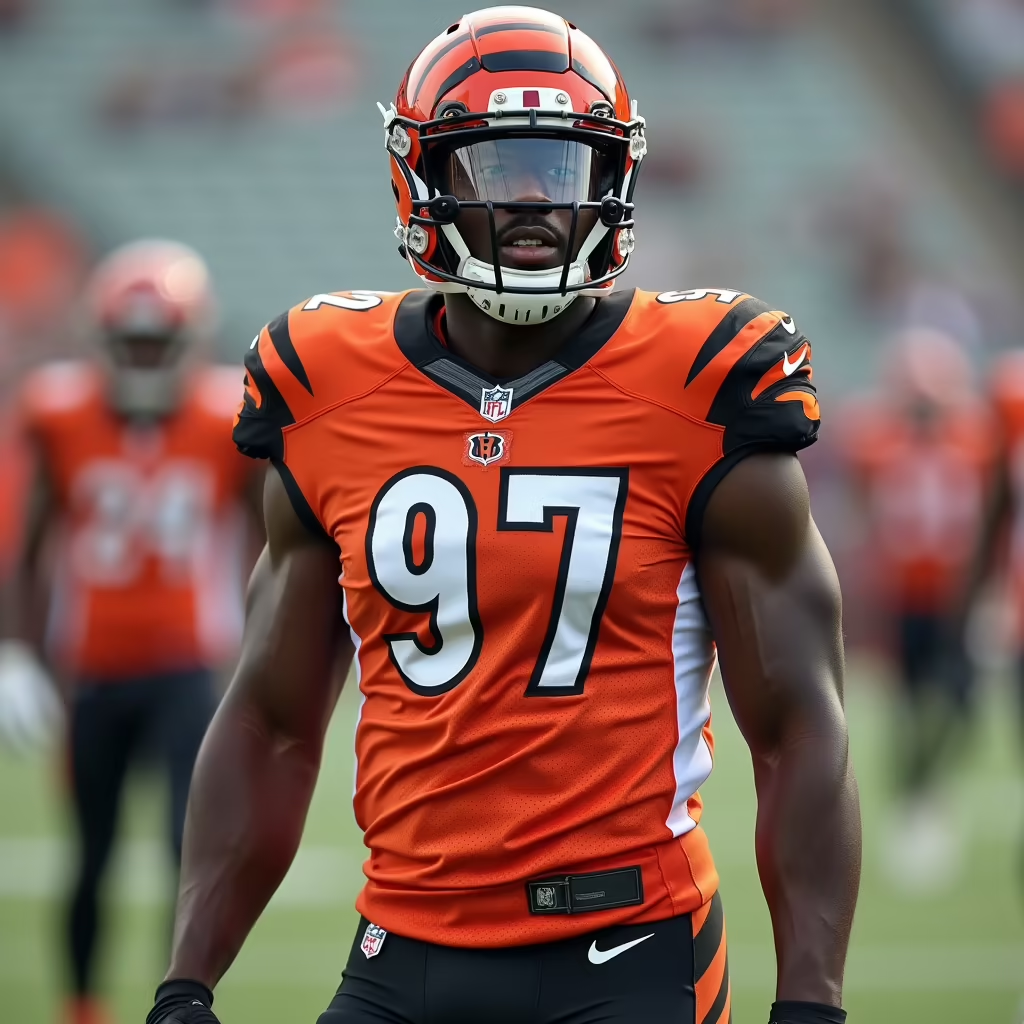
In the high-stakes world of professional football, rookie contracts have become a battleground where players and teams clash over the finer details of compensation.
This year, Shemar Stewart, the 17th overall pick in the 2025 NFL draft, found himself at the center of a standoff with the Cincinnati Bengals.


Shemar Stewart, the 17th overall pick in the 2025 NFL Draft, made headlines before he ever set foot on a practice field — by refusing to attend the Cincinnati Bengals’ rookie minicamp until his contract was finalized. The standoff spotlighted a growing tension in the NFL’s rookie contract landscape, where the fine print on bonus structures can delay a player’s entry into the league by days or even weeks.
Unveiling the Rookie Contract Dilemma
Want to know what people are really saying? Don’t miss the buzz from Reddit at the end!
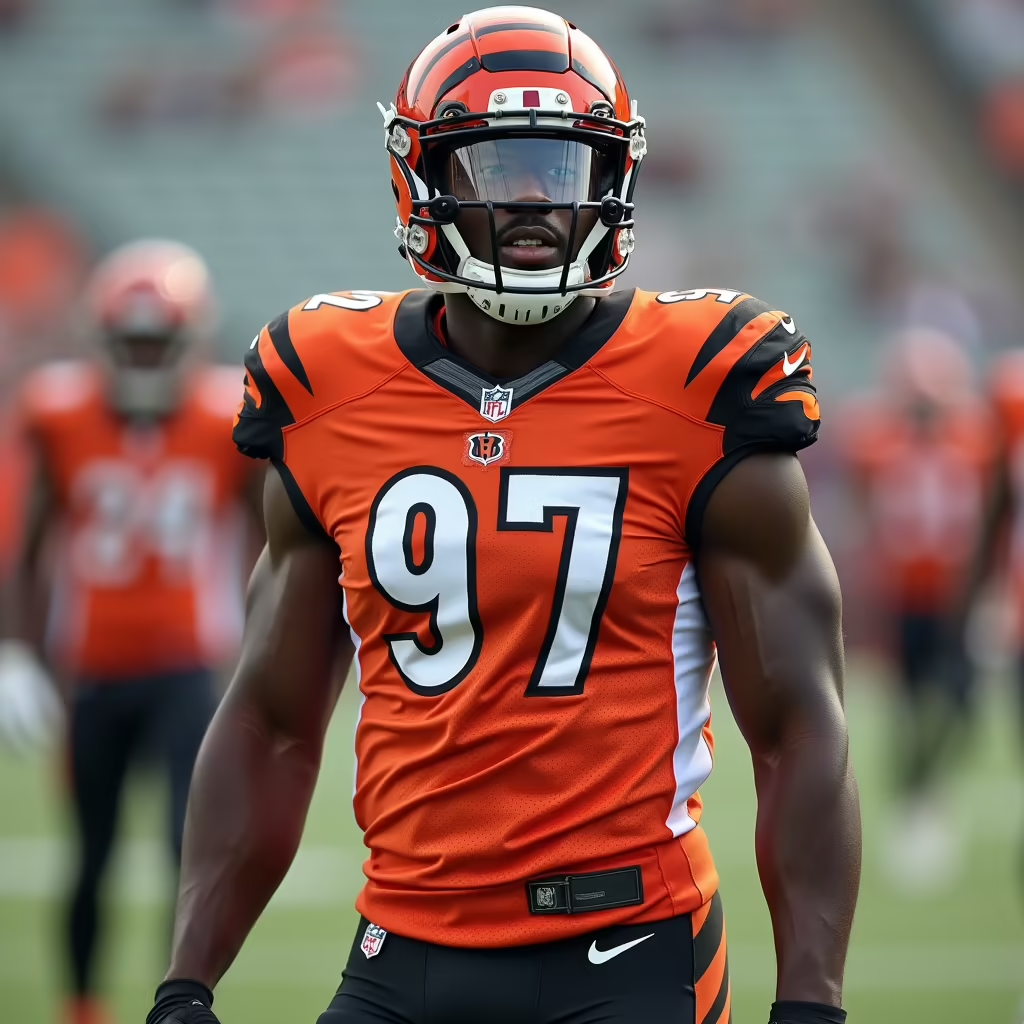
Shifting the Injury Risk: A Player’s Prerogative
At the core of the dispute was the training camp roster bonus — specifically, the percentage of Stewart’s total compensation the Bengals were willing to guarantee through that mechanism in future contract years. The Bengals’ initial offer reportedly fell below the benchmark established by the 17th overall pick in the 2024 NFL Draft. Under the NFL’s Collective Bargaining Agreement, rookie contracts for first-round picks are slotted, meaning the total value is largely predetermined. But the structure of how that money is paid — and when — remains a legitimate negotiating point, and that’s exactly where Cincinnati and Stewart’s camp hit a wall.
The Training Camp Bonus Battleground
Stewart’s decision to skip minicamp without a signed deal was calculated, not reckless.
First-round picks carry fully guaranteed four-year contracts, but that guarantee only kicks in once ink hits paper. Until then, a player who suffers an injury during team activities has no contractual protection — the financial exposure falls entirely on him.
By holding out, Stewart ensured that if he was going to perform under the Bengals’ coaching staff, on the Bengals’ practice field, the Bengals would be the ones absorbing the injury risk. That’s not a power play — that’s basic financial self-preservation.

A Unified Front: Setting a Precedent for Future Rookies
The training camp roster bonus has quietly become one of the most contested line items in first-round rookie negotiations. It functions as an early-season payout trigger, ensuring players receive a meaningful portion of their compensation before the bulk of the season’s physical toll sets in. For a defensive lineman like Stewart — selected out of Texas A&M for his elite athleticism and pass-rush upside — the stakes are especially high. Big men along the defensive front absorb punishment from day one of training camp, making early financial security not just a preference but a practical necessity. Stewart’s refusal to practice without that structure in place sent a clear signal: he understood his leverage and was willing to use it.
Stewart’s profile entering the league made the holdout even more notable. The 6-foot-5, 265-pound edge rusher was one of the most physically gifted prospects in the 2025 class, drawing comparisons to early-career pass rushers who needed refinement but possessed the raw tools to develop into impact starters.
Cincinnati selected him with the expectation that he would contribute to a defensive front that ranked among the league’s weaker units in recent seasons.
Delaying his integration into the system — even by a week — carried real developmental costs, which made the Bengals’ reluctance to simply match the 2024 slot standard all the more puzzling from a football operations standpoint.
The resolution, when it came, was expected to follow the same path as most of these disputes: the team meets the player at the established benchmark, both sides move on, and the holdout becomes a footnote.
But the episode reinforced a lesson the NFL revisits every spring — teams that try to shave fractions off bonus percentages for top picks rarely win the negotiation, and they always pay a cost in goodwill and preparation time. For Stewart, the message to Cincinnati and the rest of the league was delivered clearly before he ever ran a single drill.

Internet Reactions to the Rookie Contract Standoff
Stewart’s holdout fits into a broader trend of first-round picks pushing back on teams that attempt to deviate from established bonus structures. In recent draft cycles, the window between draft day and minicamp has compressed, and more agents are pushing to get deals done before their clients ever step onto a practice field. The precedent matters — when a top-20 pick successfully holds the line on bonus percentages, it raises the floor for every first-round pick who follows. The fix for Cincinnati was straightforward: match the training camp roster bonus percentage paid to the 17th overall selection in 2024, and the deal closes. Anything less invites a longer standoff and unnecessary friction heading into a critical development period for a young player.
Reaction across the NFL fandom reflects a solid understanding of the underlying contract mechanics. Most commenters recognized that the dispute wasn’t about Stewart being difficult — it was about the Bengals offering a structure that fell below the established slot standard for his draft position. The training camp roster bonus percentage emerged as the central talking point, with many users noting that Cincinnati’s reputation for slow-playing rookie deals added context to the holdout.
Several fans pointed to the broader principle at stake: no player should be expected to absorb physical risk on behalf of a franchise that hasn’t yet committed to him on paper. Stewart’s willingness to sit out minicamp resonated with fans who have watched other rookies sign quickly and then suffer injuries before their deals were fully structured. The sentiment was clear — holding out until the contract is right is not just acceptable, it’s smart.
The broader community reaction pointed to a pattern with the Bengals’ front office — a franchise that has historically drawn criticism for its approach to player compensation, from veteran extensions to rookie slotting. While some comments leaned into dark humor about Cincinnati’s organizational tendencies, the underlying consensus was serious: Stewart’s position was justified, his ask was reasonable, and the Bengals were the ones creating an unnecessary delay by offering terms below the market standard for his draft slot.