Two teams can have identical records and still be heading toward January with completely different problems.
That is becoming increasingly apparent in the 2026 NFL season, where several of the league’s strongest teams have reached the second half of the schedule with impressive win totals but very different paths to success.
The Buffalo Bills and San Francisco 49ers lead their respective conferences at 8-1. Behind them, teams including the Kansas City Chiefs, Jacksonville Jaguars, Detroit Lions, Chicago Bears, Denver Broncos, Cincinnati Bengals and Minnesota Vikings are clustered at 7-2.
Yet these records tell only part of the story.
Some contenders have built their success around consistent offensive production. Others depend more heavily on defense, opportunistic playmaking or winning close games. Several have already made significant roster changes, while others are discovering how quickly an injury can alter their championship outlook.
The critical question is no longer simply which team has the best record.
It is which teams can continue winning when the conditions that produced those records begin to change.
Why Identical NFL Records Can Hide Very Different Teams
Consider Jacksonville and Denver.
Both teams entered the second half of November with 7-2 records, yet their overall performances reveal a striking contrast.
According to the official NFL standings, the Jaguars have scored 269 points while allowing 144, producing an impressive plus-125 point differential.
Denver has scored 198 points and surrendered 186, leaving the Broncos with a plus-12 differential.
That is a 113-point gap between teams with identical win-loss records.
Point differential is not a perfect measure of championship potential. Opponent quality, injuries and the circumstances of individual games all affect the final numbers. Nevertheless, the comparison illustrates why a team’s record should be the starting point for analysis rather than the conclusion.
Jacksonville has generally created considerably more separation on the scoreboard. Denver has achieved the same number of victories with far less room between its points scored and points allowed.
For the Broncos, the question is how reliably they can create that margin against increasingly difficult competition.
A team accustomed to close games may develop valuable experience executing under pressure. The drawback is that turnovers, missed kicks or a single defensive breakdown can have a greater influence when scoring margins are consistently narrow.
Jacksonville faces a different challenge.
Its impressive scoring margin suggests that the Jaguars have established a strong foundation through the first nine games. The next test is whether that performance holds against playoff-caliber opposition capable of forcing them away from their preferred approach.
The Jaguars have presented the stronger overall scoring profile to this point, but Denver’s record should not be dismissed. The next several games will help establish whether the Broncos’ close-game success is sustainable or whether they need more consistent separation from opponents.
Kansas City Offers an Important Lesson About Winning Without Your Best Players
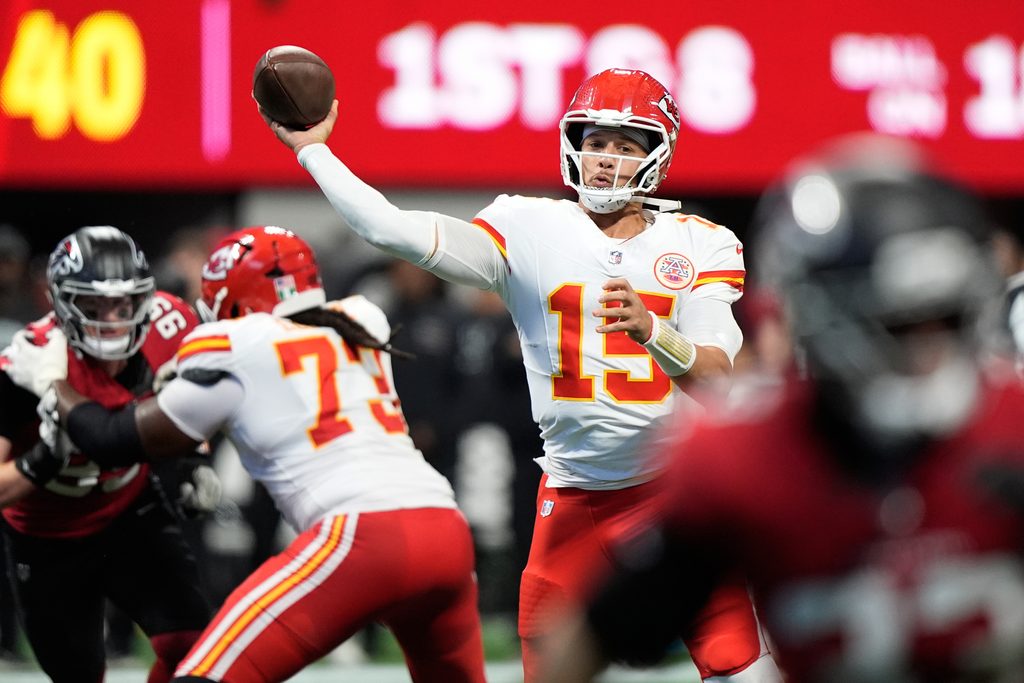
The Chiefs’ 35-13 victory over Atlanta on November 15 provided an example of how championship hopefuls can respond when their usual offensive approach is disrupted.
With running back Kenneth Walker III unavailable because of a groin injury, Kansas City turned to Emmett Johnson.
Johnson responded with 101 rushing yards on 22 carries, adding six receptions for 70 yards and two touchdowns.
As detailed in the NFL’s Week 10 recap, his contribution helped Kansas City overcome an inconsistent first half before pulling away after halftime.
The performance matters beyond one running back’s production.
It demonstrated that Kansas City’s offensive staff could create a productive game plan without relying exclusively on its usual leading back.
That flexibility could become increasingly important during the postseason.
Opposing defenses spend considerable time preparing for the tendencies of elite quarterbacks and their most dangerous weapons. When those options are limited, an offense needs alternative ways to move the football.
Kansas City also acquired wide receiver Josh Downs from Indianapolis at the November 10 trade deadline. Downs contributed a touchdown against Atlanta, offering another indication of how the Chiefs are attempting to diversify their offense.
The NFL trade tracker confirms the transaction.
Our assessment is that Kansas City’s offensive ceiling matters less than its ability to maintain a productive baseline when its best players or preferred matchups are unavailable.
Patrick Mahomes provides the Chiefs with considerable offensive possibilities. The more interesting development is whether Kansas City can consistently manufacture production from its supporting cast.
That could become one of the most important advantages of the team’s postseason preparation.
San Francisco’s 46-40 Victory Revealed Two Sides of a Championship Contender
San Francisco’s latest victory was both an offensive showcase and a reminder that impressive wins can contain concerns worth investigating.
The 49ers defeated Dallas 46-40 on November 15, improving to 8-1.
Their offense generated 584 yards, with Brock Purdy and Christian McCaffrey delivering several of the game’s defining plays.
McCaffrey finished with 223 yards from scrimmage and three touchdowns, including two receiving scores of more than 65 yards.
Keenan Allen also contributed five receptions for 61 yards following his arrival from Indianapolis, while Deebo Samuel returned to the lineup.
Those performances underline the considerable offensive flexibility available to San Francisco.
However, the 49ers also allowed 40 points.
A single high-scoring game does not establish a persistent defensive weakness. Still, it raises an important question about how comfortably San Francisco can manage games when opponents are capable of matching its offensive production.
The NFL’s game analysis provides additional context on the offensive performances against Dallas.
San Francisco also strengthened its defensive front by reacquiring DeForest Buckner before the deadline.
Rather than interpreting those moves as proof that the 49ers have solved their personnel problems, the more useful approach is to consider how those additions change their options.
Buckner offers another experienced presence along the defensive line. Allen gives Purdy another receiving target. Samuel’s return provides additional flexibility in how San Francisco distributes the football.
San Francisco possesses one of the league’s most convincing offensive ceilings, but its championship prospects should be judged by whether the defense can complement that production against elite opponents.
The difference between winning a high-scoring regular-season game and controlling a postseason contest can be considerable.
Detroit Faces a Different Challenge After Aidan Hutchinson’s Injury
Few developments demonstrate the unpredictable nature of a championship pursuit more clearly than Detroit’s latest injury news.
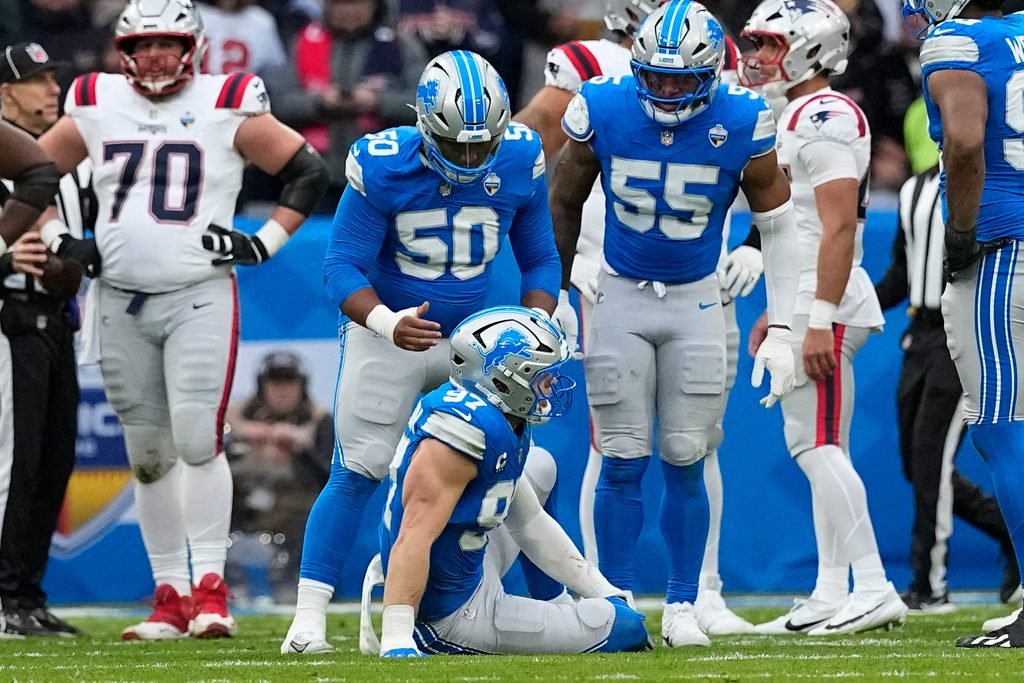
The Lions improved to 7-2 with a 35-10 victory over New England in Munich on November 15.
However, defensive end Aidan Hutchinson suffered a serious knee injury during the game.
On November 16, NFL.com reported that Hutchinson had suffered a torn ACL and would miss the remainder of the season.
The loss is significant because Hutchinson had been a major source of pressure on opposing quarterbacks.
According to the NFL’s reporting, he had recorded 50 pressures through Week 10, placing him second in the league by Next Gen Stats’ measure.
Those contributions cannot necessarily be replaced by inserting another player into the same position.
Detroit must instead determine whether its defensive front can distribute those responsibilities across multiple players.
There was at least one encouraging sign against New England.
The Lions generated four sacks after Hutchinson left the game, demonstrating that other defenders were capable of creating pressure.
Nevertheless, one performance cannot establish that Detroit will maintain the same level of production against different offensive lines.
A successful adjustment may involve changes to defensive alignments, pressure packages and how frequently the team commits additional defenders to rushing the quarterback.
Each decision creates potential trade-offs elsewhere.
Increasing blitz frequency, for example, can generate pressure but may also leave fewer defenders available in coverage.
Our assessment is that Detroit’s most consequential challenge may now be strategic rather than a straightforward question of talent.
The Lions have proven they can win games with their existing roster. The coming weeks will reveal how effectively the coaching staff can redesign parts of the defense after losing one of its most influential players.
Buffalo’s Real Test May Begin With the Schedule Ahead
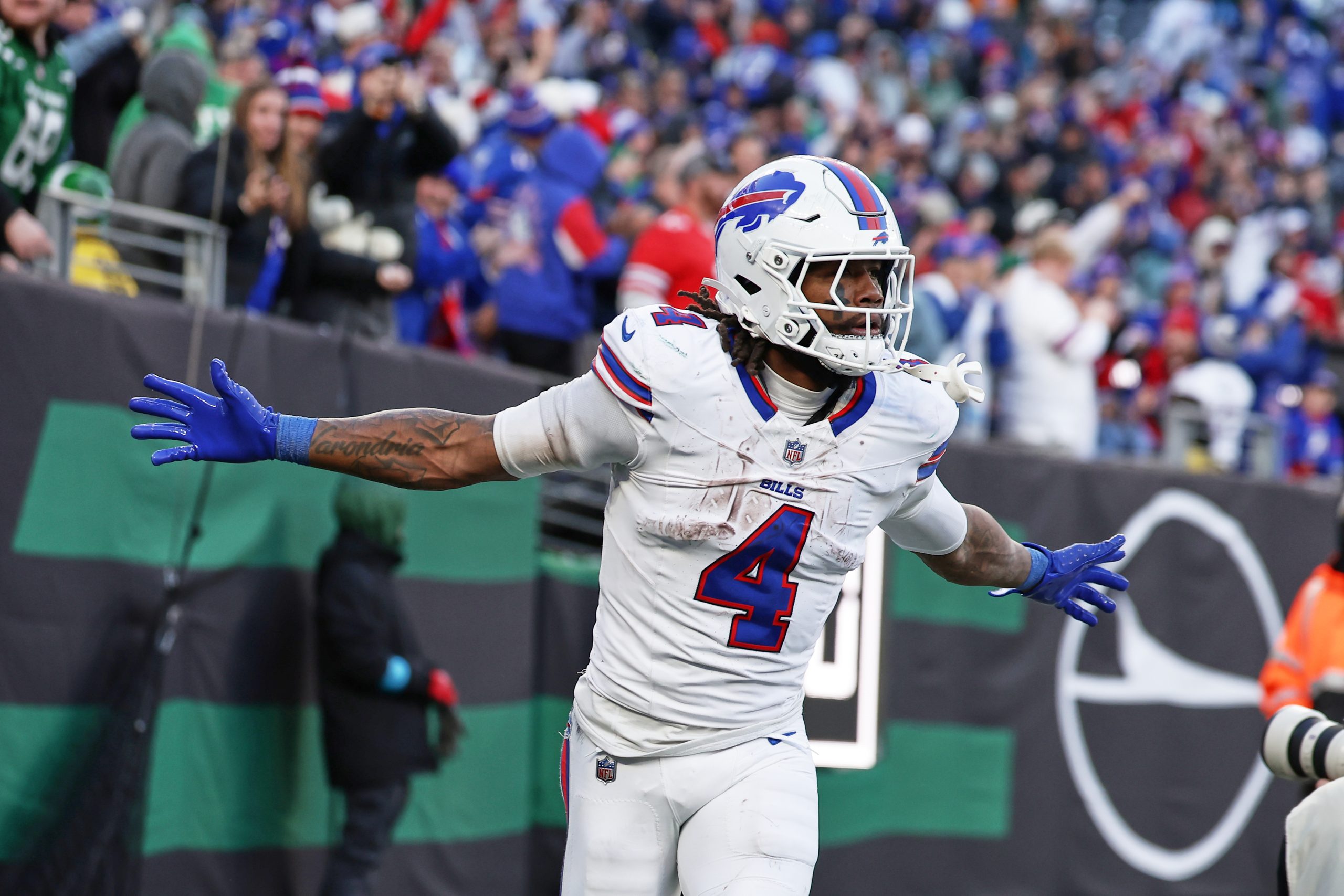
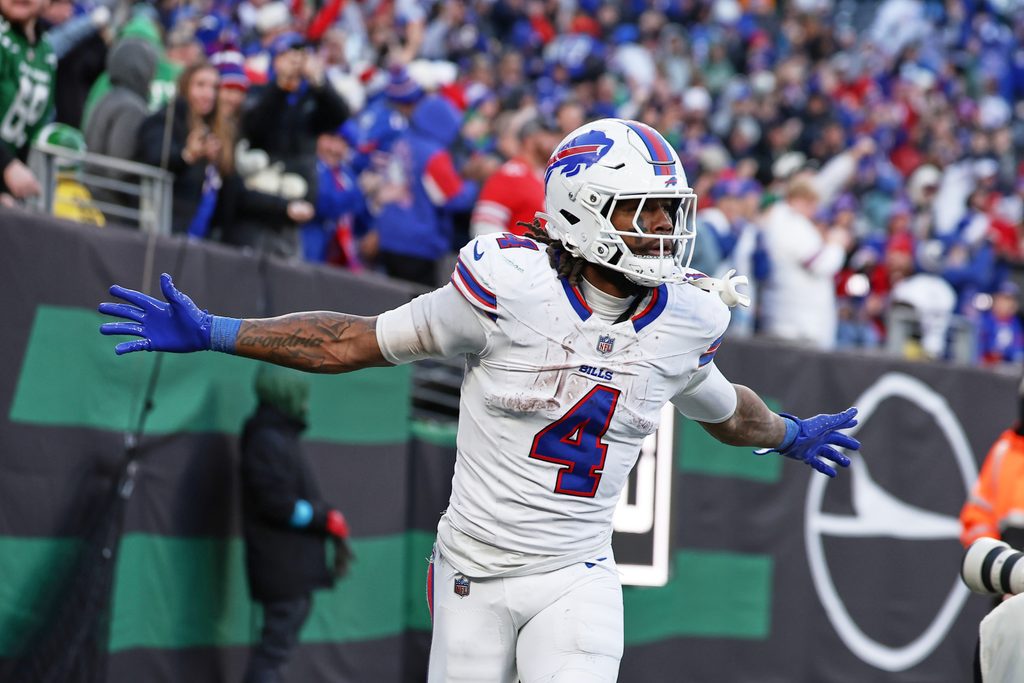
The Bills have built one of the league’s strongest records, reaching 8-1 after defeating the New York Jets 31-12.
Josh Allen contributed two rushing touchdowns, while James Cook also scored on the ground.
Buffalo’s success reflects the considerable influence of a quarterback who can threaten defenses through both passing and rushing.
However, the Bills’ upcoming schedule creates an especially useful opportunity to assess their overall postseason readiness.
According to the official Buffalo schedule, the Bills are set to face Kansas City on November 26, Green Bay on December 13, Chicago on December 19 and Denver on December 25.
That series of matchups should provide a more revealing assessment than Buffalo’s record alone.
Against Kansas City, the Bills will need to contend with an offense capable of changing its approach from one possession to another.
Green Bay and Chicago will provide additional tests within a competitive NFC North.
Denver offers a different challenge, particularly if the game is decided by a small number of possessions.
None of these matchups guarantees a specific outcome. Their value lies in the variety of opponents Buffalo must prepare for.
Buffalo’s most useful indicator will be whether its success remains consistent across different game situations.
Can the Bills protect a lead without requiring Allen to produce extraordinary plays? Can they recover when an opponent controls possession? Can their offense remain productive when explosive opportunities are limited?
Answering those questions positively would provide more meaningful evidence of championship readiness than extending a winning streak against weaker opposition.
Minnesota’s Kirk Cousins Experiment Deserves Patience
Minnesota offers one of the more intriguing situations among teams with strong records.
The Vikings reached 7-2 despite scoring just 176 points through nine games, considerably fewer than several teams with similar records.
Their defense has been a major part of their success, allowing only 126 points.
That translates to an average of approximately 19.6 points scored and 14.0 points allowed per game.
Those numbers suggest a team that has benefited enormously from limiting opposing offenses.
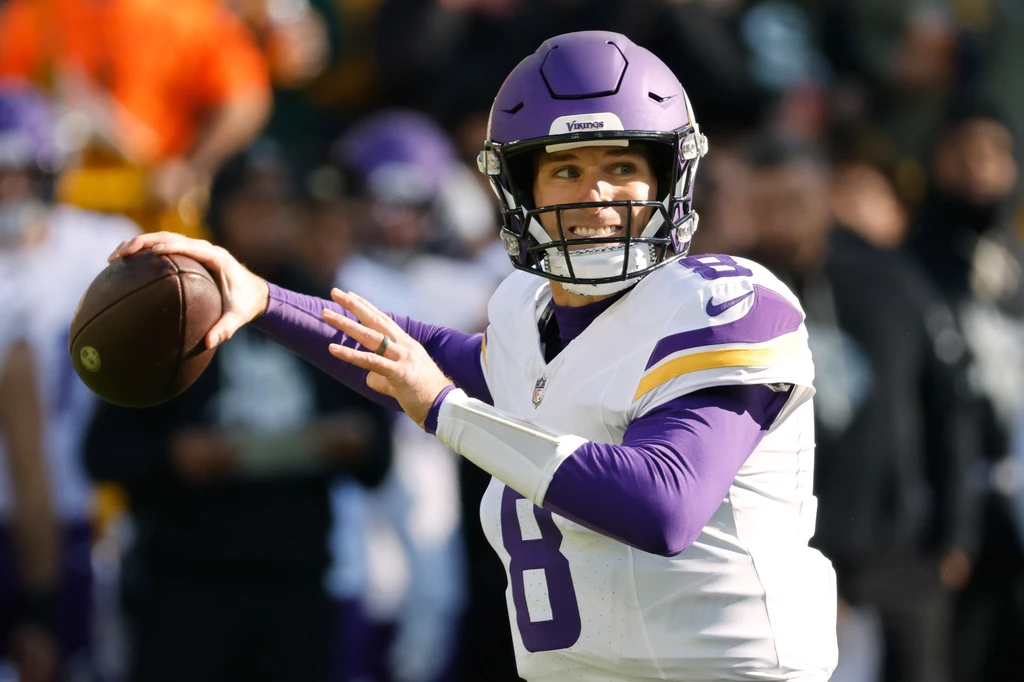
Minnesota attempted to strengthen its offense by acquiring veteran quarterback Kirk Cousins from Las Vegas on November 10.
His return produced an encouraging first result.
In the Vikings’ 30-10 victory over Green Bay, Cousins completed 21 of 31 passes for 207 yards, two touchdowns and one interception.
The performance is documented in his official NFL game log.
However, the temptation to declare Minnesota’s offensive concerns resolved after one victory should be resisted.
Cousins offers experience and familiarity with the organization, but consistency requires more than an encouraging debut.
The Vikings must establish whether their offense can sustain drives, convert difficult third downs and produce points when opponents force them into unfavorable situations.
There is also an important difference between asking an offense to complement a strong defense and asking it to carry a game when that defense struggles.
Minnesota has already demonstrated that it can win with limited scoring.
Its next challenge is showing that it can consistently produce enough offense when the circumstances demand more.
Why Seattle and Los Angeles Should Not Be Judged by Their Records Alone
Two NFC West teams with 6-4 records offer another reason to examine the standings more carefully.
Seattle has a plus-48 point differential, while the Los Angeles Rams sit at plus-61.
Both have produced larger overall scoring margins than Denver, despite having fewer victories.
That does not automatically make either team a stronger Super Bowl candidate. It does suggest that their underlying performances deserve attention.
The Rams, for example, have won four consecutive games following their 34-6 victory over Arizona.
Recent adjustments have emphasized the running game and defensive consistency, helping Los Angeles establish a clearer approach after a difficult opening stretch.
As NFL reporting on the Rams’ changing identity explains, their recent improvement has occurred despite substantial injury challenges.
The question is whether that improved approach will translate against stronger opposition.
Seattle has faced a different situation.
Quarterback Sam Darnold has missed time because of injuries, allowing backup Drew Lock to contribute during recent victories.
Lock completed 14 of 17 passes for 240 yards and two touchdowns in Seattle’s 21-13 victory over Las Vegas.
However, head coach Mike Macdonald has maintained that Darnold remains the team’s starter when healthy, according to NFL reporting published November 16.
Seattle also invested in its offensive line by acquiring Quenton Nelson, although his recovery from a knee procedure remains an important availability question. The Seahawks’ latest team update indicates that his practice timetable was still uncertain on November 16.
Our assessment is that the Rams and Seahawks illustrate a distinction between current standings and future potential.
Both teams have demonstrated an ability to compete despite disruptions. Their next challenge is turning that resilience into consistency against stronger opponents.
Neither should be dismissed solely because its record trails those of the conference leaders.
Three Questions That Could Define the NFL Playoff Race
With the trade deadline over and the regular season moving toward its final stretch, three questions stand out when evaluating the leading contenders.
1. Can a team win when its preferred strategy stops working?
An offense that depends heavily on explosive passing may encounter a defense designed to eliminate deep routes.
A team that dominates through rushing may face an opponent willing to commit additional defenders near the line of scrimmage.
The most adaptable teams will have credible alternatives.
Kansas City’s performance without Walker offers one example of that flexibility. San Francisco’s range of offensive contributors provides another.
The relevant question is not simply whether a team has multiple talented players, but whether those players give coaches genuinely different ways to attack an opponent.
2. Can the supporting cast maintain performance when a star is unavailable?
Injuries affect virtually every NFL team, but not every roster is equally equipped to absorb them.
Detroit’s situation following Hutchinson’s injury will provide an important example of how a contender responds when it loses a particularly influential player.
Seattle has already demonstrated the value of quarterback depth during Darnold’s absence.
The larger issue is whether backup performance can remain reliable over several weeks rather than for one favorable matchup.
For championship contenders, depth is more than a list of recognizable names. It is the ability to preserve enough of a team’s identity when personnel changes become unavoidable.
3. Can a contender avoid depending on perfect game conditions?
This may be the most revealing question of all.
A team that regularly needs an early lead, favorable field position or unusually high quarterback production leaves itself vulnerable when those advantages disappear.
Postseason football frequently forces teams to confront unfamiliar situations.
An offense may need to produce a scoring drive after several unsuccessful possessions. A defense may have to protect a narrow lead despite difficult field position. A coaching staff may need to abandon a successful regular-season tendency because an opponent has prepared specifically to counter it.
These situations reward flexibility, discipline and the ability to make adjustments without losing confidence.
They also provide the strongest test of whether regular-season success can translate into a championship run.
Which Contenders Appear Best Positioned?
Based on the evidence available through November 16, San Francisco and Buffalo have established convincing overall records, while Jacksonville’s scoring differential stands out among the leading teams.
Kansas City has offered recent evidence of offensive adaptability. Detroit faces a significant test following Hutchinson’s injury, and Minnesota must demonstrate that its offensive improvement can extend beyond Cousins’ promising return.
The Rams and Seahawks remain relevant because their recent performances suggest there may be more to their potential than their 6-4 records indicate.
None of these observations determines the eventual Super Bowl participants.
The most meaningful conclusion is that championship readiness cannot be measured through wins and losses alone.
A strong record is evidence of success. A strong point differential can offer additional context. But the ability to respond to injuries, adjust game plans and succeed against different opponents provides a more complete picture.
As the NFL moves toward the postseason, the contenders worth watching most closely may not be those producing the flashiest victories.
They may be the teams demonstrating that they can still win when their usual advantages disappear.