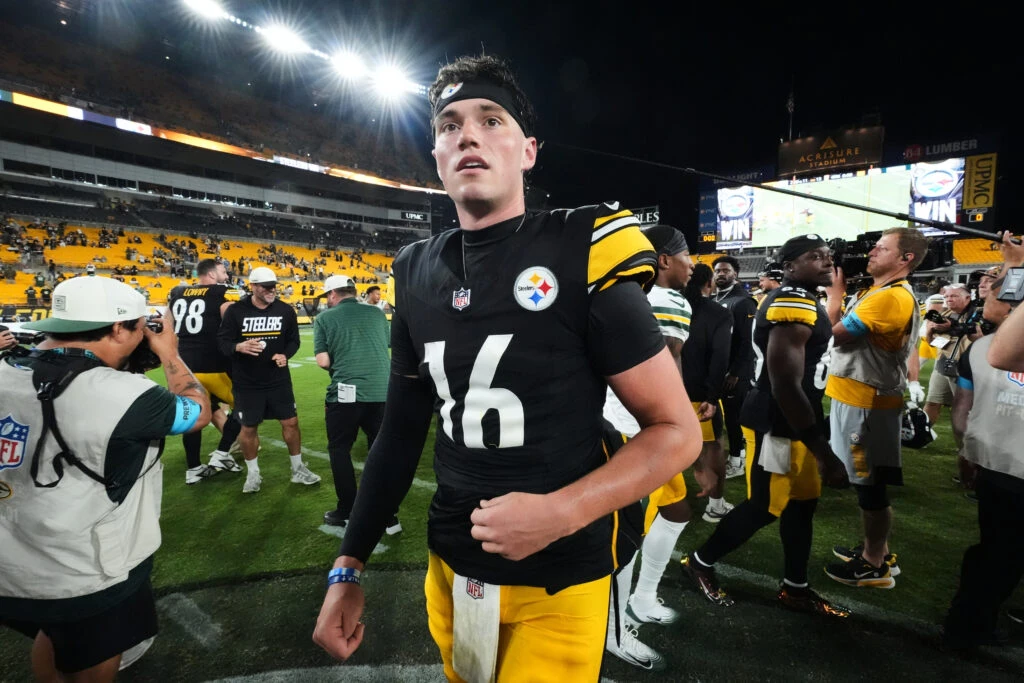
The Pittsburgh Steelers secured a decisive 28-9 victory over the Green Bay Packers in preseason action, as CBS News Pittsburgh reported, but the final score only tells part of the story. What unfolded on the field provided a glimpse into the development of two rookie quarterbacks who demonstrated a level of composure that caught the attention of coaches, veterans, and observers alike.
While preseason games often serve as experimental laboratories for young talent, the performances delivered by Drew Allar and Will Howard suggested something more substantial was taking shape within the Steelers organization. Their debut appearances raised intriguing possibilities about the team’s quarterback depth and future direction.
The Rookie QB Performance That Has Everyone Talking—But Was It Really That Simple?
Drew Allar, the third-round selection from Penn State, per The Times Leader, stepped onto the field for his first professional action and delivered numbers that exceeded typical rookie expectations.
He completed 10 of 13 passing attempts for 153 yards while accounting for three total touchdowns, including two through the air and one on the ground. His connection with fellow rookie Kaden Wetjen resulted in a 74-yard catch-and-run that showcased both timing and execution.
The efficiency of Allar’s performance extended beyond raw statistics, as he demonstrated decision-making capabilities that typically require more seasoning. His 3-yard read-option keeper for a rushing touchdown revealed an understanding of defensive alignments and situational awareness. However, attributing this success solely to natural talent would overlook the preparation and coaching infrastructure that enabled such a polished debut.
Will Howard, entering his second year but making his preseason debut after missing the previous season due to injury, completed 7 of 9 attempts for 86 yards.
His ability to orchestrate a successful two-minute scoring drive before halftime demonstrated command of tempo and clock management that often challenges inexperienced signal-callers.
It’s a huge confidence boost, but I think I came into the game confident just because of the preparation and everything that has gone on in the last two weeks down in Latrobe. Coach McCarthy and the whole offensive staff put together a really concise game plan …, just calling stuff that they know I’m comfortable with and just allowing us to go out and play fast. I feel like they did a great job of putting me in a position to go out and be successful. “Drew Allar“, crediting the coaching staff for creating an environment where he could execute at full speed. The game plan allowed both rookies to operate within their strengths while still testing their capabilities against NFL-level competition.
What Aaron Rodgers Saw From the Sideline That Changed Everything
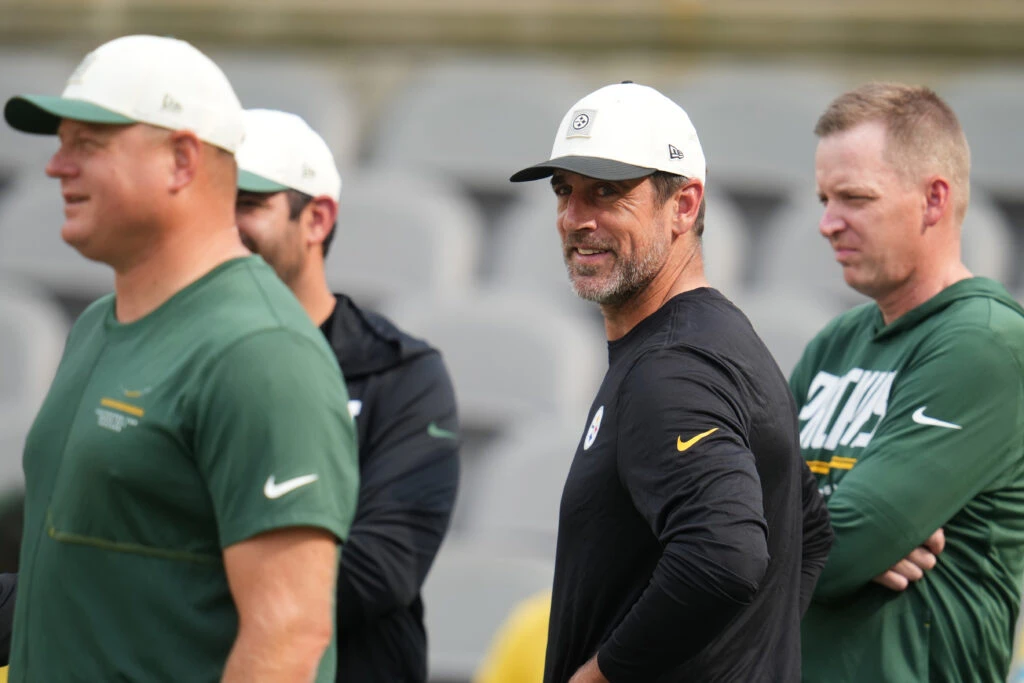
Aaron Rodgers, sidelined due to injuries affecting key receivers, assumed a mentoring role throughout the contest that provided invaluable real-time instruction.
The veteran quarterback, who previously won Super Bowl XLV with current Steelers head coach Mike McCarthy for the Green Bay Packers, offered guidance on defensive reads and recognition patterns between series. This dynamic created an unusual learning environment where decades of experience directly informed rookie development.
The relationship between McCarthy and Rodgers, forged during their successful tenure together in Green Bay, added another dimension to the coaching atmosphere.
Their reunion in Pittsburgh, marking only the fourth head coaching hire for the franchise since 1969, brought established championship pedigree to the organization. The irony that their Super Bowl victory came against the Steelers themselves added historical context to their current collaboration.
Rodgers’ observations from the sideline focused on pre-snap adjustments and post-snap progressions, elements that typically require extensive film study to master. His ability to communicate these concepts in simplified terms during game action accelerated the learning curve for both Allar and Howard, creating a bridge between classroom preparation and field execution.
With 344 completions on 531 passing attempts and a 65.7 completion percentage accumulated throughout his career, Rodgers brought a wealth of practical knowledge to share with the developing signal-callers.
The Two-Minute Drill That Revealed the Real Story
Howard’s execution of the two-minute drill before halftime provided perhaps the most revealing assessment of his development. Managing the clock while maintaining offensive efficiency requires a specific skill set that combines mental processing speed with physical execution. The successful scoring drive demonstrated his ability to operate under compressed timeframes while making rapid decisions.
The complexity of two-minute situations extends beyond simple play-calling, encompassing sideline management, timeout utilization, and field position awareness. Howard’s navigation of these variables suggested a maturity level that contradicted his limited professional experience. His completion percentage of nearly 78 percent during this high-pressure sequence indicated both accuracy and confidence in his reads.
Veteran Mason Rudolph started the game and played two series, providing a baseline for comparison. Having posted an 84.6 passer rating with a 73.1 completion percentage across his career, Rudolph’s steady presence established a professional standard. The transition from Rudolph to the younger quarterbacks allowed coaches to evaluate different skill sets and approaches within the same game context, offering valuable data points for roster decisions and developmental priorities.
Why Coach McCarthy’s Three-Word Assessment Matters More Than the Stats
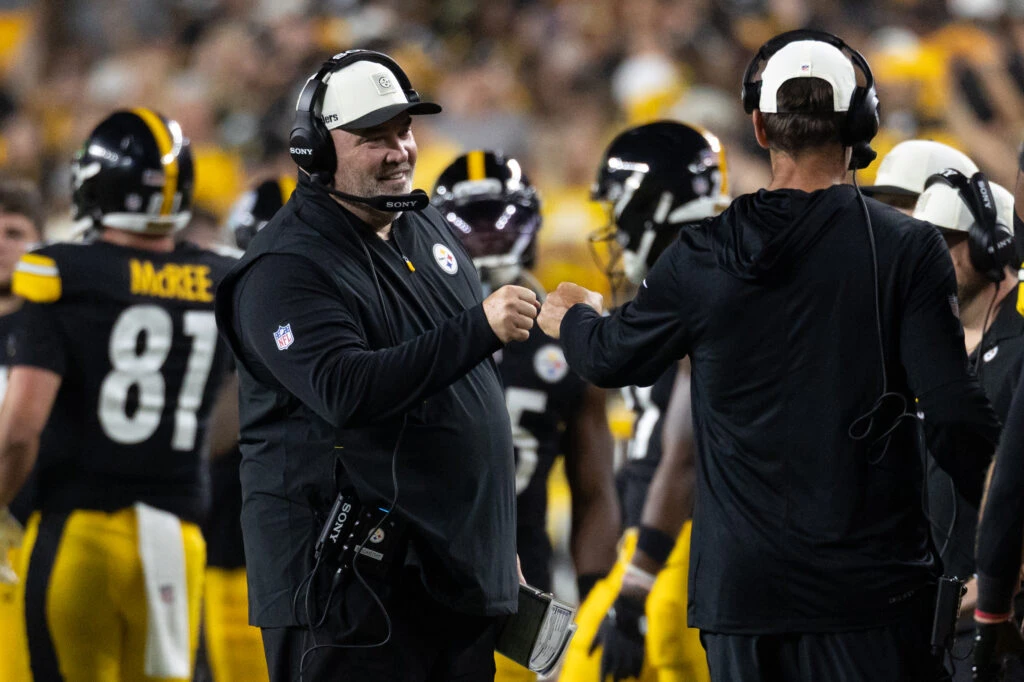
McCarthy’s evaluation of both quarterbacks as ‘very poised’ carried significant weight given his extensive experience developing signal-callers at the highest level. The emphasis on poise rather than statistical output revealed what the coaching staff valued most in these early evaluations. Poise encompasses command of the huddle, communication clarity, and emotional stability under pressure—qualities that statistics cannot fully capture.
The preparation and game planning that preceded the performance created an environment where both rookies could operate within their comfort zones while still being challenged. McCarthy’s offensive staff constructed play sequences designed to highlight strengths while minimizing exposure to complex defensive schemes that might overwhelm inexperienced quarterbacks. This methodical approach reflected the organizational philosophy that has guided Pittsburgh through decades of sustained success.
The organizational stability that has characterized the Steelers franchise, with only four head coaching changes since 1969, provided a foundation for patient quarterback development. This institutional approach contrasts with organizations that rush young quarterbacks into action without adequate support systems, often resulting in stunted growth or regression. The franchise’s commitment to building through careful evaluation and structured progression creates an ideal environment for developing talent.
The One Play That Proves These Rookies Aren’t What You Think
Allar’s 74-yard connection with Wetjen represented more than an isolated big play—it demonstrated anticipation and timing that typically require extensive repetition to develop. The throw required reading defensive leverage, trusting the route concept, and delivering the ball to a specific location rather than simply reacting to an open receiver. This level of execution suggested that both the quarterback and receiver had internalized coaching concepts at an accelerated rate.
The read-option touchdown further illustrated Allar’s processing capabilities, as these plays demand instantaneous decisions based on defensive end behavior. His ability to execute this concept successfully in his first professional action indicated comfort with option football principles and confidence in his decision-making process. These elements combine to create a foundation for continued development rather than representing a ceiling of capability.
The collective performance of both rookie quarterbacks established a narrative that extends beyond single-game evaluation. Their composure, decision-making, and execution under McCarthy’s system suggested that the Steelers’ quarterback room possessed more depth and potential than external observers might have anticipated entering the preseason. The franchise’s methodical approach to development, combined with veteran mentorship and strategic game planning, created conditions for accelerated growth that could reshape the team’s trajectory at the most critical position.