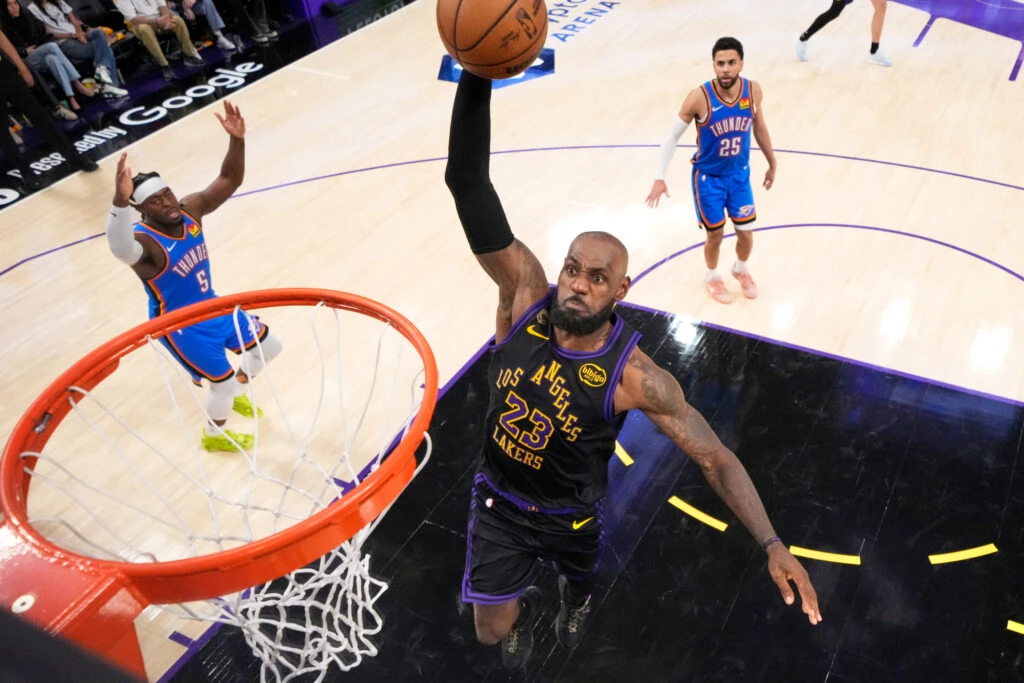
At 41 years old, LeBron James stands at a crossroads that could fundamentally reshape the Los Angeles Lakers’ trajectory for years to come.
The question of whether he’ll return for a 24th season isn’t merely about one player—it’s about organizational identity and future direction.
Recent reporting indicates he may actively seek a franchise better suited to his championship aspirations and playing style, a shift from his typical approach to team loyalty.
While prevailing sentiment suggests he’ll likely return, the ambiguity itself sends shockwaves through the front office. His decision creates immediate ripple effects across roster construction and financial planning. James’ sustained excellence—averaging 20.9 points, 7.2 assists, and 51.5% from the field in the 2025-26 season—demonstrates continued relevance at an age when most players have long since retired.
Combined with his 22-time All-Star resume and four championships, both catalogued by Britannica, his statistical production reinforces that he remains a competitive cornerstone rather than a ceremonial roster piece.
In an era where superstar autonomy has reached unprecedented levels, silence can be deafening. The organization cannot afford to stall, yet they’re effectively frozen until clarity emerges.
LeBron’s potential departure would reshape not just personnel decisions but the entire philosophical framework governing how the Lakers approach their next era. His exit would signal organizational acceptance of generational transition, forcing the franchise to fully commit to building around younger assets.
Notably, James signed his current four-year contract with the Lakers in July 2018 for $154 million, representing a long-term commitment that predates the franchise’s recent seismic roster shifts.
As one of the most successful franchises in NBA history with 17 championships, the Lakers’ storied legacy now hinges on whether their iconic leader chooses to remain part of this transformational moment or seek his final chapter elsewhere.
Luka Doncic’s Ultimatum: Why the Lakers Are Being Forced Into a Center Obsession
Luka Doncic’s arrival represents more than a roster addition—it’s a seismic shift in organizational priorities.
On February 1, 2025, the Lakers executed a transformational trade, acquiring the all-star guard along with Maxi Kleber and Markieff Morris in exchange for Anthony Davis, Max Christie, and a 2029 first-round pick, as CNN reported. This deal fundamentally reshaped both franchises’ trajectories.
Doncic’s elite production—averaging 33.5 points, 8.3 assists, and 47.6% from the field across his 64-game 2025-26 season—validates the Lakers’ aggressive trade gambit.
His six All-Star selections, six All-NBA designations, and 2023-24 Western Conference Finals MVP award establish him as a transcendent talent operating at the league’s highest echelon.
Sources reveal Doncic has articulated explicit demands regarding roster composition, specifically an elite center who can maximize his playmaking abilities.
In constant communication with Lakers President of Basketball Operations Rob Pelinka and Head Coach JJ Redick, Doncic has made his architectural preferences unmistakably clear.
This isn’t casual preference—it’s a foundational requirement for championship contention. The Slovenian superstar’s pick-and-roll mastery and floor vision demand a rim-running, defensive anchor who can convert easy opportunities and protect the paint.
The Lakers now face enormous pressure to deliver precisely what Doncic envisioned, forcing difficult choices about current roster composition. Every available resource—draft capital, cap space, trade assets—must potentially be mobilized toward acquiring premium interior defense and finishing.
For context, the Dallas Mavericks’ organizational turmoil following Doncic’s tenure, including the firing of GM Nico Harrison and departure of head coach Jason Kidd, illustrates how consequential star player movement can be.
The Lakers understand that disappointing Doncic’s fundamental architectural vision could doom their championship window before it truly opens, making center acquisition existential.
Austin Reaves’ Restricted Free Agency: Will the Lakers Pay to Keep Their Third Star?
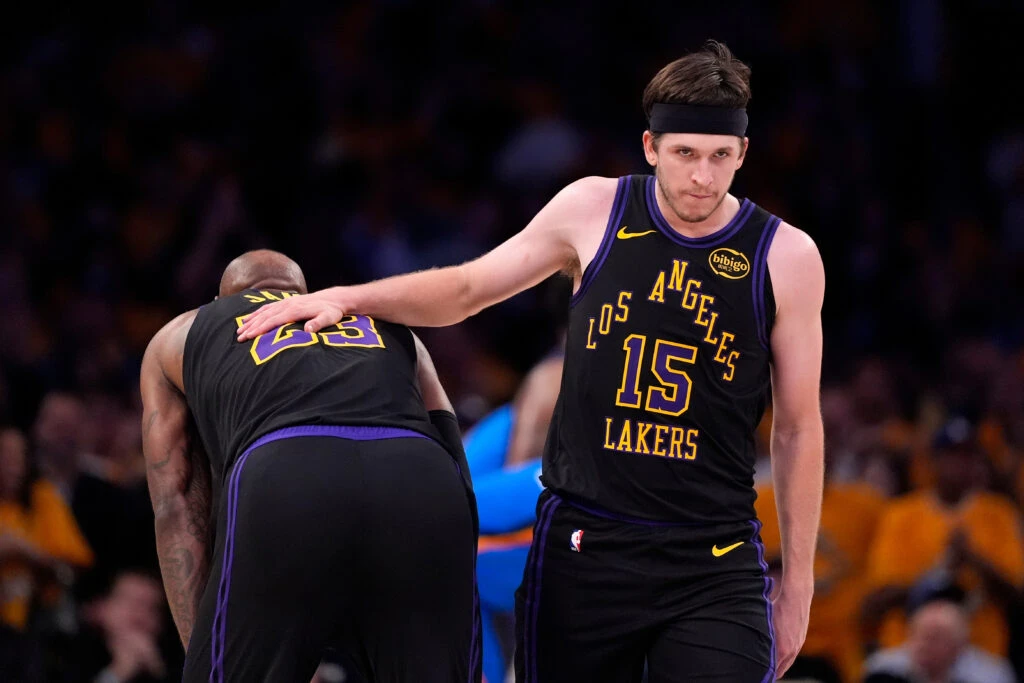
Austin Reaves has emerged as an unexpectedly critical piece of the Lakers’ present and future, but his restricted free agency status creates complicated mathematics for front office decision-makers.
The 28-year-old shooting guard has evolved into an essential complement to Doncic’s playmaking and LeBron’s veteran presence, averaging 23.3 points and 5.5 assists with 49.0% shooting efficiency in the 2025-26 season.
His career trajectory—from undrafted status to a legitimate two-way contributor—exemplifies the organization’s ability to identify overlooked talent.
As a restricted free agent, the team technically controls his destiny through matching rights, yet the financial cost of retention amid competing priorities threatens to become prohibitive.
Reaves has crystallized into one of the most sought-after players on the free agent market, meaning competing franchises will inevitably circle with aggressive offers.
The Lakers face a defining strategic choice: secure their rising star through potentially expensive long-term commitment or risk losing him to financial constraints and competitive bidding wars.
Reaves’ two-way versatility—scoring capacity combined with improved defensive effort—makes him invaluable alongside Doncic’s playmaking.
However, locking him up now could compromise resources needed for center acquisition or LeBron retention. The front office must weigh immediate loyalty against strategic flexibility, knowing that hesitation could prove catastrophically expensive if Reaves receives outside offers the Lakers cannot afford to match.
The Draft Roulette at No. 25: Who Gets Replaced Before They Know It?
The Lakers’ 25th overall draft pick functions like organizational insurance—or more accurately, like a loaded gun pointed directly at several current roster members.
Players including Dalton Knecht, Jaxson Hayes, and Marcus Smart occupy increasingly precarious positions as the organization scans the draft board for wing and center prospects who might render them expendable. This reflects ruthless organizational pragmatism disguised as strategic planning.
Management is clearly signaling that current roster composition isn’t sacred, that upgrades and replacements constitute legitimate pathways to construction.
The urgency behind this draft strategy accelerated following the Doncic acquisition’s impact on competing franchises—observing how rapid organizational change affected Dallas serves as both a cautionary tale and motivating factor.
Recent organizational changes support this aggressive posture: JJ Redick was hired as head coach in June 2024, bringing fresh perspective to personnel strategy and already collaborating closely with Doncic to align roster construction with championship blueprints.
A successful draft day acquisition could simultaneously solve one pressing need while creating another by forcing uncomfortable roster decisions.
The 25th pick carries outsized leverage over several veterans’ futures, creating tangible consequences for how management evaluates available talent. Players aware of their tenuous positions face uncertainty heading into summer, understanding that a single draft selection could trigger their departure.
The Free Agent Shopping Spree: Jalen Duren, Walker Kessler, and the Desperate Search for Youth
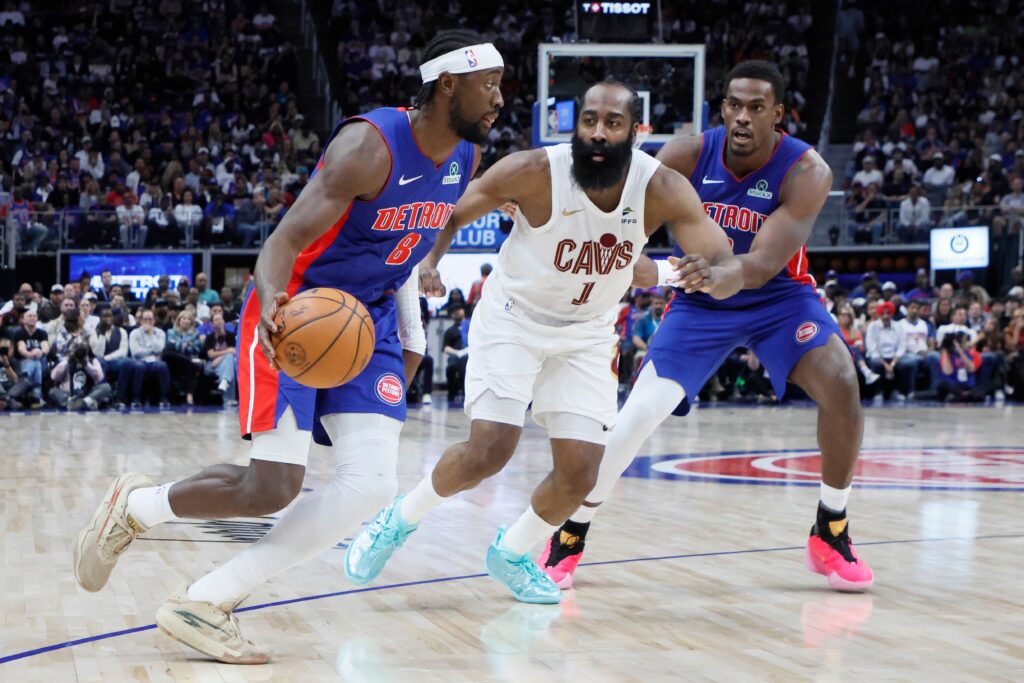
Beyond passively retaining existing talent, the Lakers are aggressively pursuing restricted free agents including Jalen Duren, Walker Kessler, Peyton Watson, and Tari Eason—a calculated assault on the market signaling explicit philosophical priorities.
This offensive approach represents a deliberate strategy to construct a younger, more defensively versatile ecosystem built specifically around Doncic’s talents and complementing LeBron’s sustained excellence.
The targeting pattern reveals organizational thinking clearly: youth, athleticism, and defensive versatility trump continuity with current veterans.
These restricted free agent pursuits explain the suddenly expendable status of several established contributors, as management embraces generational transition faster than most observers anticipated.
The aggressiveness suggests the Lakers view this offseason as transformational rather than incremental, willing to absorb upheaval if it produces meaningful competitive advantages.
Each restricted free agent targeted represents a potential replacement for current roster members, creating a domino effect of departures.
Management is essentially signaling that the championship window demands acceleration, requiring wholesale roster recalibration rather than gradual evolution.
The intensity of these pursuits indicates leadership believes waiting produces championship deficits, a conviction reinforced by witnessing organizational upheaval across the league when front offices hesitate.
The Roster Exodus Nobody Saw Coming: Five Players Who May Not Survive the Purge
When the dust settles following this offseason’s machinations, the Lakers roster could emerge drastically transformed.
LeBron James, Deandre Ayton, Dalton Knecht, Jaxson Hayes, and Marcus Smart all find themselves in genuine jeopardy of losing their roster positions as the organization pursues wholesale transformation rather than gradual refinement.
This represents organizational upheaval approaching historical proportions, not merely standard roster tinkering.
The collective uncertainty surrounding five prominent contributors signals preparedness for dramatic change, indicating management views current composition as fundamentally misaligned with championship construction around Doncic’s requirements.
Each departure would carry distinct implications: LeBron’s would signal acceptance of generational transition despite his 4-time MVP status and continued excellence, while defensive specialists’ removals would reveal investment in specific positional preferences.
The question isn’t whether significant roster change emerges—it’s whether management executes this recalibration with surgical precision or stumbles through painful compromises.
Notably, the Lakers’ recent history includes bold personnel moves: the acquisition of Anthony Davis in July 2019, followed by 2021 trades for Russell Westbrook and veterans like Carmelo Anthony and Dwight Howard.
These precedents demonstrate organizational willingness to embrace transformation. Management appears committed to ideological consistency around youth, athleticism, and Doncic compatibility, suggesting loyalty to current veterans matters less than architectural coherence.
This offseason could become a defining organizational moment, remembered either as bold championship construction or catastrophic miscalculation.
Historic Father-Son Legacy and Organizational Identity
Amid the organizational turbulence and roster upheaval, one unprecedented moment crystallizes the Lakers’ evolving narrative: in June 2024, the franchise selected Bronny James, LeBron’s son, at 55th overall in the NBA draft, forming the first father-son duo in NBA history to play together professionally, as NBA.com documented.
This milestone carries profound symbolic weight, representing continuity and legacy even as management dismantles much of the roster LeBron built.
The presence of Bronny adds emotional dimension to LeBron’s exit decision, creating a personal narrative layer beneath the organizational chess match.
Whether this historic opportunity influences LeBron’s decision to remain remains uncertain, yet it underscores the Lakers’ organizational complexity—simultaneously embracing generational transition while honoring dynasty legacy.
Additionally, the Lakers’ recent success, including winning the inaugural NBA In-Season Tournament in December 2023 and earning the 2023-24 IST MVP for LeBron, demonstrates organizational capability to execute championship-level basketball.
Playing their home games at Crypto.com Arena, one of professional sports’ premier venues, the Lakers maintain their infrastructure for championship contention despite current uncertainty surrounding their roster composition.