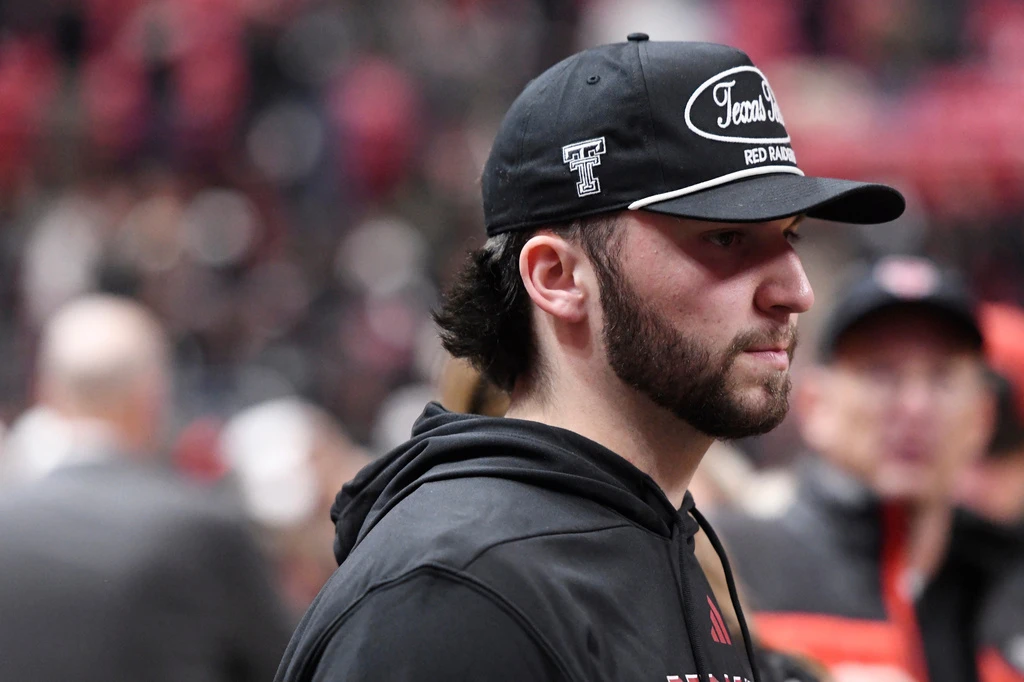
Brendan Sorsby’s gambling addiction created unprecedented chaos in college football, forcing him to navigate a legal minefield while his future hangs in balance.
Born January 2004, Sorsby allegedly placed over 3,000 bets totaling approximately $90,000 through his own accounts and those of friends and family members—a compulsive pattern extending to obscure sporting events like Romanian soccer matches.
Between September and October 2022 alone, he made at least 40 wagers on Indiana football or individual team members, according to court filings detailed by Fox News, revealing the systematic nature of his addiction.
Despite claiming he was betting on Indiana to feel more connected to the team despite already being the starting quarterback, the NCAA found no evidence of game-fixing or point-shaving.
Still, his extensive gambling activities violated NCAA rules, which he admitted had become compulsive.
On April 27, Sorsby checked into rehab, followed by an NCAA ruling of ineligibility on May 18. A Texas judge granted him an injunction on June 8 to play in the 2026 season with a two-game suspension, as FOX 4 reported, but the NCAA and Big 12 appealed shortly after, seeking harsher punishment.
Now, with Sorsby applying for the supplemental draft on June 15, a dramatic decision looms that could reshape his professional destiny.
The scandal exposed vulnerabilities in how college sports handle player conduct violations and how determined legal action can challenge institutional authority.
How a Transfer Portal Nomad Ended Up at Texas Tech
From Indiana to Cincinnati to Texas Tech—Sorsby’s college journey reads like a quarterback in perpetual search for stability. During his true freshman season at Indiana in 2022, he appeared in one game, completing 3 of 6 passes for 8 yards against Penn State.
By 2023, he was named the starting quarterback but completed 8 of 16 for 58 yards against Ohio State in Week 1 before Tayven Jackson replaced him by game three.
He entered the transfer portal on November 27, 2023, and announced his move to Cincinnati on December 6.
During the 2024 season, Sorsby emerged as Cincinnati’s primary starter, and after a strong 2025 start, he earned semifinalist status for the Davey O’Brien Award.
In the final regular-season game at TCU, he tied Desmond Ridder for the school record with 36 touchdowns in a season.
He entered the transfer portal again on December 15, 2025, announcing his move to Texas Tech on January 4, 2026—his third school in as many years. Each transfer represented a fresh start, yet his underlying gambling issues remained unresolved.
At Texas Tech, Sorsby was set to earn over $5 million in NIL money before the scandal emerged, a tangible opportunity that vanished as institutional controversy intensified. For Sorsby, moving schools couldn’t outrun the consequences of his actions.
The Supplemental Draft Loophole That Could Change Everything
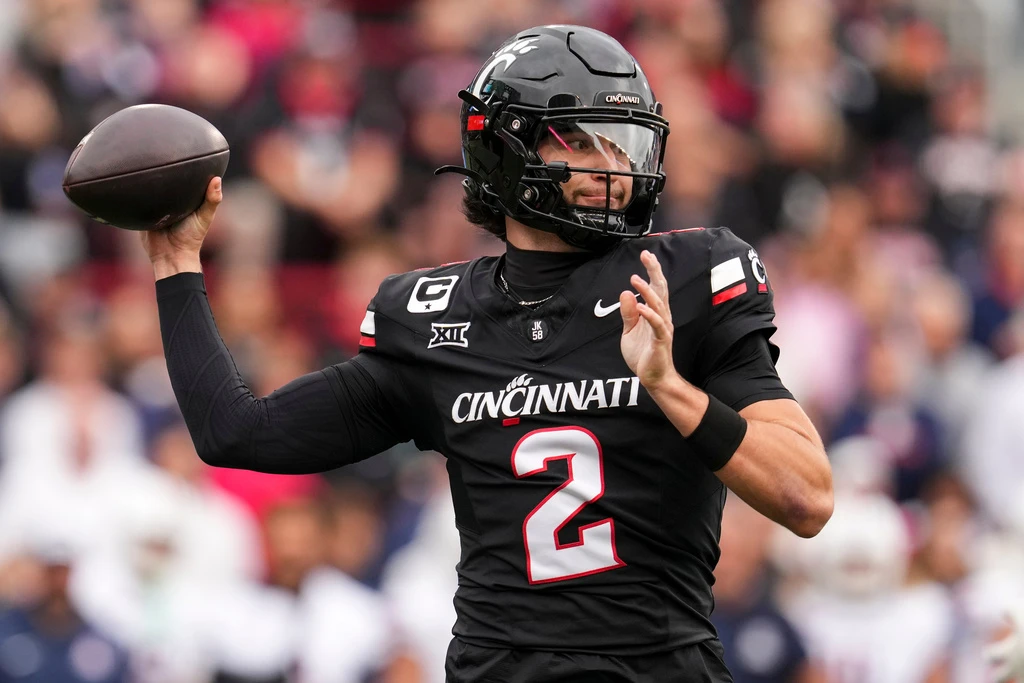
If approved, Sorsby could make history as the first supplemental draft pick since 2019 and potentially the first first-round pick in over three decades.
The supplemental draft exists for extraordinary circumstances—situations where college eligibility becomes compromised through academic issues, disciplinary matters, or missed filing deadlines.
Historically, it’s been remarkably rare. Since its 1977 inception, only 46 players have been selected, with the most recent in 2019 when, as NFL.com reported, Arizona chose safety Jalen Thompson in the fifth round.
The mechanism carries significant cost: teams forfeit their corresponding pick in the next year’s draft, explaining the supplemental draft’s scarcity.
In the supplemental draft, teams submit ‘bids’ to the Commissioner indicating the round at which they’d select a player.
If no other team bids at an earlier spot, the team is awarded the player and must surrender an equivalent pick the following year.
Draft order follows a weighted system: teams with six or fewer wins get first priority, followed by non-playoff teams with more than six wins, then playoff teams.
Sorsby’s case stretches the traditional definition to its limits, asking whether legal intervention and personal misconduct constitute grounds for exceptional consideration.
If successful, it signals that determined athletes with adequate legal resources can escape NCAA jurisdiction—fundamentally redefining supplemental draft eligibility.
The 2027 QB Class That Doesn’t Need Him
The 2027 NFL draft quarterback class is stacked with elite prospects commanding significant attention. Arch Manning from Texas represents generational talent carrying dynasty-level expectations.
Dante Moore from Oregon enters as a dynamic dual-threat prospect capable of reshaping quarterback archetypes. Darian Mensah from Miami rounds out the elite tier with exceptional physical tools and functional skill sets.
Sorsby was originally included in scout evaluations, but his removal due to NCAA eligibility issues highlighted how institutional disputes directly impact market perception.
His potential supplemental draft entry creates an intriguing subplot: can he compete for attention against generational talent, or does his complicated history relegate him to backup conversations? The 2027 class strength makes Sorsby’s timing particularly complex.
Even entering the standard draft unencumbered, he’d face elite competition.
But the supplemental route introduces additional complications—organizational questions, character concerns, and the substantial cost of forfeiting a corresponding round pick in the 2028 draft.
NFL teams must evaluate whether his ability justifies these complications or whether elite prospects in the standard class offer cleaner evaluations and fewer organizational headaches.
What Happens If Sorsby Actually Gets Selected?
Supplemental draft approval would mark a watershed moment, fundamentally signaling that legal intervention can effectively supersede NCAA authority when institutional disputes escalate sufficiently.
It demonstrates that determined athletes with adequate legal resources possess viable pathways around institutional punishment—a precedent that could alter how universities handle player disputes and enforcement.
For Sorsby personally, approval represents genuine redemption and a second chance, validating his decision to challenge rather than comply with NCAA sanctions.
His journey from placing $90,000 in bets and admitting to compulsive gambling to potentially securing professional opportunity through legal circumvention would epitomize the complex intersection of personal redemption and institutional power dynamics.
For the NCAA, it represents institutional authority constrained by judicial systems and professional league autonomy. Organizations that previously accepted institutional rulings would possess new templates for resistance.
If successful, future athletes facing NCAA disciplinary action possess demonstrated proof that legal challenges remain viable strategies—that determination and resources can create alternative pathways when traditional routes close.
For Sorsby specifically, selection would validate his legal team’s strategy while demonstrating that personal misconduct doesn’t necessarily terminate professional opportunity when legal mechanisms effectively challenge institutional authority.
His trajectory from scandal to supplemental draft pick would become cautionary tale and inspiration simultaneously.