
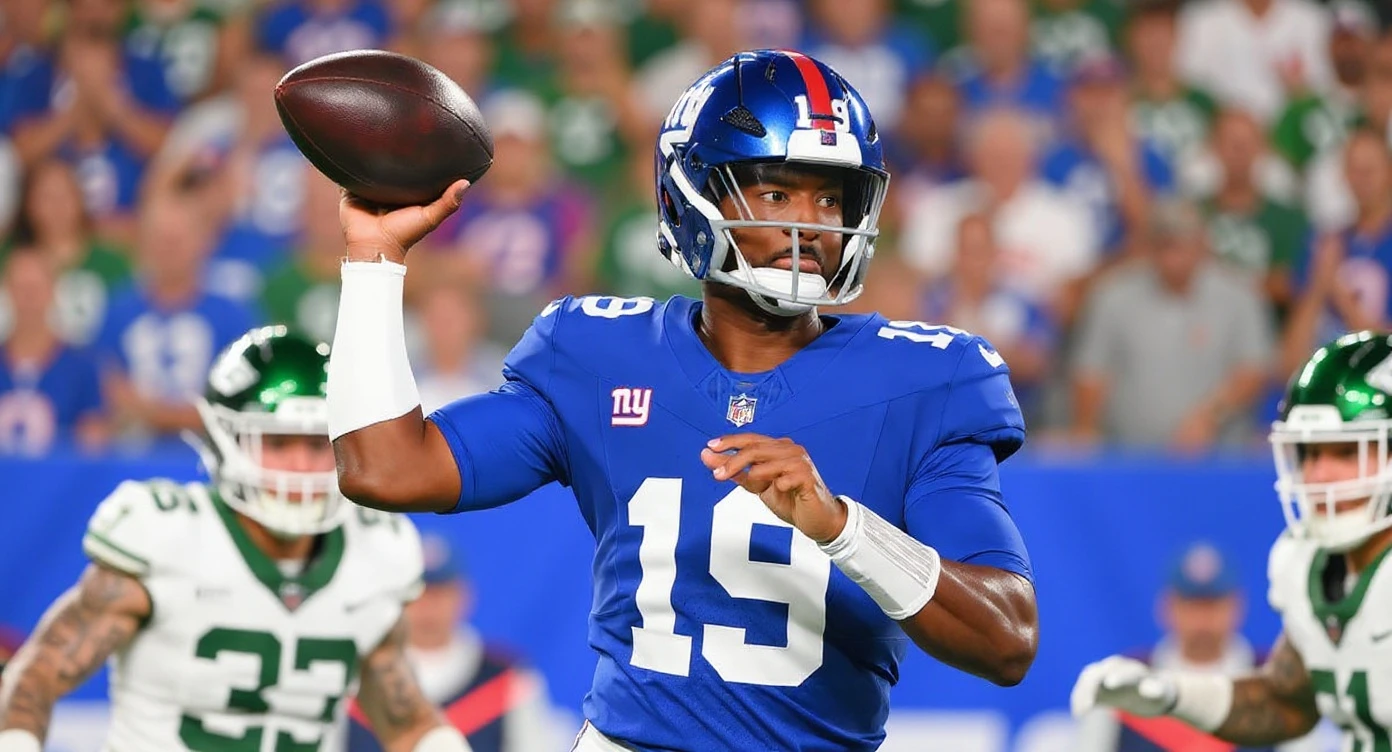
The NFL’s recent portrayal of Jameis Winston as a ‘national treasure’ has sparked widespread criticism, given the quarterback’s troubled past and lack of accountability for his actions.
The NFL’s decision to brand Jameis Winston a “national treasure” in a promotional video tied to his appointment as the New York Giants’ starting quarterback has ignited a fierce backlash — one that cuts to the heart of how the league chooses to package and sell its players to the public.
The NFL’s Controversial ‘National Treasure’
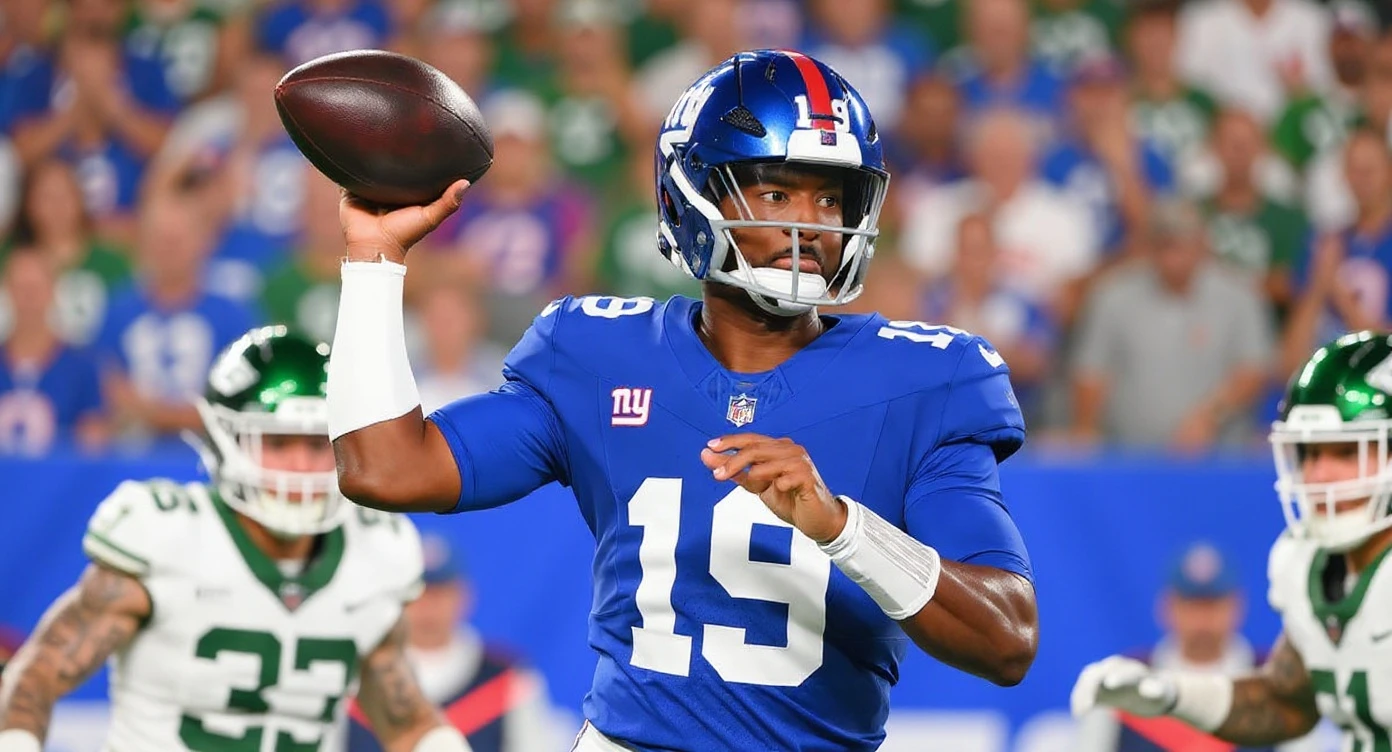
The NFL’s hype video celebrating Winston’s new role with the Giants leaned hard into his personality and charisma, slapping the “national treasure” label on a quarterback whose off-field record is anything but spotless.
The designation landed poorly with a significant portion of the fanbase and media critics who argue the league glossed over a documented history of misconduct to sell a feel-good narrative.
Winston is a genuinely dynamic personality and a quarterback with real NFL experience — he threw for 5,109 yards in 2019 with Tampa Bay, which the NFL notes was the most passing yards in a single season by any quarterback who also threw 30 interceptions — but talent alone does not erase accountability questions that have followed him for over a decade.
Unanswered Questions
Winston’s off-field record stretches back to his college days at Florida State, where he faced a sexual assault allegation in 2012.
No charges were filed, but the investigation drew national scrutiny and raised questions about how the university handled the case.
In 2014, he was cited for shoplifting crab legs from a Publix grocery store — a minor incident that nonetheless became a symbol of poor judgment at a critical moment in his career.
The most consequential disciplinary action came in 2018, when the NFL suspended Winston for three games, as reported by Fox News, after an investigation found he had groped an Uber driver in 2016.
Winston initially denied the allegation before eventually acknowledging the incident and apologizing. That suspension represented the league’s own formal finding of a conduct policy violation — a fact that makes the “national treasure” framing particularly difficult to defend.
Glorifying Misconduct?
Despite that record, outlets including The Athletic have leaned into Winston’s “carefree personality” and crowd-pleasing energy, framing him as an endearing, larger-than-life figure.
That portrayal is not entirely without basis — Winston is genuinely magnetic, and teammates have consistently spoken highly of him as a locker room presence.
But critics argue there is a meaningful difference between acknowledging someone’s charisma and laundering their history through uncritical promotional content.
The NFL’s video did the latter, presenting Winston without context and without any acknowledgment of the conduct issues the league itself once penalized him for.
Accountability in the Spotlight
Winston’s public defense of Deshaun Watson added another layer of controversy. Watson faced civil lawsuits from more than two dozen women alleging sexual misconduct, and the NFL ultimately suspended him for 11 games in 2022 under the personal conduct policy — a suspension many critics argued was too lenient given the scope of the allegations.
Winston expressed support for Watson during that period, framing him as a man unfairly targeted. That stance drew sharp criticism from advocates and commentators who saw it as dismissive of serious allegations and inconsistent with any genuine reckoning with Winston’s own past conduct.
Winston’s path to the Giants starter role is itself a story worth examining on its own terms. He has spent recent seasons as a backup and spot starter — serving as a bridge option in New Orleans and Cleveland — after losing the Tampa Bay job to Tom Brady in 2020.
At 31, he is not a reclamation project so much as a veteran trying to recapture the promise of that 2019 season, when he showed he could move the ball at an elite volume even while making costly decisions.
The Giants, coming off a period of quarterback instability, are betting that Winston’s experience and arm talent outweigh the risk. Whether that bet pays off will determine how this story is ultimately remembered — not the promotional video that launched it.
What the NFL should recognize is that fans are not asking for its players to be perfect. They are asking for honesty. Acknowledging Winston’s complicated history while still covering his new opportunity would have been the more credible approach — and would have generated far less backlash than a hype reel that ignored it entirely.
The “national treasure” label did not celebrate Winston so much as it exposed the league’s ongoing reluctance to hold its promotional instincts accountable to its own stated values.

What People Are Saying About the NFL’s ‘National Treasure’ Label for Jameis Winston
The NFL has navigated this tension before. The league has promoted Tyreek Hill aggressively despite a 2015 domestic violence conviction and a 2019 child abuse investigation.
Ben Roethlisberger played 15 seasons and won two Super Bowls while facing two separate sexual assault allegations — neither resulting in criminal charges, but both extensively documented.
In each case, the league’s promotional machinery continued largely uninterrupted. Critics argue this pattern reflects a structural prioritization of marketability over accountability, and the Winston “national treasure” video fits squarely into that history.
The broader debate here is not simply about Winston as an individual. It is about what standards the NFL applies — or fails to apply — when deciding which players to elevate and how to frame their public image.
Winston is entering a new chapter with the Giants, competing in a market that demands results and scrutiny in equal measure. New York will not be forgiving if the on-field product disappoints, and the promotional hype surrounding his arrival raises the stakes further.
Labeling him a national treasure before he has taken a regular-season snap for the franchise sets an expectation the league may struggle to justify.
The Winston situation also exposes a recurring credibility gap in how the NFL manages its public relations. The league has invested heavily in social justice messaging, domestic violence awareness campaigns, and conduct policy enforcement — all of which create an implicit standard against which promotional decisions are measured.
When the NFL produces content that celebrates a player without acknowledging a conduct violation the league itself adjudicated, it invites the charge of hypocrisy. That charge has been leveled loudly in this case, and the league has not offered a substantive response.