
On March 1st USC’s men’s basketball program faced an unexpected bombshell. Chad Baker-Mazara, the team’s leading scorer and a sixth-year senior guard, was dismissed from the roster without official public explanation from the university.
Baker-Mazara had developed into one of college basketball’s most elite perimeter threats through a remarkable journey spanning San Diego State, Northwest Florida State College, Auburn, and finally USC.
The abruptness of his dismissal left fans, analysts, and fellow players scrambling to understand what could prompt such a dramatic decision at such a critical point in the season.
Baker-Mazara had been a cornerstone of the offensive attack, and his sudden departure raised urgent questions about internal team dynamics.
This incident would prove emblematic of a broader challenge facing USC basketball under newly appointed head coach Eric Musselman—the vulnerability of rosters to sudden, high-impact disruptions at the program’s most critical moments.

Want to know what people are really saying? Don’t miss the buzz from Reddit at the end!
What Really Happened: The Untold Story Behind the Dismissal
While USC remained officially silent, sources familiar with the situation revealed that it was not one incident but an accumulation of issues that led to his exit rather than a single isolated incident.
The immediate catalyst came Saturday during the loss to Nebraska when the guard took a hard fall and left the game just minutes into the second half.
But this physical mishap was merely the visible surface of deeper, more complex issues brewing behind the scenes.
The collision between the incident and pre-existing friction finally pushed the program toward separating from their star player, suggesting organizational instability that extended well beyond what appeared in the box score.
Baker-Mazara’s dismissal marked a particularly difficult moment for a program that had recently undergone significant coaching transition.
The 2024–25 season represented a critical rebuilding phase under new leadership after Eric Musselman took over from Andy Enfield, who had led the program from 2013–2024, making the timing of internal roster conflicts especially challenging.
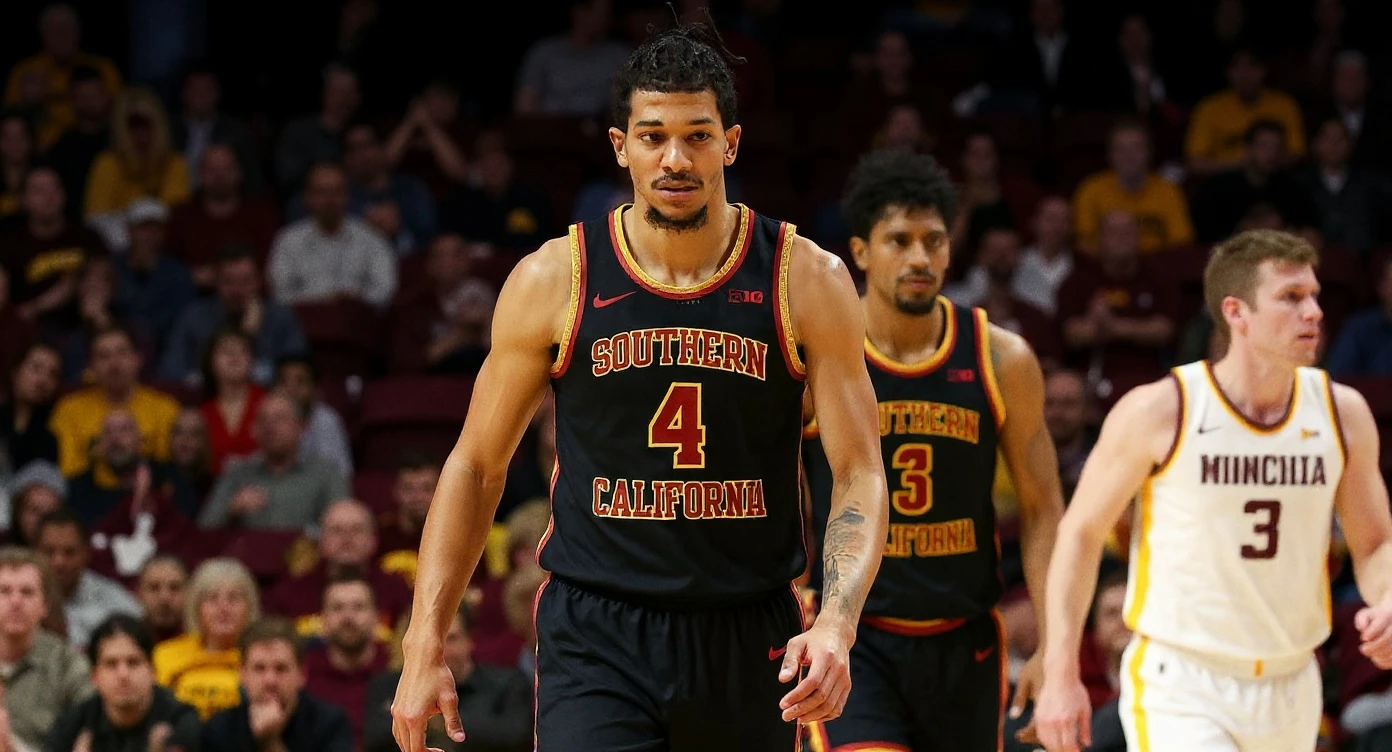
Losing a Generational Scorer at the Worst Possible Moment
Baker-Mazara’s dismissal represented far more than losing a capable contributor—it meant losing one of USC’s most elite offensive talents at precisely the wrong moment.
The sixth-year senior was pouring in 18.5 points per game while shooting an exceptional 38% from three-point range, making him one of college basketball’s most reliable perimeter threats.
His shooting efficiency reflected the trajectory he’d built throughout his collegiate career: after averaging 15.2 points on an impressive 46.9% three-point shooting at Northwest Florida State College, he transferred to Auburn, where he appeared in 35 games during the 2023–24 season, averaging 10.0 points and 3.7 rebounds with over two assists per game.
He’d recorded a career-high 25 points in a win over Georgia on February 24, 2024. His combination of volume scoring and shooting efficiency made him one of the Trojans’ most consistent offensive weapons, someone opponents had to account for on every possession.
Remarkably, his 2024–25 season performance proved so impactful that he was named one of five finalists for the prestigious Julius Erving Award.
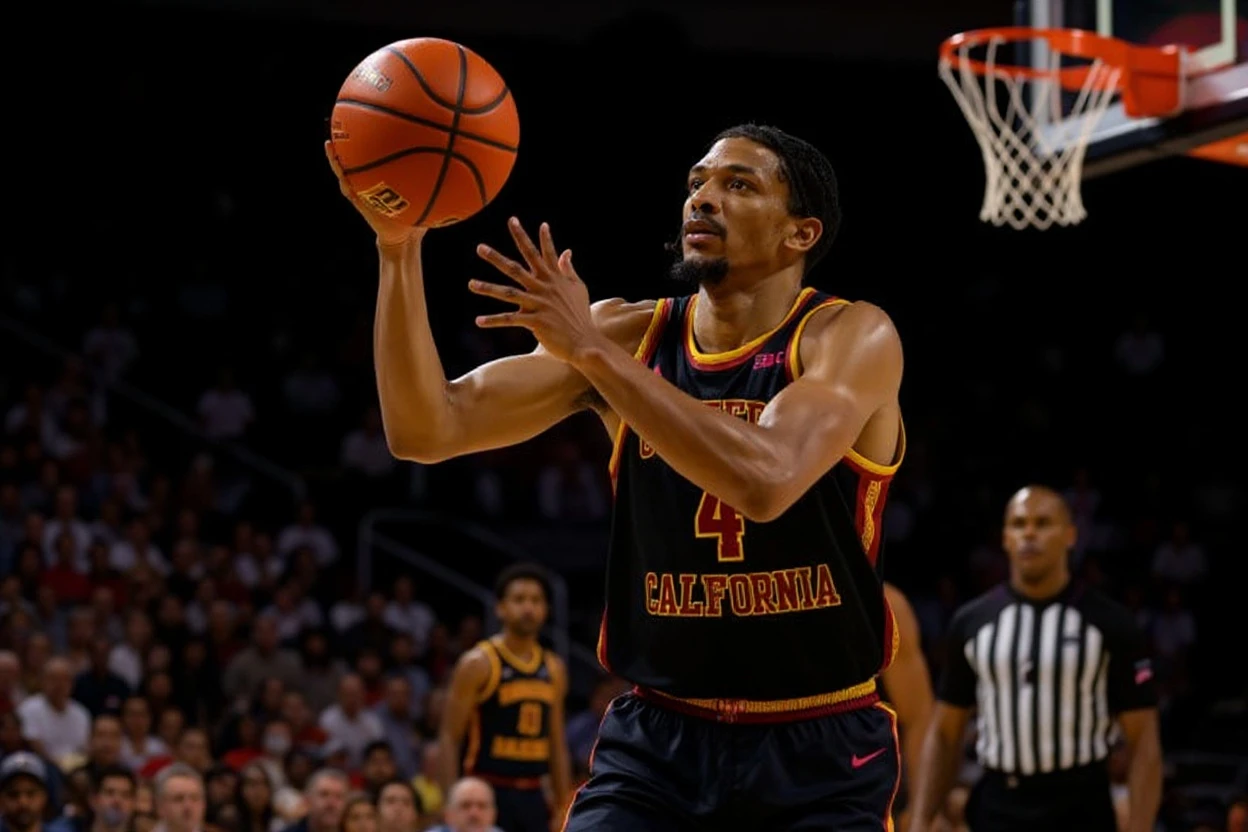
The Perfect Storm: Why USC’s Tournament Dreams Just Got Much Harder
The timing of Baker-Mazara’s dismissal couldn’t have been more devastating, arriving precisely when USC needed stability and production most.
The Trojans were already enduring their darkest stretch of the season, having lost five consecutive games while their NCAA Tournament resume deteriorated with each passing defeat.
With limited games remaining and an increasingly narrow path to postseason qualification, losing their leading scorer’s 18.5 points per night and elite three-point shooting efficiency fundamentally altered the program’s trajectory.
The combination of mounting losses, roster instability, and the sudden removal of their most prolific offensive player created a perfect storm that transformed what might have been salvageable into an uphill climb.
Baker-Mazara’s dismissal also represented a significant setback during an already transitional period, as new head coach Eric Musselman sought to establish his system and identity following Andy Enfield’s 11-year tenure.
The removal of such a prolific scorer—one talented enough to later be selected 1st overall in the 2026 Baloncesto Superior Nacional draft by the Gigantes de Carolina—underscored both the quality of talent USC had possessed and the magnitude of their loss.
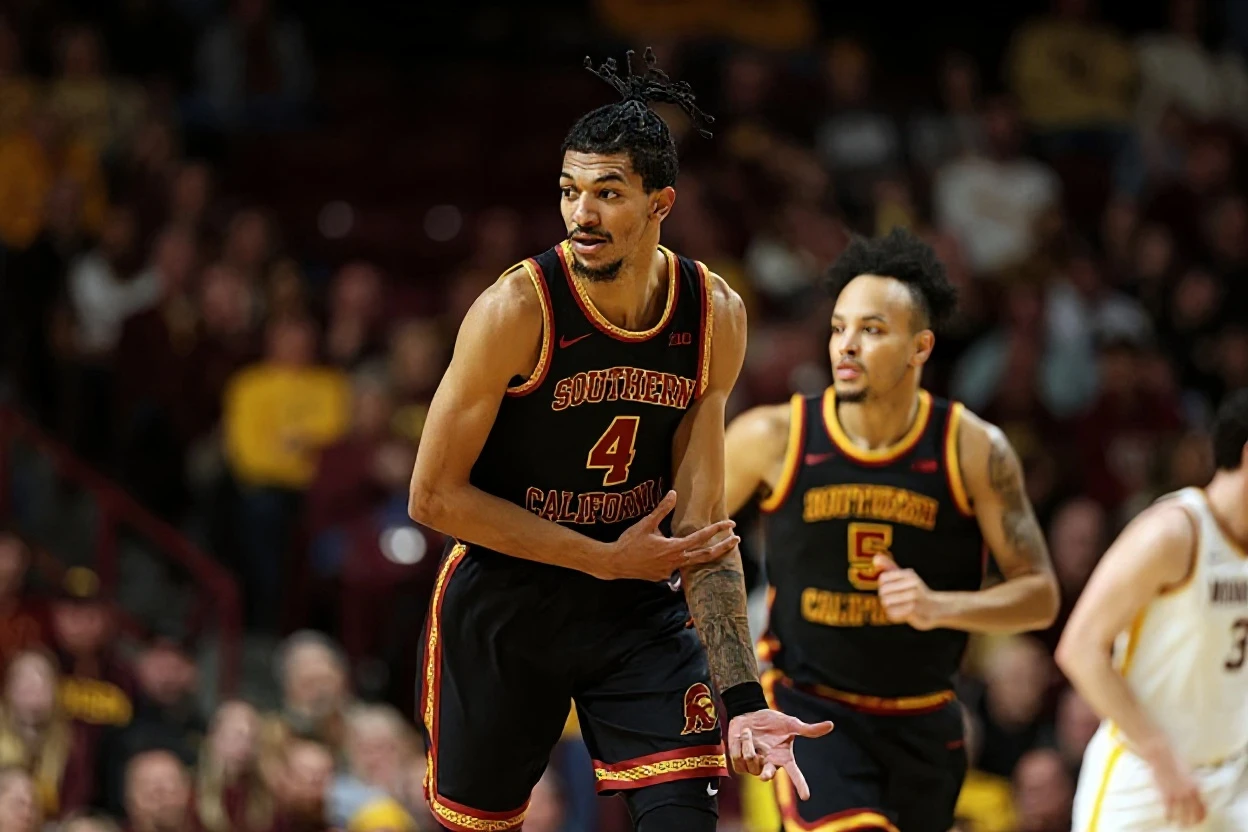
The Broader Questions Surrounding Baker-Mazara’s Collegiate Journey
Baker-Mazara’s dismissal inevitably invites reflection on a more complex narrative that extends beyond the immediate circumstances of his exit.
His path through college basketball—spanning six years across five different institutions—raises important questions about the modern landscape of collegiate athletics and what such an extended journey means for a player’s development, stability, and long-term prospects.
The unusual length of his college career underscores a tension that increasingly defines college basketball.
Players with exceptional talent and proven offensive capabilities sometimes find themselves in situations where opportunities don’t align as expected, requiring them to navigate multiple transfers and extended eligibility timelines.
For Baker-Mazara, each stop represented a different chapter—from establishing himself at Northwest Florida State College, to competing in major conferences at Auburn, to becoming a leading contributor at USC.
Yet the very fact that he remained in the college system into his mid-twenties while maintaining elite scoring production speaks to both the resilience required in modern basketball and the complicated economics of player development at the collegiate level.
When a player with his demonstrated offensive capabilities—a 38% three-point shooter averaging nearly 19 points per game—faces sudden dismissal, it naturally prompts observers to consider whether the full picture extends beyond what appears in box scores or even behind-the-scenes reporting.
The accumulation of issues that led to his departure suggests that collegiate athletics operate within complex ecosystems where talent alone cannot always predict outcomes, and where interpersonal dynamics and institutional fit matter just as much as shooting percentages and scoring averages.
There’s also an important distinction to be made between transparency and privacy in collegiate athletics.
While some observers expressed curiosity about the specific details behind the dismissal, the reality is that the reported accumulation of issues likely encompasses a range of circumstances—some potentially interpersonal, others perhaps behavioral or structural in nature.
The lack of granular public disclosure doesn’t necessarily indicate a cover-up; it may simply reflect the university’s judgment about what information serves the educational and athletic integrity of its program.
What remains clear is that Baker-Mazara’s dismissal illustrates a fundamental vulnerability in collegiate sports programs: the potential for internal friction and interpersonal dynamics to upend even the most talented rosters at the most critical moments.
Whether the underlying issues stemmed from coaching philosophy conflicts, locker room dynamics, disciplinary concerns, or some combination thereof, the incident demonstrates that elite offensive production alone cannot insulate a player from the consequences of accumulated tension within a program’s ecosystem.