The Las Vegas Raiders terminated head coach Pete Carroll after just one catastrophic season, finishing with a league-worst 3-14 record that sent shockwaves through the franchise. This marks an unprecedented fourth head coaching change in as many seasons, exposing systemic problems that extend far beyond any single coach’s tenure. Carroll’s departure on January 5, 2026, ended a tenure that began with considerable optimism when he was hired on January 25, 2025, replacing Antonio Pierce after 15 years guiding the Seattle Seahawks to sustained excellence. Remarkably, Carroll’s first game—a 20-13 victory over the New England Patriots—made him the oldest head coach in NFL history at age 73, a milestone that underscored both his enduring vitality and the unique circumstances of his Las Vegas appointment. Yet despite inheriting a team positioned for potential rebuilding momentum, Carroll’s era became a masterclass in organizational misalignment and failed execution. The season’s only silver lining: the Raiders secured the first overall pick in the 2026 NFL Draft. This opening arrives as the 2026 coaching carousel intensifies across the league, intensifying competition for elite coaching talent and creating a challenging marketplace for the Raiders’ search for Carroll’s successor.
The Quarterback Nightmare: How Geno Smith’s Turnovers Became the Team’s Fatal Flaw
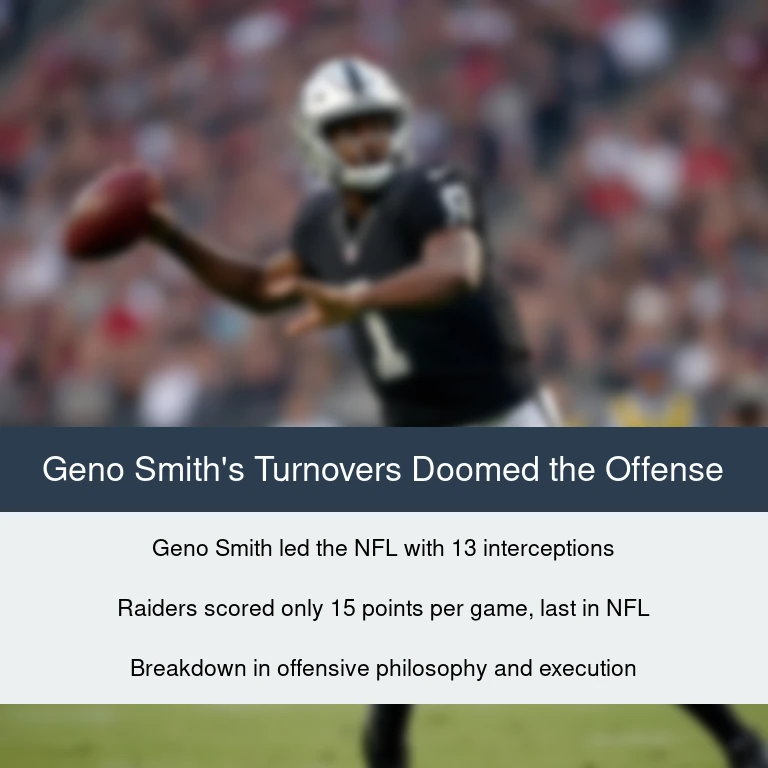
Geno Smith’s reunion with Pete Carroll in Las Vegas promised redemption and synergy between a coach and quarterback who shared Seattle history. The Raiders strategically traded for Smith during the 2025 offseason, attempting to recreate the quarterback-coach alignment that had fueled the Seahawks’ sustained success. Instead, their partnership deteriorated into one of professional football’s most spectacular collaborative failures. Smith’s statistics tell the story: he led the entire NFL with 13 interceptions, single-handedly sabotaging offensive possessions with alarming consistency. His turnover epidemic compounded an already suffocating offensive system that managed merely 15 points per game—tying for dead last across the league. This scoring drought wasn’t bad luck; it represented fundamental breakdown in offensive philosophy and execution that no quarterback-coach reunion could salvage. Yet that proven excellence couldn’t transfer to Las Vegas. With the first overall pick now in hand, the Raiders enter a marketplace featuring several intriguing quarterback prospects, offering potential to reset the franchise’s quarterback trajectory entirely.
The Mid-Season Purge: Why Firing Chip Kelly Exposed Carroll’s Crumbling Foundation
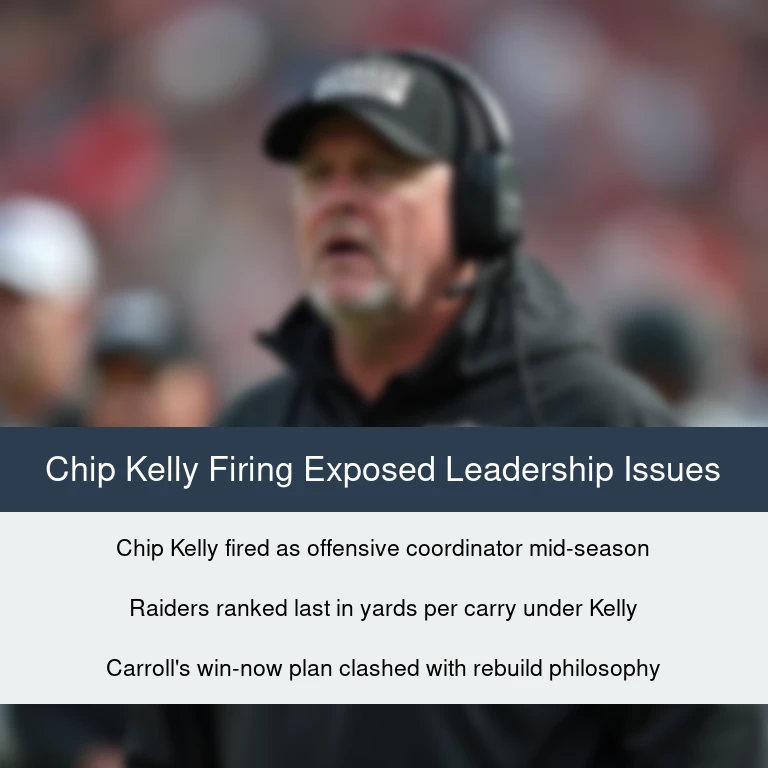
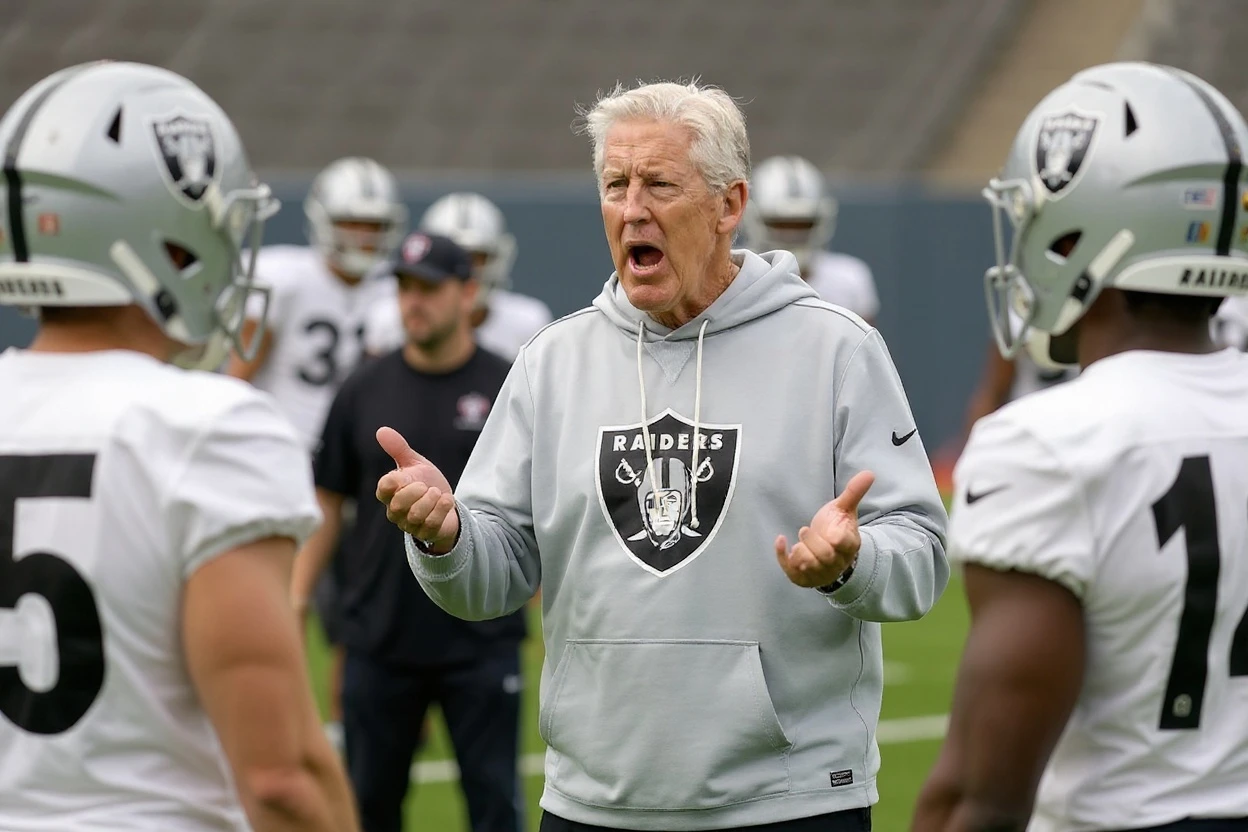
Mid-season desperation led the Raiders to dismiss offensive coordinator Chip Kelly, a shocking move that exposed a fundamental absence of cohesion permeating Carroll’s leadership structure. Kelly had been brought in specifically to revitalize the offensive system, yet his brief 11-game tenure produced historically abysmal statistics: the Raiders ranked dead last in yards per carry and managed merely 15 points across his entire run—numbers suggesting not momentary struggles but systemic breakdown. Yet the real problem extended deeper than statistics. Carroll’s aggressive win-now mentality clashed against the franchise’s apparent long-term rebuild philosophy, creating organizational chaos where competing visions destroyed strategic coherence. This philosophical incompatibility manifested painfully in rookie running back Ashton Jeanty’s underutilization. Despite being selected as a first-round investment intended to anchor the offensive future, Jeanty played sparingly—a symbolic representation of how poor planning and conflicting directives undermined the entire organization’s developmental strategy. The coaching staff itself, which included defensive coordinator Patrick Graham retained from the previous regime and Carroll’s son Brennan Carroll as offensive line coach, appeared unable to function as a unified strategic entity, further eroding any possibility of cohesive organizational direction.
The Organizational Chaos: Why the Raiders’ Revolving Door of Coaches Shows No Signs of Stopping
With four head coaches cycling through the franchise in four successive seasons, the Las Vegas Raiders have institutionalized instability in ways that transcend individual leadership failures. The pattern suggests something deeper than mere coaching incompetence. Majority owner Mark Davis and General Manager Jon Spytek now face mounting pressure to identify a successor, but the fundamental question persists: are the coaches genuinely unqualified, or are they inheriting a structurally dysfunctional organization incapable of executing any coherent strategy? Carroll’s historically elite credentials—winning a Super Bowl with Seattle and capturing AP and BCS national championships at USC (2003-2005)—make his catastrophic failure in Las Vegas particularly revealing. He stands as the third head coach ever to win both a college national championship and a Super Bowl, alongside Jimmy Johnson and Barry Switzer, yet that pedigree proved powerless against organizational dysfunction. The franchise’s consistent inability to build organizational cohesion, establish operational continuity, or execute coordinated personnel decisions indicates systemic problems that one new coaching hire simply cannot remedy. Until ownership and management address the underlying structural issues—unclear strategic direction, conflicting departmental philosophies, and decision-making paralysis—the revolving door will continue rotating, consuming promising careers and franchise resources with ruthless efficiency. The broader 2026 coaching carousel intensifies competition for qualified candidates and raises critical questions: will the Raiders attract elite coaching prospects despite their institutional dysfunction, or will the stigma surrounding the franchise deter the market’s most promising candidates?