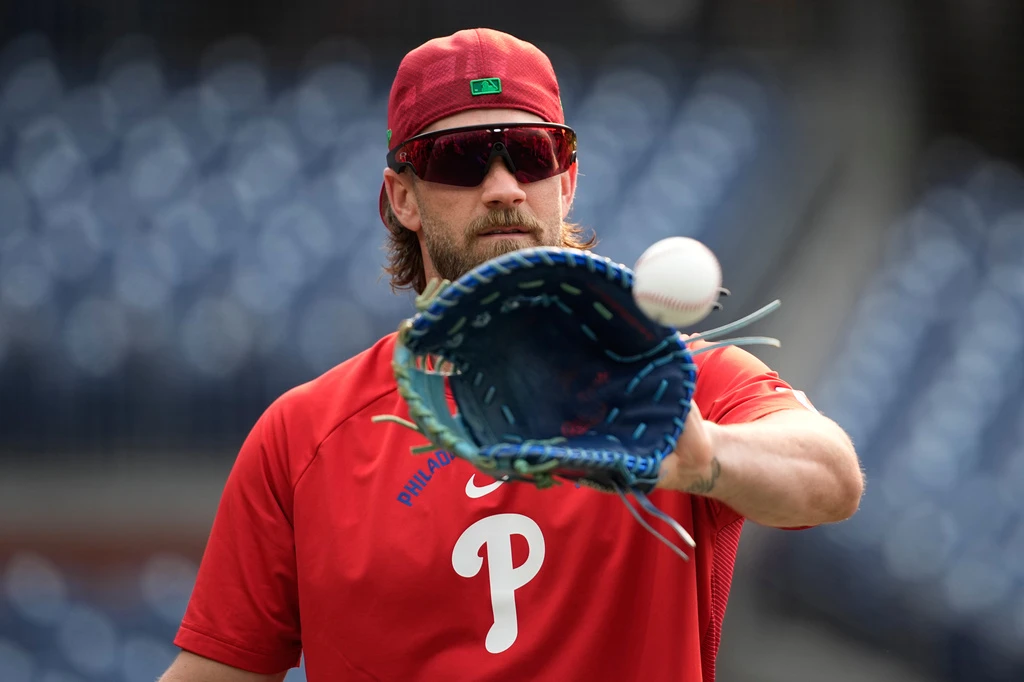
Bryce Harper stepped into the NBA conversation by making an unprecedented pitch to LeBron James about joining the Philadelphia 76ers.
This crossover moment signals something remarkable—the 76ers’ appeal transcends traditional sports boundaries.
Harper’s willingness to campaign for the team reveals genuine belief that Philadelphia represents a championship-caliber destination.
Notably, Harper himself was once compared to LeBron; in May 2009, Sports Illustrated featured him on its cover calling him baseball’s “Chosen One,” mirroring the same epithet once applied to James.
This historical parallel adds poignancy to Harper’s recruitment efforts—two generational talents, linked by comparable trajectories, now united in pursuing Philadelphia’s championship vision.
Harper’s continued excellence—reflected in his 57 RBIs and 20 home runs—underscores his credibility as a winning player advocating for organizational commitment
When athletes of Harper’s stature venture outside their own sports to recruit superstars, it reflects something deeper: recognition that the 76ers are building something genuinely competitive.
Comprehensive analysis of LeBron’s 2026 free agency market positions the 76ers among six legitimate contenders for his services, validating Harper’s pitch with authoritative market assessment.
The Four-Headed Monster: Why the 76ers’ Roster Is Unlike Anything LeBron Has Seen
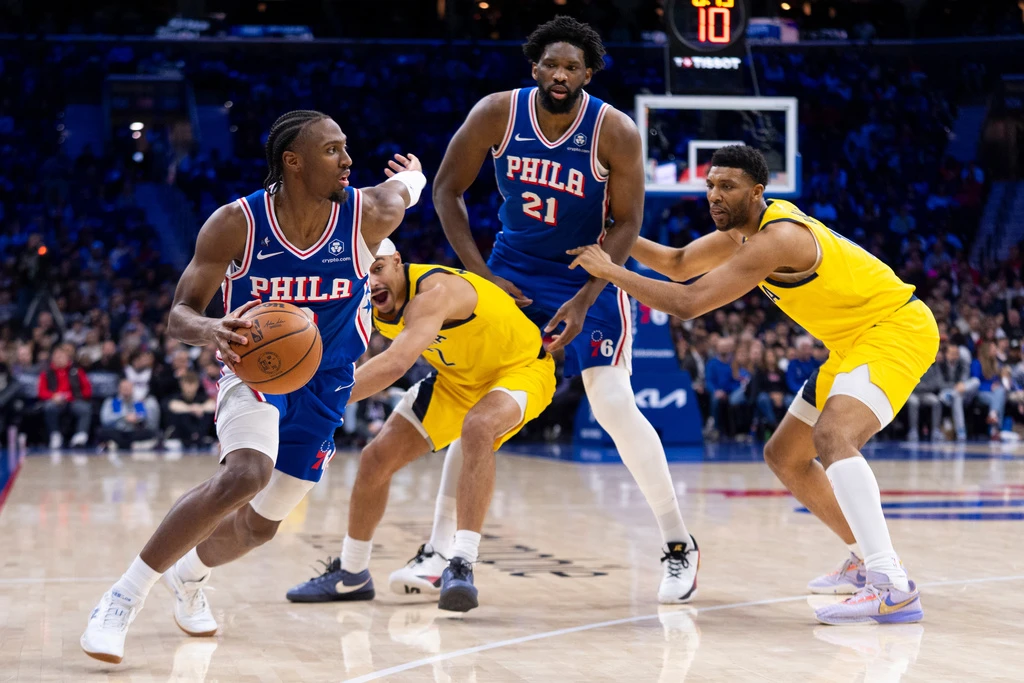
The 76ers boast a rare alignment of talent with four elite scorers: Joel Embiid, Tyrese Maxey, Jaylen Brown, Paul George, and organizational flexibility to add more.
In 2026, these players demonstrated formidable offensive firepower: Maxey led the charge with 2,241 points and 526 assists, showcasing elite scoring and playmaking, while Brown contributed 2,218 points on a robust 47.7 field goal percentage, demonstrating consistent efficiency.
Embiid, operating as the post-dominant anchor, added 1,189 points while shooting 48.9% from the field.
Unlike fragmented rosters where stars compete for touches, these players complement each other.
Each brings distinct skill sets—Embiid’s post dominance, Maxey’s perimeter shooting and speed, Brown’s two-way versatility.
The recent acquisition of Brown exemplifies the 76ers’ commitment to championship-level roster construction, with a projected starting five capable of competing for titles.
Harper’s 2019 signing—a 13-year, $330 million contract, the richest North American sports contract at that time per MLB.com—demonstrates Philadelphia’s willingness to invest unprecedented resources into building championship-caliber rosters across sports.
The question becomes: can one player—even one as exceptional as LeBron—maximize the potential of four legitimate All-Star caliber scorers simultaneously?
The Missing Ingredient: How LeBron’s Passing Could Unite Scattered Scorers
While the 76ers possess immense talent on paper, their fundamental challenge lies in synchronization and flow.
Multiple elite scorers can either become a championship juggernaut or an inefficient collection of individual talents—success depends entirely on orchestration.
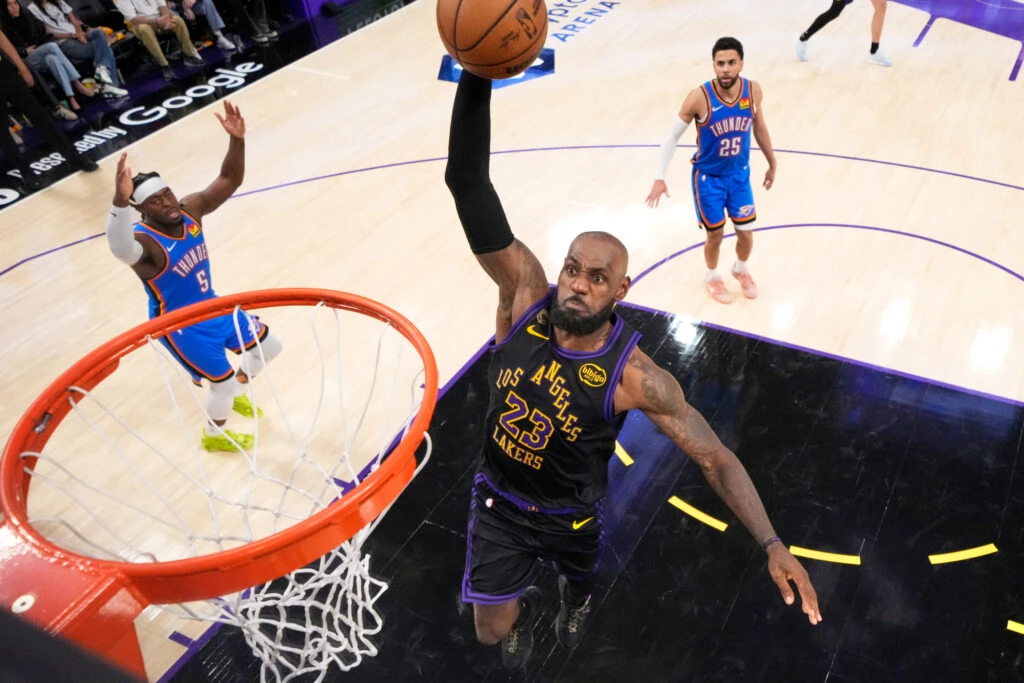
LeBron James’ legendary court vision and basketball intelligence could be precisely the catalyst transforming disparate scorers into a cohesive, unstoppable offensive machine.
In 2026, LeBron distributed 505 assists while maintaining a remarkable 51.5 field goal percentage, demonstrating his capacity to both facilitate for others and remain efficient himself.
When LeBron enters playoff mode, defenses must account for not just his scoring, but his playmaking gravity.
This creates secondary opportunities for shooters and scorers operating on the perimeter and in transition. The 76ers currently possess the pieces but lack the quarterback capable of maximizing everyone’s efficiency.
LeBron’s partnership would address what many analysts identify as Philadelphia’s fundamental gap—not talent acquisition, but talent orchestration at the highest level.
Why the 76ers Might Offer LeBron Something Neither Cavs nor Heat Could Promise
The 76ers present a uniquely compelling case compared to LeBron’s previous championship destinations.
His return to Cleveland in 2014 represented nostalgia and unfinished business.
His time in Miami created chemistry through sustained collaboration. Philadelphia, however, offers something entirely different: a supercharged roster built for immediate, explosive competition with virtually untapped synergistic potential.
The fanbase’s legendary passion creates an intoxicating atmosphere rarely matched in modern sports.
Harper’s pivotal role in winning the 2022 NLCS MVP and leading the Phillies to their first pennant since 2009, as MLB.com recounts, showcases Philadelphia’s capacity to build and execute winning culture across sports, signaling institutional competence that extends beyond basketball.
Most critically, the pure talent level combines to create conditions that Cavaliers nostalgia or Heat tradition cannot replicate.
LeBron’s 2026 performance—1,488 points, 431 rebounds, and three triple-doubles—demonstrated he remains capable of elite, well-rounded production at the highest level.
For LeBron at this stage of his career, seeking one final championship run, the 76ers represent perhaps the most talented collection of co-stars he could realistically join.
The Uncomfortable Truth: What the 76ers’ Flaws Reveal About Championship Ambitions
No team is perfect, and the 76ers are no exception.
Despite concentrated star power, structural challenges persist—depth beyond the elite four remains questionable, frontcourt depth concerns linger following roster moves, and organizational questions about coaching and complementary roster construction cannot be entirely dismissed.
History demonstrates that talent alone doesn’t guarantee championships. Chemistry matters. Supporting cast quality matters. Coaching matters.
However, Harper’s pitch suggests that talent concentration can sometimes overcome traditional weaknesses when coordinated effectively.
The real question isn’t whether the 76ers are flawless; it’s whether their star power and potential synergy outweigh imperfections in pursuit of a championship.
Past super teams faced similar criticisms before proving doubters wrong. The 76ers’ gamble is essentially this: assemble enough elite talent, acquire a player of LeBron’s caliber, and trust that the combination creates an insurmountable obstacle.
Whether this philosophy succeeds depends entirely on execution—coaching adjustments, role clarity, defensive discipline, and playoff adaptability.