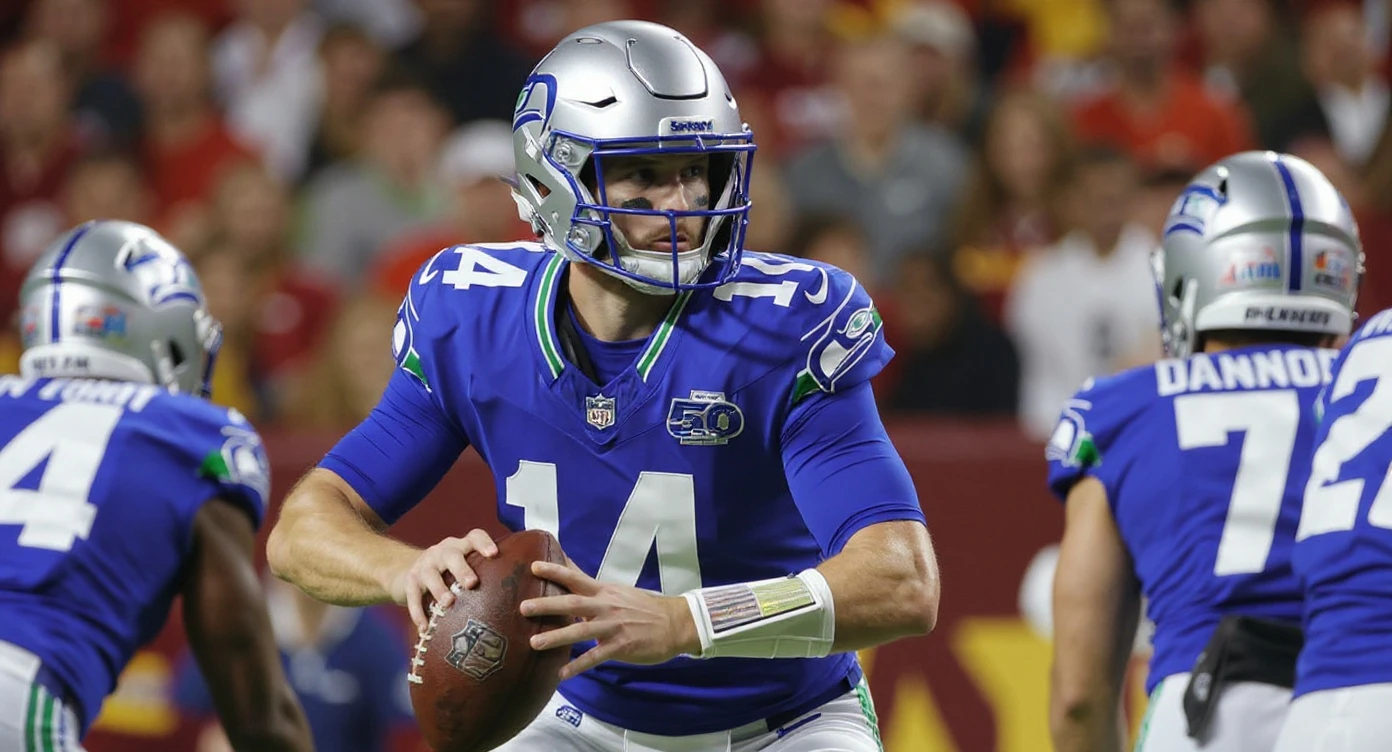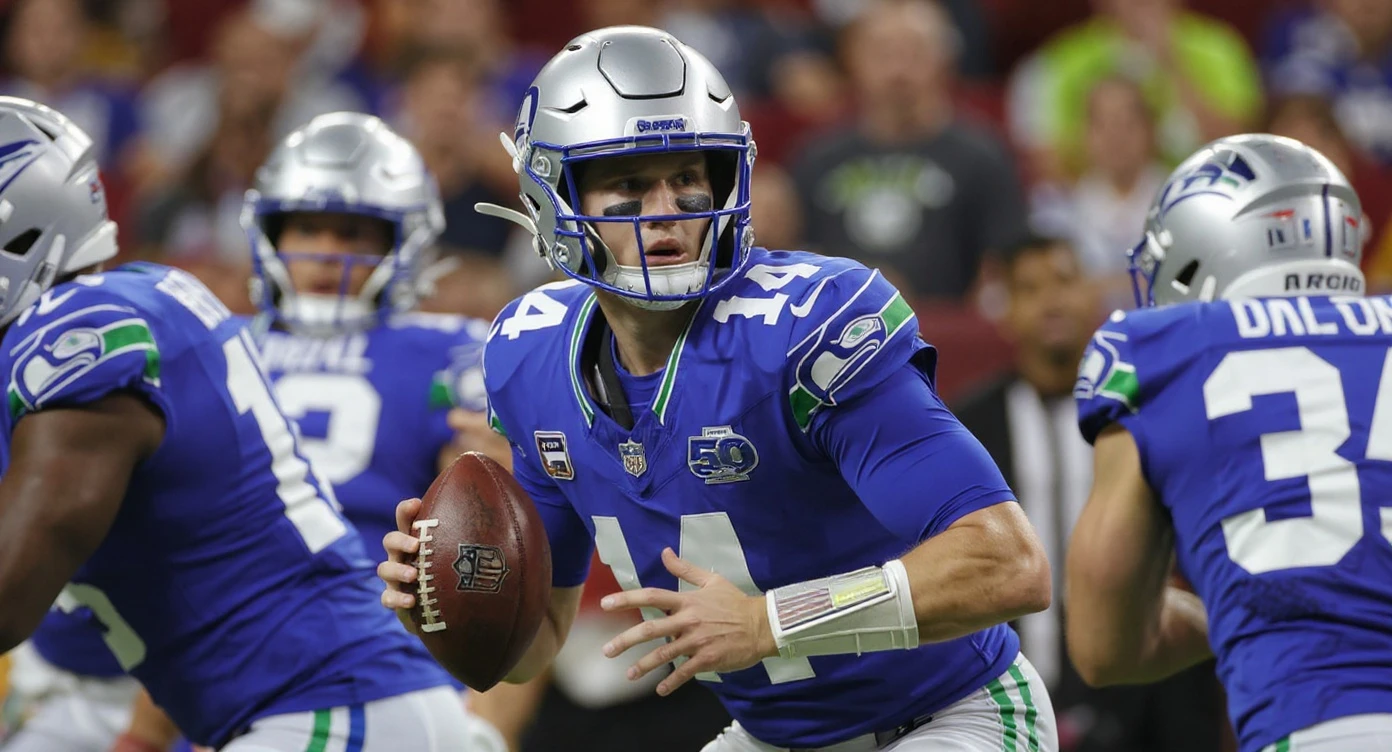
Sam Darnold played through an oblique scare and delivered, leading the Seattle Seahawks to an emphatic 41-6 divisional-round demolition of the San Francisco 49ers and a berth in the NFC championship game. The result put an exclamation point on one of the NFL’s most striking redemption arcs. After years of uncertainty at previous stops, the 28-year-old USC product—originally drafted 3rd overall by the New York Jets in 2018—signed a three-year, $100.5 million deal with Seattle, which the Seahawks announced on March 13, 2025. He rewarded that investment immediately. Darnold finished the 2025 regular season at 67.7% completion, 4,048 passing yards, 25 touchdowns, and 14 interceptions across 17 games, per Sporting News, guiding Seattle to a 14-3 record and the NFC’s No. 1 seed after beating San Francisco in Week 18 at Levi’s Stadium, according to ESPN. That 14-3 mark matched the record he posted with the Minnesota Vikings in 2024 on his way to his first career Pro Bowl selection, ESPN noted. CBS Sports reported he earned his second consecutive Pro Bowl nod this season. In doing so, Sporting News confirmed, Darnold joined Tom Brady and Peyton Manning as the only quarterbacks in NFL history to lead two different teams to 14-win seasons. Then, with the oblique still fresh, he went out and won 41-6.
Just as the Seahawks prepared for their playoff run, a mid-week injury report threatened to upend everything—here’s how the scare unfolded, and how Darnold silenced it.
The Oblique Scare That Couldn’t Stop Him
Seahawks.com reported that Darnold injured his oblique early in Thursday’s practice, forcing him to miss the rest of that session while backup Drew Lock took over. The team added him to the injury report with a questionable designation for Saturday’s divisional-round game against the 49ers.
Darnold wasted little time putting the speculation to rest. “In routes on air, I just felt a little something in my oblique. I just didn’t want to push it,” he told reporters, per Seahawks.com. Asked about the likelihood he would sit out, he was direct: “It’s a very low percentage, probably closer to zero.”
NFL.com and Seahawks.com both confirmed he was active for the game on January 17. He then went out and helped Seattle roll to a 41-6 win over San Francisco, advancing the Seahawks to the NFC championship game, per Seahawks.com.
Darnold’s Back-to-Back 14-Win Seasons: Where He Stands in NFL History
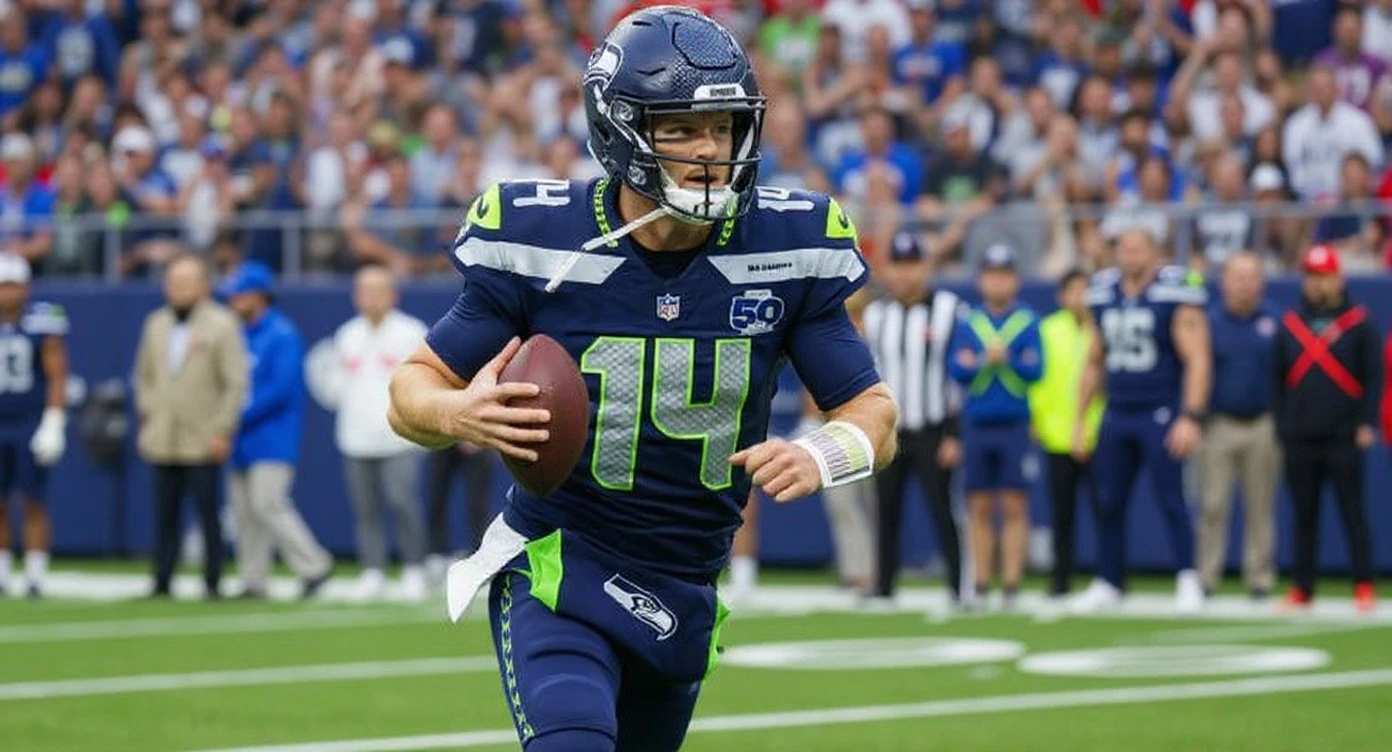
The broader context of Darnold’s 2025 season is impossible to separate from what he did in 2024. ESPN noted that his 14-3 record with Seattle this season mirrors the exact mark he posted with Minnesota last year—a campaign that earned him his first Pro Bowl selection.
Back-to-back 14-win seasons with two different franchises puts Darnold in historically rare company. Sporting News confirmed he joined Tom Brady and Peyton Manning as the only quarterbacks to accomplish that feat. CBS Sports added that his second straight Pro Bowl came after throwing for over 4,000 yards and 25 touchdowns for the 14-3 Seahawks.
NFL.com noted that Darnold has recorded 35 consecutive starts, including playoffs, since taking over as the Vikings’ QB1 ahead of the 2024 season—a durability streak that underscores how completely he has reinvented himself as a reliable, high-end starter.
The Saturday Night Test—Passed Decisively
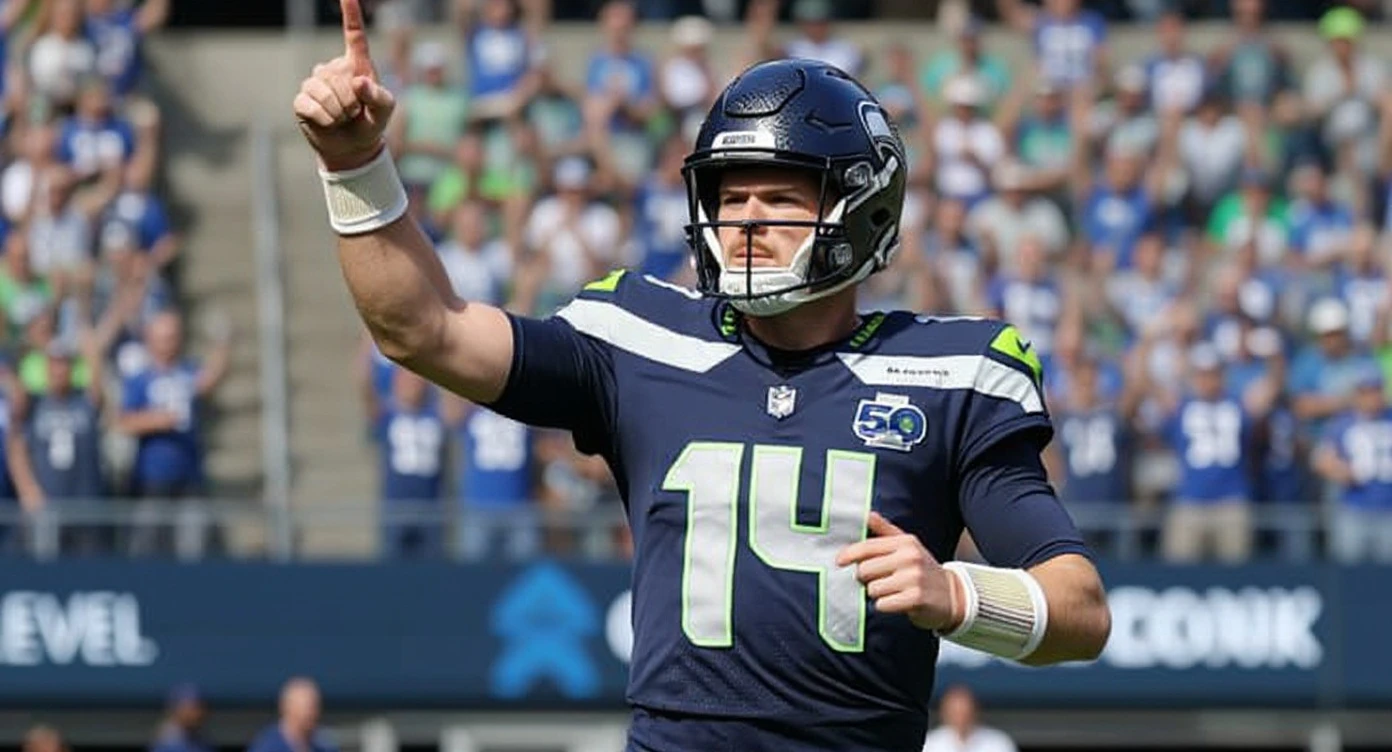
The divisional-round matchup against San Francisco was always going to be a statement game, and the oblique injury only raised the stakes. Darnold had scored just 13 points in each of his two regular-season meetings with the 49ers, The Athletic noted, making the 41-6 playoff output all the more striking.
Seahawks.com confirmed that Darnold, despite not throwing a football since Thursday’s practice, was active and did not let the injury limit him. Seattle’s 41-6 win was described as “emphatic” by Seahawks.com, sending the franchise to the NFC championship game.
The result validated Seattle’s $100.5 million investment and their earned No. 1 seed. Darnold’s redemption narrative no longer requires a qualifier—he played hurt, won decisively, and the Seahawks are two wins away from a Super Bowl.