
Stefon Diggs, the New England Patriots’ star wide receiver and four-time Pro Bowl selection, is navigating a legal minefield while his team races toward the Super Bowl. In December, an incident with his former private chef sparked serious felony charges—strangulation or suffocation and misdemeanor assault and battery. Now 32 years old, Diggs signed a lucrative three-year, $69 million contract with the Patriots in 2023 after previous stints with the Minnesota Vikings, Buffalo Bills, and Houston Texans. His career trajectory has been remarkable: 161 games, 942 receptions, 11,504 yards, and 74 touchdowns. In 2025 alone, he’s recorded 85 receptions for 1,013 yards and 4 touchdowns across 17 games, helping clinch the AFC East title as the No. 2 seed. The incident, which occurred December 2, reportedly escalated from a dispute over unpaid wages into something far more serious. As the Patriots prepare for their championship run with a 14-3 record, Diggs finds himself caught between two competing narratives—his value as an elite athlete and the serious legal allegations against him. The timing couldn’t be more complicated, with the Super Bowl looming and courtroom dates suddenly shifting.





Want to know what people are really saying? Don’t miss the buzz from Reddit at the end!
The Postponement That Raises Questions About Justice and Sports
Diggs’ arraignment was originally scheduled for January 23—just two days before the AFC Championship Game—but his legal team successfully pushed it to February 13, 2026, five days after Super Bowl LX concludes on February 9. While prosecutors didn’t object to the postponement, the timing raises uncomfortable questions: Does delaying proceedings until after championship games send a troubling message about equal treatment under the law? Such judicial accommodations are rare for ordinary citizens facing serious felony charges. The delay essentially allows Diggs to potentially compete in football’s biggest game without the immediate pressure of a courtroom appearance—a luxury that underscores the disparity between how high-profile athletes and average defendants navigate the criminal justice system. Legal experts have long debated whether such postponements compromise judicial integrity or simply represent practical case management. In Diggs’ situation, the lack of prosecutor objection suggests both sides found the delay workable, but it highlights a systemic reality: celebrity and resources can reshape legal timelines in ways unavailable to most Americans facing similar charges.

Her Version vs. His Denial: The Conflicting Narratives
According to police reports filed December 16, 2025, the former chef alleged that Diggs struck her in the face and attempted to strangle her by placing his arm around her neck in a headlock, then threw her onto a bed during a dispute over unpaid wages. The alleged assault occurred December 2, and the confrontation reportedly escalated when she brought up financial compensation owed to her. Following the incident, she terminated her employment and left his residence. When she returned December 9 to retrieve her property and inquire about overdue wages, Diggs referred her to his personal assistant, who informed her she’d need to sign a non-disclosure agreement before receiving payment—a demand she refused. She initially declined to press charges but changed her mind after that December 9 encounter, filing charges on December 22 and leading to Diggs’ arrest. Diggs’ attorney, David Meier, categorically denies everything, calling the allegations ‘unsubstantiated and uncorroborated’ and framing the situation as an unresolved financial dispute. This stark contradiction leaves critical questions about credibility unanswered—for now.
Beyond the Assault Charges: A Pattern of Legal Troubles
The strangulation and assault charges are just part of Diggs’ expanding legal storm. Court records reveal he’s simultaneously entangled in two additional legal battles involving claims of extortion and defamation, painting a troubling picture of a high-earning athlete facing multifaceted legal jeopardy. The simultaneous nature of these legal proceedings—spanning criminal matters to civil disputes—creates unprecedented pressure on Diggs. While details about the extortion and defamation claims remain less publicized than the assault case, their existence signals broader interpersonal conflicts that extend across multiple relationships. The cumulative effect is significant: Diggs faces potential consequences across criminal and civil domains simultaneously, each with distinct standards of proof and potential penalties. This legal complexity transforms what might otherwise be handled as an isolated incident into something far more consequential for his career and reputation.
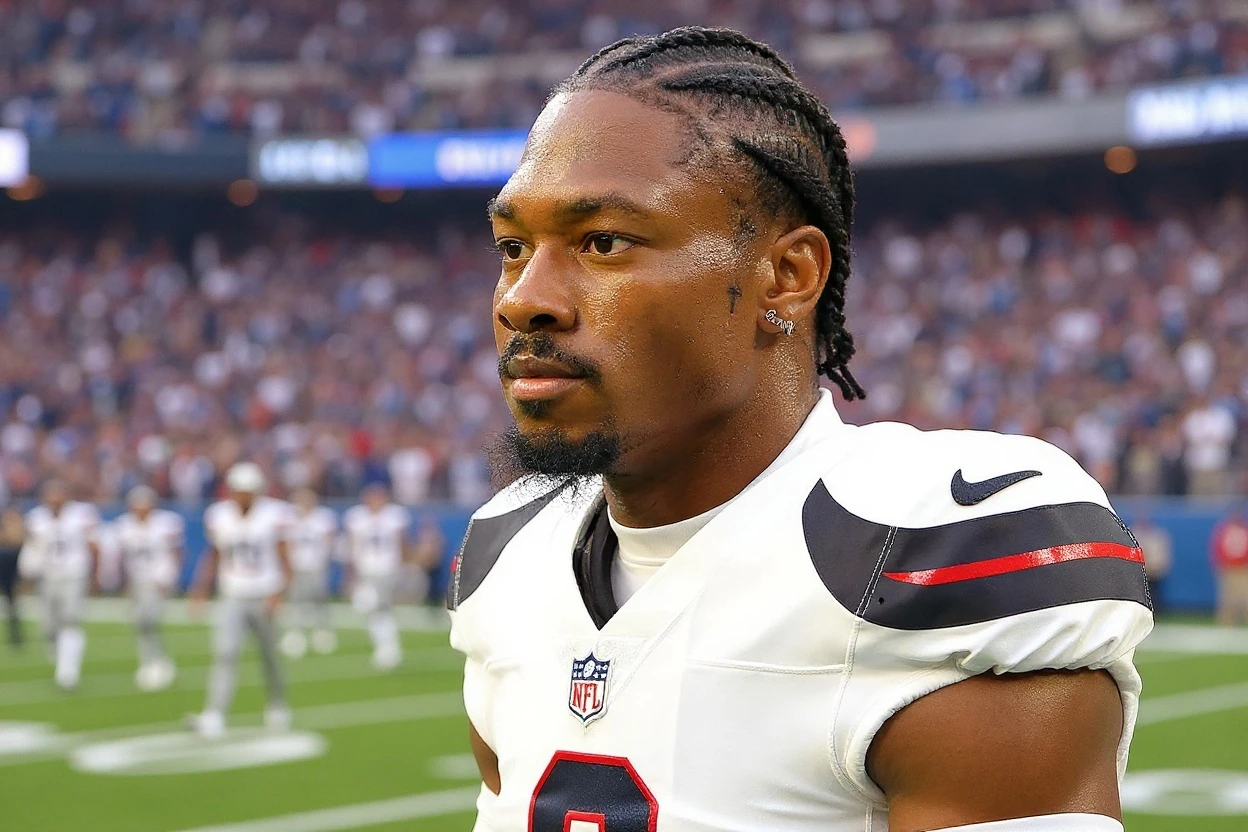
The NFL’s Silent Investigation and Dual-Track Consequences for His Career
While the league hasn’t publicly commented on potential disciplinary action, the NFL is actively investigating Diggs alongside teammate Christian Barmore, the Patriots defensive tackle facing his own criminal charges. The league’s quiet approach masks significant uncertainty: Will Diggs face suspension? Could he be banned from the Super Bowl itself? The investigation’s outcome could reshape his career trajectory. Critically, the NFL operates independently from criminal proceedings under its comprehensive conduct policy, meaning criminal conviction isn’t required for league discipline. Historical precedent demonstrates the league has suspended stars for considerably less serious allegations. Diggs’ situation is compounded by his teammate’s simultaneous legal troubles, which may intensify league scrutiny on the Patriots organization. The New England Patriots issued a statement saying ‘We support Stefon,’ providing some comfort but offering no guarantee against future discipline. The convergence of criminal and NFL disciplinary processes creates a dual-track consequence system—one where even a favorable court outcome wouldn’t necessarily protect Diggs from league suspension.

Public Skepticism Over Justice and Celebrity Privilege
The judicial postponement of Diggs’ arraignment has ignited broader concerns about the intersection of wealth, fame, and the American legal system. Many observers view the timing of his court date shift—occurring precisely after the Super Bowl concludes—as emblematic of a two-tiered system where elite athletes receive accommodations unavailable to ordinary citizens facing similar charges. The contrast is stark: an average defendant facing felony strangulation charges would struggle to secure a postponement of several weeks, let alone one that conveniently aligns with the conclusion of a high-profile sporting event.
However, not all observers interpret the postponement as evidence of preferential treatment. Legal professionals note that continuances are routine in the judicial system regardless of a defendant’s background or financial standing. Case delays extending several months—or even longer—occur regularly across all socioeconomic brackets. From this perspective, a five-week postponement represents standard practice rather than an exceptional privilege. The fact that prosecutors raised no objection to the delay further complicates the narrative of preferential treatment, suggesting that both legal teams viewed the timing as reasonable case management.