
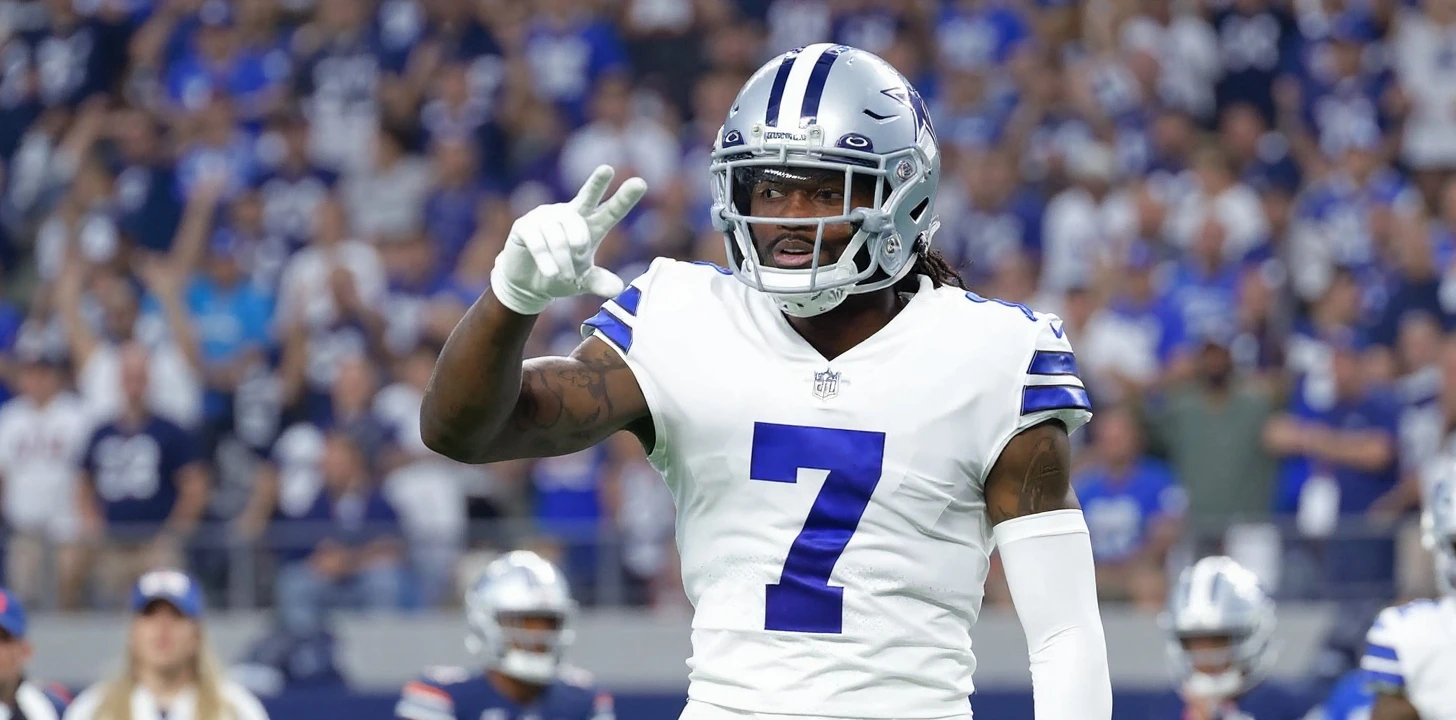
Trevon Diggs, once a Pro Bowl cornerback and symbol of the Dallas Cowboys’ defensive future, was released with just one game remaining—a shocking reversal that few saw coming with such finality. On July 25, 2023, the Cowboys had signed Diggs to a five-year, $97 million extension featuring $42.30 million guaranteed, a commitment reflecting their conviction in his elite prowess. Yet by December 30, that investment was severed entirely, standing as compelling evidence of how quickly elite talent becomes expendable. His release wasn’t merely a roster decision; it represented a fundamental breakdown between player and organization. The deterioration spanned multiple seasons—mounting injuries and what management viewed as defiance toward team protocols. For a franchise accustomed to championship aspirations, cutting a player of Diggs’ caliber sent shockwaves through the locker room. This moment crystallizes a broader crisis in Dallas rooted not in bad luck, but in a cascade of organizational miscalculations. Any team claiming Diggs off waivers would inherit $530,823 of remaining salary for the final week, a financial reality further complicating his transition.
When Injuries Become Excuses: The Rehab Rebellion That Broke Trust
Two catastrophic knee injuries in two years tested any player’s resolve and physical capabilities. The first struck on September 21, 2023, when Diggs tore his ACL during 1-on-1 drills, sidelining him for the remainder of that season and limiting him to just two games with four solo tackles, three pass deflections, and one interception. His decision to rehab in South Florida instead of under the Cowboys’ direct supervision sparked a deeper crisis—one fundamentally rooted in trust and organizational autonomy. The Cowboys’ subsequent enforcement of a $500,000 base salary de-escalator for 2025 wasn’t merely financial punishment; it was a public declaration of displeasure. Diggs participated in only 16% of voluntary offseason activities, choosing instead to oversee his recovery independently. Following chondral graft surgery in January 2024, another knee setback in 2025 exemplified how injury complications cascade beyond initial diagnoses. When a player of Diggs’ stature chooses independence over institutional oversight while rehabbing from serious injury, the relationship dynamic fundamentally shifts. The Cowboys’ medical staff viewed this as both a red flag and a breach of protocol. From management’s perspective, a player refusing prescribed rehabilitation under their supervision raised questions about commitment and accountability. The lingering tension proved irreparable, transforming a standard recovery narrative into a symbol of organizational discord.
The Stats Don’t Lie: From Interception Legend to a Ghost on the Field
Diggs’ statistical decline tells a more damning story than any narrative. In 2021, he recorded an astonishing 11 interceptions, tying a franchise record while earning first-team All-Pro honors and his first Pro Bowl selection. He appeared unstoppable—a player capable of single-handedly changing games through playmaking and disruption. By 2024, across 11 games and 11 starts, he accumulated 42 combined tackles (35 solo), 11 pass deflections, and two interceptions—respectable volume, but dramatically diminished impact. Before the season ended on December 14, the Cowboys announced another knee injury requiring surgery, forcing him to miss the final four games. In 2025, his performance cratered further: 8 games, 27 tackles, 1 tackle for loss, 2 pressures, 0 interceptions, 0 pass breakups. The contrast between his 2021 dominance and 2025 reality is stark and undeniable. Diggs had registered at least one interception in each of his previous five seasons entering 2024, establishing himself as a threat quarterbacks had to account for. His precipitous decline suggested a fundamental loss of edge, instinct, or physical capability. Cornerback requires not just technique but a sixth sense for ball trajectory and timing—skills that deteriorate when bodies are compromised or confidence erodes.
Jerry Jones’ Bigger Gamble: Why Diggs’ Release Signals a Deeper Disaster
Releasing Diggs represents the symptom of a much deeper organizational disease metastasizing through Dallas. The true indicator of systemic failure emerged earlier when owner Jerry Jones orchestrated the trade of Micah Parsons, the Cowboys’ star pass rusher, to the Green Bay Packers for draft picks. This decision faced immediate condemnation—’FLEECED’ trended across social media as analysts and fans recognized the lopsided swap. Parsons, a generational defensive talent, departed after Jones refused to negotiate meaningfully, effectively burning bridges beyond repair. The Packers acquired a franchise-altering pass rusher while parting with relatively modest compensation. Inside the locker room, players noticed this symbolic failure. When management demonstrates an inability to retain star players through poor negotiation strategy, it sends a message: organizational dysfunction runs deeper than any single contract dispute. Parsons’ departure wasn’t financial; it was a rejection of how the organization operates. With both Parsons and Diggs gone, the Cowboys’ defensive infrastructure has been systematically dismantled, raising an existential question: Has the organizational collapse begun?
The Billion-Dollar Mistakes: How Massive Contracts Built a House of Cards
The Cowboys’ predicament cannot be divorced from catastrophic contract negotiations that gutted salary cap flexibility. Quarterback Dak Prescott received a $240 million deal with $180 million guaranteed, among the richest in NFL history, followed by wide receiver CeeDee Lamb’s $136 million agreement. These mega-deals weren’t inherently problematic—establishing long-term commitments to elite talent is standard. However, Jones’ negotiation blunders cost the franchise nearly $64 million in missed savings through delayed signings and poor timing. With the salary cap consumed by offensive-focused commitments, little remained for defensive depth. Combine this with an aging roster, diminishing draft capital, and a defense ranked 28th in expected points allowed, and the Cowboys face an impossible rebuild. The decisions made over the past 24 months—including Diggs’ $97 million extension signed before his repeated knee injuries—exemplify how organizational resource misallocation cascades into forced decisions that further weaken an already compromised roster. At 81 years old, Jerry Jones must confront an uncomfortable reality: the window for another Super Bowl victory may have already closed.